Books for Cat Lovers

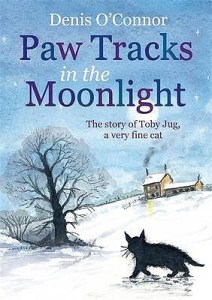
I loved both these books by Denis O’Connor:

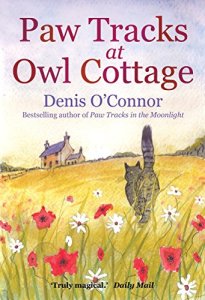
Paw Tracks in the Moonlight and Paw Tracks at Owl Cottage.

Denis O’Connor trained as a psychologist and teacher. Throughout his career he taught in schools and lectured in colleges and universities. He holds a doctorate in education and psychology and is now retired, living with his wife Catherine and his two Maine Coon cats in a remote country cottage in Northumberland.

Paw Tracks in the Moonlight tells the story of how he rescued a kitten during a snowstorm and how kitten survived, despite the vet’s prediction that he wouldn’t. O’Connor lived at Owl Cottage and as he was out at work all day he put the kitten in a jug to keep him safe and named him Toby Jug. This memoir covers the first year of Toby Jug’s life and it’s a remarkable story because this is no ordinary cat (if such a creature exists, that is). He is a Maine Coon cross. He learns to walk on a lead and even goes on a camping trip on horseback during the summer in the Cheviot Hills with O’Connor.

Paw Tracks at Owl Cottage chronicles O’Connor’s experiences with four more cats, all Maine Coons. He had moved from Owl Cottage, unable to face living there after Toby Jug died in 1978, but years later, when he took early retirement, Owl Cottage came up for sale – and he and his wife bought it. it’s a wonderful place for cats and they acquired four – Pablo, Carlos, Luis and Max. The book is divided into sections describing each cat and there are also reminisces of Toby Jug, with more stories of their lives together.

Both contain beautiful descriptions of the Northumberland countryside, most of which I’m familiar with, which made the books even more special for me. Inevitably the death of Toby Jug filled me with sadness, but both books are full of the cats’ personalities and the joy they brought to O’Connor and his wife. They demonstrate the close bonds that are possible between people and cats:

I tell them [his friends who are astonished at the close bonds]  I believe that any animal, be it a horse, dog, cat, parrot or budgerigar, will always respond to kindly attention and caring affection, and that I know this because I’ve made good friendships with them all.

But to return to how I am with our cats, I can honestly state that quite apart from loving them deeply and being loved in return, I know them inside their minds and they know me; we are linked on a mental plane of mutual affection and understanding. (page 222 of Paw Tracks at Owl Cottage)

Definitely books for cat lovers!

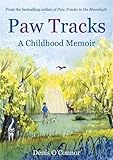
Denis O’Connor has written a third book (which I haven’t read) – Paw Tracks: a Childhood Memoir, described on Amazon as ‘a searingly honest account of how the power of nature can lift the human spirit and overcome the most unloving of childhoods.’

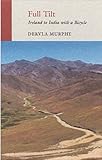
Full Tilt by Dervla Murphy

Dervla Murphy was born in County Waterford, Ireland. In a Book Beginnings post I wrote about how when she was ten she decided she wanted to cycle to India. And that is what she did 21 years later.

Full Tilt: Dunkirk to Delhi on a Bicycle, first published in 1965  is an account of her journey in 1963, which took her through Europe, Persia (Iran), Afghanistan, over the Himalayas to Pakistan and into India. She travelled on her own, with a revolver in her saddle bag. I’m full of admiration for her courage and determination.

Reading this book made me wonder about the countries she cycled through and how they’ve changed since the early 1960s. It would certainly be a different experience if anyone tried to do the same these days! T

Here are a few quotes to give a taste of the book:

The border between Persia and Afghanistan

The only indication of the Persian-Afghan frontier is a seven-foot stone pillar, conspicuous from far across the desert, which lucidly announces ‘Afghanistan’.  Here I stopped to photograph Roz [her bicycle]. Three miles further on a long branch served as Customs barrier and beside it lay a very young soldier in a very ragged uniform, sound asleep with one hand on his rifle. I quietly raised the barrier for myself and continued towards the Customs and Passport Office two hundred yards ahead.

There, no one took the slightest notice of either my kit or my passport, no uniformed officials appeared and no series of dingy, uncomfortable offices had to be visited. (page 47)

The concept of time:

… people here have no concept of time as we understand it. The majority wear watches as ornaments and I was diverted to discover that they can’t read the time and don’t see why they should learn! Yesterday is over, today is something to be enjoyed without fuss, and tomorrow – well, it’s sinful to plan anything for the future because that’s Allah’s department and humans have no business to meddle with it. (page 58)

Dervla Murphy loved the Afghan way of life and deplored the modernisation of countries:

The more I see of life in these ‘undeveloped countries’ and of the methods adopted to ‘improve’ them, the more depressed I become. It seems criminal that the backwardness of a country like Afghanistan should be used as an excuse for America and Russia to have a tug-of-war for possession. (page 69)

Her thoughts on the attitude of Westerners:

… what an artificial life is led by the foreign colonies in these Asian cities! The sense of their isolation from the world around them is quite stifling. At a dinner party tonight I met a European couple who have been in Kabul for eighteen months without once entering the home of an ordinary Afghan – and they are not exceptions. The attitude is that the ‘natives’ are people to be observed from  a discreet distance and photographed as often as possible, but not lived among. The result is boredom and an obsessional longing for home leave, (page 101)

This was not her attitude as she stayed with local people wherever she could, accepting their food and lodgings which was given freely – they would not let her pay for anything and would have been offended if she had insisted.

Her essentials for a five-month trip – she needed less than I would want!

… the further you travel the less you find you need and I see no sense in frolicking around the Himalayas with a load of inessentials. So, I’m down to two pens, writing paper, Blake’s poems, map, passport, compass, comb, toothbrush, one spare pare of nylon pants and nylon shirt – and there’s plenty of room left over for food as required from day to day. It’s a good life that teaches you how little you need to be healthy and happy, if not particularly clean! (page 105)

Her views on ‘Progress’:

The more I see of unmechanized places and people the more convinced  I become that machines have done incalculable damage by unbalancing the relationship between Man and Nature.

people now use less than half their potential forces because ‘Progress’ has deprived them of the incentive to live fully. (page 149)

… I don’t know what the end result of all this ‘progress’ will be – something pretty dire, I should think. We remain part of Nature, however startling our scientific advances, and the more successfully we forget or ignore this fact, the less we can be proud of being men. (pages 149 – 150)

I enjoyed Full Tilt, as much for her descriptions of the places she visited as for her thoughts along the way. I’m not sure that I would find her easy company though!

Laurie Lee

Laurie Lee was born in Stroud in Gloucestershire and moved to Slad when he was three in 1917. He died there in 1997. His best known book is Cider With Rosie (1959) which I loved. It covers his childhood years in Slad and it is absolutely fascinating. He was also a poet and this book reads like a prose poem throughout – I wrote about it here.

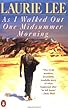
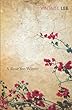
I’ve recently read another two of Laurie Lee’s books – As I Walked Out One Midsummer Morning (1969), which is about his life after he left his home in Slad, and A Rose for Winter (1955), which is a record of his travels in Andalusia 15 years after he first went there.

 As I Walked Out One Midsummer Morning is the second of his autobiographical trilogy which began with Cider With Rosie followed by A Moment of War (1991). It begins in 1934 when Laurie Lee left his home in the Cotswolds and set out ‘to discover the world’. First he walked to London where he got a job on a building site and supplemented his income by playing the violin. He left for Spain a year later, landing at Vigo and then making his way on foot through to Castillo on the south coast, playing his violin in exchange for food and a bed for the night. Then the Spanish Civil War began in earnest and he came home on a Royal Navy destroyer that had been sent from Gibraltar to rescue any ‘British subjects who might be marooned on the coast.’ In an Epilogue he explains how he had shameful doubts about leaving Spain and so he returned to join the Republicans.

Lee writes vivid, lyrical prose with beautiful descriptions of the countryside, the scorching heat, the poverty and the people, so although I haven’t been to any of the places he describes it was easy to visualise the scenes. It’s not just the scenery he captures, but also the atmosphere, the splendour and squalor, and the desperation and also the love and enthusiasm for life.

In A Rose in Winter Lee writes about his travels in Andalusia which he visited with his wife fifteen years after his last time there during the Spanish Civil War. Again, he describes the towns and countryside beautifully, portraying the poverty, the hospitality and the changes the Civil War had inflicted. He takes part in religious processions, goes to a bull fight and watches the ‘most fundamental, most mysterious of all encounters in Andalusian folk-music – the cante flamenco’, a most dramatic and erotic performance.

Reading them one after the other I was struck by his descriptions of the towns – Seville, for example, in As I Walked Out One Midsummer Morning was

… dazzling – a creamy crustation of flower-banked houses fanning out from each bank of the river. The Moorish occupation had bequeathed the affection for water around which so many of even the poorest dwellings were built – a thousand miniature patios set with inexhaustible fountains which fell trickling upon ferns and leaves, each a nest of green repeated in endless variations around this theme of domestic oasis. (page 126)

and in A Rose for Winter

So Seville remains, favoured and sensual, exuding from the banks of its golden river a miasma of perpetual excitement, compounded of those appetites that are most particularly Spanish – chivalry, bloodshed, poetry and religious mortification. (page 34)

Katrina commented on my previous post about As I Walked Out One Midsummer Morning that she was disappointed to read that Laurie Lee’s Spanish experiences were almost all fiction. I tried to find out more about this. There are doubts that Lee falsified and embellished his involvement in the Spanish Civil War in A Moment of War (which I haven’t read). However, his widow denied this. In an interview recorded in The New York Times, 24 February 1985, Lee, talking about Cider With Rosie said  “… it is not so much about me as about the world that I observed from my earliest years. It was a world that I wanted to record because it was such a miracle visitation to me. I wanted to communicate what I had seen, so that others could see it.”

Whether his books are fictionalised accounts of his life or not, I like them. They evoke the past – a world long gone – and give a sense of what life was like. I like to think they portray truth, even if all the facts may not be strictly accurate.

Books of the Month: April

I’ve finished reading 8 books this month, 7 of them fiction and 1 non-fiction. Three of them are books from my to-be-read shelves (TBR), one is a library book, one borrowed from a friend and one is an e-book.
They are (listed in the order I finished them), with links to my posts:
  1. My Cousin Rachel by Daphne du Maurier 4/5 (from TBR bks)
  2. The Murder on the Links by Agatha Christie 3/5 (Poirot)
  3. Agnes Grey by Anne Bronte 3/5 (Kindle)
  4. The Hanging Valley by Peter Robinson 3/5 (from TBR books)
  5. The Village by Marghanita Laski 5/5 (borrowed from a friend)
  6. Daphne du Maurier: a Daughter’s Memoir by Flavia Leng (library book) 3.5/5
  7. Ninepins by Rosy Thornton (author review copy) 4.5/5
  8. A Place of Greater Safety by Hilary Mantel 4/5 (post to follow)

So, going off my ratings (which are purely subjective) my pick of the month is The Village by Marghanita Laski, with Ninepins by Rosy Thornton a close second.

Kerrie at Mysteries in Paradise is hosting the Crime Fiction Pick of the Month. My crime fiction reading this month has been less than usual, with just two books:

The Murder on the Links by Agatha Christie and The Hanging Valley by Peter Robinson

and I’ve rated them both 3/5 – so a dead heat.

Daphne du Maurier: Fact and Fiction

Recently I’ve had a bit of a run on books by and about Daphne du Maurier. First of all I read The Parasites, which reminded me that I’d had Justine Picardie’s novel, Daphne sitting on my bookshelves unread, so I immediately got it down. Then I just had to read My Cousin Rachel, a book I’ve had for years and never got round to reading before now. After that I read Daphne du Maurier: a Daughter’s Memoir by Flavia Leng, just because it was one of the books Justine Picardie consulted in writing her novel. I’ve previously read Margaret Forster’s biography Daphne du Maurier and Daphne du Maurier’s The ‘Rebecca’ Notebook and Other Memories, which is mainly autobiographical.

Daphne by Justine Picardie (2008) – synopsis (from the back cover):
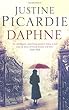
It is 1957. As Daphne du Maurier wanders alone through her remote mansion on the Cornish coast, she is haunted by thoughts of her failing marriage and the legendary heroine of her most famous novel, Rebecca, who now seems close at hand. Seeking distraction, she becomes fascinated by Branwell, the reprobate brother of the Bronte sisters, and begins a correspondence with the enigmatic scholar Alex Symington in which truth and fiction combine. Meanwhile, in present day London, a lonely young woman struggles with her thesis on du Maurier and the Brontes and finds herself retreating from her distant husband into a fifty-year-old literary mystery.

My view: 4/5

This book merges fact and fiction so well that it’s hard to differentiate between the two. I much preferred the story of Daphne herself and her search for information about Branwell. I had to go back to Forster’s biography of Daphne to compare the accounts of her life, which matched up pretty well. I was less keen on the modern day story of a young woman, the second wife of an older man. It had too many obvious parallels with Rebecca for my liking. And if you haven’t read Rebecca, this book gives away the plot. There are also references to My Cousin Rachel, which I glossed over in case there were any spoilers there too (I don’t think there were). All in all, a very satisfying mystery about Daphne and the missing Bronte documents.

My Cousin Rachel by Daphne du Maurier (1951) – synopsis (Amazon):
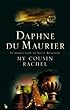
Orphaned at an early age, Philip Ashley is raised by his benevolent older cousin, Ambrose. Resolutely single, Ambrose delights in Philip as his heir, a man who will love his grand home as much as he does himself. But the cosy world the two construct is shattered when Ambrose sets off on a trip to Florence. There he falls in love and marries – and there he dies suddenly. In almost no time at all, the new widow – Philip’s cousin Rachel – turns up in England. Despite himself, Philip is drawn to this beautiful, sophisticated, mysterious woman like a moth to the flame. And yet …might she have had a hand in Ambrose’s death?

My view: 4/5

I thoroughly enjoyed this book, completely taken in by the characters and loving the setting in an old mansion in Cornwall. The story is narrated by Philip, so the other characters are seen through his eyes. The tension mounts as Philip becomes obsessed with Rachel and I was never quite sure what was real and what to believe. He is not a stable character and as Rachel’s own thoughts are not revealed it’s not clear if she can be believed either, whether she is sincere or evil and manipulative.

Daphne du Maurier: a Daughter’s Memoir (1994) – synopsis (from the back cover):
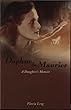
In this moving and revealing memoir, Flavia Leng paints a powerful portrait of her mother, Daphne du Maurier. She presents an account of an unusual and often lonely childhood spent in London and especially Cornwall, at her mother’s beloved home, Menabilly. Family friends included Nelson and Ellen Doubleday, Gertrude Lawrence and Noel Coward. However, at the centre of this story is Daphne du Maurier herself. The book reveals a writer with a deep attachment to Cornwall, where she put down her roots and found inspiration for her novels, and who spent much of her life as a recluse, withdrawn not only from the outside world but also from members of her own family. A picture emerges of a woman who lived in a world of her own creation that was beyond the comprehension of those around her.

My view: 3.5/5

In the epilogue Flavia Leng, Daphne du Maurier younger daughter, explained that she began to write this memoir of her childhood two years before her mother died in 1989 and it was never meant for publication – it was just for the family. And that to me epitomises this memoir – it’s an account of her childhood and of her family as seen through a child’s eyes. It seems a lonely childhood, despite being the middle child. As children Flavia and her older sister Tessa didn’t get on and both she and Tessa saw that their mother lavished more affection on her beloved son, Christopher who they called Kits. But a picture emerges of Daphne, who they called Bing, as a solitary person, closeted away with her typewriter or lost in her world of ‘never, never land’, peopled by the characters she invented, with little time for her children, who were looked after by Nanny and then ‘Tod’, their governess.

Like her mother Flavia has a great love of Cornwall which shines through the book – she was never happier than when alone in Menabilly and the surrounding woodlands. It’s a sad memoir ending with Flavia feeling she had no roots left after her parents died:

I have heard it said that a person only really grows up when both parents have gone; what I do know is that life will never be quite the same again. Cornwall no longer holds the enchantment it once did. Gone is the excitement of driving down those leafy, winding roads to the lovely old houses, my beloved Menabilly, and then later Kilmarth where Bing lived out her years.
Crime Fiction Alphabet – Letter I

Rebus’s Scotland: A Personal Journey by Ian Rankin is my choice to illustrate the letter I in Kerrie’s Crime Fiction Alphabet.

If you like the Rebus books, like me, then you’ll also like this book. It is fascinating to read, with insights into Ian Rankin’s own life and that of the character he has invented, along with his thoughts on Scotland and the Scottish character. It’s partly autobiographical, blending his own life with Rebus’s biography. It also describes many of the real life locations of the books, in particular Edinburgh, Rebus’s own territory.

I particularly enjoyed Ian Rankin’s views on writing – how writers mine their own experiences, reshaping their memories to create fiction and the similarities between novelists and detectives:

Both seek the truth, through creating a narrative from apparently chaotic or unconnected events. Both are interested in human nature and motivation. Both are voyeurs. (The Edinburgh-born Muriel Spark says that she and her fellow novelists ‘loiter with intent’ – playing on the idea of a criminal activity.) I certainly enjoy dipping into other people’s lives, giving fresh texture and tone to them, while Rebus has his own reasons for prying into everyone else’s secrets. (page 31)

He went on to quote from The Hanging Garden and then The Falls giving Rebus’s reasons – which were ‘to stop him examining his own frailties and failings.’

I’ve read all the Rebus books – links to my posts are in the Author Index (the tab at the top of the blog). Some of these are brief and last year I decided to make a page on each one to flesh them out a bit more. So far, that just remains an intention, although the parent page has a list of all the books. In preparing to write Rebus’s Scotland Ian Rankin re-read all his Rebus books. Here is his own analysis:

Authors seldom read their own work: by the time a book has been published, we’re busy with our next project. When a story is done, it’s done – reading it through would only make most authors want to tinker with it. Having said that, I enjoyed the majority of the Rebus novels. Knots & Crosses I thought wildly overwritten – definitely a young man’s book. Dead Souls possesses too many characters and story-lines: at points it confused even its author! But several books which had seemed real chores to write surprised me with their deftness – Set in Darkness and Let it Bleed especially. (I think they probably seemed chores because of the amount of political detail they had to embrace – it’s never easy to make politics seem exciting to the layman.) (page 125)

Throughout this book Ian Rankin quotes liberally from his books to illustrate the points he makes. He begins with a chapter on the place where he was born and grew up, which was in the same cul-de-sac as John Rebus – even in the same house. But really, of course, Rebus was not born there. He was created in a bed-sit in Edinburgh where Rankin was living and writing. He deals with Rebus’s ‘prodigious intake of alcohol‘, the Oxford Bar, his taste in music, the city of Edinburgh (Rebus’s territory) and Fife, where Rebus and Rankin have shared memories. I like the way he writes about Rebus as though he were a real person, sometimes admitting that he’s not sure what Rebus will do, but at the same time acknowledging that he is his creation.

An excellent book. My only criticism is that I would have loved it to have an index – maybe I’ll do one for myself

  • Paperback: 224 pages
  • Publisher: Orion; New Ed edition (1 Jun 2006)
  • Language English
  • ISBN-10: 0752877712
  • ISBN-13: 978-0752877716
  • Source: my own copy