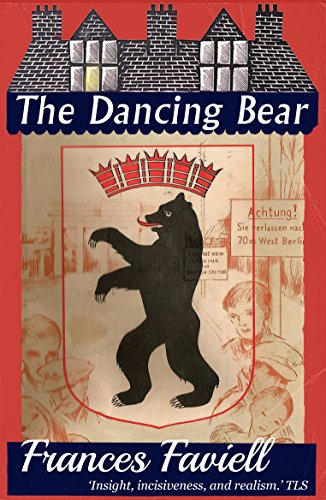
The Dancing Bear by Frances Faviell

Rating: 5 out of 5.

The Dancing Bear by Frances Faviell took me by surprise by how much I enjoyed it. I wasn’t expecting it to be so good.

Frances Faviell (1905-1959) was the pen name of Olivia Faviell Lucas, painter and author. After the war, in 1946, she went with her young son, John, to Berlin where Richard Parker, her second husband, had been posted as a senior civil servant in the post-war British Administration. It was here that she befriended the Altmann family, which prompted her first book The Dancing Bear (1954), a memoir of the Occupation seen through the eyes of both occupier and occupied. She later wrote three novels, A House on the Rhine (1955), Thalia (1957), and The Fledgeling (1958). These are now all available as Furrowed Middlebrow books.

The Dancing Bear covers the years from Autumn 1946 to Autumn 1949, with an Epilogue dated Autumn 1953 and, in this edition, an Afterword by John Parker, Faviell’s son. Her memoir is mainly about her friendship with the Altmann family – Frau Maria Altmann, her husband, Oskar and her children, Ursula, who works for a group of American service men, Lilli, a ballet dancer and son, Fritz, who was a member of the Hitler Youth and is now involved in the Black Market. Their eldest son. Kurt. is missing in Russia. Berlin had been divided into four sectors by the Allies – Britain, the United States, France and the Soviet Union – and Frances is horrified by the conditions she found. There were deaths from hunger and cold as the winter approached and queues for bread, milk, cigarettes, cinemas, buses and trams.

The complete and utter devastation of Berlin had shaken me profoundly. Nothing … had prepared one for the dead horror of this city. (page 15)

The complete absence of shops was something the Allied and German women felt. There was scarcely a single shop left standing in Berlin. The great stores and emporiums lay in dust, as did the great blocks of flats. One could not get the simplest articles except on the Black Market, and then only in exchange for cigarettes and coffee which had taken the place of money. (page 166)

The Altmanns live on the ground floor of a large ruined house – the upper storeys had disappeared and just the twisted iron girders remained, sticking up grotesquely against the sky. The ground floor looked very shaky and the windows were covered in cardboard and the door had been repaired from odd pieces of wood. It was freezing cold, and although they had a stove they had no fuel to light it and because electricity was rationed they had to use candles. There were two bedrooms, a small kitchen, a sitting room and a bathroom. With the help of her driver, Stampie, she does what she can to help them.

The British, unlike the Americans were forbidden to be friendly with the Germans, or to allow them in their homes or any of their buildings, clubs or messes and also to give them lifts, but these rules were frequently broken. At night Berlin ‘became a whirl of revelry’:

But if Berlin was a tragic city by day; at night it became a whirl of revelry. The Allies entertained on a scale which was extraordinary in a starving town, and if one went down to the Kurfurstendamm or the Kaiserdamm at night every cafe and night club was packed with revellers. (page 63)

I have only touched the surface of this book in this short post. It’s a moving memoir and I was fascinated by it all – the people, their situations, and their morale and attitudes as well as the condition of Berlin in the aftermath of World War Two. The realities of living under occupation are clearly shown, as well as the will to survive despite all the devastation and deprivation. I now want to read more of Frances Faviell’s books.

  • ASIN ‏ : ‎ B01M12EH2E
  • Publisher ‏ : ‎ Dean Street Press (3 Oct. 2016)
  • Language ‏ : ‎ English
  • Print length ‏ : ‎ 311 pages
  • My Rating: 5*

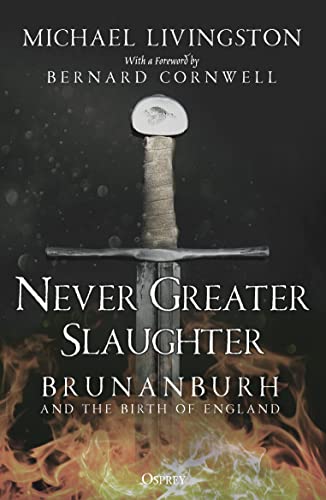
Never Greater Slaughter by Michael Livingston

Osprey Publishing| May 2021| 241 pages| e-book Review Copy| 3.5*

I had heard of the Battle of Brunanburh before I read Never Greater Slaughter by Michael Livingston, but my knowledge was limited to the fact that this had taken place in 937 between Æthelstan, King of England, King Alfred’s grandson, and an alliance led by Anlaf, a Viking chieftain, other chieftains and Constantine King of the Scots, in which Æthelstan was victorious. So I was very keen to find out more.

Synopsis from Amazon:

Late in AD 937, four armies met in a place called Brunanburh. On one side stood the shield-wall of the expanding kingdom of the Anglo-Saxons. On the other side stood a remarkable alliance of rival kings – at least two from across the sea – who’d come together to destroy them once and for all. The stakes were no less than the survival of the dream that would become England. The armies were massive. The violence, when it began, was enough to shock a violent age. Brunanburh may not today have the fame of Hastings, Crécy or Agincourt, but those later battles, fought for England, would not exist were it not for the blood spilled this day. Generations later it was still called, quite simply, the ‘great battle’. But for centuries, its location has been lost.

The title is taken from the poem in the Anglo-Saxon Chronicle describing the battle thus:

Never greater slaughter Was there on this island, never as many Folk felled before this By the Swords edges.

The location of the battle has been lost. Historians, archaeologists, linguists and other researchers have studied the little evidence that remains about the battle and put forward ideas about that location. In this book Livingston concludes that the only ‘certain pieces of information about the field at Brunanburgh – the place-names by which it was known in the immediate years afterwards – unquestionably point us to blood being shed in the mid-Wirral.’ (location 76%)

It seems to me that this is a very thorough and detailed book describing the battle and the various theories about its location. But not only that Livingston sets out his definition of history and its limitations. For example he says that whilst some facts will be known, a great many through the passage of time are lost, and some are facts that people have chosen to record to suit their own needs – their own bias in other words – or are simply not true.

Then Livingston describes what is known about the period leading up to the battle, describes the battle itself, and, having stated his objections to other possible locations, explains the reasons he concludes the location is in the Wirral, which seems convincing to me.

I found this a well researched and fascinating book that gave me a much better understanding of the period.

My thanks to the publishers for a review copy via NetGalley.

Throwback Thursday: The Perfect Summer

Today I’m looking back at my post on The Perfect Summer by Juliet Nicolson a book I loved. I first reviewed it on October 29, 2009. It focuses on the period from May, when King George V was crowned, to September, describing the minutiae of everyday life of both the rich and the poor. 

My review begins:

The Perfect Summer: Dancing into Shadow in 1911 by Juliet Nicolson is a fascinating look at life in Britain during the summer of George V’s Coronation year, 1911.

When I finished reading this book I decided that the summer of 1911 was not “the perfect summer”. It was one of the hottest years of the twentieth century, making life most uncomfortable at a time when most people had no means of getting out of the sweltering heat. Even a trip to the seaside for working class people meant they donned their Sunday best clothes and spent the day standing because they couldn’t afford to hire deck chairs!

Click here to read my full review

The next Throwback Thursday post is scheduled for December 30 2021.

New Additions at BooksPlease

I’ve been lucky with some of the 99p e-books on offer on Amazon recently and bought three books, well five actually as one is a trilogy.

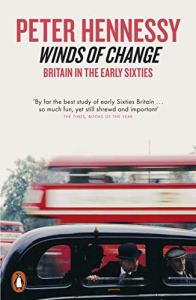
First a nonfiction book, Winds of Change: Britain in the Early Sixties by historian, Peter Hennessy. The centre of the book is 1963 – the year of the Profumo Crisis, the Great Train Robbery, the satire boom, de Gaulle’s veto of Britain’s first application to join the EEC, the fall of Macmillan and the unexpected succession to the premiership of Alec Douglas-Home. Then, in 1964, the battle of what Hennessy calls the tweedy aristocrat and the tweedy meritocrat – Harold Wilson, who would end 13 years of Conservative rule and usher in a new era. It’s the final book in Hennessy’s Post War trilogy.

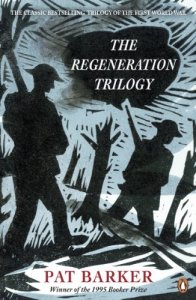
Then three novels – all historical fiction: The Regeneration Trilogy: Regeneration; The Eye in the Door; The Ghost Road by Pat Barker, three novels set during the First World War. I already had the third book, but hadn’t read it because I wanted to read the trilogy in order. It tells the story of three men, shell-shocked soldiers, who were sent back to the front. It’s based on the experiences of poets, Siegfried Sassoon and Wifred Owen who met at Craiglockhart Hospital near Edinburgh.

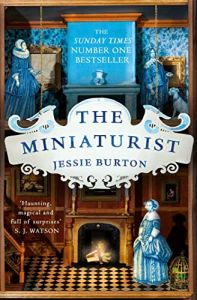
The Miniaturist by Jessie Burton – A few years ago I borrowed this book from the library but had to return it unread. Later on I watched the TV series and thought I’d like to read the book. So, when it was on offer for 99p I bought it. It’s set in Amsterdam in 1686. Nella Oortman marries a rich merchant, but life in her new home is unfulfilled. Even her cabinet house brings a mystery to the secretive world she has entered as the lifelike miniatures somehow start eerily foreshadowing her fate.

This last book is my choice this month from Amazon First Reads free books:

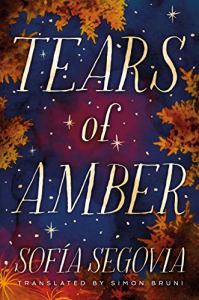
Tears of Amber by Sofía Segovia – a novel set during the Second World War in East Prussia between 1938 and 1947. In her author’s note Sofia Segovia says her novel was inspired by the story of Ilse and Arno Schipper, who established a factory in Monterrey, Mexico, her home town. It is a mix of fact and fiction. Publication date 1 May 2021. I have started reading and it’s looking good so far.

Throwback Thursday: The Verneys

Today I’m looking back to 25 October 2007 when I wrote longer posts than I do now! This one, The Verneys of Claydon is about the Verney family who lived at Claydon House, a country house in the Aylesbury Vale, Buckinghamshire, England, near the village of Middle Claydon. It is now owned by the National Trust.

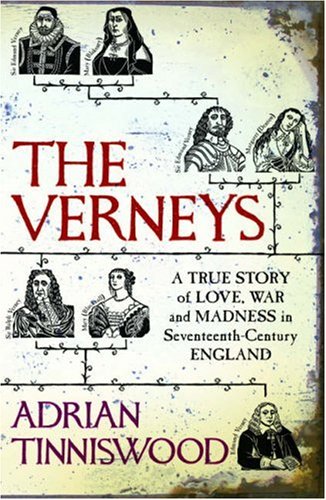
The Verneys: a True Story of Love, War and Madness in Seventeenth-Century England by Adrian Tinniswood.

This is how I began my post:

I became very fond of The Verneys as I read Adrian Tinniswood’s book The Verneys, shortlisted for the Samuel Johnson Prize for Non-Fiction 2007. If you’re interested in seventeenth century England you simply must read this book, or if you like reading biographies and family histories read this book. I think it would make a fantastic film or TV series.

It is a tour de force, a mammoth of a book. It is huge, both in its scope, its extraordinary detail and its length. It is also heavy, but only in weight. It is impressive in its coverage of not only the lives of the Verney family but also of the seventeenth century itself.

Madness, piracy, murder and adultery – The Verneys tells the story of a unique English family in the seventeenth century. Based on the near-miraculous survival of tens of thousands of Verney family letters in an attic, Adrian Tinniswood explores the history of one family in the most intimate detail. By drawing on this wealth of personal correspondence, he reveals the private and public world of members of the Buckinghamshire gentry, offering extraordinary insights into 17th Century family life.

Click here to read the rest of my review

Adrian Tinniswood OBE FSA is the author of fifteen books on social and architectural history, including Behind the Throne: A Domestic History of the Royal HouseholdThe Long Weekend: Life in the English Country House Between the Wars, a New York Times and Sunday Times bestseller; His Invention So Fertile: A Life of Christopher Wren and The Verneys: a True Story of Love, War and Madness in Seventeenth-Century England, which was shortlisted for the BBC/Samuel Johnson Prize. He has worked with a number of heritage organisations including the Heritage Lottery Fund and the National Trust, and is currently Senior Research Fellow in History at the University of Buckingham and Visiting Fellow in Heritage and History at Bath Spa University. (Amazon)

~~~

I visited Claydon House in October 2007, which was when I found out about this book. One of the most interesting rooms is Miss Nightingale’s bedroom. Florence Nightingale was Sir Harry Verney’s sister-in-law and often stayed at Claydon House between 1857 and 1890. Sir Harry had first asked Florence to marry him but she declined and he married her older sister Parthenope. I wrote about the House in this post.

Nonfiction November Week 3: Ask the Expert

We’re now in Week 3: (Nov. 12 to 16) of Nonfiction November. The topic is – Be The Expert/Ask the Expert/Become the Expert (RennieWhat’s Nonfiction)

Three ways to join in this week! You can either share three or more books on a single topic that you have read and can recommend (be the expert), you can put the call out for good nonfiction on a specific topic that you have been dying to read (ask the expert), or you can create your own list of books on a topic that you’d like to read (become the expert).

I’ve read a few books on World War 2 and would love to find out more. I have read several novels set during the War, the most recent is V2 by Robert Harris, which has made realise how little I know about it. It is a vast subject and I know there are very many books both fiction and nonfiction about it. My difficulty is where to start!

These are some of the nonfiction books I’ve read/have waiting to be read:

  • Our Longest Days: a People’s History of the Second World War by the Writers of Mass Observation, which is fascinating.
  • Wartime Britain 1939 – 1945 by Juliet Gardiner – I’ve only read some of this book.
  • The Ration Book Diet by Mike Brown, Carol Harris and C J Jackson – social history.
  • Winston Churchill’s six volume History of the Second World War – these look particularly daunting in the amount of detail involved! I’ve start the first volume.
  • Band of Brothers by Stephen E Ambrose – I watched the entire HBO series called Band of Brothers. I started to read the book and stalled!
  • Great Escape Stories by Eric Williams – TBR
  • How the Girl Guides Won the War by Janie Hampton – TBR

There are so many aspects to the war, so many countries involved, so many battles, people, places, politics, so many events that led up to the war, so many technological details and developments, etc, etc. Any suggestions of where to start will be much appreciated.