Library Loot

Here’s a pile of books I’ve recently borrowed:

From top to bottom they are

  • Brat Farrar by Joesphine Tey. Patrick had committed suicide, so who is the mysterious young man claiming to be him and calling himself Brat Farrar? I borrowed this because I enjoyed Tey’s books, The Daughter of Time and The Franchise Affair.
  • The Sea Lady by Margaret Drabble: a story of first and last love and the ebb and flow of time giving shape to our lives. I borrowed this because it’s been a long time since I read anything by Drabble, the last one being The Witch of Exmoor.
  • Naked to the Hangman by Andrew Taylor. Detective Inspector Thornhill is under suspicion of murder and his wife and former lover join forces to try to help him. The only other book by Taylor that I’ve read is The American Boy, historical crime fiction, set in 19th century England, with links to Edgar Allan Poe.
  • The Forgery of Venus by Michael Gruber. This was on display at the library in a section of books called ‘Thrills and Chills’, not normally the sort of book I read, but this looked interesting about an art dealer with a dark past and the discovery of a previously unknown masterpiece by Velazquez. When I got the book home I realised I’ve got another book by Gruber – The Book of Air and Shadows, which I started once and put to one side, so I don’t expect much from this book.
  • Truth to Tell by Claire Lorrimer. I fancied reading something different by an author I’d not heard of before. The title appealed to me. The Library Journal blurb tells me it’s ‘Nicely done pyschological suspense, firmly in the cozy tradition.’ It looks more like a historical romance though.
  • Green for Danger edited by Martin Edwards, a collection of short crime fiction stories on the theme of ‘crime in the countryside.’ I’ve become quite a fan of these short story collections. This one includes stories from Robert Barnard, Reginald Hill, Ruth Rendell, Ann Cleeves and Martin Edwards, himself. I think I’ll start with this book.
  • The Death Ship of Dartmouth by Michael Jecks, a medieval mystery set in 1324. In Dartmouth a man is found lying dead in the road and a ship has been discovered half ravaged and the crew missing. I first came across Jecks when I read King Arthur’s Bones by The Medieval Murderers, in which he wrote one of the short stories. I hope this is just as good.

Have you read any of these books – are they any good?

Library Loot is hosted by is a weekly event co-hosted by Eva and Marg that encourages bloggers to share the books they’ve checked out from the library.

Wolf Hall by Hilary Mantel – Final Thoughts

I began reading Wolf Hall last year and at first I found it hard to get interested in it. For one thing it’s written in the present tense and that usually jars with me and then it’s so physically big and heavy. So I put it to one side whilst we moved house, only going back to it recently.

I’ve referred to the book in a few posts including one on a small extract containing the word waffeting and one on my thoughts as I was reading it. Now I’ve finished it I can reflect on it as a whole. Overall, despite being written in the present tense and despite the over-frequent and confusing use of the pronoun ‘he’, I think it’s one of the best books I’ve read this year, if not the best one. It is satisfying in depth and breadth, with a host of characters and detail.

It is, of course the story of Thomas Cromwell, the son of a blacksmith, and his political rise, set against the background of Henry VIII’s England and his struggle with the Pope over his desire to marry Anne Boleyn. It’s a brutal time. What I found most enjoyable was the way this book transported me back to that time, with Mantel’s descriptions of the pageantry, the people, the places and the beliefs and attitudes of the protagonists. My knowledge of the period has been built up over time, from history lessons at school, films, books and TV series and it all seemed secondhand. In this book you are there in the thick of it all. Here, Thomas More is not the saint I thought he was from watching ‘A Man for All Seasons’, Anne Boleyn is a coy, flat-chested, manipulator and schemer and Thomas Cromwell is not the hard hearted, cold and stern character I’d read about before, but is humane, kind and considerate, taking care of his family whilst weaving his way through the intricacies of court life. He is hardworking, generous and cultured. But he is tough and ruthless too. Here Chapuys, the French ambassador is talking to Cromwell after Anne’s coronation:

‘Well, you have succeeded where the cardinal failed, Henry has what he wants at last. I say to my master, who is capable of looking at these things impartially, it’s a pity from Henry’s point of view that he did not take up Cromwell years ago. His affairs would have gone on much better. … When the cardinal came to a closed door he would flatter – oh beautiful yielding door! Then he would try tricking it open. And you are just the same, just the same.’ He pours himself some of the duke’s present. ‘But in the last resort, you just kick it in.’ (page 465)

The descriptions of Cromwell’s house, Austin Friars, and his family brings it all to life, the reality of the daily lives of ordinary people as well as of the court. I wondered about Austin Friars, whether it still exists and found an article by Mantel in the Timesonline where she writes:

Very near the Bank of England, at the foot of the glass cliff of Tower 42, there is a secret city garden that now belongs to Draper’s Hall. A plaque on the wall says: ‘On this site, once part of the Augustinian Priory, Thomas Cromwell built his palace and in 1536 plotted the downfall of Anne Boleyn, second wife of Henry VIII.

“Palace’ is perhaps an inflation. The building at Austin Friars was an opulent merchant’s house, which from 1530 accreted new wings, storerooms, strongrooms, and tighter and tighter security. It was a powerhouse of Tudor politics, and over a decade, its master became one of the richest and most powerful men in England: councillor and secretary to the king, Master of the Rolls, Lord Privy Seal and eventually Earl of Essex. Austin Friars was not a quiet spot. Twice a day, 200 of London’s poor swarmed to the gate to be fed by the great man’s kitchen.

I’m still a bit puzzled about the title – why Wolf Hall, when Wolf Hall, the home of the Seymour family hardly figures at all in the book. It could be that it is symbolic of the times, when ‘man is wolf to man’ (page 572).  The Seymour family is a seemingly of little significance, sneered at by Anne as ‘those sinners at Wolf Hall.’  But there are tantalising glimpses of Jane Seymour at the court, ‘ a little pale girl … the sickly milk-faced creeper’ who Anne calls ‘Milksop‘ and thinks no one will ever want, let alone Henry! The future is signalled as the book ends, with Cromwell’s intention to visit Wolf Hall.

As well as being shortlisted for the Orange Prize for Fiction, Wolf Hall is also shortlisted for the Walter Scott Prize for Historical Fiction.

I hope it’s not too long before her second book on Cromwell is published, taking his story up to his execution in 1540 .

Library Loot

I hadn’t intended to borrow any more library books for a while, at least until I’ve read at least half of the ones I’ve got out at present. But on Thursday I was watering the hanging basket at the front door and glancing down the road saw a mobile library van. We moved here in December and this was the first time I’d seen it. Needless to say I went across the road to have a look and came away with four books. It comes here every three weeks! So now I have three libraries locally that I can use – I’m spoilt for choice.

One of the books I borrowed is a great source of writers: Myers’ Literary Guide The North East. This includes not just writers born in the North East, which includes the counties of Northumberland, Tyne and Wear, Durham, and Cleveland, but also writers with important links to the area. These include such people as Wordsworth, Shakespeare, Coleridge, Auden and Larkin. This area of Britain boasts the first known writer of English prose – Bede (673 – 735) who was also known as ‘The Father of English History’ – and the first Christian English poet, Caedmon (fl. 670 – 680), a servant at the monastery in Whitby. The only drawback is that it concentrates on historical rather than modern writers.

I also borrowed:

  • Agatha Raisin and the Haunted House by M C Beaton. This was quite opportune because I’d read an article about Agatha in newbooks Crime Fiction Supplement the other day. The victim of the haunting is an old lady nobody likes. Then she is murdered. This looks as if it sits in the Cozy Mystery genre.
  • Indiscretion by Jude Morgan, who was also mentioned in the Supplement, so maybe that’s why one of his books stood out for me. This one is historical fiction set in Regency England.
  • The Cruellest Month: an Inspector Gamache Crime Novel by Louise Perry. I keep seeing her books mentioned on book blogs but haven’t read any of them yet. This is a Canadian whodunit about a seance in an old abandoned house that has gone wrong. Another Cozy Mystery?

King Arthur’s Bones by The Medieval Murderers

King Arthur’s Bones is a historical mystery written by The Medieval Murderers, a group of five authors, all members of the Crime Writers’ Association. The book consists of five stories with a prologue and epilogue tracing the mystery of Arthur’s remains.

The legend is that King Arthur is not dead, but sleeping with his knights ready to return to defend his country in a time of great danger. So when monks at Glastonbury Abbey find what are thought to be his bones that causes great consternation. If these are his bones then Arthur really did die. The implications are too much for some and the bones mysteriously disappear from the Abbey.

The stories by Philip Gooden, Susanna Gregory, Bernard Knight, Michael Jecks and Ian Morson follow the bones from their discovery in 1191 at Glastonbury Abbey through to 2004 when archaeologists at Bermondsey Abbey discover a nineteenth century iron coffin containing an incomplete skeleton of what had been a large man who had probably died after a severe head injury.

Each story involves a murder, as the bones are passed down the centuries. They’re all colourful tales. I particularly liked the story (by Philip Gooden) set in the 17th century involving William Shakespeare’s brother Edmund who discovered a long thigh bone and murder in the Tower of London in one of the compartments of the Lion Tower where the king kept lions and tigers. 

Now that I was here, against my will, I could not see the beasts, but I could smell and hear them. I was in one of the compartments of the Lion Tower meant for animal use. More of a cave or a cell than a chamber it smelled rank. In the next-door cell was a body, not animal but human and supposedly murdered. (page 260)

These are entertaining tales, full of action and surprises. I liked the way the stories interlink around the central theme and the similarities and differences that contribute towards making this such an inventive story. I could believe that one day Arthur will return.

I’ll be looking out for the four earlier books The Medieval Murderers have published and for books by the individual authors as well.

Historical Accuracy in Historical Fiction?

After I finished reading King Arthur’s Bones (a post on this book to follow) I wanted to read more about King Arthur and I remembered I still have Relics of the Dead by Ariana Franklin to read. This too is about the discovery of the alleged remains of King Arthur.

I hadn’t got very far into it – pages 39-40 – when I came across this sentence that made me pause:

The pilgrims would loyally accompany their new friend, Emma, Lady Wolvercote, on her diversion to the judicial battleground at the Buckinghamshire county town of Aylesbury.

I lived for over 20 years near Aylesbury, which is indeed the county town – now. But in 1176, when this event took place, it wasn’t the county town. Maybe I only know this because I’m interested in the history of places where I’ve lived, or even because I used to work in the Buckinghamshire County Record Office, but it still irks me. How difficult is it to check this fact I wondered? Not difficult at all – Wikipedia has some details – Buckingham was the county town until the 16th century.

How much influence should this have over my reading? Well, it may not be an important part of the story, but it has influenced me enough to make me put the book to one side for a while until I’ve got over it.

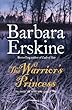
The Warrior’s Princess by Barbara Erskine: Book Review

Recently, I wanted to read something other than crime fiction, but chose The Warrior’s Princess by Barbara Erskine, which just happens to include a couple of rapes, kidnappings and a murder. However, it’s really a time-slip book, switching between the present day and the first century AD in Rome and Britannia, a mix of historical fiction, fantasy and romance.

It starts dramatically as teacher, Jess is raped in her flat. She has only vague memories of her attacker. She then resigns from teaching and flees to her sister’s house in Wales, which is haunted by a young girl. She becomes interested in discovering more about the girl and her sister, Eigon, the daughters of Caratacus, the king of the Catuvellauni tribe who led the British in their fight against the Romans. He was captured and taken as a prisoner to Rome, together wife his wife and daughter. Actually she becomes obsessed to the point of absurdity, regardless of her own safety, so much so that the past and the present merge in her mind. She travels to Rome to continue her research into Eigon’s life.

There was much I enjoyed in this book – the suspense as Jess gradually begins to remember who her attacker was and the danger she finds herself in both in Wales and Rome were initially gripping.  I also liked the historical references, such as the persecutions of the Christians by Nero, and the Roman and Welsh locations. I remember walking around the Roman Forum imagining what it must have been like so I could identify the picture of ancient Rome that Jess is able to construct.

However, I thought it was too drawn out, and would have been better if the plotting had been tighter. I was also sceptical about the way Jess and Eigon “communicated” through Jess’s dreams and trances. It seemed an artificial way of telling the story. The mix of supernatural and historical however, was quite intriguing even though I had to suspend my disbelief a little too much for my liking and there were too many coincidences and contrivances. Although I thought the ending was rushed and kaleidascoped in comparison with the rest of the book, it did hold my attention to the end.