Why We Sleep by Matthew Walker

Penguin Books|4 January 2018|368 p|e-book |Review copy|4*

I have read several books and watched TV programmes on sleeping, but Why We Sleep: the New Science of Sleep and Dreams is one of the most in depth and thorough books on the subject that I’ve come across. It is fascinating and disturbing in equal measures.

It emphasises how important sleep is to our health. Eight hours sleep each night will improve your immune system, help prevent infection, regulate your appetite, lower blood pressure, maintain your heart in fine condition, improve your ability to learn, memorise and make logical decisions.

But be warned if you don’t get eight hours sleep you run the risk of doubling your risk of cancer, of increasing your risk of developing Alzheimer’s disease, diabetes, cardiovascular disease, strokes, and heart attacks, and insufficient sleep contributes to all major psychiatric conditions, including depression, anxiety and suicidal tendencies. It is a terrifying scenario as every major disease in the developed world has very strong causal links to deficient sleep.

Matthew Walker is professor of neuroscience and psychology at the University of California, Berkeley, where he is director of the Center for Human Sleep Science. He goes into great detail examining every aspect of the subject looking at what sleep is, how we sleep, as well as why we should sleep and the external factors that cause poor sleep. There are sections on sleep deprivation, sleeping pills, insomnia and other sleep disorders and on dreams – creativity and dream control. He also considers the sleep requirements of babies, children, teenagers and the elderly.

There are a number of things I highlighted as I read the book, including:

  • sleep is the foundation of good health
  • every major system, tissue and organ of your body suffers if your sleep is short
  • the shorter your sleep, the shorter your life
  • the less you sleep you’re more likely to put on weight
  • sleeping six hours or less increases your risk of developing cancer by 40%
  • routinely sleeping less than six or seven hours a night demolishes your immune system, more than doubling your risk of cancer

He cites the World Health Organization’s and the National Sleep Foundation’s stipulation of an average of eight hours of sleep for adults. So, what can you do to improve your sleep if you don’t get eight hours? I really want to know. Walker refers to behavioural methods for improving sleep, such as cognitive behavioural therapy intended to break bad sleep habits, obvious methods such as reducing caffeine and alcohol intake, removing LED devices from the bedroom and having a cool bedroom. Other things to establish – having a regular bedtime, only going to bed when sleepy, avoid sleeping in the early/mid evenings and daytime napping etc, etc – nothing I haven’t come across before.

Why We Sleep is full of fascinating facts, but at times it is repetitive with lots of detail about sleep experiments that made me worried about the effects on those people who undertook them. Matthew Walker is most certainly on a mission to educate people about the importance of sleep, even if there is nothing new he has to offer about how to improve sleep times.

Saturday Snapshot

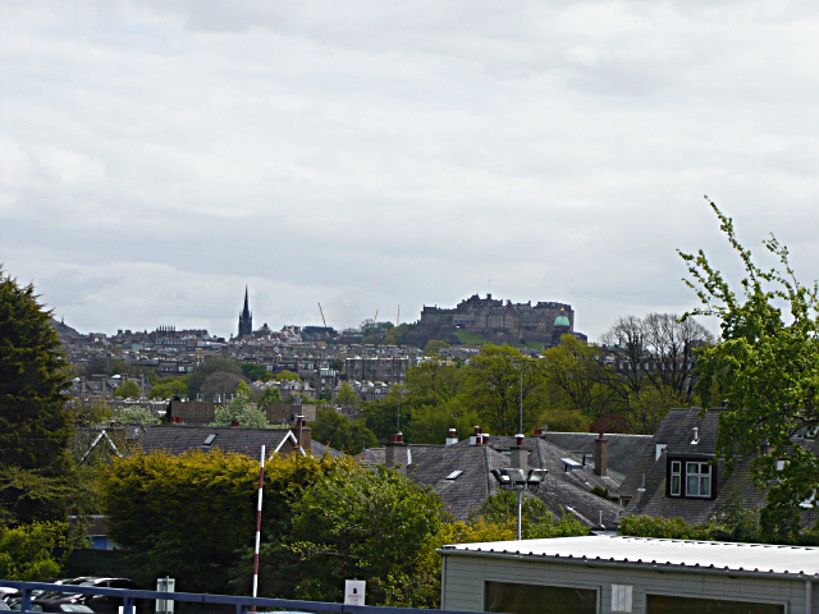
This scene has become very familiar to me over the last four weeks:

Edinburgh Cancer Centre view of Edinburgh skyline2

It’s the Edinburgh skyline I can see from the Edinburgh Western General Hospital. The tall spire towards the left of the photo is the Scott Monument in Princes Street Gardens. Moving to the right of that is the fortress that is Edinburgh Castle and below that the green dome is the copper-clad dome of West Register House, one of the buildings of the National Archive of Scotland, in Charlotte Square.

And this is why – it’s the view from the Edinburgh Cancer Centre, where I’ve been going for the last four weeks. (Last week I wrote about being diagnosed with a breast cancer – see this post.)

Edinburgh Cancer Centre entranceIt’s not as grim inside as it looks outside – it’s quite nice actually. I’ve got two more sessions of radiotherapy next week and then that is the end of my treatment, apart from follow-up appointments and a bone density scan. I’ll be glad to get back to ‘normal’. Maybe then I’ll get back to writing about books – I’ve got quite a pile lined up to review.

See more Saturday Snapshots on Alyce’s blog At Home With Books.

Why I haven’t been writing many book reviews

I’ve not been writing many book posts these last few weeks, I’ve now read four books and not written about them, although I have nearly finished a post about Hilary Mantel’s A Place of Greater Safety.

Here’s the reason.

This is something I’ve been thinking about writing about for a while now, but now seems the right time. Last August I was diagnosed with a breast cancer. I couldn’t feel a lump, but my breast didn’t look right and I thought it might be a cancer. My GP couldn’t feel a lump either but thought it best to check it out at the local hospital’s breast clinic. It was still a shock to have it confirmed- even more so when the consultant said he thought I needed a mastectomy and he could do it very soon. But when they examined the biopsy it turned out that the type of cancer I had was oestrogen receptive and it was possible it would shrink by taking hormone therapy tablets. I was amazed to say the least. Apparently if you have to have a breast cancer, this type is the best one to have!!!

And so, from August to February I faithfully took the tablets, with practically no side effects – and they worked, shrinking the cancer by about a third. Still, I did need an operation, but a wide local excision, or lumpectomy in everyday language, and not a mastectomy. I had the operation at the beginning of March. It was just day surgery and went well. It was a strange experience, having surgery to correct something that wasn’t causing me any pain or discomfort and coming round from the operation with scars and discomfort – and that was all it was discomfort, soreness, massive bruising and swelling.

But all the cancer has been removed, the bruising has disappeared. It’s still tender and I get darting pains every now and then. Currently I’m having 20 sessions of radiotherapy as a precautionary measure. It’s every weekday, but the sessions are only 10 minutes long, with the actual radiation only taking about two/three minutes. There was a planning appointment where they pinpointed the area to target, and I mean pinpoint as I have at least four (I lost count) minute tattoos that outline the area. For someone who hates the idea of having tattoos, this was quite daunting, but they are such small dots I can hardly see them and it didn’t hurt (much) when they did them.

So far, I’ve had 8 treatments and it has all been painless. I’m told that tiredness kicks in after about a fortnight’s treatment and by the end of the sessions my skin may get red and sore, as though I’d got sunburn. I hope that is as bad as it gets. The most difficult thing so far has been the travelling to Edinburgh for the treatment. It takes 1 hour 20 minutes each way, which is tiring enough on its own. D is driving me and we’re listening to Blue Lightning by Ann Cleeves, the fourth in her Shetland series with Detective Jimmy Perez investigating murders on Fair Isle, which is keeping us both guessing who the murderer could be.

I’ve always had a dread of cancer, made more personal when my mother had a mastectomy, when I was in my twenties. She died five years later, after it had spread. My father died of bronchial cancer, after smoking since he was ten years old and four years ago this August my sister died of lung cancer – she’d smoked since she was 15. But, I have to say, that so far it’s not been too bad. I’m a terrible wimp regarding needles and injections and that has been the worst thing for me – the most painful was the injection before the doctor took the ultrasound core biopsies, but it wasn’t much worse than injections I’ve had at the dentist. It’s the fear of the unknown that has been more terrible than the treatment itself.

I am so grateful for the NHS – speedy appointments, kind and caring medical staff, and practically pain free treatment (I won’t mention the nurse who had great difficulty taking blood from me). I’ve had so many tests and scans and thankfully the cancer hadn’t spread anywhere else. Even so, the surgeon took a biopsy of my lymph nodes when he did the lumpectomy just to make sure, which confirmed the cancer hasn’t spread .

I like to know as much as possible about what’s happening to me and I asked the breast care nurse if there was anything I could read about breast cancer. She warned me off reading statistics online as these are often out of date and gave me a pack produced by Breast Cancer Care, which is an excellent introduction. What I have found most helpful are the Macmillan Cancer support publications, particularly Understanding Breast Cancer and Understanding Radiotherapy. Books on cancer are rather more problematic, as so many are out of date, or are aimed at the medical profession. There are some written by patients, but I’m a bit wary about them as symptoms and treatments differ from person to person. Treatment in the future looks promising as I’ve seen on the news about progress that’s being made in diagnosing cancers and less invasive ways of treating them.

This may have slowed me down, writing about the books I’ve read, but it certainly hasn’t slowed down my reading. It has brought home to me just how many books there are and that it really is true – ‘so many books, so little time‘. It’s not just books, of course, because no matter how young or old you are, how well or ill you are, life is unpredictable and we should make the most of it whilst we can.

I am optimistic, because as my breast care nurse said ‘the cancer’s away and the prognosis is good.’