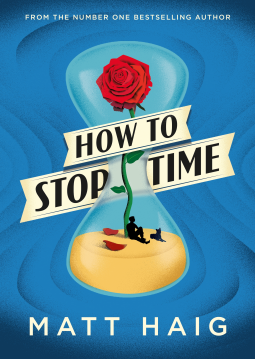
How To Stop Time by Matt Haig

Publication Date: July 6 from Canongate Books Ltd

Source: Review Copy

Blurb:

I am old. That is the first thing to tell you. The thing you are least likely to believe. If you saw me you would probably think I was about forty, but you would be very wrong.’
Tom Hazard has a dangerous secret. He may look like an ordinary 41-year-old, but owing to a rare condition, he’s been alive for centuries. From Elizabethan England to Jazz Age Paris, from New York to the South Seas, Tom has seen a lot, and now craves an ordinary life.

Always changing his identity to stay alive, Tom has the perfect cover – working as a history teacher at a London comprehensive. Here he can teach the kids about wars and witch hunts as if he’d never witnessed them first-hand. He can try and tame the past that is fast catching up with him. The only thing Tom mustn’t do is fall in love.

How to Stop Time is a wild and bittersweet story about losing and finding yourself, about the certainty of change and about the lifetimes it can take to really learn how to live.

My thoughts:

How To Stop Time caught my imagination right from the start and I read it quite quickly, enjoying the trips through time. Tom’s condition is called ‘anageria’, in which, whilst he is actually ageing very slowly, he doesn’t appear to be getting any older. It’s the opposite of ‘progeria’ that causes a child’s body to age very quickly. It causes him problems, particularly in his youth in the late 16th century (he was born in 1581) when people suspected his mother of witchcraft. In more modern times the danger comes from scientists (the ‘new witch finders’) and their experiments to discover the nature and causes of anageria.

Tom tells his life story in flashbacks, switching back and forth in time between the present day and the past. His life is by no means uneventful, meeting amongst others Shakespeare, Richard Burbage, Captain Cook, and Scott and Zelda Fitzgerald. As a young man in Elizabethan England he fell in love with Rose and they had a daughter, Marion, who has the same genetic anomaly. He left his family to keep them safe and lost touch with Marion.  It’s a fascinating book that succeeded in bringing the past to life and transporting me back in time.

How To Stop Time is not just a trip through time because overarching Tom’s story is that of the Albatross Society, whose members have the same condition as Tom, headed by the rather frightening figure of Hendrich. The conditions of belonging to the Society are that every eight years members have to carry out assignments and in return Hendrich helps them to change the identity and thus keeps them safe over the centuries. Tom, who by now just wants to live as normal a life as possible, has become reluctant to carry out the assignments but he carries on as Hendrich says he is close to finding Tom’s daughter, Marion.

It examines the nature of time, the fact that life is continuous and ever-changing, but emphasising that in reality you can only live in the present. Without being in any way moralistic, it demonstrates that life should be lived to the full each day.

My thanks to NetGalley and Canongate Books, the publishers for an uncorrected proof copy for review.

  • Format: Kindle Edition
  • File Size: 1711 KB
  • Print Length: 336 pages
  • Publisher: Canongate Books; Main edition (6 July 2017)
  • My Rating: 4*

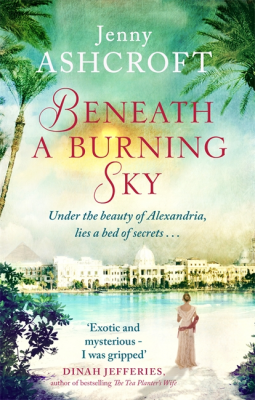
Beneath a Burning Sky by Jenny Ashcroft

Publication Date: June 29th from Sphere

Source: Review Copy

When twenty-two-year-old Olivia is coerced into marriage by the cruel Alistair Sheldon she leaves England for Egypt, his home and the land of her own childhood. Reluctant as she is to go with Alistair, it’s in her new home that she finds happiness in surprising places: she is reunited with her long-estranged sister, Clara, and falls ‘“ impossibly and illicitly ‘“ in love with her husband’s boarder, Captain Edward Bertram.

Then Clara is abducted from one of the busiest streets in the city. Olivia is told it’s thieves after ransom money, but she’s convinced there’s more to it. As she sets out to discover what’s happened to the sister she’s only just begun to know, she falls deeper into the shadowy underworld of Alexandria, putting her own life, and her chance at a future with Edward, the only man she’s ever loved, at risk. Because, determined as Olivia is to find Clara, there are others who will stop at nothing to conceal what’s become of her . . .

Beneath a Burning Sky is a novel of secrets, betrayal and, above all else, love. Set against the heat and intrigue of colonial Alexandria, this beautiful and heart-wrenching story will take your breath away.

My Thoughts:

I have mixed feelings about Beneath a Burning Sky by Jenny Ashcroft. I liked the historical setting – Alexandria at the end of the 19th century when Egypt was under British rule. It is a complex book but it is not so much historical fiction but more of a romantic story. Overall I enjoyed it but thought the book was melodramatic and I was hoping for more historical content.

There is a large cast of characters and although the main character, Olivia is convincingly described, many of the other characters are rather flat stereotypes – Alistair the sadistic older husband, Millicent, the wicked grandmother, and Edward, the ‘good’ character, the handsome, romantic lover.

From the start of the novel there is a lot that is not explained and the action moves swiftly from location to location, switching between different sets of characters. Olivia, trapped in an appalling marriage, is reunited with her older sister Clara from whom she was separated at a very young age after the death of their parents. She has no memories of her parents or her early life in Egypt, but throughout the book has tantalising flashbacks. I would have liked to have discovered what had happened to her parents, but this was only hinted at. I also wondered why Millicent, the wicked grandmother, had hated Olivia’s mother so much. And I was not convinced about the plausibility of Olivia’s forced marriage to Alistair.

But this is not the main mystery – that concerns Clara, because shortly after Olivia arrives, Clara disappears. The police investigation is completely useless, mainly because the chief of police is corrupt. What follows is Olivia’s frantic search for Clara with multiple twists as various secrets and passions begin to surface.

An added complication is the story of Nailah, an Egyptian woman, and her family. This shows the contrast between the ruling British class and the local people and the conditions they experienced and I think Jenny Ashcroft’s portrayal is the best part of her book. But I floundered to understand Nailah’s role in the novel and it was only towards the end that that became clear.

It is easy reading, and I was keen to know what had happened to Clara and why she disappeared. But for me it was too long with too many episodes that I sometimes found confusing. However, other people enjoyed it more than I did -there are plenty of 5 and 4 star reviews both on Amazon and Goodreads.

With thanks to NetGalley and Sphere, the publisher for a review copy.

  • Paperback: 432 pages
  • Publisher: Sphere (29 Jun. 2017)
  • Language: English
  • ISBN-10: 0751565032
  • ISBN-13: 978-0751565034
  • My Rating: 3˜…

This is the second book for my 10 Books of Summer Challenge.

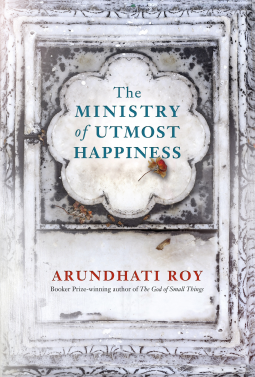
The Ministry of Utmost Happiness by Arundhati Roy

I wanted to read Arundhati Roy’s second novel, The Ministry of Utmost Happiness because I’d loved her first novel, The God of Small Things when it won the Booker Prize in 1997.

Blurb:

The Ministry of Utmost Happiness takes us on an intimate journey across the Indian subcontinent from the cramped neighbourhoods of Old Delhi and the glittering malls of the burgeoning new metropolis to the snowy mountains and valleys of Kashmir, where war is peace and peace is war, and from time to time ‘normalcy’ is declared. Anjum unrolls a threadbare Persian carpet in a city graveyard that she calls home.

We encounter the incorrigible Saddam Hussain, the unforgettable Tilo and the three men who loved her – including Musa whose fate as tightly entwined with hers as their arms always used to be. Tilo’s landlord, another former suitor, is now an Intelligence officer posted to Kabul. And then there are the two Miss Jebeens: the first born in Srinagar and buried, aged four, in its overcrowded Martyrs’ Graveyard; the second found at midnight, in a crib of litter, on the concrete pavement of New Delhi.

At once an aching love story and a decisive remonstration, a heart-breaker and a mind-bender, The Ministry of Utmost Happiness is told in a whisper, in a shout, through tears and sometimes with a laugh. Its heroes are people who have been broken by the world they live in and then rescued, patched together by acts of love-and by hope. For this reason, fragile though they may be, they never surrender. Braiding richly complex lives together, this ravishing and deeply humane novel reinvents what a novel can do and can be. And it demonstrates on every page the miracle of Arundhati Roy’s storytelling gifts.

My thoughts:

My initial reaction to it was one of disappointment. After a good beginning I struggled with it because there is so much description, so little plot and such a large cast of characters. At times I was on the verge of abandoning the book, but then first one episode and then another and another held my imagination and I read on. Now, though, I’m glad I finished it as the ending is clearer and more understandable than the middle, where quite frankly I was for the most part bewildered.

It’s a difficult book to read firstly because of its structure (or lack of structure) and secondly because of its content. It’s not a straight narrative, as it moves backwards and forwards in time and place and between different narrators, both in the third and first person, all of which makes it a disjointed and fragmentary book. There are stories within stories, some of which at first appear to be totally unconnected to anything else, but looking back I can see how they become interwoven into the whole (I think).

I preferred the beginning, the story about Anjum, to the rest of the book but by the end it’s as though Roy decided to bring all the strands together, to come back full circle to Anjum and the community she established in the old graveyard in Delhi. Maybe it’s because she spent 10 years or so to write it. For more details about why it took over 20 years for Arundhati Roy to write her second novel see this article, Fiction Takes Its Time in The Guardian.

I’m sure that I didn’t pick up all the political and cultural references, but the issues surrounding caste, nationalism, gender and religious conflict are clear. It’s a book about love and loss, death and survival, grief, pain and poverty. There are outcasts, the hijras – transgender individuals, rape victims, addicts and abandoned babies; and there is a lot of violence, massacres, beatings, tortures and rapes. It’s a heartbreaking book, which doesn’t spare the details. I was relieved to finish it.

Thanks to the publisher for an ARC via NetGalley.

  • Format: Kindle Edition
  • File Size: 2822 KB
  • Print Length: 417 pages
  • Publisher: Penguin; 01 edition (6 Jun. 2017)
  • My rating: 2.5

The Ministry of Utmost Happiness is the first book for my 10 Books of Summer Challenge.

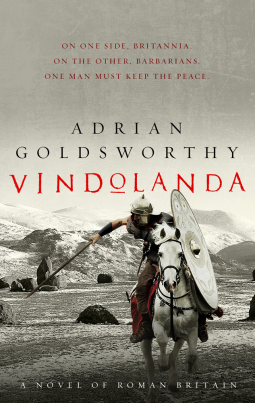
Vindolanda by Adrian Goldsworthy

AD 98: The bustling army base at Vindolanda lies on the northern frontier of Britannia and the entire Roman world. In twenty years’ time, the Emperor Hadrian will build his famous wall, but for now defences are weak, as tribes rebel against Roman rule, and local druids preach the fiery destruction of the invaders.

Flavius Ferox is a Briton and a Roman centurion, given the task of keeping the peace on this wild frontier. But it will take more than just courage to survive life in Roman Britain…

I was quickly drawn into Vindolanda by Adrian Goldsworthy, a novel set in northern frontier of Britain in 98 AD. It’s full of historical detail. Whilst some characters are based on real people about whom little is known apart from their names, most of the characters are fictional, including the main character, centurion Flavius Ferox.  He is based at a small fort called Syracuse (a fictional fort) near the garrison of Vindolanda (modern Chesterholm). Vindolanda is south of Hadrian’s Wall and predates its construction.

The story begins with the arrival of Vindex, the head of the native scouts and a minor son of a chieftain of the Brigantes tribe, who announces that there is a force of at least sixty barbarians in the area planning an attack on the road to Coria (modern day Corbridge). He needs Ferox’s help in hunting these marauders. This is just the start of a series of skirmishes, ambushes and full scale battles. There is at least one traitor in the Roman army informing the tribes of the army’s movements and Ferox is charged with finding out who it is.

I enjoyed reading Vindolanda and the insight it gives into the early period of British history. Adrian Goldsworthy’s Historical Note at the end of the book is excellent, explaining just what is fictional and what is fact in his novel. After Boudicca’s defeat in AD 60 there was little resistance to the Romans in southern Britain, but it was different in northern Britain where there were frequent outbursts of violence, raids and warfare.

There are sections in the Historical Note about the Roman army describing its structure and tactics, on the period before the construction of Hadrian’s Wall, on tribes and druids. The most interesting section for me is the one on Vindolanda and the Writing Tablets found there. These are wooden tablets written in ink on thin sheets of wood. Hundreds of them have survived, most are mundane containing details of daily life, letters, accounts and give an idea about the food they ate and of the social life of the commanders and their families. Among them are details about the commanding officer around AD 98, the Prefect Flavius Cerialis and his wife, Sulpicia Lepidina, both of whom are major characters in the novel.

Vindolanda is a most enjoyable and informative book. I have just one criticism of it, which is purely personal because my eyes always glaze over during battle scenes (both in books and on screen) and in this book there is just too much detail about the battles for me interrupting the storyline, even though the scenes are graphic and fast-paced.

My thanks for the advance review copy I received courtesy of NetGalley and the publishers, Head of Zeus.

  • Hardcover
  • Expected publication: June 1st 2017 by Head of Zeus
  • ISBN13 9781784974688
  • Source: Review copy
  • My rating: 4*

The Author 

Adrian Goldsworthy has a doctorate from Oxford University. His first book, THE ROMAN ARMY AT WAR was recognised by John Keegan as an exceptionally impressive work, original in treatment and impressive in style. He has gone on to write several other books, including THE FALL OF THE WEST, CAESAR, IN THE NAME OF ROME, CANNAE and ROMAN WARFARE, which have sold more than a quarter of a million copies and been translated into more than a dozen languages. A full-time author, he regularly contributes to TV documentaries on Roman themes.

For more information see his website.

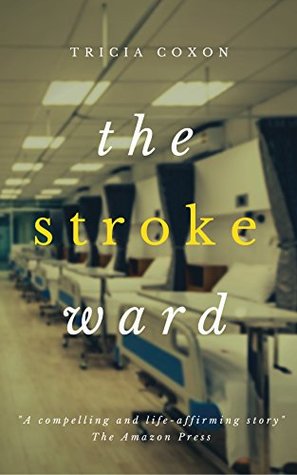
The Stroke Ward by Tricia Coxon

‘Life is fragile on the stroke ward’

The Stroke Ward: A portrait of a century of life in the north east of England, told through the lives of six very different women

The Stroke Ward: A portrait of a century of life in the north east of England, told through the lives of six very different women by Tricia Coxon is a beautiful book. First of all I have to say that I know the author. However, she did not ask me to read her book and I bought my copy. I am absolutely delighted to say that I enjoyed it immensely. It is fiction, inspired by Tricia’s three week sojourn in a stoke ward in Northumberland when she began to imagine the lives and history of the women on the ward, their past and what the future would hold for them.

I was quickly drawn into the story exploring the lives of the six stroke patients and the nurses who cared for them.  Tricia Coxon writes beautifully, vividly conveying the trauma and catastrophic effects of a sudden stroke, the confusion and loss of dignity and independence.  It is a moving story as each woman remembers the past, seeing themselves at various stages in their lives:

When night falls and the lights are dimmed, the stroke ward is full of memories. Shadowy, misty and delicate, they fill space like a spider’s web quivering on a frosty bush. (Loc 53)

All the women have different memories and are distinct characters. I felt I knew these women, that I was there in the ward with them, that I was inside their minds, living their memories with them. Meg is the one I was most drawn to. She can remember the past with vivid accuracy. When she was a small girl Meg’s father went on the Jarrow March to 10 Downing Street in London in 1936 to present a petition against the mass unemployment and extreme poverty in the north-east of England. When he returned Meg and the family were thrilled when Ellen Wilkinson came to tea – a special tea party. She was the local MP who had accompanied them on the March and had tried to improve their working and living conditions. But she is now confused about what has happened to her, hardly able to move, and suffering from anxiety and increasing dementia she needs specialist care. I was in tears as I read her story.

I loved the stories of these women’s lives and how Tricia has woven into them events such as the Jarrow March, the Spanish Civil War and a touching incident in Virginia Woolf’s life when she stayed at an Inn in Wooler whilst recovering from a nervous breakdown.  I also loved the warmth, the depth of compassion and dedication she portrays in the nurses’ care for their patients.

The Stroke Ward is a gem of a book that explores the nature of love and loss, friendship and family, and life and death. I loved it.

  • Kindle Edition, 186 pages
  • Published April 3rd 2017 by Tyne Bridge Publishing
  • Source: I bought my copy
  • My Rating: 5*

Amazon UK link

Amazon US link

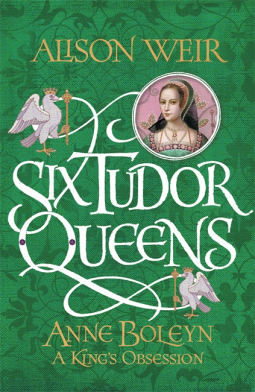
Six Tudor Queens: Anne Boleyn: A King’s Obsession by Alison Weir

Anne Boleyn: A King’s Obsession is Alison Weir’s second book in her series of novels about Henry VIII’s Queens and is due to be published on 18 May 2017.

Just like her first book on Katherine of Aragon this is fictional biography at its most straight forward, written in an uncomplicated style. It is a long and detailed story told from Anne Boleyn’s point of view following her life from when she was eleven up to her execution in 1536.

Mainly I think because I didn’t know much about it before I really enjoyed the first part of the book detailing Anne’s time at the court of the Archduchess Margaret, Regent of the Netherlands, then at the French court where she served Mary Tudor (Henry VIII’s sister) and then she was transferred to the household of Queen Claude, the wife of François I. Anne became proficient in French, and accomplished in the art of pleasing, and witty, flirtatious conversation.

She also learnt from the Archduchess how a woman could rule, and about the ‘New Learning’, that is the texts of ancient Greece and Rome that had been recently discovered. She learnt from Erasmus about the corruption within the Church and she had access to the Archduchess’ library, where she found books written by Christine de Pizan, who had enlightened views on women’s education. The Archduchess encouraged her to show that women were just as capable as men, so that men would admire women for their courage, character and intellect and not just their beauty.

I’m much more familiar with the rest of her life story. As Alison Weir acknowledges in her author’s note in some ways Anne Boleyn is unknowable, we do not have ‘a wealth of her letters’ to get an insight into her inner thoughts and much of the material we do have comes from a hostile source, the Imperial ambassador, Eustache Chapuys. In writing this novel she has tried to reconcile conflicting views of her and I think she has succeeded, portraying her as a flawed and human character. Anne was ambitious and in her early years she had the example of the Archduchess Margaret who  introduced her to ideas questioning the traditional ideas about women.

Alison Weir has kept closely to the historical record, although taking ‘occasional minor liberties’ and ‘modernising the language in places to make the context clearer. Some quotes have been taken out of context or put in the mouths of others’. And the scenes between Anne and Leonardo da Vinci are imaginary (much to my disappointment).

Perhaps it is because she kept closely to the records that the period when Henry was pursuing Anne is described at great length, whilst attempting to end his marriage to Katherine. I found it increasingly tedious to keep reading about how Anne left the court and went to Hever Castle, her parents’ home, then returned to court and then went back to her parents, etc, etc.

Overall, I enjoyed this book, but it is too long and in places very pedestrian and flat. At times it is a bit like reading chick-lit, for example as Mary Boleyn describes how Henry raped her and later as Henry complains to Anne that he has not ‘bedded with a woman in years’, looking at her with ‘anguish and longing in his eyes.’ He comes across as a weak character, truly obsessed with Anne but his passion soon cooled after their marriage when she failed to produce a male heir. And Anne is portrayed as a complex, intelligent woman but obsessed with her ambition for the power that came with being queen.

  • Format: Kindle Edition
  • File Size: 2923 KB
  • Print Length: 544 pages
  • Publisher: Headline Review (18 May 2017)
  • My rating: 3.5*

My thanks to the publishers via NetGalley for a review copy.