 This week I’ve been reading just two books. Often I read more than this but I’ve decided for the time being to stick to one or two at a time. It’s been easy this week as one of the books is compelling reading – Black and Blue by Ian Rankin.
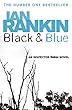 It’s a real page-turner and very complicated. I’m reading it quickly because I want to know what happens next and to see how Rebus gets himself of the terrible mess he is in – suspected by his superiors of being a killer(!) and of corruption back in his early days as a detective, along with Lawson Geddes, his boss at the time. He’s being investigated by a TV company and also by the police themselves in an internal enquiry and all the time he’s spiralling downhill under alcohol and cigarettes. I’m thinking that when I get to the end I may go back to the beginning and read it again more slowly to appreciate the detail.
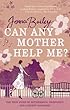 This contrasts so well with the other book I’m reading – Can Any Mother Help Me? by Jenna Bailey. I’m reading this one slowly, one or two chapters at a time, because it is quite intense. It’s comprised of letters between a group of women writing from the 1930s to the 1980s about their “ordinary” lives, but it’s by no means mundane or ordinary at all. It’s social history, as told by the people who lived their lives through the Second World War and into the late 20th century. It’s a bit like eavesdropping on private conversations, reading these personal letters between woman who became friends through their Correspondence Club.
Both books are ones I’ve owned for a while and so are books off my TBR mountain. I have bought one new book this year, but as it’s a craft book it’s not adding to the pile to read, but adding to the pile of cross-stitch projects I want to do! The book is The Portable Crafter: Cross-Stitch by Liz Turner Diehl, a beautiful book full of designs for small(ish) items that you can work on anywhere.
 One that caught my eye is a corner bookmark. But it looks quite tricky with Kloster blocks – you have to cut out the centres and it might be a bit bulky for a bookmark
 There’s a design for a little Persian rug, finished size 3½” x 5″ I’d like to make.
But the one that I’d like to start first is a Garden Clock, the only thing is I don’t know where I can get a wooden clock in which to insert the design.


 BooksPlease