Last Sunday I wrote that I was going to concentrate on reading just two books at a time concentrating on reading one non-fiction and one fiction. I sort of stuck to my plan and am still reading Karen Armstrong’s The Case for God. I finished Among the Mad by Jacqueline Winspear (more about that in a later post) and my plan after that was to go back to reading one of the books shown on the sidebar – Wolf Hall or The Children’s Book.
But it didn’t work out like that, because I went with D to a hospital appointment and needed a book to read whilst waiting. Both Wolf Hall and The Children’s Book are heavy hardbacks  and wouldn’t fit in my handbag so instead I picked up one of my library books – Faceless Killers by Henning Mankell and started to read that. Reading in a hospital waiting room is an exercise in concentration. First off we had to use the hand spray to prevent catching, spreading the swine flu germs – how that works I don’t understand given that once you’re in you have to touch chairs, doors etc. Then we were told to sit on the green chairs whilst waiting to go to the next waiting area. The green chairs are next to the entrance doors that open automatically each time someone goes near, and it was a wet, windy day. One small boy was fascinated by the doors and kept walking in front of them saying “close” when they opened which meant that they stayed open. This went on for several minutes until his mother came and took him away. I read a few pages whilst being alternately amused and irritated and shivering.
We then were called to the next waiting area – no automatic doors, but a constant stream of doctors and nurses calling out names and ushering people through, people complaining about how long they’d had to wait, the phone ringing and people talking loudly. Still, it is a hospital, not a reading room, no matter how long you have to wait. But Faceless Killers is sufficiently engrossing so that I was hardly aware of what was going on around me.
I finshed it this morning and will now read either Wolf Hall or The Children’s Book. I started both of them a while back and only put them down because they’re so heavy it’s hard to read them in bed (where I like to do my reading). I’ll have to work on strengthening my hands and arms.
I hadn’t heard of Henning Mankell until the BBC broadcast the Wallender series last year with Kenneth Branagh playing Kurt Wallender. I’d been meaning to read one of the books since then. Branagh’s face was inevitably in my mind as I read Faceless Killers, but as it wasn’t one of the books filmed the rest was purely down to my imagination from reading the book. Wallender is yet another detective to join the ranks of Rebus in my mind. He is a senior police officer and, like Morse, listens to opera in his car and in his apartment. He is lonely, morose, overweight and drinks too much. His wife, Mona has left him, he’s estranged from his daughter, Linda and has problems with his father, an artist who has painted the same picture for years and is now senile.
I discovered on the Inspector Wallender website that Faceless Killers is the first in the Kurt Wallender series of books, so for once I’ve begun at the beginning of a series! (Although Wallender first appears in The Pyramid, a collection of short stories). It’s about the brutal murder of the Lovgrens, an old man and his wife in an isolated farmhouse in Skane, the southern most province in Sweden (there’s a helpful map in the book). The old lady’s last word is “foreign”. Does this mean the killers are foreigners? When this is leaked to the press the ugly issue of racial hatred is raised. Are the killers illegal immigrants from the refugee camps, or should the police be looking at the Lovgrens’ family? Why would anyone kill them in such a savage way – they weren’t rich and had no enemies?
This is not just a detective story, apart from racial discrimination and refugees, Wallender reflects on the problems of change in Swedish society, of aging, and of the uncertainty and fragility of life – the incantation he often reflects on is:
A time to live and a time to die.
I hope to find the next Wallender book to read soon: The Dogs of Riga.
Faceless Killers, like other Wallender books, has been adapted into a series on Swedish TV and an English version, again with Kenneth Branagh, is due to be broadcast next year.
 I’ve been taking part in Kerrie’s Agatha Christie Reading Challenge. I’m not reading her books in the order she wrote them, but as I find copies. Sometimes I join a challenge and then lose interest, but I’m really enjoying this one – it’s pure pleasure.
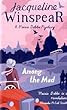
 Although the Great War had ended more than thirteen years years ago it still haunts Maisie and her assistant Billy Beale and this suicide brings all its horrors back to them. This is a dark novel as Maisie is drawn into the investigation by Scotland Yard to discover the identity of the man who is threatening to kill thousands of people unless his demands are met. It highlights the desperate conditions of the war veterans suffering still from shell-shock, unable to work and receiving no pensions. As first dogs and birds and finally a Government junior minister are found dead from some unknown chemical substance the search becomes increasingly more sinister as the mind of the madman is revealed.
 Murder Being Once Done

 BooksPlease