I’ve read a few books recently and not written about them.They’re library books and due back very soon so I thought I’d jot down a few notes about each one.
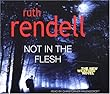 Dave and I listened to this in the car whilst travelling to Northumberland and back. This is an Inspector Wexford mystery – a man taking his dog for a walk discovers a severed hand, which turns out to be part of a skeleton wrapped in a purple sheet. The police have to discover the identity of the victim – and of the body of a second corpse found in a nearby house. Both have been lying undiscovered for at least ten years. I’m not used to listening to books and I did find it a bit difficult to follow. Of course, the sat nav and traffic news kept interrupting which didn’t help, but even so I did get confused. There were too many people and sub-plots. Maybe I should read the book.
It seemed overlong. I thought it would have been improved if it had been shorter and less rambling. It was narrated by Christopher Ravenscroft who plays Mike Burden in the Wexford TV series. He took Wexford’s voice so well I could almost imagine it was George Baker reading that part.
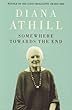 I loved this memoir. Diana Athill comes across as an honest writer, not afraid to say what she thinks, now she is no longer an editor. As the title indicates, she writes about what it is like getting towards the end of her life. At the time of writing she was 89 years old and looking back on her life with few regrets. This is a book I may well buy to re-read at leisure.
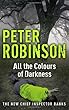 I have mixed feelings about this book, parts of it really interested me, but I could have done without the terrorist attack and involvement of MI5 and MI6. This is only the 2nd Inspector Banks book I’ve read and it’s the 18th in Robinson’s series. I think that doesn’t matter as I had no difficulty in sorting out his relationships and although other cases are referred to this reads OK as a stand-alone book. What I did have difficulty with was believing the spy stuff – one of the victims had been a spook. What I do like is Robinson’s descriptive writing eg:
It was after sunset, but there was a still glow deep in the cloudless western sky, dark orange and indigo. Banks could smell warm grass and manure mingled with something sweet, perhaps flowers that only opened at night. A horse whinied in a distant field. The stone he sat on was still warm and he could see the lights of Helmshore beneath the tree, down at the bottom of the dale, the outline of the sqaure church tower with its odd round turret, dark and heavy against the sky. Low on the western horizon, he could see a planet, which he took to be Venus, and higher up, towards the north, a red dot he guessed was Mars. (page 224)
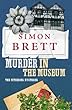 This is the fourth in Simon Brett’s Fethering Mysteries series. It’s set in Bracketts, an Elizabethan house, the former home of Esmond Chadleigh, a celebrated poet during his lifetime. The house is about to be turned into a museum, although not all the Trustees agree. Carole Seddon has been co-opted onto the Board of Trustees and when a skeleton is discovered in the kitchen garden she soon becomes involved in solving the mystery. Then Sheila Cartwright, the bossy domineering former Director of the Trustees is shot, and Carole finds her own life is in danger.
I haven’t read any of the other Fethering mysteries so have yet again jumped into the middle of a series. In this case I think it would have helped to read the earlier ones. Carole and her neighbour Jude obviously have acted as sleuths in the past. I liked this book, once I’d read a few chapters and thought Carole and Jude’s relationship was well described. Carole likes everything cut and dried and out in the open with her friends. She cannot understand and resents Jude’s reticence. I’m going to look out for more of Simon Brett’s books.

 Another author who used to be a great favourite of mine is Ed McBain. I haven’t read anything of his for many years. He was born Salvatore Albert Lombino in 1926 and changed his name to Evan Hunter, writing under the pseudonym Ed McBain from 1956. He died in 2005. He wrote an enormous number of books – from 1958 until his death he wrote one or two books a year as Ed McBain. The first one in his 87th precinct series is
  Then there is Ellery Queen – who was actually two people writing pseudonymously. They were cousins Daniel (David) Nathan, alias Frederic Dannay and Manford (Emanuel) Lepofsky, alias Manfred Bennington Lee. They also used the pen name Barnaby Ross. Ellery Queen was also the chief character of their novels. A list of their books can be found on the
  Umberto Eco wrote one of my favourite books
  I thought I would remind myself of the concept of the Sunday Salon. So I’ve copied this from the Sunday Salon
  yesterday but it didn’t match my mood this morning. I didn’t feel like a sentimental read, so instead I read some more from Karen Armstrong’s book
 And there in those two quotes is the nub of this book. Who is the good guy? As Fox, yet another divorced cop with a drink problem, his father in a care home and his sister, Jude, in an abusive relationship, is drawn into an increasingly complex and puzzling investigation he has to work out just who the bad guys are. He is asked to investigate DS Jamie Breck, a likeable young cop who is allegedly involved in a paedophile site run by an Aussie cop in Melbourne. Then Jude’s partner, Vince is murdered and Breck is the investigating officer. As Fox gets to know him it become increasingly difficult for him to know just who he can trust.
 BooksPlease