Whilst I’ve been busy moving house Kerrie’s A-Z Crime Fiction meme has featured the letters J and K. Now that I have the computer up and working (well D actually did that for me) I’m having a little break from unpacking boxes to add to the series. I’ve written about the following books earlier in this blog and have adapted my reviews for this post.
 J is for A Judgment in Stone by Ruth Rendell.
This portrays Eunice, an illiterate woman and a psychopath who does anything to stop anyone from finding out that she can’t read or write. Her ingenuity and resourcefulness is amazing. She blackmails people and killed her father. I found the whole premise of such a damaged person apparently functioning normally in society scary.


I felt helpless whilst reading this, desperately wanting the Coverdales to realise Eunice’s problems, but they were blind to the fact that Eunice was illiterate and although they tried to prevent her meeting Joan they were unaware of the danger they were in. This inflamed Eunice and pushed her into taking the actions she did.
Although Eunice’s crime is known right from the start, that does not detract from the suspense. It actually makes it worse – you know that the murder is going to happen and as the reasons why it happens become clear, the tension builds relentlessly.
 is for King of the Streets by John Baker.
I read this over two years ago. It depicts violent murder in graphic detail, which I found hard to stomach and the subject matter of the abuse and murder of children is neither easy nor pleasant to contemplate, but it’s a quick read.  This was the third book I’d read by Baker, all set in York and featuring the private detective, Sam Turner and his assistant Geordie (naive, but street-wise). Sam is investigating the murder of a blackmailer and the death of a teenage runaway, hampered by a gangster and his “minders”.
It’s well written, giving insight into the minds of both the detective and the criminal characters. I particularly liked the nickname ‘Gog’ for one of the ‘minders’, who trashes Sam’s office. Gog is, as the name suggests, a huge giant of a man, with little reasoning power, but plenty of brawn, looked after (not very successfully) by his brother, Ben. Baker also refers to Gulliver’s Travels in describing Gog as ‘Brobdingnagian’. At times I even felt sorry for Gog.
I enjoyed this book immensely, despite the violence it portrays.
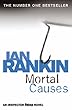 About the book (from the back cover): It is August in Edinburgh and the Festival is in full swing… A brutally tortured body is discovered in one of the city’s ancient subterranean streets and marks on the corpse cause Rebus to suspect the involvement of sectarian activists. The prospect of a terrorist atrocity in a city heaving with tourists is almost unthinkable. When the victim turns out to be the son of a notorious gangster, Rebus realises he is sitting atop a volcano of mayhem – and it’s just about to erupt.

 begins very enigmatically referring to characters and events when I have no idea who or what they are and there are quite a lot of short sentences without verbs – my English teacher wouldn’t have let me get away with that. And yet it works, it builds up suspense and tension. The cover is different from the one I’ve shown here, but I can’t find the same one on line, so this will have to do.
 I particularly liked the way Montalbano’s thoughts are revealed and his relationship with his bosses. He’s another detective who works well on his own and with his own team independently of his superiors. He loves food and there are various desciptions of the meals he savours with great relish. He is also a bit of a philosopher – sitting in an old olive tree whilst musing on life and his work:
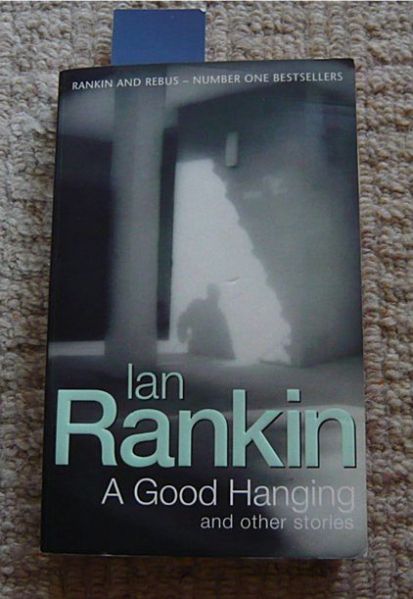 First published in 1992 it’s one of the earlier Rebus books. The first story in this book is called ‘Playback‘. It’s a bit dated now with Rebus impressed by being able to phone your home phone ‘from the car-phone’ to get ‘the answering machine to play back any messages.’ As the title indicates, solving the crime in this story hinges on phone messages. The police receive a phone call from the murderer confessing his crime. He panics and tries to flee, only to be caught as the police arrive on the scene of the crime. He then insists on his innocence. Rebus disentangles the puzzle even though this seems to be ‘the perfect murder’.
 BooksPlease