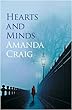
Hearts and Minds by Amanda Craig: Book Review

I like novels that have an underlying  theme or themes that gradually impinge upon my mind as I read; themes that become clear often only after I’ve finished reading. There is no doubt about the theme of  Hearts and Minds by Amanda Craig. Although it begins with a murder its main focus is a passionate denunciation of the treatment of illegal immigrants, thinly disguised as a novel. The characters are mouthpieces for the condemnation of social injustice.

It is page after page of unrelenting misery. Poverty and prejudice, squalor and suffering, prostitution, racism, illegal immigrants, and life in desperate circumstances. There is no relief from the images of brutality, fear, hatred, misery, and helplessness and evil, danger, deceit and terror abound.

In the midst of all this is Polly, a single mum and a lawyer working on behalf of illegal immigrants, employing them as au-pairs, cleaners and taxi-drivers. Whatever she does she feel guilty, exhausted, oppressed and in a mess. It rubbed off on me as I read this book, long-listed for the Orange Prize for Fiction.

It begins with the murder of a young woman, whose body is dumped in a pond on Hampstead Heath, then meanders through a whole host of characters (some one-dimensional) before the relationships (in some cases it seems forced) between them become clear. The main characters, apart from Polly, are all immigrants living in London, Job an illegal taxi driver from Zimbabwe, Ian, an idealistic supply teacher, from South Africa, Katie from New York  working for a political magazine, and Anna, a teenager from the Ukraine, trafficked into sexual slavery.

It is heart-rending, but totally depressing reading. I could only read it in short bursts. It’s depiction of life in London today is harsh, and criticises the British who aren’t willing to do the work carried out by immigrants and complain that life in Britain is no longer the same with jobs are being taken from them. It asserts that it is only the immigrants who do work such as nursing and taxi-driving, teaching and cleaning. Reading this book should deter anyone from wanting to live here, particularly in London. Everything comes in for criticism from the NHS to the state school system. There are not only illegal immigrants but also asylum seekers, trafficked under-age prostitutes, suicidal Moslems, mindless journalists and the idle rich.

I can see that this is a worthy book, a serious book and yet I found I just couldn’t warm to it. I’m waiting with interest to see if it makes the Orange Prize shortlist, to be announced on 20 April.

Wondrous Words Wednesday – King Arthur’s Bones

Wondrous Words Wednesday, run by Kathy (Bermudaonion),  is a weekly meme where we share new (to us) words that we’ve encountered in our reading.


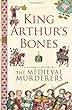
This week I have a few words from King Arthur’s Bones by The Medieval Murderers, which I’m currently reading.

  • Calvarium – ‘Gingerly pulling that aside, they gazed down on a jumbled heap of mottled brown bones, some of which even their inexpert eyes recognised as human, especially as they glimpsed the rounded calvarium of a skull.’ (page 150)

I realised from the context what a calvarium is but didn’t know before that it is the upper domelike part of the skull without the jawbone or facial parts. From the Latin.

The next words all have a medieval origin as is to be expected in a book about medieval murder. No doubt I’ll come across more before I’ve finished this book. The meanings can all be surmised from the text but the dictionary definitions flesh out the words.

  • Cote-hardie – ‘A grey-haired man, dressed in a sombre but good-quality cote-hardie,  nodded his agreement.’ (page 157)

Obviously a garment of some sort – the dictionary defines it as a medieval close-fitting tight-sleeved body garment – from Old French.

  • Lymer – ‘ Before he got fifty paces, a dozen hounds broke cover, including several lymers and running dogs,  which hunted by scent rather than sight.’ (page 162)

Another word defined in the text, more specifically a lymer was  a forerunner of today’s bloodhound, used to find the lay of the game before the hunt even started, and it was therefore important that, in addition to a good nose, it remained quiet. Silence in the lymer was achieved through a combination of breeding and training. See this article on Medieval Hunting.

  • Mazer – ‘Peter lifted his eyebrows and gazed pensively at the jug as his bottler poured two mazers of wine.’ (page 201)

A mazer is a type of drinking bowl made originally of maple wood (Old French masere, of Germanic origin).

  • Murdrum – ‘ ” No need to worry about proving he was local, then. Just a murdrum fine and the usual amercements”, Sir Richard grunted.’ (page 210)

Again from the text I could understand that murdrum is a fine. Specifically as defined in the Norman Conquest Encyclopedia murdrum “derives from the Old French murdre from which the English word murder comes. The new law provided that if a Norman was killed and the killer was not apprehended within five days, the hundred within which the crime was committed should be liable for a collective penalty of whatever balance of the sum of forty-six marks of silver the lord of the hundred could not pay. The killing of a Saxon triggered no such penalty.”

  • Deodand – ‘I will say the weapon was worth at least a shilling, and that much is deodand.’ (page 219)

My Chambers Dictionary defines deodand as ‘ a personal chattel [property] which had been the immediate accidental cause of the death of a human being, forfeited to the crown for pious uses. (Latin deo to God, and dandum, that must be given from dare, to give).’

The online Free Dictionary gives additional information that it traces back to the 11th century and has been applied, on and off, until Parliament finally abolished it in 1846. In theory, deodands were forfeit to the crown, which was supposed to sell the chattel and then apply the profits to some pious use. In reality, the juries who decided that a particular animal or object was a deodand also appraised its value and the owners were expected to pay a fine equal to the value of the deodand. If the owner could not pay the deodand, his township was held responsible.

Teaser Tuesdays

Teaser Tuesdays is a weekly bookish meme, hosted by MizB of Should Be Reading.

Share a couple or more sentences from the book you’re currently reading. You also need to share the title of the book that you’re getting your ‘teaser’ from €¦ that way people can have some great book recommendations if they like the teaser you’ve given!

My teaser is from King Arthur’s Bones by The Medieval Murderers:

Each of the individuals who stared at these remains in the abbot’s parlour was lost for a time in his imagination, seeing a great and final battle in which a warrior-king had been fatally struck down. They put out their hands – even Michael and the other labourers – to touch the scullcap, the jaw-bone, the mighty shin-bone, the fragments of ribcage, as if some trace of Arthur’s spirit might be transmitted to their own blood and sinew. (page 22) 

This is a book of shortish interlinked stories tracing the whereabouts of King Arthur’s skeletal remains. It begins in 1191, when monks at Glastonbury Abbey discover an ancient cross and lying beneath in a hollowed out tree trunk are bones in the form of a body.

 Are these really King Arthur’s bones? As soon as the bones are found they are carried away by the ‘Guardians’ whose heritage is to protect them until the legend is fulfilled and Arthur returns to save his country. The story moves forward through the centuries and treachery, theft, blackmail  and murder follow the bones.

Crime Fiction Alphabet: Z is for Pariah by Dave Zeltserman

I’ve really enjoyed taking part in Kerrie’s Crime Fiction Alphabet – many thanks Kerrie! For the last letter I’ve chosen Pariah by Dave Zeltserman.

I toyed with the idea of writing about Carlos Ruiz Zafon, but it’s been a long time since I read The Shadow of the Wind, so my memory is a bit rusty about the details and I haven’t started his latest book The Angel’s Game.

I don’t think the only other book I have by a ‘Z’  author, Gem Squash Tokoloshe by Rachel Zadok, qualifies as crime fiction and I don’t have any books with titles beginning with Z. So it was off to the library to see what they had – not a lot! But Pariah by Dave Zeltserman was sitting on the shelf and I borrowed it although the quote on the front cover made me doubt whether any book could live up to such praise:

‘The perfect pitch of reality, history, crime, celebrity, plagiarism, and sheer astounding writing.’ Ken Bruen

Now I’ve read it, in my opinion it doesn’t. I’ve recently joined the Cozy Mystery Challenge and this book just doesn’t qualify for that category – it has everything a ‘cozy’ mystery doesn’t.

As I began it I thought I wasn’t going to like this at all – too much swearing, too much gratuitous violence, too much blood and gore, just too much ‘reality’ (but not reality as I know it). So I put the book down and began another one. But somehow I found myself thinking about Pariah and wondering how it would turn out and I just had to go back and finish it.

It’s a study in evil. The narrator is Kyle Nevin, a killer without a conscience, just released from an eight-year prison sentence, determined to get revenge on Red Mahoney, South Boston’s head mobster, who had set him up with the FBI. But he needs money to track down Red and carry out his plan. He stops at nothing to get what he wants, killing, maiming, robbery, drugs, drink, sex, etc, etc – until it all goes wrong that is.

All though I wanted things to go wrong for him the irony is that it’s through writing a novel that it finally happens. He’s approached by a publisher to fictionalise his crimes:

I want this to be a tough, hard-hitting crime novel, something where there are no winners, only losers, and with the authenticity that you are more than capable of providing. (page 222)

I really enjoyed this part of the book. Dropped in between some of the chapters are Kyle’s notes to the editor, so I knew all along that this was a book he was writing, but it is onlyin the last few chapters that this comes to the fore. Part of the pleasure for me was the contrast between creative fiction writing – there is a character who has an MFA in creative writing who Kyle pays to write the book for him, until the publisher rejects his submission, telling him that it’s unacceptable because it ‘screamed MFA’ (Master of Fine Arts). He wanted writing with ‘raw energy’.

And I loved it when it came to the ‘celebrity’ interiews, the plagiarism charge and the reaction of book reviewers and book bloggers.

The papers had a field day with me, but the bloggers were the worst. Jesus they were unmerciful. During those four days I couldn’t sleep and spent my time reading all that shit written about me on those blogs. (page 267)

This is a tough tale, a dark thriller, written with confidence and fluency. Kyle is an anti-hero, a real pariah and I disliked him intensely. I may not have liked the characters, the language or the content of this story but it certainly has great impact and has lingered in my mind for days.

Sunday Salon

Not much reading here today as D and I are off out with the family this afternoon.

This morning I’ll be reading more from Griff Rhys Jones’s memoir Semi-Detached, which is coming on nicely. I’m now up to the part where Griff is in his final year at school. I loved his description of cricket that I read yesterday.

I hate and abhor cricket. I loathe cricket. I abominate cricket. There is only one thing more boring than the abysmal English habit of watching a game of cricket and that is an afternoon playing the wretched game. It is sport for the indolently paralysed. Only three people out of twenty two are engaged in any proper activity. The rest simply sit and wait their turn.

The excruciating tedium of ‘fielding’ – standing about, like a man in a queue with nothing to read, in case a sequence of repetitive events, ponderously unfolding in front of you, should suddenly require your direct intervention … (page 179)

Football is a game. Tiddly-winks is a game. A sack race involves energy and fun. Cricket is like a cucumber sandwich: indulged in for reasons of tradition, despite being totally eclipsed by every other alternative on offer. (page 181)

I can well imagine that fielding would be much more pleasurable if one could read at the same time. One of my fond memories of childhood is going with my parents to watch cricket, but then I did used to lie in the grass making daisy chains.

I’d like to finish reading Hearts and Minds by Amanda Craig this evening, if I have time before I fall asleep. I have very mixed ideas about it right now, varying from liking it to wishing I’d never bothered to pick it up. It’s a tough read – from a subject point of view, that is. This is by no means a ‘comfy’ read, more of a rollercoaster to batter and bruise. But I must finish it before writing about it properly.

Coming up next week I’m looking forward to reading one of these books:

At the moment it’s King Arthur’s Bones that is calling out to me. It’s five interlinked mysteries from Michael Jecks, Susanna Gregory, Bernard Knight, Ian Morson and Philip Gooden.

Cozy Mysteries

When I saw the Cozy Mystery Challenge I wondered just would could possibly be ‘”cozy” about murder, after all “cosy” (as I prefer to spell it) means snug, warm and comfortable – a teacosy is meant to keep the teapot warm, a cosy cottage is small and welcoming. “Cozy” is not really the right word then for crime fiction.

Nevertheless there is a category of crime fiction with that label and I rather like reading them every now and then, along with police procedurals and historical crime fiction. As I found on the Cozy Mystery website cozy mysteries are those without  rough language, sex scenes, or gruesome details about the killing, and where the main character is normally an amateur detective. I like the puzzle-solving elements of that type of crime fiction rather than the noir realism of murder.

Sometimes I like to use reading challenges  to find new authors to read, but for this one I’m aiming to stick to books I already own and have been saving to read (in other words my to-be-read piles). The following are all on my shelves:

  1. Faithful Unto Death by Caroline Graham (Midsomer Murders)
  2. Asimov’s Mysteries
  3. My Cousin Rachel by Daphne Du Maurier
  4. An Agatha Christie – I have a few to choose from
  5. One Good Turn by Kate Atkinson
  6. The Private Patient by P D James
  7. A Ruth Rendell – also a few to choose from

But then again, I shall be going to the library over the next six months (the period of this challenge) and could easily find other books to read.

I think I’ll start with Azimov’s Mysteries.

Is there a category of crime fiction labelled science fiction mysteries? I expect there is. Years ago my husband and I both read a number of science fiction books – Frank Herbert’s Dune series and E E ‘Doc’ Smith’s Lensmen  and Skylark books for example. And hidden amongst them on the shelves I came across one I haven’t read –  Asimov’sMysteries, which I think fits into this category and may very well be a cozy mystery too. It is described on the back cover as:

… thirteen fiendishly ingenious stories of crime, murder, puzzlement and detection in the far reaches of space and centuries in the future … a superb showcase of Dr Asimov’s brilliant storytelling talent.