Crime Fiction Alphabet: Z is for Pariah by Dave Zeltserman

I’ve really enjoyed taking part in Kerrie’s Crime Fiction Alphabet – many thanks Kerrie! For the last letter I’ve chosen Pariah by Dave Zeltserman.

I toyed with the idea of writing about Carlos Ruiz Zafon, but it’s been a long time since I read The Shadow of the Wind, so my memory is a bit rusty about the details and I haven’t started his latest book The Angel’s Game.

I don’t think the only other book I have by a ‘Z’  author, Gem Squash Tokoloshe by Rachel Zadok, qualifies as crime fiction and I don’t have any books with titles beginning with Z. So it was off to the library to see what they had – not a lot! But Pariah by Dave Zeltserman was sitting on the shelf and I borrowed it although the quote on the front cover made me doubt whether any book could live up to such praise:
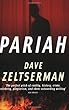
‘The perfect pitch of reality, history, crime, celebrity, plagiarism, and sheer astounding writing.’ Ken Bruen

Now I’ve read it, in my opinion it doesn’t. I’ve recently joined the Cozy Mystery Challenge and this book just doesn’t qualify for that category – it has everything a ‘cozy’ mystery doesn’t.

As I began it I thought I wasn’t going to like this at all – too much swearing, too much gratuitous violence, too much blood and gore, just too much ‘reality’ (but not reality as I know it). So I put the book down and began another one. But somehow I found myself thinking about Pariah and wondering how it would turn out and I just had to go back and finish it.

It’s a study in evil. The narrator is Kyle Nevin, a killer without a conscience, just released from an eight-year prison sentence, determined to get revenge on Red Mahoney, South Boston’s head mobster, who had set him up with the FBI. But he needs money to track down Red and carry out his plan. He stops at nothing to get what he wants, killing, maiming, robbery, drugs, drink, sex, etc, etc – until it all goes wrong that is.

All though I wanted things to go wrong for him the irony is that it’s through writing a novel that it finally happens. He’s approached by a publisher to fictionalise his crimes:

I want this to be a tough, hard-hitting crime novel, something where there are no winners, only losers, and with the authenticity that you are more than capable of providing. (page 222)

I really enjoyed this part of the book. Dropped in between some of the chapters are Kyle’s notes to the editor, so I knew all along that this was a book he was writing, but it is onlyin the last few chapters that this comes to the fore. Part of the pleasure for me was the contrast between creative fiction writing – there is a character who has an MFA in creative writing who Kyle pays to write the book for him, until the publisher rejects his submission, telling him that it’s unacceptable because it ‘screamed MFA’ (Master of Fine Arts). He wanted writing with ‘raw energy’.

And I loved it when it came to the ‘celebrity’ interiews, the plagiarism charge and the reaction of book reviewers and book bloggers.

The papers had a field day with me, but the bloggers were the worst. Jesus they were unmerciful. During those four days I couldn’t sleep and spent my time reading all that shit written about me on those blogs. (page 267)

This is a tough tale, a dark thriller, written with confidence and fluency. Kyle is an anti-hero, a real pariah and I disliked him intensely. I may not have liked the characters, the language or the content of this story but it certainly has great impact and has lingered in my mind for days.

Sunday Salon

Not much reading here today as D and I are off out with the family this afternoon.

This morning I’ll be reading more from Griff Rhys Jones’s memoir Semi-Detached, which is coming on nicely. I’m now up to the part where Griff is in his final year at school. I loved his description of cricket that I read yesterday.

I hate and abhor cricket. I loathe cricket. I abominate cricket. There is only one thing more boring than the abysmal English habit of watching a game of cricket and that is an afternoon playing the wretched game. It is sport for the indolently paralysed. Only three people out of twenty two are engaged in any proper activity. The rest simply sit and wait their turn.

The excruciating tedium of ‘fielding’ – standing about, like a man in a queue with nothing to read, in case a sequence of repetitive events, ponderously unfolding in front of you, should suddenly require your direct intervention … (page 179)

Football is a game. Tiddly-winks is a game. A sack race involves energy and fun. Cricket is like a cucumber sandwich: indulged in for reasons of tradition, despite being totally eclipsed by every other alternative on offer. (page 181)

I can well imagine that fielding would be much more pleasurable if one could read at the same time. One of my fond memories of childhood is going with my parents to watch cricket, but then I did used to lie in the grass making daisy chains.

I’d like to finish reading Hearts and Minds by Amanda Craig this evening, if I have time before I fall asleep. I have very mixed ideas about it right now, varying from liking it to wishing I’d never bothered to pick it up. It’s a tough read – from a subject point of view, that is. This is by no means a ‘comfy’ read, more of a rollercoaster to batter and bruise. But I must finish it before writing about it properly.

Coming up next week I’m looking forward to reading one of these books:

At the moment it’s King Arthur’s Bones that is calling out to me. It’s five interlinked mysteries from Michael Jecks, Susanna Gregory, Bernard Knight, Ian Morson and Philip Gooden.

Cozy Mysteries

When I saw the Cozy Mystery Challenge I wondered just would could possibly be ‘”cozy” about murder, after all “cosy” (as I prefer to spell it) means snug, warm and comfortable – a teacosy is meant to keep the teapot warm, a cosy cottage is small and welcoming. “Cozy” is not really the right word then for crime fiction.

Nevertheless there is a category of crime fiction with that label and I rather like reading them every now and then, along with police procedurals and historical crime fiction. As I found on the Cozy Mystery website cozy mysteries are those without  rough language, sex scenes, or gruesome details about the killing, and where the main character is normally an amateur detective. I like the puzzle-solving elements of that type of crime fiction rather than the noir realism of murder.

Sometimes I like to use reading challenges  to find new authors to read, but for this one I’m aiming to stick to books I already own and have been saving to read (in other words my to-be-read piles). The following are all on my shelves:

  1. Faithful Unto Death by Caroline Graham (Midsomer Murders)
  2. Asimov’s Mysteries
  3. My Cousin Rachel by Daphne Du Maurier
  4. An Agatha Christie – I have a few to choose from
  5. One Good Turn by Kate Atkinson
  6. The Private Patient by P D James
  7. A Ruth Rendell – also a few to choose from

But then again, I shall be going to the library over the next six months (the period of this challenge) and could easily find other books to read.

I think I’ll start with Azimov’s Mysteries.

Is there a category of crime fiction labelled science fiction mysteries? I expect there is. Years ago my husband and I both read a number of science fiction books – Frank Herbert’s Dune series and E E ‘Doc’ Smith’s Lensmen  and Skylark books for example. And hidden amongst them on the shelves I came across one I haven’t read –  Asimov’sMysteries, which I think fits into this category and may very well be a cozy mystery too. It is described on the back cover as:

… thirteen fiendishly ingenious stories of crime, murder, puzzlement and detection in the far reaches of space and centuries in the future … a superb showcase of Dr Asimov’s brilliant storytelling talent.

Crime Fiction Alphabet: Letter Y

There are just two letters left in Kerrie’s Crime Fiction Alphabet series. This week it is the letter Y and I’ve chosen Dead in the Morning which was first published in 1970 and is the first of Margaret Yorke’s Patrick Grant mysteries.

Set in Fennersham, an English village this is about a family dominated by old Mrs Ludlow. When Mrs Mackenzie, the housekeeper is found dead it seems that she was killed by mistake and the intended victim was in fact Mrs Ludlow.

Dr Patrick Grant, Fellow and Dean of St Mark’s College Oxford and lecturer in English  is staying in the same village with his sister Jane. Patrick is writing a book about unsolved mysteries from the past and as his sister says he

… is the most inquistive man ever to be born. … He looks for mysteries where there are none and is always poking his nose into other people’s business. (page 42)

He knows Timothy Ludlow, Mrs Ludlow’s grandson, who is a student at St Mark’s, so when he sees Phyllis Medhurst, Mrs Ludlow’s daughter in the chemist collecting her mother’s medicine his interest in the family is aroused. Jane tells him that Mrs Ludlow is a 

… regular tartar, from all accounts. … She’s  paralysed, or something, spends her days in a wheel chair and leads them all the devil of a dance, according to gossip. (pages 26-7)

The rest of the family comprise Cathy, Mrs Ludlow’s granddaughter, Gerald, Cathy’s father and his new wife Helen (Cathy’s mother died ten years earlier when Cathy was 8), and his brother Derek, his wife Betty and two sons, Timothy and Martin.

Mrs Ludlow, tired after the family get together to meet Helen, has her meal in bed, chicken fricassee and lemon meringue pie, but doesn’t eat the pie. The next morning Mrs Mackenzie is found dead in her room and the coroner’s verdict is that she died as a result of eating the portion of lemon meringue pie that Mrs Ludlow had left. It had been laced with barbiturates.

Cathy and Jane are friends and so Patrick manages to work his way into the family and discovers all sorts of family secrets. He thinks it is a question of character and wonders whether it is a crime of passion or of greed.

There are plenty of red herrings along the way but I’d worked it out before the end, which is predictable. Nevertheless I wanted to read on to find out the why rather than the who and that wasn’t so predicitable. All in all, an enjoyable book.

Raven Black by Ann Cleeves: Book Review

Raven Black is the first book I’ve read by Ann Cleeves. It’s set in Shetland and begins on New Year’s Eve with Magnus Tait seeing the new year in on his own. Magnus, a simple elderly man lives by himself, shunned by most of the other islanders.  To his delight two teenage girls knock on his door to wish him a Happy New Year. One of the girls is Sally, the daughter of the primary schoolteacher and the other is Catherine, an English girl whose father is the Head Teacher at Anderson High School.  A few days later Catherine is found dead in the snow not far from Magnus’s house, strangled with her own scarf.

Eight years earlier a young girl, Catriona, had gone missing and had never been found. At the time, although he had never been charged with anything, everyone was convinced that Magnus had killed her. When Catherine’s body is discovered the police and the locals immediately suspect that Magnus must have killed her.

Inspector Jimmy Perez, originally from Fair Isle, is in charge of the investigation until the arrival of a team from Inverness headed up by DI Roy Taylor. Whilst everyone else is convinced of Magnus’s guilt Perez doesn’t want to jump to conclusions and and feels pity for him. Perez is a fascinating character, descended from a seaman from the Spanish Armada, shipwrecked on Fair Isle. Coming from Fair Isle to Shetland he understands how it must have been for Catherine as an outsider. Catherine, though had not worried what others thought of her and had been making a film of the island, interviewing people getting them to reveal themselves to her camera.  As everyone who knew Catherine is questioned it becomes clear that several people could easily be her killer and I completely failed to identify the culprit. Thinking back over the book I could see that all the clues were there, but so skillfully planted that I failed to see them.

The tension between the islanders and the incomers is evident and also the loneliness of outsiders. Family ties, heredity and personal relationships are important themes running through the narrative.  There is also a strong sense of location and terrific atmosphere – the landscape, the sea, the weather, the circling ravens and the spectacle of Up Helly Aa (the Fire Festival), all anchor the story and bring the book to life.

Often the colours on the islands were subtle, olive green, mud brown, sea grey and all softened by mist. In the full sunlight of early morning, this picture was stark and vibrant. The harsh white of the snow. Three shapes silhouetted. Ravens. (page 28)

There are three more books set in Shetland, featuring Perez – White Nights, Red Bones and Blue Lightning. I’m looking forward to reading them all. I’m also  going to look out for her other novels set in Northumberland.

Crime Fiction Alphabet – X is for A Loyal Character Dancer by Qiu Xiaolong

Qiu Xiaolong was born in Shanghai and was a member of the Chinese Writers’ Association, publishing poetry, translations and criticism in China. Since 1989 he has lived in the United States, his work being published in many literary magazines and anthologies. His first crime novel, Death of Red Heroine, won the Anthony Award for Best First Crime Novel. A Loyal Character Dancer is his second book featuring Chief Inspector Chen Cao, of the Shanghai Police Bureau.

Like Qiu Xiaolong, Chen is a member of the Chinese Writers’ association and he writes poetry (reminding me of PD James’s Adam Dalgleish). It was not his desire to become a policeman. He is also a gourmet and the book contains many tantalising descriptions of Chinese food – for example:

He ordered a South Sea bird’s nest soup with tree ears, oysters fried in spiced egg batter, a duck stuffed with a mixture of sticky rice, dates, and lotus seed, a fish steamed live with fresh ginger, green onions, and dried pepper, … (page 120-121).

In this book he has two crimes to deal with – the murder of an unknown man found in Bund Park, a park celebrated for “its promenade of multi-colored flagstones, a long curved walkway raised above the shimmering expans of water which joined the Huangpu and Suzhou rivers.” The man was in his forties, dressed in silk pajamas and he had been hacked more than a dozen times with a sharp, heavy weapon.

His second case is to investigate the disappearance of Wen Liping, the wife of Feng Dexiang, a crucial witness in an illegal immigrant case in Washington. The American and Chinese governments have agreed to a joint investigation to find Wen and Chen is assigned to work with Inspector Catherine Rohn, of the US Marshall’s Office.

I loved this book. There is a lot in it about life in China, the impact of the Cultural Revolution and the country itself. There is a very strong sense of place and this had me reaching for my sister’s books on China (she visited a few years ago before she died) to see photos of the locations and read more about life in China.

Having to explain things to Catherine made it easy for Qiu to pack in lots of information that otherwise could have seemed intrusive. For example as well as quoting poetry he also quotes from Confucius and explains literary references. Wen was a beautiful young woman, forced to leave her home to be “re-educated” when she was only sixteen during the Cultural Revolution. She had become a Red Guard cadre and a member of the song-and-dance ensemble, dancing the loyal character dance (hence the title of the book). Chen explains to Catherine that although dancing was not then allowed in China, this was particular form of dancing was allowed :

…  dancing with a paper-cut out of the Chinese character of Loyalty or with a red paper heart bearing the character, while making every imaginable gesture of loyalty to Chairman Mao. (page 84)

Chen is an enigmatic man, skilled at working the system. As a chief inspector he is also responsible for preserving Shanghai’s image. Keeping and saving face is very important. His boss, Li, the Party Secretary is more concerned with making sure that Catherine has a satisfactory stay in China, seeing only the good things than with carrying out the investigation into Wen’s disappearance. He does not like it when Chen and Catherine discuss the living conditions of the poor, China’s birth control policy and the question of illegal immigrants to the US. However, Chen and Catherine make a good partnership and with the help of Chen’s assistant, Dectective Yu get to the bottom of the mysteries of the murder and Wen’s disappearance, despite the activity of rival triad gangs.