Crime Fiction on a Euro Pass: Holland

The idea behind Crime Fiction on a Euro Pass, run by Kerrie, is that participants write a post linked to the country of the week.

This week’s stop there is a choice of either Holland or Belgium. I’ve chosen Holland, with two books set in Amsterdam.

First a book I reviewed in January 2008:

The Good Thief’s Guide to Amsterdam by Chris Ewan.

[Thief2.jpg]This was the 2007 winner of Long Barn Books First Novel Award. From the back cover: ‘œCharlie Howard writes caper novels about a career thief. He also happens to be one.’

The description of Amsterdam conveys its atmosphere, canals and buildings very well for some one like me, who has never been there. Charlie is asked by an American to steal two little monkey figurines to make up the set ‘œSee no evil, hear no evil, speak no evil’. They don’t appear to have any value and he has to steal them from two different people on the same night. Then the American is found murdered and at first Charlie is suspected of being the murderer.

From that point on the book moves at a fast pace through all the ins and outs of the mystery ‘“ who did murder the American, why, what is the significance of the monkeys? At the same time Charlie has a problem with a book he is writing and spends time on the phone discussing the difficulties of sorting out the plot with Victoria, his agent in London.

It kept me guessing and amused and I raced through it to find out what happens.

There are more Charlie Howard mysteries:

  • The Good Thief’s Guide to Paris
  • The Good Thief’s Guide to Vegas
  • The Good Thief’s Guide to Venice

And for more information check out Chris Ewan’s blog – The Good Thief’s Blog.

Secondly, a book I read in May 2006, before I began this blog:

book cover of   The Apothecary's House   by  Adrian MathewsThe Apothecary’s House by Adrian Mathews. As I didn’t write anything about it other than this in my list of books read – ‘Set in Amsterdam – a good mystery novel‘ and I no longer have the book, here is a summary from Fantastic Fiction:

When an old woman storms into the Rijks Museum demanding the return of her painting, archivist Ruth Braams cannot quell her curiosity. Together with Myles, her gay confidant, Ruth delves into the history of the piece of looted Nazi art and discovers an enigmatic picture with a disturbing wartime provenance. It also appears that the elderly Lydia is not the only claimant and, against strict bureau regulations, Ruth endeavours to help strengthen her case. Days later, Ruth begins to receive sinister anonymous threats, warning her to stay away from Lydia and the painting. When the door of her home, a houseboat on the Bloemgracht canal, is covered in graffiti and her gas supply tampered with, Ruth is convinced these are deterrents from the rival claimant. Our irrepressible and emotionally troubled heroine refuses to take them at face value and continues to strike up a friendship with the lonely old lady. But as the threats escalate, Ruth realises that there must be far more to the painting’s popularity, and she enters into a series of increasingly lethal adventures as she investigates the painting’s secret symbolism…

Murder on the Eiffel Tower by Claude Izner

I thought Murder on the Eiffel Tower was a frustrating book to read. On the one hand it combines crime fiction and historical fiction, which is a favourite genre so I expected to be good. It begins really well as Eugénie Patinot takes her nephews and niece to the newly-opened Eiffel Tower in 1889. They sign the visitors’ book, the Golden Book and then Eugénie collapses and dies, apparently from a bee-sting.  Then there is Victor Legris, a bookseller (even better – historical crime fiction and a bookshop!) who is determined to find out what had really happened. More deaths occur, also caused by bee-stings. Could Paris really be invaded by killer  bees?

So far, so good, but the historical descriptions kept interfering with the mystery. Although it was interesting it slowed the book down too much and was distracting, to my mind. And the mystery wasn’t that good either, with too much guesswork by Victor, who kept changing his mind about who he suspected (and so did I).  I also thought the characters were rather flimsy and I didn’t really engage with any of them. Maybe it’s the translation but I wasn’t enthralled with the style of writing, either, which in parts was a bit tedious. I loved the cover, though.

I bought this book secondhand from Barter Books, without knowing anything about it or the author, attracted by the idea of a murder on the Tower and the cover. From the book I discovered that Claude Izner is the pen-name of two sisters, Liliane Korb and Laurence Lefèvre. They are both booksellers on the banks of the Seine, so that was why I found the book-selling scenes the best part of the book. They are also experts on 19th century Paris – hence the plethora of historical detail, I suppose.

  • Paperback: 304 pages
  • Publisher: Gallic Books (1 May 2007)
  • Language English
  • ISBN-10: 190604001X
  • ISBN-13: 978-1906040017
  • Source: I bought the book

Book Beginnings

I’ve been reading books recently and not writing about them. I didn’t have the impetus at the time (too many other things going on in my life right now to distract me), but I hope to write about them quite soon:

  • The Hanging Wood by Martin Edwards – excellent
  • Evil Under the Sun by Agatha Christie  – very good
  • Murder on the Eiffel Tower by Claude Izner – a bit disappointing

I’m about to start reading S J Bolton’s second book Awakening. Here are the opening sentences from the Prologue:
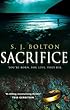
The darkest hour I’ve ever known began last Thursday, a heartbeat before the sun came up.

It was going to be a beautiful morning, I remember thinking, as I left the house; soft and close, bursting with whispered promises, as only a daybreak in early summer can be. The air was still cool but an iridescence on the horizon warned of baking heat to come. Birds were singing as though every note might be their last and event the insects had risen early.

This opening is full of threat. Even though it is a beautiful morning it foreshadows some dreadful event coming soon, in contrast to the fine day.

I decided to read Awakening after finishing Sacrifice, which I wrote about in my last post, especially as several people commented that her later books are better.

Book Beginnings on Friday is hosted by Katy at A Few More Pages.

Sacrifice by S J Bolton: a Book Review

I found most of Sacrifice an absolutely compelling book to read. It begins with the discovery of a corpse buried in the peat in Tora Hamilton’s field on Shetland. This is no ordinary corpse because the heart has been removed and there are marks etched into the skin that look very similar to the carvings Tora has seen in the cellar of her house. Tora is an obstetric surgeon. She had recently moved to the Shetland Isles with her husband Duncan, who although he had been born on the Isles, hadn’t been back there for twenty years.

Tora uses her position at the hospital to search patient records and aided by D S Dana Tulloch begins to discover some very suspicious and sinister facts. Despite opposition from her boss and from Dana’s boss the two women dig deeper and become involved in a very dangerous and bizarre situation, endangering both their lives.

I was swept along with the story, but as more twists and turns in the plot developed with links to folklore and myth I found it became rather far- fetched the more I read. But, having said that I did like the book. I liked the drama, the characters were well-defined, and I liked the tension that built up between the characters as Tora began to wonder who she could trust. I liked the setting of a mysterious, remote and isolated place where outsiders find it difficult to fit in and where dark deeds could take place. I liked it enough to want to read more books by S J Bolton.

Crime Fiction on a Euro Pass: France

This week’s Crime Fiction on A Euro Pass destination is France. When I think of French crime fiction Georges Simenon’s Maigret immediately pops into my mind.  Simenon was actually Belgian, not French, but as the Maigret books are set in France (mainly in Paris) they fit the criteria for the Europass.

Simenon wrote 75 novels and 28  short stories featuring Commissaire Jules Maigret and I first knew of them from a friend at school who loved the books. Then there were the numerous TV productions with Rupert Davies as Maigret.

I have read several of them in the past and most recently I’ve read the following three Maigret books. The links are to my posts on the books:

  • Lock 14, which was the second book, originally published in 1931 as Le Charretier de la ‘˜Providence’ and translated as Maigret Meets a Milord in 1963. It’s a short book of 124 pages set along the canal from Epernay to Vitry-le-Francois. It’s a mystery in which Maigret gets increasingly grumpy, exasperated and tired.
  • My Friend Maigret, first published in 1939 as Mon ami Maigret. It’s a study of Maigret himself, and of life on a small Mediterranean island, three miles from the French coast, where he investigates the murder of Marcellin, a thug, drunkard, thief and pimp. He is accompanied by Mr Pyke, a British detective who is shadowing Maigret to studying his method of working.
  • The Man on the Boulevard, first published in 1953 as Maigret et l’homme du banc. This book is set in Paris where Louis Thouret is found stabbed in a little alleyway. Louis  has led a double life that his wife knew nothing about. It appears he had been having an affair for three years.

There are many things I like about the Maigret books – the attention to detail, the descriptions of the weather, and the characters themselves.  The descriptions of the locations are good, but above all I like the characterisation of Maigret himself.

Crime Fiction on a Euro Pass

A new challenge: Crime Fiction on a Euro Pass

Kerrie at Mysteries in Paradise is hosting a new challenge taking us on a 12 stage European Journey in Eurail Pass style. As our travel agent she has chosen 12 destinations for our journey. It began last Monday with with a stop in England. Click HERE for additional details.

The challenge is simple really.

You have to connect us to a blog post on your site that relates to crime fiction in the country we are visiting. The meme will enable us to share our knowledge and perhaps point out new reading opportunities to each other.

You can choose one of the following (or something more imaginative)

  • a book review (create a new one or revive an old one)
  • an author profile
  • a reading syllabus for crime fiction either set in this country, or written by authors from this country.

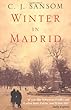
I don’t think I’ll be taking part every week, but for this week I’m in Spain, featuring C J Sansom’s Winter in Madrid, which I thought was one of the best books I’ve read. I wrote about on this blog back in January 2008, describing it as a book that had me in tears as I was reading about the devastation, desolation and waste of war. I little thought that a few years later we would be witnessing the devastation that has been happening here in England with the terrible riots that have been taking place this week.

Back to the book. I already knew from reading his 16th century crime thrillers that C. J. Sansom is a master storyteller and this book exceeded my expectations. It is an action packed thrilling war/spy story and also a moving love story and historical drama all rolled into this tense and gripping novel.

Sansom vividly conveys the horror and fear of the realities of life in Spain during the Spanish Civil War and the first two years of the Second World War. The opening chapter dramatically sets the tone for the book with the brutality of the Battle of Jarama in 1937 then leaps straight into the bombing of London in 1940. Then Harry Brett, traumatised by his injuries at Dunkirk is sent to Spain to spy for the British Secret Service. He is plunged into the terrible living conditions in Madrid where people are starving, children are left homeless to fend for themselves and wild dogs roam the rubble of bombed houses.

He turned into a square. Two sides had been shelled into rubble, all the houses down, a chaos of broken walls rising from a sea of shattered bricks and sodden rags of bedding. Weeds had grown up between the stones, tall scabrous dark-green things. Square holes in the ground half filled with green scummy water marked where cellars had stood. The square was deserted and the houses that had been left standing looking derelict, their windows all broken.

Harry had never seen such destruction on such a scale; the bombsites in London were small by comparison. He stepped closer, looking over the devastation. The square must have been intensively shelled. Everyday there was news of more raids on London ‘“ did England look like this now?

This is a long and detailed book, but it moves along rapidly, with believable characters, including the bullying Ambassador, Sir Samuel Hoare, Alan Hillgarth, the chief of intelligence (both of whom are real historical figures), diplomats, Spanish Monarchists and Falangists and the ordinary Spanish people. Franco’s Madrid is shown as a place where fear, poverty and corruption stalk the streets; where hatred and suffering are paramount. It’s a chilling picture, but Harry finds love too when he meets Sofia and plans her escape with him to England after he has completed his mission.

The question is will Franco maintain Spain’s neutrality and enter the war in support of Hitler? Harry’s cover is as an interpreter, whilst his mission is to make contact with Sandy Forsyth, who he had known at public school in England, gain his confidence and discover the truth behind the rumour that gold deposits have been discovered in Spain, which would boost the economy making Spain less reliant on British support. Harry, a reluctant spy, soon finds himself in danger. He is plagued by memories of another school friend Bernie Piper, an ardent Communist who had enlisted in the International Brigades and had disappeared, reported killed at the Battle of Jarama. Barbara, an ex- Red Cross nurse, now Sandy’s girlfriend and Bernie’s former lover is convinced Bernie was not killed She appeals to Harry for help in finding Bernie, and so the story moves to its climax.

With its haunting themes of corruption, murder, the power of authority and heroism Winter In Madrid captivated my imagination. It’s a book I’d like to reread some time.