First Chapter: The Drowning

First chapterEvery Tuesday Diane at  Bibliophile by the Sea hosts First Chapter First Paragraph Tuesday Intros, sharing the first paragraph or (a few) of a book she’s reading or thinking about reading soon.

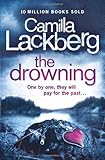
I bought a secondhand copy of this book I bought a few weeks ago and am looking forward to reading it. It’s The Drowning by Camilla Lackberg, a Swedish author whose books I keep seeing on other book blogs.

The Drowning begins:

He had known that sooner or later it would come to light again. Something like that was impossible to hide. Every word had led him closer to what was unnameable and appalling. what he had been trying for so many years to repress.

Now escape was no longer an option. He felt the morning air fill his lungs as he walked as fast as he could. His heart was pounding in his chest. He didn’t want to go there, but he had to. If someone was there, he would have to speak. If nobody was there he would continue on his way to work, as if nothing had happened.

This is a good opening that makes me want to read on, but I do have resevations after reading the Guardian blurb on the back cover – ‘Expert at mixing scenes of domestic cosiness with blood-curdling horror’. I don’t like horror – maybe I won’t be able to finish this book?

May's Books 2013 & Crime Fiction Pick of the Month

I’ve read ten books this month and have only written about five of them – I don’t think I’ll get round to writing about all of them now. More reading means less writing!

I read five crime fiction novels:

May bks

  • The Chessmen by Peter May. This is the third in his Lewis Trilogy, a fascinating and compelling book in which the body of an old friend of Fin McLeod’s is discovered seventeen years after he had disappeared. Whilst the books in this trilogy can be read as stand-alones I think it’s best to read them in sequence, because the second and third books refer to events and characters covered in the first book.
  • The Frozen Shroud by Martin Edwards, the sixth in his Lake District Mysteries with another cold case and a possible copycat murder five years later for Daniel Kind and DI Hannah Scarlett to solve. An excellent book.
  • Requiem for a Mezzo by Carola Dunn, Daisy Dalrymple and DI Alex Fletcher are faced with the murder of an opera singer during a performance of Verdi’s Requiem. A quick, easy read.
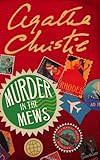
  • Murder in the Mews by Agatha Christie (Poirot 4 short stories), longer than the average short stories (and so more satisfying) these feature some of Agatha Christie’s plot elements and endings, with Poirot performing his usual final denouements.
  • Cards on the Table by Agatha Christie – an excellent murder mystery – I want to write about this in more detail in a later post.

My Crime Fiction Pick of the Month is The Frozen Shroud by Martin Edwards. See Kerrie’s blog, Mysteries in Paradise for more Crime Fiction Picks of the Month.

The other five books I finished reading in May are:

  • The Lollipop Shoes by Joanne Harris – I wasn’t too keen on this one.
  • Peaches for Monsieur Le Curé by Joanne Harris and again was rather disappointed. I may write more about the latter book and feel a bit differently about it. Sometimes writing about a book makes me appreciate it more. It’s as though it crystallises my thoughts and I can evaluate it better.

I may also write about these books:

May bks

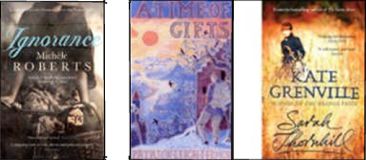
  • Ignorance by Michèle Roberts on Kindle – historical fiction set in France before and during the Second World War. a book about guilt, desire and love.
  • Patrick Leigh Fermor’s A Time of Gifts, non-fiction, about his journey from the Hook of Holland to Constantinople, although this book only covers his journey to the Danube between what were in 1934 Slovakia and Hungary.
  • Sarah Thornhill by Kate Grenville – a beautiful book, also historical fiction set in Australia during the early/mid 19th century. A book about race, family, secrets and love.

Murder in the Mews by Agatha Christie

I don’t usually find short stories as satisfying as novels, but the stories in Murder in the Mews are good, mainly, I think, because with one exception they are novellas, longer than the average short stories. The collection was first published in 1937.

There are four stories about crimes solved by Hercule Poirot:

  •  Murder in the Mews – at first it looks as though a young widow, Mrs Allen has committed suicide, but as the doctor pointed out the pistol is in her right hand and the wound was close to her head just above the left ear, so it’s obvious that someone else shot her and tried to make it look like suicide. The plot is tightly constructed, with a few red herrings to misguide Poirot and Inspector Japp and a moral question at the end. The book begins on Guy Fawkes Day and I like this conversation between Poirot and Inspector Japp:

(J): ‘Don’t suppose many of those kids really know who Guy Fawkes was.’

(P): ‘And soon, doubtless, there will be confusion of thought. Is it in honour or in execration that on the fifth of November the feux d’artifice are sent up? To blow up an English Parliament, was it a sin or a noble deed?’

Japp chuckled. ‘Some people would say undoubtedly the latter.’ (page 7)


  • The Incredible Theft – Poirot is called in to investigate the theft of top secret plans of a new bomber from the home of a Cabinet Minister, Lord Mayfield, where a number of guests are gathered for a house party: Mrs Vanderlyn is an American siren who had formed friendships with ‘a European party’ (this was written in 1936). Air Marshall Sir George Carrington  wonders why she is there. Lady Julia Carrington, Sir George’s wife is a keen bridge player, who has ‘the most frightful overdraft’ and their son Reggie, fancies the French maid. Also present are Mrs Macatta MP, and Mr Carlile, Lord Mayfield’s private secretary. This is perhaps the weakest story in the collection.
  • Dead Man’s Mirror – a conventional murder mystery. Sir Gervase Chevenix-Gore is found dead in his locked study, shot through the head. The bullet had shattered the mirror on the wall behind his desk. Again it looks like suicide, but the question is why he should kill himself. Poirot considers it’s all wrong psychologically – Sir Gervase was known as The Bold Bad Baronet, with a huge ego, much like Poirot, considering himself to be a man of great importance. This is another story, complicated by family relationships. Things of interest I noted are that Poirot studies the footprints in the garden outside the study, Mr Satterthwaite (seen in later stories) makes an appearance, and on a personal note I wondered if this was Agatha Christie’s cynical view of divorce?

 I can’t see it makes a ha’p’orth of difference who you marry nowadays. Divorce is so easy. If you’re not hitting it off, nothing is easier than to cut the tangle and start again. (page 115)


  • Triangle at Rhodes – although this is the shortest story, not my preferred length, I think this is the best one in the book. It’s similar to her later book Evil Under the Sun in that it is about a love triangle and a crime of passion. Poirot is on holiday in Rhodes and observes the jealousy and passion between two couples as he sits in the sun on the beach. He foresees trouble ahead and is worried as he traces a triangle in the sand. There aren’t many people on holiday there and he wonders if he is imagining things , reproaching himself for being ‘crime-minded‘. But he is not wrong and Valentine Chantry, a famous beauty, married to a commander in the navy, a strong, silent man, is murdered.

These stories demonstrate some of Agatha Christie’s plot elements and endings – the locked room murder, the murderer conceals the motive, Poirot foresees murder, the clues (often odd clues) are there hidden or in plain sight, there are red herrings and bluffs, chance remarks that have significance, and the final denouement, explaining the solution to the mystery.

The Frozen Shroud by Martin Edwards

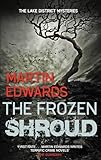
The Frozen Shroud is the sixth book in Martin Edwards’s Lake District Mystery series. I’ve enjoyed the previous five, featuring historian Daniel Kind and DCI Hannah Scarlett, head of the Cold Case Review Team and this one is no exception; it kept me guessing almost to the end.

The Frozen Shroud begins at Halloween in Ravenbank, an isolated community on the shores of Ullswater. At Ravenbank Hall, Miriam Park tells Shenagh Moss the ghost story of the Faceless Woman, Gertrude Smith who was murdered on Hallowe’en, just before the First World War. She was found, battered to death, her face reduced to a pulp and covered with a woollen blanket like a shroud. Her murderer wasn’t hanged and the story goes that her tormented spirit walks down Ravenbank Lane on Hallowe’en. Later that night Shenagh goes missing and is found, battered to death and with her face covered by a rough woollen blanket.

Five years later, Daniel Kind sets out to discover more about Gertrude Smith’s murder when a third murder occurs on Hallowe’en; another young woman with her face shrouded from view. This time it’s Hannah’s best friend Terri Poynton, who was at a Hallowe’en party at the Hall.  Is it the same killer or a copycat murder?  DCI Fern Larter investigates this latest murder and because it looks as though there are connections with Shenagh’s murder, Hannah reopens that case. She and Daniel work together once more to discover the truth.

In Martin Edward’s books, the characters are all so alive, the settings so vividly described and the plots so intricate and compelling. I love all the historical and literary references he uses, weaving them seamlessly into the books, and then there is the ongoing friendship between Daniel and Hannah – both Daniel’s sister and Hannah’s friends keep insisting they’re right for each other.

I think each book can be read on its own, but it helps to fully understand the characters’ relationships if you read them in order. The earlier books are as follows (linked to Fantastic Fiction):

1. The Coffin Trail (2004)
2. The Cipher Garden (2005)
3. The Arsenic Labyrinth (2007)
4. The Serpent Pool (2010)
5. The Hanging Wood (2011)
6. The Frozen Shroud (2013)
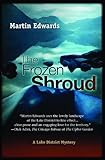
The Frozen Shroud is available in the USA in both hardback and paperback, published by Poisoned Pen Press. I received my copy from Maryglenn McCombs Book Publicity.

In the UK the hardback, published by Allison & Busby will be released in June this year.

crime_fiction_alphabetThis is my contribution to Kerrie’s Crime Fiction Alphabet 2013 for the letter F. To take part your post MUST be related to either the first letter of a book’s title, the first letter of an author’s first name, or the first letter of the author’s surname, or even maybe a crime fiction “topic”. But above all, it has to be crime fiction.

I’ve taken part in all of Kerrie’s previous Crime Fiction Alphabets but this is my first one for this series. I decided to contribute when the books I’ve read or am reading coincide with the letter of the week. Actually this book could equally as well be for the letter E too.

Book Notes: Daisy Dalrymple

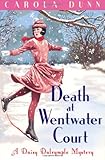
I’ve now read the first three books in Carola Dunn’s Daisy Dalrymple series – all borrowed from the Kindle Owners’ Lending Library. I wrote about the first book Death at Wentwater Court in this post. It’s a typical country house murder mystery.

I’ve recently read the second and third books, The Winter Garden Mystery, another country house murder mystery and Requiem for a Mezzo. These are quick, light, easy and enjoyable to read, not requiring much brain power to work out who did the murders. They provide an interesting glimpse of life in the 1920s..

Set in 1923 Daisy is visiting Occles Hall in Cheshire, the home of her school friend Bobbie, to write an article for the Town and Country magazine and discovers a corpse buried in the Winter Garden. It’s the body of Grace Moss, the blacksmith’s daughter and parlour maid at the Hall. She had gone missing three months earlier.The under-gardener is arrested. Daisy convinced of his innocence contacts Detective Inspector Alex Fletcher of Scotland Yard and their relationship develops as they set about discovering the murderer.
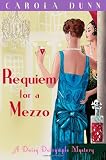
In this book Daisy and DI Alex Fletcher are at the Albert Hall watching a performance of Verdi’s Requiem in which her neighbour, Bettina Westlea is singing , until she drops dead, apparently from cyanide poisoning.  Alex reluctantly lets Daisy help with the investigation into her murder.

Bettina had made many enemies and it surfaces that there are several possible motives and suspects. Daisy has a knack of getting people to talk to her, but I did find this just a little repetitive as Alex tried to stop her involvement. However, this didn’t detract from their continuing relationship.

April's Books

I read 8 books in April.

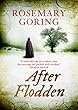
The book I enjoyed the most is After Flodden by Rosemary Goring, which is to be published in June (I read an Advanced Proof Copy supplied by Love Reading).

The full list is (with links to my posts on the books):

  1. The Distant Hours by Kate Morton (TBR book) – historical fiction
  2. After Flodden by Rosemary Goring – historical fiction
  3. The Winter Garden Mystery by Carola Dunn (Daisy Dalrymple 2) (Kindle) – historical crime fiction
  4. Daughters of Fire by Barbara Erskine (TBR book) – historical fiction
  5. Balthazar Jones and the Tower of London Zoo by Julia Stuart (TBR book) (review to follow)
  6. Short Sentence: A crime short story collection from Bloomsbury: 10 stories of dastardly deeds (Kindle) – crime fiction
  7. The Blackhouse by Peter May (library book) – crime fiction
  8. The Lewis Man by Peter May (Kindle) – crime fiction

My Crime Fiction Books of the Month:

Blackhouse& Lewis Man

CF Pick of the monthOf the 8 books, 4 are crime fiction. It’s a tie this month for Crime Fiction Book of the Month between The Blackhouse  and The Lewis Man both by Peter May. I really couldn’t decide between them. I’ll post my thoughts about The Lewis Man soon. For more Crime Fiction Books of the Month go to Kerrie’s blog Mysteries in Paradise.


Notes on the books without reviews:

  • The Winter Garden Mystery* by Carola Dunn (Daisy Dalrymple 2). A quick, easy and enjoyable read. Set in 1923, Daisy is visiting Occles Hall in Cheshire, the home of her school friend Bobbie, to write an article for the Town and Country magazine and discovers a corpse buried in the Winter Garden. It’s the body of Grace Moss, the blacksmith’s daughter and parlour maid at the Hall. She had gone missing three months earlier.The under-gardener is arrested and Daisy convinced of his innocence. Enter Detective Inspector Fletcher of Scotland Yard.
  • Short Sentence: A crime short story collection from Bloomsbury: 10 stories of dastardly deeds*.  This is a free Kindle edition of short stories from Parker Bilal, Alex Cooper, Sarah Evans, Conor Fitzgerald, Calum Macleod, Jan Snook, Mary Waters, Anne Zouroudi, Thomas Mogford and James Runcie. Very quick reads – each just 1000 words or less on the themes of Deception, Bad Judgement, Payback, Secrets and Lies and Obsession. I prefer a more complicated plot and character development, but these are OK for their length. My favourite was Secrets and Lies by Jan Snook (a new-to-me author).