Books from the Mobile Library

The mobile library came here this week and for the first time since the first lockdown we could go on board the van! I borrowed just three books this time.

The Seal King Murders by Alanna Knight – an Inspector Faro Mystery. Set in 1861 in Orkney, this is the second casebook of Constable Faro, looking back to his earlier career. A champion swimmer, has drowned in mysterious circumstances and Faro is met with rumours of missing artifacts, the myth of the seal king, a dead body under the floor of Scarthbreck, his first love, and a mother who is determined to find him a wife. 

Faro later had an illustrious career as Chief Inspector in the Edinburgh City Police and personal detective to Her Majesty Queen Victoria at Balmoral. I haven’t read any of the Inspector Faro mysteries, so I think this could be a good place to start.

Alanna Knight had more than seventy books published in an impressive writing career spanning over fifty years. She was a founding member and Honorary Vice President of the Scottish Association of Writers, Honorary President of the Edinburgh Writers’ Club and member of the Scottish Chapter of the Crime Writers’ Association. Alanna was awarded an MBE in 2014 for services to literature. Born and educated in Tyneside, she lived in Edinburgh until she passed away in 2020.

The Invisible Library by Genevieve Cogman. Irene is a professional spy for the mysterious Library, which harvests fiction from different realities. And along with her enigmatic assistant Kai, she’s posted to an alternative London. Their mission – to retrieve a dangerous book. This is fantasy in a world that is chaos-infested – the laws of nature bent to allow supernatural creatures and unpredictable magic. It is the first of 8 books in the Invisible Library series.

Genevieve Cogman got started on Tolkien and Sherlock Holmes at an early age, and has never looked back. But on a perhaps more prosaic note, she has an MSC in Statistics with Medical Applications and has wielded this in an assortment of jobs: clinical coder, data analyst and classifications specialist. Although The Invisible Library is her debut novel, she has also previously worked as a freelance roleplaying game writer. Genevieve Cogman’s hobbies include patchwork, beading, knitting and gaming, and she lives in the north of England.

A Bespoke Murder by Edward Marston, book 1 in the Home Front Detective series. Set in 1915 with thousands of Britons away in the trenches, a severely depleted police force remains behind to keep the Home Front safe and continue the fight against crime, espionage, and military desertion. Detective Inspector Harvey Marmion and Sergeant Joe Keedy investigate the murder of Jacob Stein, a Jewish tailor, a victim of anti-German riots after the sinking of the Lusitania. His shop is set ablaze, his daughter is raped and he is murdered

Edward Marston is a pseudonym used by Keith Miles, an English author, who writes under his own name and also historical fiction and mystery novels under the pseudonym Edward Marston. He is known for his mysteries set in the world of Elizabethan theatre. He has also written a series of novels based on events in the Domesday Book, a series of The Railway Detective and a series of The Home Front Detective.

I’ve read one of Alanna Knight’s books and one by Edward Marston, but none of Genevieve Cogman’s. Have you read any of these books? Are you tempted?
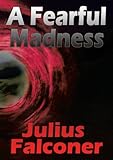
A Fearful Madness

I received A Fearful Madness by Julius Falconer as a free review copy through LibraryThing. I hadn’t come across any of Falconer’s books before but the LibraryThing Early Reviewers’ description interested me enough to request a copy:

A police investigation into the violent death of a part-time cathedral verger stalls for lack of incriminating evidence. However, three people have a close interest in clearing the matter up where the police have failed: the dead man’s sister, anxious to see justice done, and two of the police suspects, both released without charge but keen to clear their names.

Striking out on their own, each approaches the murder from a different perspective: book-trafficking on the black market; revenge by an extremist religious organisation for the dead man’s betrayal of them; and retaliation in a case of blackmail. The police continue to maintain that the murder was committed out of sexual anger, even though they have no proof apart from the circumstances of the verger’s death.

Eventually DI Moat and his assistant DS Stockwell, from the North Yorkshire Force, take a hand. Moat pays his predecessors in the investigation, both professional and amateur, the compliment of taking their findings seriously – but comes up with an idea of his own.

My view:

Julius Falconer uses language in a more formal way than many other modern authors. His sentences are carefully punctuated, his vocabulary is extensive (meaning there are some words I had to check in the dictionary – and one or two weren’t in my dictionary) and he uses many literary references and illusions. I like his style of writing, although in parts it does tend to be long-winded.

It’s a complex book, following each of the three investigations – some of which seem highly unlikely, but then they do say that truth is stranger than fiction.Two people had been suspected of murdering James Thwaites, the verger, but the police were unable to produce any evidence and the cases against them were dropped. It appeared he had been stealing rare and valuable books from the cathedral and selling them on the black market. I was intrigued by the book-trafficking business which on the one hand was highly organised involving the use of white van drivers, and on the other seemed remarkably lax!

A bearded man was seen outside Thwaites’s house on the evening of the murder and Matthias Biddulph, one of the original suspects, who had been in a relationship with Thwaites hires a private investigator to find him. Another possible motive for the murder is Thwaites’s involvement with an eccentric version of Christianity – the Anti-Church of Jesus Christ, set up in opposition to the Anglican Church, which his sister Serenity investigates.

For the most part, I rather enjoyed reading A Fearful Madness, although I had little idea how it would end – the verger’s will is of significance, but that only features towards the end of the book (unless I missed an earlier reference). I think this is possibly the weakest part of the book when the culprit confesses to the murder. Having said that, I liked it well enough to read more of Falconer’s books and have downloaded Jagger onto my Kindle.

Julius Falconer has written several books. Formerly, a teacher, he began writing detective novels in 2009. His website, with the sub-tile of Erudite Crime Novels for the Connoisseur,  includes details of his books and an account of The Falconer Style.

the letter JThis is my contribution to Kerrie’s Crime Fiction Alphabet for the letter J. In previous years I’ve contributed to the meme for each letter of the alphabet, but for this series I’m joining in only occasionally.

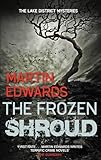
The Frozen Shroud by Martin Edwards

The Frozen Shroud is the sixth book in Martin Edwards’s Lake District Mystery series. I’ve enjoyed the previous five, featuring historian Daniel Kind and DCI Hannah Scarlett, head of the Cold Case Review Team and this one is no exception; it kept me guessing almost to the end.

The Frozen Shroud begins at Halloween in Ravenbank, an isolated community on the shores of Ullswater. At Ravenbank Hall, Miriam Park tells Shenagh Moss the ghost story of the Faceless Woman, Gertrude Smith who was murdered on Hallowe’en, just before the First World War. She was found, battered to death, her face reduced to a pulp and covered with a woollen blanket like a shroud. Her murderer wasn’t hanged and the story goes that her tormented spirit walks down Ravenbank Lane on Hallowe’en. Later that night Shenagh goes missing and is found, battered to death and with her face covered by a rough woollen blanket.

Five years later, Daniel Kind sets out to discover more about Gertrude Smith’s murder when a third murder occurs on Hallowe’en; another young woman with her face shrouded from view. This time it’s Hannah’s best friend Terri Poynton, who was at a Hallowe’en party at the Hall.  Is it the same killer or a copycat murder?  DCI Fern Larter investigates this latest murder and because it looks as though there are connections with Shenagh’s murder, Hannah reopens that case. She and Daniel work together once more to discover the truth.

In Martin Edward’s books, the characters are all so alive, the settings so vividly described and the plots so intricate and compelling. I love all the historical and literary references he uses, weaving them seamlessly into the books, and then there is the ongoing friendship between Daniel and Hannah – both Daniel’s sister and Hannah’s friends keep insisting they’re right for each other.

I think each book can be read on its own, but it helps to fully understand the characters’ relationships if you read them in order. The earlier books are as follows (linked to Fantastic Fiction):

1. The Coffin Trail (2004)
2. The Cipher Garden (2005)
3. The Arsenic Labyrinth (2007)
4. The Serpent Pool (2010)
5. The Hanging Wood (2011)
6. The Frozen Shroud (2013)

The Frozen Shroud is available in the USA in both hardback and paperback, published by Poisoned Pen Press. I received my copy from Maryglenn McCombs Book Publicity.

In the UK the hardback, published by Allison & Busby will be released in June this year.

crime_fiction_alphabetThis is my contribution to Kerrie’s Crime Fiction Alphabet 2013 for the letter F. To take part your post MUST be related to either the first letter of a book’s title, the first letter of an author’s first name, or the first letter of the author’s surname, or even maybe a crime fiction “topic”. But above all, it has to be crime fiction.

I’ve taken part in all of Kerrie’s previous Crime Fiction Alphabets but this is my first one for this series. I decided to contribute when the books I’ve read or am reading coincide with the letter of the week. Actually this book could equally as well be for the letter E too.

Crime Fiction Alphabet 2012 – summary

Kerrie’s Crime Fiction Alphabet came to the end last week. This is the third time I’ve taken part and as before I thoroughly enjoyed taking part. Thanks, Kerrie.

The rules of the meme are that you have to write a blog post about crime fiction related to the letter of the week and your post MUST be related to either the first letter of a book’s title, the first letter of an author’s first name, or the first letter of the author’s surname.

I had very little difficulty in finding books to fit the rules and mainly read whatever I wanted and slotted them in wherever they would fit. The exception to that was, of course, that pesky letter X and I resorted to having a title that sounded as though it began with X.

Many were books by old favourites, such as Agatha Christie (3 books) and some by new-to-me authors, such as Dana Stabenow, Michael Innes, M R Hall, Chris Pavonne and Suzanne Young.

Here’s my list – a mixture of titles and authors’ names:

I rated most of the books between 3/5 to 4/5 with two at 5/5:

and The Chalk Circle Man by Fred Vargas at 4.5

Crime Fiction Alphabet: Letter Z

We have reached the final letter in Kerrie’s Crime Fiction Alphabet and to illustrate the letter Z I’m focusing on:

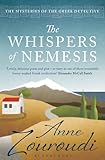
The Whispers of Nemesis by Anne ZouroudiThis book is the fifth in Zouroudi’s series about Hermes Diaktoros of Athens, the Greek Detective.

Summary (from Anne Zouroudi’s website):

It is winter in the mountains of northern Greece and as the snow falls in the tiny village of Vrisi a coffin is unearthed and broken open. But to the astonishment of the mourners at the graveside, the remains inside the coffin have been transformed, and as news of the bizarre discovery spreads through the village like forest fire it sets tongues wagging and heads shaking.

Then, in the shadow of the shrine of St Fanourios (patron saint of lost things), a body is found, buried under the fallen snow – a body whose identity only deepens the mystery around the exhumed remains. There’s talk of witchcraft, and the devil’s work – but it seems the truth, behind both the body and the coffin, may be far stranger than the villagers’ wildest imaginings. Hermes Diaktoros, drawn to the mountains by a wish to see an old and dear friend, finds himself embroiled in the mysteries of Vrisi, as well as the enigmatic last will and testament of Greece’s most admired modern poet.

The Whispers of Nemesis is a story of desperate measures and long-kept secrets, of murder and immortality and of pride coming before the steepest of falls.

My view:

Hermes is a detective with a difference. Just who he is and who he works for is never explained. He’s most definitely not a policeman and when asked he says he works for a ‘higher power’ than the police. He is described as ‘the fat man’. He wears a cashmere overcoat of midnight blue, a grey suit with a subtle stripe and a waistcoat, and white tennis shoes. He has owlish glasses and thick curly greying hair. His name is his

… ‘father’s idea of humour. He’s something of a classical scholar.  And in the spirit of my namesake, I call these’ – he indicated his white tennis shoes – ‘my winged sandals.’  (page 94)

It is this element of the novels that appeal to me – that and the quirky mysteries. And this book certainly is about a strange mystery about the life and death of the poet Santos Volakis. A local man, he had died some four years earlier choking on an olive stone. In his will he had stipulated that his bequests would only be available when his bones ‘finally see daylight’. So the rite of exhumation, which is customary in rural Greece four years after a death was important to his family and friends, but no one was prepared for the shock that it delivered when the bones were revealed.

I found it a little difficult at first following the sequence of events and identifying who was who, but I soon worked it out. I also had worked out what the mystery was well before the the end, which actually added to my enjoyment of reading the book. The setting is superb, placing you so completely in Greece in winter amongst believably real people.

Each of the books in the Hermes Diaktoros series features one of the Seven Deadly Sins ‘“ in this one it is the sin of pride. Nemesis is the bringer of retribution.

  • Paperback: 304 pages
  • Publisher: Bloomsbury Paperbacks (7 Jun 2012)
  • Language: English
  • ISBN-10: 1408821915
  • ISBN-13: 978-1408821916
  • Source: I bought the book
  • My Rating: 3.5/5

1. The Messenger of Athens (2007)
2. The Taint of Midas (2008)
3. The Doctor of Thessaly (2009)
4. The Lady of Sorrows (2010)
5. The Whispers of Nemesis (2011)
6. The Bull of Mithros (2012)

Thanks to Kerrie for organising the Crime Fiction Alphabet. I’ve listed the books I’ve read in a page (see Index tab at the top of the blog) and soon I’ll do a summing up post about the highlights.

Crime Fiction Alphabet: Letter Y

Kerrie’s Crime Fiction Alphabet has reached the letter Y – an easier letter to illustrate than last week’s letter X. My choice this week is …

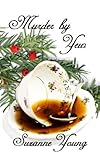
Murder by Yew by Suzanne Young. (The first book in the Edna Davies Mysteries series) I read this on Kindle.

Synopsis (Fantastic Fiction)

When her handyman dies of taxine poisoning, Edna Davies, amateur herbalist, becomes the prime suspect. Nearly certain that she hadn’t concocted a poisonous potion and desperate to save herself from arrest, Edna taps into strengths she never before realized she possessed. Shunned by the townsfolk, questioned by the police, and threatened by thieves, she follows the clues of a forty-year-old disappearance to capture a killer.

My View

Suzanne Young is an American author with a degree in English from Rhode Island University. She has worked as a writer, editor and computer programmer. She now writes fiction full time. For more information see her website

Murder by Yew is the first book by Suzanne Young that I have read. It’s an entertaining ‘cosy’ murder mystery, set in mainly in Rhode Island, a light and quick read. The story is told in the third person from Edna’s perspective. It’s clearly written, with well described locations. The dialogue is lively, apart from one section with reported dialogue which isn’t so convincing.

Edna and her husband, a retired doctor, have recently moved to Rhode Island and she is getting to know her neighbours. She employs Tom Greene to do jobs around the house and garden. The former owner of the house was a keen gardener and had left notebooks filled with comments on the plants in the garden, along with recipes for home-brews and potions and Edna is enjoying herself making some of them, such as chamomile tea with a touch of lemon balm. When Tom collapses and dies the police take samples of her tea mixes and suspect that he had been poisoned by the addition of yew to one of Edna’s tea blends.

Tom’s little grandson, Danny, who is deaf with a speech problem, holds the key to the mystery, but his mother won’t allow Edna to talk to him. Things go from bad to worse for Edna as people begin to shun her and then a storm hits Rhode Island. The cast of characters is well-drawn, with Edna as a most likeable amateur sleuth. She has to discover the motive for killing Tom – was it to do with his present day work,or did it lie further back in his past? Does the recent spate of robberies have a link to his murder and what is the significance of the presence of Edna’s housekeeper in a photo taken in Boston by Edna’s daughter? Edna proves most resourceful in sorting it all out and discovering the murderer’s identity. I had my suspicions about one character quite early on in the book – and I was right, so maybe it was just a bit predictable, which isn’t a bad thing!

Suzanne Young has written two more Edna Davies mysteriesMurder by Proxy and Murder by Mishap, both also available on Kindle and I’m looking forward to reading them.

  • Format: Kindle Edition
  • File Size: 348 KB
  • Print Length: 252 pages
  • Publisher: Mainly Murder Press; 1 edition (27 Nov 2009)
  • Sold by: Amazon Media EU S.à r.l.
  • Language: English
  • ASIN: B003P8P8G0
  • Source: I bought it
  • My Rating 3.5/5