Louisa May Alcott: Little Women

I had forgotten that Little Women is such a moral tale. In fact, I doubt that when I first read it years ago I ever thought of it as a moral tale at all, but the emphasis on the characters of the four sisters  with their individual flaws and efforts to overcome them was the dominant theme that struck me whilst I was reading the book this time.

I loved Little Women when I first read it and re-read it several times. It remains in my memory as one of my favourite childhood books. But reading again now it seems dated (although I did like reading what the girls wore – gloves were essential wear for a party!) and rather pious. I’m also reading Eden’s Outcasts: the story of Louisa May Alcott and Her Father, so I flipped forward in that book to see what John Matteson had to say about Little Women and Louisa May’s thoughts on writing her book. She wrote Little Women after Thomas Niles, a partner in the publishing firm of Roberts Brothers had asked her to write a book for girls. She wasn’t too keen but agreed to do so even though she said that:

I don’t enjoy this sort of thing. Never liked girls or knew many, except my sisters. (Quoted in Eden’s Outcasts page 332.)

She consulted her mother and sisters and with their consent wrote the book based around the Alcott girls’ lives.

Little Women is about the four March sisters, Meg, Jo, Beth and Amy, and their mother – ‘Marmee’. Their father is absent for most of the book, working as a chaplain in the army,during the American Civil War.  The first part of the book is a series of scenes of the March family life illustrating each sister’s burden of character flaws, and their attempts to overcome them. Meg is vain and materialistic, Jo has a temper and flies into great rages, Beth is painfully timid and shy and Amy is selfish. This section of the book is loosely based on Bunyan’s Pilgrim’s Progress, as some of the chapter headings indicate – for example, Playing Pilgrims, Amy’s Valley of Humiliation, Jo Meets Apollyon and Meg Goes to Vanity Fair.

The second part of the book centres on Jo (based on Louisa herself), her writing and her reluctance to grow up. Again this hadn’t struck me when I read as a child (I can’t remember how old I was); I’d thought of her as a tomboy character. She says to Meg, who at 17 is a year older and falling in love:

Don’t try to make me grow up before my time, Meg: it’s hard enough to have you change all of a sudden; let me be a little girl as long as I can. (page 162 of my copy of Little Women)

Laurie, who lives next door with his grandfather becomes a friend to all the girls, but especially to Jo. The family go through a number of dramas, both small and large, culminating in Beth catching scarlet fever after visiting the poor Hummel family, whilst Marmee is in Washington staying with Mr March who was very ill in hospital. Mr March is mostly absent from the book, and even when he does come home there is very little mention of him; he is a man of few words. He discovers that his ‘little women’ have changed for the better whilst he has been away, despite it being a rough road for his little pilgrims to travel:

“But you have got on very bravely; and I think the burdens are in a fair way to tumble off very soon,” said Mr March, looking with fatherly satisfaction at the four young faces gathered him. (page 232)

Little Women ends with Meg’s engagement to John Brooks, Laurie’s tutor. The story continues in Good Wives,which I have as a separate book, but it was originally published as volume 2 of Little Women. These two books were followed by Little Men, the story of Jo and her husband Professor Bhaer at Plumfield school, and Jo’s Boys, continuing the lives of the family and the boys ten years later.

Even though it is a sentimental tale, which it wasn’t in my memory, I did enjoy the experience of re-reading Little Women – some of the magic was still there. And I think I’ll re-read the other books soon as well.

Booking Through Thursday – Foreign

Today’s Booking Through Thursday’s question is:

Name a book (or books) that you love from a country other than your own (in my case the UK).

Where to start? There are so many! My choices are books that came to mind today – another day I could choose many other books and other countries.

I think the first one is a book from Switzerland – one  from my childhood. It’s Heidi by Johanna Spyri. I loved this book and the sequels, Heidi Grows Up and Heidi’s Children both written by Charles Tritten. It was first published in 1880. Johanna Spyri was born and lived in Switzterland. In the story Heidi goes to live in the Swiss Alps with her grandfather who lives on his own isolated from the other villagers. At first he doesn’t want Heidi there at all but she gradually softens his heart. I haven’t read it for years and would probably find it terribly dated and sentimental, but it lives in my mind as a beautiful book.

Next, a book from the USA – Angle of Repose by Wallace Stegner. This book won the Pullitzer Prize for fiction in 1972. It is the story of Lyman Ward, a wheelchair bound retired historian who is writing his grandparents’ life history and also gradually reveals his own story. It’s the story set in the wilderness of the American West – of Oliver Ward’s struggles with various mining and engineering construction jobs, contrasted with Susan Ward’s efforts to support him against great difficulties. This is made more difficult when she compares her life with that of her New York society friend, Augusta.

One of the reasons I chose this book is my fascination with the Wild West.

Margaret Atwood is favourite author who is Canadian. Which book to chose? I’ve decided to highlight the first one that I read – The Blind Assassin.

I think it may have been one of the first books I read that contains a story within a story and it’s about writers and readers as well as about the lives of two sisters, one of whom apparently committed suicide.

Another favourite author is the Australian Colleen McCullough. I’ve loved her books – the Rome series – The First Man in Rome and so on. I first came across her books many years ago with the TV series of The Thorn Birds and then read the book, but my favourite has to be Morgan’s Run. This is an historical novel based on the history of Botany Bay centred on the life of Richard Morgan who was transported from Britain to New South Wales. Again it’s my fascination for history that made me enjoy this book so much.

Finally, a book from China. I read A Loyal Character Dancer by Qiu Xiaolong last year and it’s another favourite. Qiu Xiaolong was born in Shanghai and was a member of the Chinese Writers’ Association, publishing poetry, translations and criticism in China. Since 1989 he has lived in the United States, his work being published in many literary magazines and anthologies. His first crime novel, Death of Red Heroine, won the AnthonyAward for Best First Crime Novel. A Loyal Character Dancer is his second book featuring Chief Inspector Chen Cao, of the Shanghai Police Bureau. Apart from the story which is crime fiction there is a lot about China in it – life, the country and the impact of the Cultural Revolution.

Catching Up with Reviews

Some of January’s books – two quick reviews:

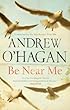
Be Near Me by Andrew O’Hagan is a beautifully written and moving book about David, a parish priest in a small Scottish parish and as I read it I gradually became aware of just how naive he is. The prologue foreshadows the problems he encounters when his mother comments that he has been through such a lot and that in her experience “nothing is ever behind anyone.” He tells her that he is looking forward to

Just working in an ordinary parish and greeting the faith of ordinary people.

What follows is a troubling story of what happened and what he did in that ordinary parish full of ordinary people. It’s a very sad and nasty tale, about prejudice, religious bigotry and it’s full of regret and despair.

Information about Andrew O’Hagan is here. I would like to read his earlier books, maybe The Missing, which is part autobiography and part looking at what happens to communities when people go missing.

That, quite coincidentally brings me on to another book I read in January:

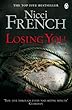
Losing You by Nicci French is a fast paced, take-your-breath-away book about Nina whose teenage daughter, Charlie goes missing. I read it a break-neck speed, switching between being completely engrossed and desperate for her to find her daughter before it’s too late and being annoyed by her attitude to the police.

It’s set on Sandling Island, off the east coast of England and the feelings of isolation and oppression fill the book. Nina is a newcomer to the island and is not really accepted as “one of us”. She struggles to get people, friends, neighbours and the police to take Charlie’s disappearance as anything serious. It’s the portrayal of the police as inept, inefficient and casual that bugged me – would that really be the case? Anyway, even if some of it was barely believable it is a real page-turner and I will be reading more of Nikki French’s books.

‘Nicci French’ is the pseudonym of wife and husband Nicci Gerard and Sean French. More information is on this website and they have a blog.

The Sunday Salon – Today’s Selection

tssbadge1

Some thoughts on today’s reading.

But first of all a short video (the first one I’ve put on YouTube):

Thunder and lightning – very, very frightening!

We had the most tremendous thunder storm last night and our lane was like a river in full flow. We’ve never had such a storm before with the whole lane covered by several inches of fast flowing water. The patio in the backgarden was completely flooded, fortunately it didn’t get quite up to the height of the doorway. This morning we found the slabs were lifted and the patio covered in garden debris.

I’ve not done much reading today. The family stayed overnight, arriving just as the water was subsiding. They’ve gone now to visit friends and will be back here later in the week.  Meanwhile, they’ve left behind quite a range of books that I could read today, including these –

Granddaughter (age 8 )

Granddaughter’s choice (age 3)

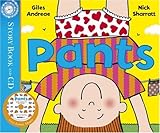
  • Pants by Giles Andreae, featuring lots of pants (what would Alan Sugar think?!) – giant frilly pig pants, fairy pants, hairy pants, run away from scary pants!  Love it!

Grandson’s (age 7) selection:

My selection?

I’ve read a short chapter from After the Victorians by A N Wilson, called The Silly Generation –  in the 1920s enthralling the world were Mary Pickford, Douglas Fairbanks, Charlie Chaplin, Ronald Coleman, Greta Garbo and Harold Lloyd. Rudolph Valentino, one of the first great stars of the Silver Screen died in 1922; thousands attended his funeral, openly weeping, foreshadowing the 21st century’s adulation of celebrities as witnessed by the deaths of Elvis, Marilyn Monroe, Princess Diana  and most recently Michael Jackson.

Musing Monday – Early Reading

Today’s MUSING MONDAYS post is about early reading –

Do you remember how you developed a love for reading? Was it from a particular person, or person(s)? Do you remember any books that you read, or were read to  you, as a young child? (question courtesy of Diane)

My love of reading comes from my parents. My father always read me a bedtime story and would make up stories of his own to tell me. My mother always had a book on the go and she took me to the local branch library, which was a small library with both children’s and adults’ books all in one room. This was before I started school, but according to my parents I could read by myself then.

I don’t remember learning to read and I don’t remember a time when I didn’t have books. My parents bought me books each birthday  and Christmas and so did my aunties and uncles. Some of the earliest books I remember being read to me are a book of nursery rhymes and a book about Teddy Robinson. When I was a bit older I read the Noddy books and then other Enid Blyton books and  fairy tales I loved those. I loved the Flower Fairy books too. I don’t have any of my orginal Flower Fairy books, but I’m delighted to see they’re still in print. There are many more now than when I was little and you can get the Flower Fairies Complete Collection of all eight original books – “Spring”, “Summer”, “Autumn”, “Winter”, “Wayside”, “Garden”, “Alphabet”, and “Trees” .

The Adventure Story

My eight year old granddaughter is very creative. She loves drawing and painting and has won prizes for her pictures. She also loves reading and writing. She has written lots of stories on the computer and she sent me this one recently. I hope you like it. I just love those tips at the end!

The Adventure Story by Emilia 

Once upon a time there lived a girl in the mountains called Charlie. She lived in a cottage with her mum, her dad and her sister Lily. One day Charlie went off into the mountains on her own and she found a dark, scary, spooky cave. She shouted ‘˜HELLO’! her voice echoed. 

“I wonder who lives here?” said Charlie. Then she quietly wandered off into the cave.

But Charlie did not know that a witch lived in a cottage just outside the cave which she had just passed.

“Hello,” said a croaky voice.

“Hello, I’m Charlie,” said Charlie.

“Come into my cottage,” said the witch.

But in the cottage there were potions.

Charlie got scared and she just had to RUN. She ran all the way home and told her mum everything that happened.

“You shouldn’t go off on your own,” said her mum

“Yer,” said Lily.

“Don’t be mean, Lily,” snapped her Dad.

And ever since this happened Charlie had been safe.

        THE END   

Charlie’s top tips for staying safe

  • NEVER accept a letter from people you don’t know.
  • NEVER walk with a stranger.
  • NEVER go in a stranger’s house or car.