This week’s question: -LibraryThing’s Recently Added feature: do you look at it? Do you use it for ideas? Is there something listed there now that looks interesting to you? What have you added to your LT library recently?
My answer: I hardly ever look at Recently Added (the one that shows what other people have added, although strangely I do look at my own). I’ve looked this morning and my goodness it changes so quickly! Blink and you’ve missed it. One that did catch my eye is Warmth Disperses and Time Passes by Hans Christian Von Baeyer about the law of thermodynamics. It looks really interesting and I don’t normally say that about books on science. I’ve never even wondered why my cup of tea cools down, so I’m going to see if I can borrow a copy from my local library.
My own recent additions are a mixed bag. I’ve added:
Harald First of the Vikings by Charles Young (lovely illustrations by Gertrude Hammond), published in 1911. I need to scan the cover as at present it’s showing the horrible brown default cover;
Walking In the Wild: over 50 Celtic Walks in Devon, Wales and the Hebridean Isles by Brian Carter. This is not just a book of walks, but is also autobiographical and “a quest for Celtic connections from South Devon, and Dartmoor, through Welsh-speaking Wales to the Hebridean Isle of Mull off the West Coast of Scotland” (quote from the back cover). It has beautiful black and white sketches of places and wildlife as well as line drawings of the walks.
I quite like it when I add books to LibraryThing and see that I’m the only person who owns copies. It’s almost as though I’m keeping the books alive.
Today’s Booking through Thursday’s question is: What, in your opinion, is the best book that you haven’™t liked? Mind you, I don’™t mean your most-hated book’“oh, no. I mean the most accomplished, skilled, well-written, impressive book that you just simply didn’™t like.
I find this question quite hard to answer, mainly because if I don’t like a book I usually don’t finish reading it. The only book I gave up on recently was Edith Wharton’s The House of Mirth. I found it long winded, tedious and boring. I’d borrowed it from the library and after renewing it several times I eventually returned it without finishing it. I got tired of Lily and her lust for luxury. It was one of the books read in Cornflower’s Book Group and I think nearly everybody else loved it – see here!
I think the real turn-off for me is when I find I’m bored with a book and it could be the subject or the style. Fortunately they drop out of my mind very soon, which is why I can’t think of any others right now.
What with one thing and another (and another … ) I feel very behind with everything. I’ve not been at home much since July and the garden has gone wild. The only thing that is good in it really is the lawn and that is because Green Thumb have been coming along and feeding and applying weed killer, with the result that for the first time since we moved into the house we now have a lovely lush green lawn which is nearly weed free. Apparently some of the weeds are difficult to get rid of at once but will succomb after a few treatments and it is working!
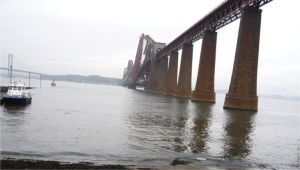
I’m now so behind with writing about the books I’ve read and the places I’ve visited that I think I’ll just have to start afresh, although I do want to write about some of them. Just last week my husband and I went to Scotland to visit our son and his family who have moved to a house south of Edinburgh. I’m still sorting out the photos we took and will post some of them later. We visited Queensferry and saw the bridges over the Firth of Forth – most impressive. There is lots of information on the bridges in the Queensferry Museum, with much better photos than mine. The first crossing of the Firth of Forth was by ferry as early as the 12th century. If you click on the picture below you can just see the Road Bridge on the left – the Railway Bridge is on the right.
Forth Road Railway Bridge
We also went to Linlithgow and walked round the Palace, where Mary Queen of Scots was born. It is so beautiful, overlooking the loch. We were surprised to see hoards of cyclists and then realised that they were on a sponsored ride between Glasgow and Edinburgh. So a real mixture of history mixed up with modern life.
Then we were off to visit the Kingdom of Fife and in particular Lower Largo, a small, picturesque seaside resort which was the birthplace in 1676 of Axander Selkirk, who inspired Daniel Defoe to write Robinson Crusoe. Amongst other places we also visited Edinburgh Zoo and Niddry Castle – more to follow on all of these later.
Travelling almost the length of England up to the Scottish Borders and beyond entails several stops along the way and inevitably these include motorway service stations. These are not always the most interesting places to stop and eat, although I was flabbergasted at the Charnock Richard service station when we sat by the window not very far above the north bound lanes of the M6 – it was the speed of the traffic that shocked me. What seems fast enough when you’re travelling is nothing compared to the sensation when you’re sitting completely still next to the speeding cars and lorries, not to mention the motorcyclists weaving in and out of the lanes. I’ve never been to a Grand Prix – that must be exhilarating.
But of course a stop at a service station, or anywhere really, is an opportunity to look at books and surprisingly most of the motorway book stalls stock a variety of books – well some are the same in each, but I restricted my buying to four books, which are
The Outcast by Sadie Jones – I’d read about this in newbooks. It’s about life in an English village after World War II and shortlisted for the Orange Prize for Fiction this year.
Roma by Steven Saylor – several bloggers have recommended this.
The Breaker by Minette Walters – a crime novel. I see it has very mixed reviews on Amazon!
Birthright by Nora Roberts – according to the author information inside the book she is “indisputably the most celebrated and beloved women’s writer today.” Sorry, but I’d never heard of her or read any of her more than 100 books. I thought I’d better remedy that and I liked the blurb on the back cover, which says that it’s set in the Blue Ridge Mountains at an archaelogical dig when five-thousand-year-old human bones are found.
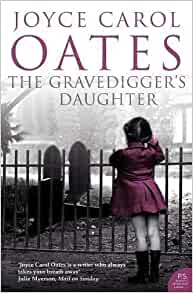
These books will have to wait as I’m still reading The Gravedigger’s Daughter by Joyce Carol Oates, which as Danielle wondered is rather “unsettling”. More on that another time. I’m also reading Dear Dodie: a life of Dodie Smith by Valerie Groves, because I loved I Capture the Castle. I must update my sidebars too and check where I am with reading challenges – so many things to catch up with!
I went to the local library yesterday and although I didn’t intend to borrow any more came home with two books. My excuse is that one is a book I’d reserved so I had to bring it home – The Suspicions of Mr Whicher by Kate Summerscale. The other is The Clothes On Their Backs by Linda Grant, which is on the Booker Prize Shortlist – it was irresistible.
I was looking through books yesterday at the shops and saw all the Twilight books, which I know basically nothing about. What I do know is that I’™m beginning to feel like I’™m the *only* person who knows nothing about them.
Despite being almost broke and trying to save money, I almost bought the expensive book (Australian book prices are often completely nutty) just because I felt the need to be ‘˜up’™ on what everyone else was reading.
Have you ever felt pressured to read something because ‘˜everyone else’™ was reading it? Have you ever given in and read the book(s) in question or do you resist? If you are a reviewer, etc, do you feel it’™s your duty to keep up on current trends?
I have felt pressured to read a book because ‘everyone else’ is reading it, but often find that it makes me actually resist reading it. Recently this has happened to me with what I think of as ‘that potato peel book’. Its proper title is The Guernsey Literary and Potato Peel Pie Society and I’ve read several reviews full of its praise. I know that people have enjoyed it immensely, so why am I so reluctant to read it? For one thing (and this is trivial, I know) but I don’t like the title. Mainly, though, I suppose it’s because I don’t like to jump on the bandwagon and also because I have succumbed in the past and been disappointed in a book – The Thirteenth Tale, Labyrinth, and The Time-Traveller’s Wife all come to mind. All these books failed for me to live up to the hype and I don’t like to have my expectations raised in that way.
I can’t put my finger on exactly why I feel that this about some books, because I often read other bloggers’ reviews and think ‘I really must read that book’. But I don’t actually feel any need to read a book just because lots of other people are reading it – it has to appeal to me. I write about books because I want to and I don’t get paid for it so I certainly don’t feel it’s my duty to keep up on current trends. Having said that I do want to know about new books and what other people are reading – I’m just contrary I suppose.
And I expect that eventually I will pick up ‘that potato peel book’, if only to have a look at what all the fuss is about.
Last Sunday found me in Ancient Egypt. Today I’ve been flitting between the Crimea, London and Italy with the Victorians whilst reading The Rose of Sebastopol by Katharine McMahon. I’m about half-way through this historical romance that switches from place to place and backwards and forwards between1844, 1854 and 1855 making me wondering where and when I am. Apart from that it’s a good read about the Crimean War as seen through the eyes of Mariella Lingwood. Her fiance, Henry is a surgeon who volunteered his services at the battlefields and her cousin Rosa, determined to be a nurse has also gone to the Crimea. There’s a good deal of interesting and somewhat gruesome descriptions of the medical practices and, surprisingly to me at any rate, criticism (so far) of Florence Nightingale. It was the connection with Florence that interested me when I saw this book in the bookshop so I hope she gets more involved in the story in the second half of the book. There’s a list of books about Florence Nightingale in the acknowledgements at the beginning of the book – maybe I’ll look these up later. It’s also interesting to read of the amazement that horses were shipped to the Black Sea by sail instead of steam and the dismay that supplies hadn’t reached the British troops and that proper medical arrangements hadn’t been made. Not only were they suffering from neglected battle wounds they were dying from cholera.
Yesterday I wrote that there is an autumn feel in the air, and then the sun came out here. It was really hot, but today it’s a lot cooler and pouring with rain. This morning I watched Countryfile, which featured Bekonscot Model Village, which we visited at the end of June. It was a bit chilly that day too. I’ve been meaning to write about it ever since. In the meantime you can check it out here.
I’ve still to write about Down To a Sunless Sea by Mathias B Freese, which he kindly sent to me a while ago. I’ve started to write a post about it so maybe I’ll finish that this week. It’s a collection of fifteen short stories, well character studies, described as “dark, offbeat stories about life”, about “the darkest struggles of life”. Serious stuff, indeed.
On a lighter note, a short while ago I received Stillmeadow and Sugarbridge by Gladys Taber and Barbara Webster from Nan at Letters From a Hillfarm as a result of a draw she held. Thank you, Nan. This looks a lovely book composed of letters between Gladys and Barbara about life in the country, illustrated by Edward Shenton. I’ve dipped into this and liked this short extract showing that life in the country is far from boring:
For one thing you can’t sit down long enough. Things happen. Pipes burst, well goes dry, heaters go off, dogs get sick, mice arrive in the back kitchen. Japanese beetles swarm on the special roses. Company drives up; in the end, all the world comes to the country for weekends. And you hope there’s time to do the laundry before the next batch comes round the mailbox corner.
I’m looking forward to receiving an Early Reviewer’s copy of Tangled Roots by Sue Guiney from LibraryThing, described as the story of an ageing mother and her adult son, carrying us from Boston to London to Moscow and back again. “Through physics, religion, travel and even baseball, they express the often unknown, yet undeniable, influences one life will have on another.”
newbooks magazine arrived a couple of weeks ago and I’m still deciding which free book (you only pay for postage) to choose from this latest edition. It’s either:
Life Class by Pat Barker -set in World War I, Slade School of Art and the Belgian Red Cross.
The Outcast by Sadie Jones – life in an English village after World War II and its effect on Lewis.
Lullabies for Little Criminals by Heather O’Neill – Baby is 12, whose survival depends on her gift for spinning stories.
Boy A by Jonathan Trigell – can Jack connect with new friends while hiding a monstrous secret?
The Septembers of Shiraz by Delia Sofar – in the aftermath of the Iranian revolution a rar-gem dealer is arrested and falsely accused of being a spy.
I’m torn between Life Class, The Outcast and The Septembers of Shiraz, but leaning towards Life Class at the moment.
newbooks includes extracts from each book, other features and interviews with authors.The “Big Interview” in this issue is with Susan Hill, a favourite author who has published over thirty five books – I’ve only read a few and am particularly fond of the Serrailler series, which began as a trilogy and now there is a fourth, The Vows of Silence, which I must read. She’s already writing the fifth, while the sixth and seventh are planned!
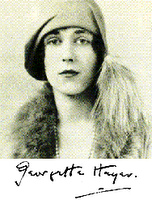
I don’t know whether it’s the time of year, summer drawing to a close and the promise of autumn in the air, but I feel in need of a change. Autumn always makes me think of doing new things anyway so when I read about the Georgette Heyer Reading Challenge it seemed just the time to read a new (to me) author.
The challenge is a perpetual challenge, hosted by Becky of Becky’s Book Reviews. There is no time limit to this challenge. The aim is simply to read as many of Georgette Heyer’s books as you would like – all or just a few.
Heyer wrote historical fiction, Regency romances most set before 1800 and also mystery thrillers. I first came across Georgette Heyer’s books years ago when I started working in a library. Her books were amongst the most frequently borrowed books and maybe that’s why I never read any of them – they were always out on loan. Other popular books were the Jalna series of books by Mazo de la Roche. I have been meaning to read some of these books for years and it seems that now is as good a time as any to begin. I haven’t got any of Heyer’s or De la Roche’s books so I’ll borrow them from the library to see if I like them.
On Geranium Cat’s recommendation I’m starting with Friday’s Child, in which the wild Lord Sheringham who, having been rejected by Miss Milborne, vows to marry the first woman he meets. I haven’t read anything like this for years. I’ve also borrowed The Private World of Georgette Heyer by Jane Aiken Hodge, to get an idea of what Heyer’s life was like. She was born in August 1902 in Wimbledon, into a very different world. I’m tempted to start with the biography, although it may be better to some of Heyer’s books first. What do you think?
 strangely I do look at my own). I’ve looked this morning and my goodness it changes so quickly! Blink and you’ve missed it. One that did catch my eye is Warmth Disperses and Time Passes by Hans Christian Von Baeyer about the law of thermodynamics. It looks really interesting and I don’t normally say that about books on science. I’ve never even wondered why my cup of tea cools down, so I’m going to see if I can borrow a copy from my local library.
 This is not just a book of walks, but is also autobiographical and “a quest for Celtic connections from South Devon, and Dartmoor, through Welsh-speaking Wales to the Hebridean Isle of Mull off the West Coast of Scotland” (quote from the back cover). It has beautiful black and white sketches of places and wildlife as well as line drawings of the walks.