 My choice this week for the Crime Fiction Alphabet meme is N for Not Safe After Dark by Peter Robinson.
This is a collection of twenty short crime stories, including three Inspector Banks stories and an Inspector Banks novella (90+ pages). The title story Not Safe after Dark is just six pages long and yet those six pages are full of tension and suspense as an unnamed man enters a park after dark, even though he knows that such big city parks are dangerous places.
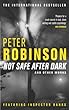 Peter Robinson’s introduction is interesting for me in that he explains how he writes and compares writing a novel to writing short stories. He’s used to thinking in terms of the novel, with it’s ‘broad canvas’ and finds it hard to ‘work in miniature’. Short stories don’t come easily to him.
I carry a novel around in my head for a long time – at least a year, waking and sleeping – and this gives me time to get under the skin of the characters and the story. Also, plotting is probably the most difficult part of writing for me, and being asked to write a short story, which so often depends on a plot twist, a clever diversion or a surprising revelation, guarantees that I’ll get the laundry done and probably the ironing too.
In short stories there is no space to develop the characters or the plot, nor to give different points of view as in a novel. But, as far as I’m concerned, with the stories I’ve read so far in this book Robinson has succeeded in creating convincing stories with believable characters in real settings.
Often reading short stories I’m left wanting more, which is what happened to Robinson with one of these stories. Innocence is a haunting tale of a man accused of murduring a teenage girl. After writing Innocence, which won the Crime Writer of Canada’s Best Short Story Award in 1991, he couldn’t let the story go and went on to write a whole novel expanding on the events of the story. This eventually became Innocent Graves, featuring Inspector Banks (who is not in the short story).
The other stories include a private-eye story set in Florida, a romantic Parisian mystery, a historical story inspired by Robinson’s interest in Thomas Hardy and the place where he was born, and stories about such varied topics as American Football and Shakespeare.
Note: Peter Robinson’s website is here.

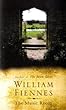 It’s the story of William Fiennes childhood. It reads in parts like a novel, but is actually a memoir. He lived in a moated castle, in a beautiful setting with his parents, and older brothers and sister. Richard, eleven years older than him suffered from severe epilepsy, which has a profound effect on the family. I like the descriptive passages in this book and the details about the family, the loving memories that William evokes. The castle is open to the public part of the time and is also used by film crews and he was entranced by the filming as well as by the actors. Just fancy meeting Eric Morecambe when you’re five and he asks if you’re married, or selling Ian McKellen a postcard.
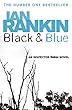 It’s a real page-turner and very complicated. I’m reading it quickly because I want to know what happens next and to see how Rebus gets himself of the terrible mess he is in – suspected by his superiors of being a killer(!) and of corruption back in his early days as a detective, along with Lawson Geddes, his boss at the time. He’s being investigated by a TV company and also by the police themselves in an internal enquiry and all the time he’s spiralling downhill under alcohol and cigarettes. I’m thinking that when I get to the end I may go back to the beginning and read it again more slowly to appreciate the detail.
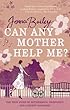 This contrasts so well with the other book I’m reading –


![Musing Mondays2_thumb[1]](https://i0.wp.com/www.booksplease.org/wp-content/uploads/2010/01/Musing-Mondays2_thumb1-150x89.jpg "Musing Mondays2_thumb[1]")


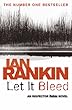 I read further on this morning to be confronted with another suicide, this time Hugh McAnally, known as Wee Shug blows his head off with a sawn-off shotgun. Rebus is struggling, drinking and smoking too much, living on his own and at odds with his daughter. He’s rubbed people up the wrong way and is told to take time off, which worries him – without work his life has no shape or substance:

