Crime Fiction Alphabet: U is for Umberto Eco

This week’s letter in Kerrie’s Crime Fiction Alphabet series is  ‘U’.

I’ve chosen Umberto Eco, an Italian writer of post-modern fiction, full of allusions and references, using puzzles, playing with language, words and symbols.

I’ve read  The Name of the Rose twice, some years ago now.It is a fantastic historical crime mystery novel set in a Franciscan monastery in 14th century Italy. William of Baskerville and his assistant Adso are sent to the monastery to investigate a series of murders. I loved this book, which has so much of what I enjoy in reading – historical setting, the pursuit of truth behind the mystery and the meaning of words, symbols and ideas and a great detective story all combined with religious controversies and theories. William is an expert in deduction, and needs all his skills to work his way through the monastery’s labyrinthine library:

The library is a great labyrinth, sign of the labyrinth of the world. You enter and you do not know whether you will come out. … And in our midst someone has violated the ban, has broken the seals of the labyrinth … (pages 158 & 159)

I read Foucault’s Pendulum after reading The Name of the Rose, but struggled at first to read it. It’s immensely detailed, slow to get going and in parts it is boring. But I persevered and in the end I found it fascinating, although I do prefer The Name of the Rose. Again it’s a mystery thriller this time concerned with books and words, mixed in is a coded message about a Templar plan to tap a mystic source of power. It features the Knights Templar, the Crusades, the bloodline of Christ, the Rosy Cross etc, etc  so that when I read Dan Brown’s Da Vinci Code I immediately thought back to this book, but of course it’s nowhere near the same!
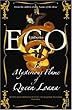
I have one other book by Eco – The Mysterious Flame of Queen Loana. I haven’t read it yet. From the back cover:

Yambo, a rare-book dealer, has suffered a bizarre form of memory loss. He can remember every book he has ever read but nothing about his own life.

In an effort to retrieve his past, he withdraws to his old family home and searches through boxes of old newspapers, comics, records, photo albums and diaries kept in the attic.

Flipping through it, it doesn’t look as difficult as Foucault’s Pendulum and there are colour illustrations of the books and newspapers etc that Yambo finds in the attic. As a book-lover this appeals to me.

Sunday Salon – Give Up Reading??

Could you give up reading for a week? That’s what Bibi van der Zee did. She wrote about it in yesterday’s Guardian. She was beginning to wonder if books were eating her up and whether they were some kind of drug.

I just can’t imagine not reading for that length of time. If I go for one day without reading I start to feel irritable and in need of a book, so perhaps it is a drug of sorts. She discovered this startling information about the effect of reading on the brain.

In a book coming out next year about the psychology of fiction, Professor Keith Oatley describes a piece of research where scientists got people to read while they were in a brain scanner. “When readers were engaged in a story, the researchers found that, at the points in which the story said a protagonist undertook an action, the part of the brain which was activated was the part which the reader himself or herself would use to undertake the action. So, when the story- protagonist pulled a light cord, a region in the frontal lobes of the reader’s brain associated with grasping things was activated.”

I shan’t be giving up reading and I must look out for that book.

Weekend Cooking – French Cookbooks

Last week for my Weekend Cooking post I wrote about Italian cookbooks, so this week I thought I’d stay on the Continent and write about my French cookbooks. I only have four – two over 20 years old and two more recent. Three are by British food writers and one by a French woman writer.

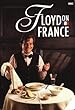
The first one is Floyd on France – an old book with a photo of a young (well youngish) Keith Floyd on the cover. It was published in 1987 by the BBC based on his BBC 2 series of the same name. Keith Floyd hosted many TV programmes on cooking, combining food and travel. He died last September. This book includes his personal selection of some of his favourite French dishes. They’re French provincial  recipes.

After a description of the “Principal Gastronomic Regions of France” the book follows the standard cookbook formula of recipes of Soups, Vegetables, Fish, Meat etc; recipes such as Shrimp Bisque made with live grey shrimps (I’ll never attempt that!) from Charente, a variety of omelettes, Carp in Wine Sauce from Burgundy,  Jugged Hare with Tiny Dumplings from Alsace, and Nut Tart from Perigord.

I’m going to make his Leek Pie (from Charente) tomorrow.

 (Click on the photo to see the recipe.)

Next The Frenchwoman’s Kitchen by Brigitte Tilleray, published in 1990. The brief biographical details given in the book are that she was born in Normandy and was a journalist before writing books on food. This is a beautiful book, one I love to peruse, admiring the photos of food and of France. It’s arranged by regions with information about the land and the people as well as recipes – such as Escargots Baked in a Wine Sauce from West France, Spicy Pear Pie from Normandy and Chicken with Cepes from The Pyrénéés .

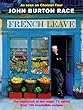
French Leave by John Burton Race is an account of 2002, the year he and his family spent living in a farmhouse in the south-west of France. Another book full of beautiful photos and recipes. John is a two Michelin  star chef, who was once a sous chef at Raymond Blanc’s Le Manoir aux Quat’ Saisons, before opening his own restaurants. His book follows the seasons from Autumn to Spring, with recipes such as Cauliflower Soup with Truffle Oil, Loin of Veal with Pieds de Mouton and Crepes Suzette.

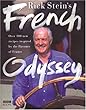
And last but not least Rick Stein’s French Odyssey. This is the book of Rick’s “journey of gastronique discovery from Padstow to Bordeaux and then on to Marseille”. It’s divided into a diary section and recipe chapters arranged by courses. Rick is one of my favourite TV chefs, and I would love to eat in one of his seafood restaurants in Padstow in Cornwall. There are recipes for classic French dishes such as Vichyssoise, Bouillabaisse, Cassoulet and Tarte Tatin as well as “new takes on traditional ingredients”, such as Fillets of John Dory with Cucumber and Noilly Prat and Prune and Almond Tart with Armagnac.

Visit Beth Fish Reads for other bloggers who are participating in Weekend Cooking.

Library Loot

Here are some of the library books I currently have out on loan.

I haven’t started any of them, although I’ve dipped into each one. From top to bottom they are:

  • The Case of the Missing Books by Ian Sansom. An interesting title I thought. It’s about a Jewish, vegetarian librarian who has just arrived to take up his first post as a librarian in Ireland. His problem is that the library has been shut down and he ends up driving a mobile library – with 15,000 fewer books than there should be. Who has stolen them and when would they have time to read them all?
  • The Careful Use of Compliments by Alexander McCall Smith. I keep reading reviews of his books, but not of this one, saying how good his books are, so I thought I’d borrow one to see for myself. This is an Isabel Dalhousie novel, part of the Sunday Philosophy Club series, in which she has a new baby, deals with the threatened takeover of her beloved Review and is drawn into the story of a painter’s mysterious death of the island of Jura.
  • Death of a Red Heroine by Qui Xiaolong. I read about this one on Norman’s blog and thought it sounded good. Set in Shanghai in 1990, Chief Inspector Chen’s investigation of the murder of a young woman leads him to the decadent offspring of high-ranking officials.
  • Dead in the Morning by Margaret Yorke. It’s been a few years since I read any of Margaret Yorke’s books. This one is about arrogant, cruel and demanding old Mrs Ludlow, whose housekeeper is found dead. Everyone assumes the fatal dose of poison was  intended for Mrs Ludlow herself, but was it?
  • Happy Birthday by Christina Jones. This is described as a “magical romantic comedy” and I thought it could make a nice change from my usual fare. It’s about Phoebe, jilted at the altar. Can she really use the secret magic of “birthday-ology” to find a perfect match? I’m not sure now that I’ll like this book.

Library Loot is hosted by Eva and Marg.

Sunday Salon – This Year’s Books

It seems  a good day to look back over my reading in  the first two months of the year. I’ve read 15 books – 8 in January and 7 this month.

Titles marked * are crime fiction, underlined are non-fiction and in italics are library books. The rest are my own books acquired from various booksellers.

  1. Drood by Dan Simmons
  2. Invisible by Paul Auster
  3. Be Near Me by Andrew O’Hagan
  4. Let it Bleed by Ian Rankin *
  5. Black and Blue by Ian Rankin *
  6. Losing You by Nicci French *
  7. The Pale Horse by Agatha Christie *
  8. The Music Room by William Fiennes
  9. Can any Mother Help Me? By Jenna Bailey
  10. Fallen Gods by Quintin Jardine *
  11. The Hanging Garden by Ian Rankin *
  12. The Hollow by Agatha Christie *
  13. Not Safe After Dark & other works by Peter Robinson * (short stories)
  14. The Warrior’s Princess by Barbara Erskine
  15. Dead Souls by Ian Rankin *

Of these 15 books 9 are crime fiction, which is partly because I’m taking part in Agatha Christie Reading Challenge and also Kerrie’s Crime Fiction Alphabet series. This means writing about a book  related to the letter of the week. It can either be the first letter of a book’s title, the first letter of an author’s first name, or the first letter of the author’s surname. Tomorrow it’s the letter T and I’m currently reading The Franchise Affair by Josephine Tey. I’ve read about half the book and may finish it later today and write about it Monday or Tuesday.

I think the best of these 15 books is Black and Blue by Ian Rankin.

The only challenge I’m doing this year is Emily’s To-Be-Read challenge which is to read at least 20 books from your to-be-read piles before buying any more books. I’m doing this with the proviso that I’m actually allowing myself to buy a few books as it would be too hard otherwise.

 I’ve bought four books this year – one of them being Dead Souls by Ian Rankin. I “had” to buy this because I’m reading his Rebus books in chronological order and didn’t have this one and it was the next one to read. So far then, I’ve read 10 books off my to-be-read piles in two months – not bad!

As well as reading The Franchise Affair I’m also reading Poetic Lives: Shelley by Daniel Hahn and The Girl with the Dragon Tattoo by Stieg Larsson.

Books I’ll be reading next are:

  • Being Shelley: The Poet’s Search for Himself by Anne Wroe
  • The next Rebus book – Set in Darkness by Ian Rankin
  • Sunday Salon – Reading and Writing

    Writing Tips: I liked this – yesterday’s articles in the Guardian – a survey of established authors’ tips for successful authorship.  Part one tips from Elmore Leonard, Diana Athill, Margaret Atwood, Roddy Doyle, Helen Dunmore, Geoff Dyer, Anne Enright, Richard Ford, Jonathan Franzen, Esther Freud, Neil Gaiman, David Hare, PD James, AL Kennedy

    and

    Part Two: Hilary Mantel, Michael Moorcock, Michael Morpurgo, Andrew Motion, Joyce Carol Oates, Annie Proulx, Philip Pullman, Ian Rankin, Will Self, Helen Simpson, Zadie Smith, Colm Tóibín, Rose Tremain, Sarah Waters, Jeanette Winterson

    Choice tips: mostly along the lines of

    •  Write
    • Read
    • Get on with it/be persistent

    I think this from Will Self goes for everyone not just successful authors:

    You know that sickening feeling of inadequacy and over-exposure you feel when you look upon your own empurpled prose? Relax into the awareness that this ghastly sensation will never, ever leave you, no matter how successful and publicly lauded you become. It is intrinsic to the real business of writing and should be cherished.

    Reading – Today I’ve been trying to decide which book to get as my free book from newbooks magazine. As usual I’m spoilt for choice and have to ask myself – do I really want yet another book to add to the to-be-read mountain?

    These are the books (soon to be published in paperback):

    • The Crimson Rooms by Katherine McMahon (pub date 1 April). Six years after the end of the First World War Evelyn is still haunted by the death of her younger brother. I enjoyed her earlier novel The Rose of Sebastopol, so maybe this would be a good choice.
    • The Glass Room by Simon Mawer (pub date 11 March) Set in 1930, the storm clouds of World War Two are gathering in Czechoslovakia. Landauer House built of glass, steel and onyx is passed from hand to hand. I’ve only read The Gospel of Judas by Mawer – enjoyed that, perhaps this would be good too.
    • Relics of the Dead by Ariana Franklin (pub date 18 March). More about Adelia, a 12th century ‘readerof bones’ for Henry II. In this latest book she has to identify and authenticate the bones of Arthur and Guinevere. I loved the first book Mistress of the Art of Death and the second The Death Maze, although I haven’t read it yet. It would be good to have this third book to complete the set.
    • Balthazar Jones and the Tower of London Zoo by Julia Stuart (pub date 4 March). Balthazar is a Beefeater and his new job is to look after the exotic animals that are to be moved from London Zoo to the Tower’s grounds. This is a debut novel. It does sound different from my usual choice of reading.
    • Instruments of Darkness by Imogen Robertson (pub date 1 April). A murder mystery set in West Sussex in the 18th century. A man’s body is found in the grounds of Thornleigh Hall. His throat has been cut. On the same day Alexander Adams is murdered in London. This is a debut novel too. I do like historical crime fiction, but I’m not sure about this one.