Book Beginnings

Whistling for the Elephants by Sandi Toksvig, first published in1999 is my book group’s choice for July. It begins:

There are two basic types of creature in Nature’s kingdom. The first, like frogs and turtles, produce many offspring and simply hope that some will survive. The second, like elephants and people, produce one or two, at long intervals, and make great efforts to rear them. My mother belonged in a class of her own. She produced two at short intervals and made no effort to rear them whatsoever. Some people agonize over these things but I thank God. A hint more attention from my own family and things might never have turned out the way they did. (page 11)
This is Sandi Toksvig’s first novel and I haven’t read much more than the first few pages. I’m expecting it to be an amusing book, if not laugh-out-loud humour, from seeing Sandi Toksvig on programmes like QI. She is a Danish born comedian, broadcaster and author, who studied law, archaeology, and anthropology at Girton College, Cambridge, where she was a member of the Footlights at the same time as Stephen Fry, Hugh Laurie, Tony Slattery, and Emma Thompson. As well as Whistling for the Elephants she has also written books for children and Flying Under Bridges, The Travels of Lady ‘Bulldog’Burton, and Gladys Reunited: A Personal American Journey (none of which I’ve read).

From the back cover I gleaned that Whistling for the Elephants is a novel about Dorothy, aged ten, living with her English parents in Sassapaneck, New York in 1968. She comes across a small faded zoo and gets to know an eccentric group of women and ‘begins to discover a world way beyond the one she has glimpsed so far.’

Book Beginnings is hosted by Katy at A Few More Pages, where you can leave a link to your own post on the opening lines of a book you’re currently reading.
Gently by the Shore by Alan Hunter: Book Review

Gently by the Shore is the second Inspector Gently book by Alan Hunter. George Gently is called in to investigate a murder in Starmouth, a British seaside holiday resort. An unidentified body was found on the beach. The victim was naked, punctured with stab wounds. Gently summarises it:

He had wandered into town, this enigmatical foreigner, he had taken lodgings, he had found a cafe to his taste and a prostitute to his taste; and then he had been, in a short space of time, kidnapped, tortured, murdered and introduced into the sea, his room ransacked and plundered of something of value. There was a ruthlessness about that … it bore the stamp of organization. But there was no other handle. The organization persisted in a strict anonymity. (page 92)

All Gently has to go on is his intuition. This man had been in disguise, no one seemed to know him or why he was in Starmouth. Gently by the Shore was first published in 1956 and reflects that period of time. Gently smokes a pipe and puffs his way through the investigate often in a haze of smoke when questioning suspects who also smoke. The account of a British holiday scene in the fifties brought back memories of childhood holidays (without any murders!) of sunny days on the beach, wet days in amusement arcades on the penny slot machines, the end-of-piers shows, beach cafes, deckchairs, and staying in Guest Houses, where you had bed, breakfast and an evening meal but weren’t expected to stay in your room during the day, the change-over on a Saturday with a mass exodus of one set of holiday makers before the next lot arrived.

It has a very ‘English’ feel about it:

Exceeding Sunday-white lay the Albion Pier under mid-morning sun. Its two square towers, each capped with gold, notched firmly into an azure sky and its peak-roofed pavilion, home of Poppa Pickle’s Pierrots, notched equally firmly into a green-and-amethyst sea. Its gates were closed. They were not open until  half past two. The brightly dressed strollers, each infected in some degree by the prevailing Sundayness, were constrained to the languid buying of ice-cream, the indifferent booking of seats or the bored contemplation of Poppa Pickle’s Pierrots’ pics. They didn’t complain. They knew it was their lot. Being English, one was never at a loss for a moral attitude. (page 145)

The fifties were also the period where the death sentence was still in force and Gently and the main suspect discuss the ethics of killing comparing a hired killer with the hangman. Gently maintains that the death penalty is an ideal – ‘to protect people on their lawful occasions’, and that his duty is to catch the criminal. The case is complicated by the involvement of secret agents, at which point I thought the plot became too contrived, and Gently is faced with solving:

… a planned execution, the details of which have been efficiently erased. (page 189)

But, solve it, he does!

My verdict is that this book doesn’t live up to the promise of the first one, Gently Does It, but I enjoyed the setting, the ethical discussions and the problem-solving aspects.

Crime Fiction Alphabet: Letter Y

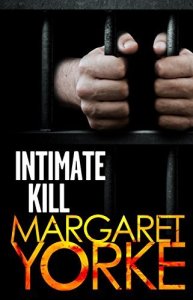
My choice for Kerrie’s Crime Fiction Alphabet this week is Margaret Yorke’s Intimate Kill.

Margaret Yorke has written numerous crime fiction novels and is a past chairman of the Crime Writers’ Association (CWA). In 1999 she was awarded the CWA’s Cartier Diamond Dagger Award for her outstanding contribution to the genre.

Intimate Kill was first published in 1985 and I think it’s an excellent example of her work  Margaret Yorke writes in a fluent style, one that draws you into the story effortlessly. Stephen Dawes has been released from prison after serving 10 years of a life sentence for murdering his wife, Marcia. Her body had never been found. Stephen knew he was innocent and believed that she had killed herself, making him out to be the murderer, devastated when he had asked for a divorce. He is determined to find out how she did it.


Intimate KillThe book is divided into three parts. Part One deals with Stephen’s search for the truth about Marcia’s death and for his daughter. Stephen’s marriage had not been a happy one and he’d been having an affair with Ruth Watson which resulted in the birth of his daughter, Susannah. Part Two moves back in time eleven years, dealing with the events that led up to Marcia’s disappearance and subsequent events. In Part Three Stephen discovers the truth and nearly loses his own life.

It’s not difficult to work out what actually happened but that doesn’t detract from the pleasure of reading this book. Margaret Yorke is so skilled in characterisation that she has captured the emotions and feelings, as well as the weaknesses and ambitions of all the characters. I believed in all of them. The plot moves swiftly and with a real sense of evil as the tension mounts.

Sunday Selection

Sunday seems to be the day when I start new books or at least think about starting new books. Today’s no exception, but it’s so lovely outside so I won’t be spending much of the day indoors reading – in the garden, maybe.

I thought I’d decided what I was going to read next – Gillespie and I by Jane Harris for one and Gormenghast, the second book in Mervyn Peake’s trilogy for another, and continue reading Wilful Behaviour by Donna Leon.

But then D finished his long-term reading of Joyce Carol Oates’s mammoth novel Blonde and passed it over to me. Blonde is a novel that

reimagines the inner, poetic and spiritual life of Norma Jean Baker – the child, the woman, the fated celebrity and idolized blonde the world came to know as Marilyn Monroe. (From the back cover)

I wanted him to write his thoughts on the book but I can’t persuade him. He tells me that he was always having to be conscious as he was reading  that Blonde is a novel and frequently checked in Richard Havers’s book, Marilyn in Words, Pictures and Music to make sure which was fact and which was fiction (we also have Barbara Leaming’s biography). We have DVDs of Marilyn’s films and as he was reading he watched the film that he was reading about (I watched one or two).  So now I’m eager to read Blonde.

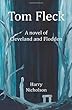
Yesterday I received in the post (from the author) Tom Fleck: a novel of Cleveland and Flodden by Harry Nicholson. This is about a young farmworker who took part in the Battle of Flodden in the north-east of England, close to the Scottish border in 1513.  We live not far from Flodden Field and the 500th anniversary is coming up, with many events planned to commemorate the battle, so when Harry emailed me about his book I was immediately interested. As I do with each book I get I read the opening pages. I read enough to make me want to read on.

So now I’m stuck.  I can continue with reading Wilful Behaviour, but I want to have another book on the go – which book should I read first?

Best Crime Fiction Reads so far this year

Kerrie asks: ‘What are the best crime fiction titles you’ve read in 2011?

So far this year I’ve read 31 crime fiction titles. The following books have my highest ratings:

  1. Exit Lines by Reginald Hill 5/5
  2. Drawing Conclusions by Donna Leon 5/5
  3. Rebus’s Scotland by Ian Rankin 5/5
  4. The Stabbing in the Stables by Simon Brett 4.5/5
  5. Gently Does It by Alan Hunter 4.5/5
  6. Cop Hater by Ed McBain 4.5/5
  7. The Case of the Lame Canary by Erle Stanley Gardner 4.5/5
  8. Intimate Kill by Margaret Yorke 4.5/5 (see review next week)
  9. Wycliffe and the Last Rites by W J Burley 4.5/5
  10. The Silent World of Nicholas Quinn by Colin Dexter 4.5/5
  11. The Art of Drowning by Frances Fyfield 4.5/5

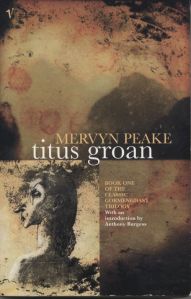
Titus Groan by Mervyn Peake: a book review

Titus Groan 001

Sometimes it’s dangerous to re-read a book you loved the first time round. There’s always the possibility that you’re going to be disappointed that it wouldn’t live up to to your expectations, especially if the first time you read it was whilst you were in your teens.

With Titus Groan I needn’t have worried. I thought it was fantastic the first time and absolutely fantastic this time too.

The world Peake created in Gormenghast is real on its own terms. It has history, culture and its own rituals and traditions. The novel is poetical,  rich in imagination, description and characters. It all came alive as I read on and the same magic I felt the first time was still there.

It was first published in 1946 but because it’s about an imaginary world it hasn’t dated at all. Yes, it’s slow-moving, but with a book like this that’s essential as there’s so much to absorb. The names of the characters are Dickensian, farcical and eccentric. It’s a story of good and evil, raising issues about equality, age versus youth, tradition versus change, destruction and violence, and insanity. It’s grotesque in parts, sensual and tender in others. It is brilliant.

It’s impossible to summarise in a few paragraphs. It begins with the birth of Titus, soon to be the 77th Earl of Gormenghast and ends when he is almost two years old. His father, Lord Sepulchrave has endured despair and then madness after his beloved library was burnt down and Steerpike, a disrespectful youth, has clawed his way out of the castle’s kitchen to a position of some power, by manipulation and deceit.

Titus thus inherits that immense structure – Gormenghast Castle and its surrounding kingdom and the possibility of change is in the air:

There would be tears and there would be strange laughter. Fierce births and deaths beneath umbrageous ceilings. And dreams, and violence, and disenchantment.

And there shall be a flame-green daybreak soon. and love itself will cry for insurrection! For tomorrow is also a day – and Titus has entered his stronghold. (pp 505-6)

I wrote about the first few chapters with a list of characters in an earlier post.

Titus Groan:

  • Paperback: 512 pages
  • Publisher: Vintage Classics; New edition edition (6 Oct 2005)
  • Language English
  • ISBN-10: 0749394927
  • ISBN-13: 978-0749394929
  • Source: I bought the book

And now, on to part two of the trilogy – Gormenghast.

Follow the Gormenghast Read-along on Jackie’s blog.