Friday’s Child by Georgette Heyer

fridays-child

 Friday’s Child is the first book I’ve read by Georgette Heyer. It is completely different from the type of  books I normally read and at first I thought I wouldn’t like it but I soon changed my mind. It’s a light-hearted novel that’s easy to read, although full of Heyer’s Regency slang.

In 1943 when she was working on Friday’s Child Georgette Heyer wrote  to her publisher describing it as

a Regency society-comedy quite in my lightest vein. … Nothing mysterious or very exciting happens, but I think it is pretty lively.

Twenty years later she described it as ‘my own favourite’.  I found it entertaining and amusing. Lord Sheringham (Sherry) is rejected by the Incomparable and outstandingly beautiful Miss Milborne and vows to marry the first woman he meets. Fortunately this happens to be Hero Wantage (Kitty), a young and naive girl who has loved him since childhood. Although he is not in the least in love with her they elope.

The story is quite predictable, but none the less enjoyable, as Kitty and Sherry embark on a series of mishaps, mayhem and scrapes. The  trouble is that he doesn’t realise she loves him and carries on as though he were still single and she takes what he says as the gospel truth, resulting in chaos and disaster. Eventually she takes the drastic step of running away from him aided and abetted by his friends, George, Lord Wrotham, Mr Ringwood and the Hon. Ferdy Fakenham. The end result as Sherry desperately tries to find her is very much in the vein of a Whitehall farce, with disguises and mistaken identities.

Georgette Heyer’s portrayal of Regency England is superb in detail and atmosphere.  The beauty and skill of this elegant, romantic novel is that it transported me back in time to Regency England, a time of dashing heroes and enterprising heroines. I’m now looking forward to reading more.

My first book for The Georgette Heyer Reading Challenge.

The Behaviour of Moths, Poppy Adams

A brilliant book

Behavior Of Moths

It’s the story of two sisters, Ginny and Vivi. Vivi, the younger sister left the family mansion 47 years earlier and returns unexpectedly one weekend. Ginny, a reclusive moth expert has rarely left the house in all that time. What happens when they meet again is shocking to both of them. It’s a story full of mystery and suspense as it is revealed that the two have very different memories of their childhood and the events of the past.

The story alternates between the past and the present as Ginny recalls their lives. The house is now dilapidated, crumbling away, invaded by the Virginia creeper that covers the exterior turning it a beautiful deep red in the autumn. Ginny is an introverted, obsessive character who has rarely ventured out of the house since Vivi left. Her only contact with the outside world is through Michael, who was previously the gardener, when he brings her shopping. Two events in particular affected their lives. The first is when Vivi aged 8 fell from the bell tower and nearly died. She was impaled on an iron stake and as a result lost her ability to have children; the second when Maud, their mother died having tripped down the cellar steps changing their lives for ever.

Ginny, the narrator is the one who followed in her father’s footsteps becoming a “relatively famous lepidopterist“. Over the years she has closed down and locked rooms she no longer uses and has sold much of the furniture and many of their belongings. Vivi is horrified:

… you’ve wiped out every reference to our past. Our family might not have happened. There was no point in its existing for the last two hundred years if it’s got nothing to show for itself.

Ginny thinks differently and asks:

Is it really necessary to to record your life in order to make it worthwhile or commendable? Is it worthless to die without reference? Surely these testimonials last another generation or two at most, and even then they don’t offer much meaning. We all know we’re a mere fleck in the tremendous universal cycle of energy, but no one can abide the thought of their life, lived so intensively and exhaustively, being lost when they die, as swiftly and as meaninglessly as an unspoken idea.

This thought struck me quite forcibly. I know de-cluttering is “liberating” but almost emptying the house is taking it to the extreme. But on the other hand Ginny has a point – we are more than our possessions and our lives are so brief. These days so much is on record about us, but what does it all mean?  Right from the start you realise that there is something different about Ginny and as the story is seen through her eyes it is told in intricate detail and a somewhat detached fashion.

The family relationships are so well defined and we see how they all interact and have a different perspective on the truth. The contrast between the sisters is reflected in the contrasting characters of their parents and the mother/daughter and father/daughter relationships. Ginny’s attention to detail is frightening – for example she pins the sheets to the blankets and they have to be tucked in in a particular way so that they won’t move when she is in bed. It takes her fifty-five minutes to make the bed! In the morning it hardly looks as though she slept in it. The disruption she experiences when Vivi returns to the house is fraught with tension as she silently stalks Vivi’s movements through the house.

I I loved all the detail about moths. Poppy Adams, so the book cover tells me, has a Natural Science degree and is a documentary filmmaker and it shows. Yet this is no dry, factual account. I was fascinated by the descriptions of the study of moths and their behaviour. They are not an aside but are integral to the story. At one point in the story Ginny goes with Clive, her father, when he gives a lecture at the Royal Entomological Society and it is here I think that I realised the significance of the title. Clive is asked whether he is suggesting that moths don’t make up their own minds about what they do, that their actions are absolutely determined. He replies that he believes their behaviour is involuntary. His questioner is aghast:

Involuntary! What – like the muscles that pump our hearts? You really believe that insects are living automatons? They have no emotions, no sentiment, no interests and no mind?

It seems that this is how Ginny sees and has lived her life. But then, as the story unravels, it is clear that all is not as it seems.

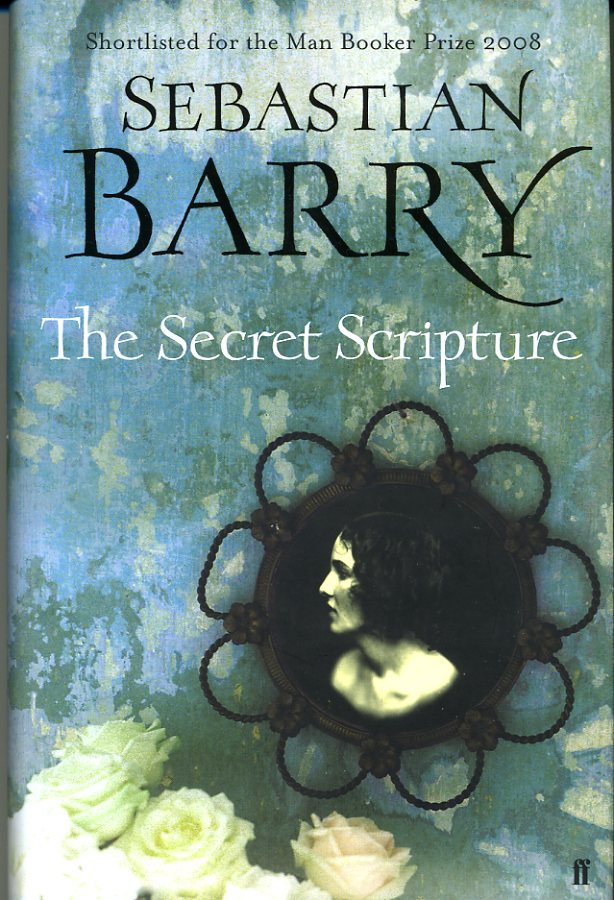
The Secret Scripture by Sebastian Barry

secret scripture004

I knew very little about The Secret Scripture when I started reading it, apart from the fact that it was on the shortlist for the Man Booker Prize and it was about an old woman in a mental hospital in Ireland, secretly writing her life story. I’d not long finished  The Gravedigger’s Daughter by Joyce Carol Oates and was surprised to find that I was reading yet another tragic tale about a gravedigger’s daughter. The opening sentences set the tone:

The world begins anew with every birth, my father used to say. He forgot to say, with every death it ends. Or he did not think he needed to. Because for a goodly part of his life he worked in a graveyard.

However, Roseanne, now about 100 years old, is the daughter of a very different gravedigger, one who was happy in his work and apparently well-liked. But his happiness didn’t last as many disasters assailed him which inevitably also affected Roseanne. As she later recalls her father

was let go from the cemetery, a living man exiled from the dead.

That was a little murder, also.

… Working in the graveyard, under the patronage as it were of Fr Gaunt, was in some manner to him his life perfected, made good. In some manner, made as a prayer back to his own father. It was the way he had learned to live, in Ireland, the accidental place he loved.

And to lose the job was to lose in some extraordinary fashion himself.

At the beginning of the book the hospital is due to close and at the same time as she is writing her own account of her life, Dr Grene is assessing whether she could cope with living on her own. He delves into her past trying to find the reason she was admitted and as the “facts” of her life emerge there are obvious discrepancies between her own account and the hospital records. It’s a story of Roseanne’s struggle to survive set against the background of religious conflict and political unrest in Ireland.

I was thoroughly gripped and moved by this novel; by the plot, the characters and the writing. Dr Grene, whose wife dies during the course of the book, is haunted by the failure of his marriage and overcome with grief:

I had woken in the night with an appalling sense of shame and disquiet. If I could itemise the attributes of my grief, and print them in a journal, I might do the world a general service. I suspect it is hard to remember grief, and it is certainly invisible. But is is a wailing of the soul nonetheless and I must never underestimate its acidic force in others.

One aspect of this novel particularly appealed to me – the nature of memory and its function in our lives. Roseanne looking back over her life begins to wonder just what was real and what was fantasy, comparing memory to a box or lumber room where

the contents have become jumbled about, maybe not only from neglect but also from too much haphazard searching in them, and things to boot thrown in that don’t belong there.

As she sees it,

… time passing is just a trick, a convenience. Everything is always there, still unfolding, still happening. The past, present, and the future, in the noggin eternally, like brushes, combs and ribbons in a handbag.

I’ve read some criticism that the ending is disappointing and contrived and although I could see how events were going to unfold I have no complaints. It was satisfying and it worked for me.

Lock 14 – Georges Simenon

I used to enjoy the TV series Maigret with Rupert Davies in the title role and when I came across this book I thought it was time to renew my acquaintance. Lock 14 was originally published in 1931 as Le Charretier de la ‘Providence’ and translated as Maigret Meets a Milord in 1963. It’s a short book of 124 pages which didn’t take me very long to read.

The main action is in the world of canals and barges with Maigret cycling up and down the canal in his efforts to discover who had murdered a woman found in a stable at Dizy alongside the canal from Epernay to Vitry-le-Francois. I was a little puzzled at first about what was going on but I wasn’t the only one as Maigret himself had to familiarise himself in a world that was very different from the one he knew.  At first I found the names of the places, boats and characters confusing but really the story is quite simple, once I’d worked out who was who, which boat they were on and that horse-drawn barges had stables on board.

The murdered woman we soon discover was Mary, the wife of Sir Walter Lampson, a retired colonel of the Indian Army, who is sailing on his yacht The Southern Cross, with the seaman Vladimir, Willy Marco his friend and Gloria (Madame Negretti) the widow of a Chilean politician. When Willy is also found strangled in the canal the mystery thickens. Also travelling along the canal is the horse-drawn barge the Providence – the skipper, his wife ‘a fat Brussels woman with peroxided hair and a shrill voice’ and the carter, Jean who looks after the horses.  Just who was Mary and why was she killed?

In the end I did enjoy this mystery, with its description of the gloomy canal world, as the rain pours down incessantly and Maigret gets increasingly grumpy, exasperated and tired.

Tales of Terror

The Body Snatcher and Olalla are two short stories by Robert Louis Stevenson included in my copy of The Strange Case of Dr Jekyll and Mr Hyde, a Penguin Classic. Both stories were written for the Christmas “crawler” tradition in 1884 and 1885. Christmas was a season traditionally associated with supernatural and creepy tales. In the introduction to the book, the editor, Robert Mighall explains that a “crawler” was a ‘sensational tale of a supernatural incident designed to produce a pleasurable thrill in its readers.’

The Body Snatcher is very much a traditional Christmas ghost story, beginning with four men gathered in an inn on a dark winter’s night telling tales round the fireside of grisly deeds. On this particular night Fettes, the local drunk, is roused from his stupor  as if “arisen from the dead” when he hears the name ‘Dr Macfalane’. What follows is the tale of their relationship in the past when they were both medical students. The title of this story of course gives the game away and it is based on the activities of Burke and Hare in Edinburgh in the 1820s, body snatchers who turned out to be murderers selling bodies that had never been buried. I didn’t find this story to be very chilling or thrilling, although I didn’t predict the slight twist at the end. The interest for me is in the two personalities of Fettes and Macfarlane and how the turn of events affected their lives. Macfaarlane had gone on to be a successful and wealthy doctor, untroubled by his conscience, and

richly dressed in the finest of broadcloth and whitest of linen, with a great gold watch chain and studs and spectacles of the same precious metal; he wore a broad folded tie , white and speckled with lilac, and he carried on his arm a comfortable driving coat of fur.

Whereas Fettes overcome by his conscience had lived in idleness, pursuing

“crapulous, disreputable vices”. Permanently in a “state of melancholy, alcoholic saturation”, a “parlour sot, bald, dirty, pimpled and robed in his old camlet cloak”.

Olalla is a longer story and to my mind is the better of the two. When does a short story cease to be considered short, I wonder? It is definitely written as a Gothic tale, set in an ancient Spanish castle surrounded by deep woodland, about a young man recovering from his war wounds and to “renew his blood”, who finds himself living with a strange family. The castle is as much a character in this story as the people, fallen into disrepair as much as the family has degenerated from its noble ancestors who fell prey to evil.

The young man, naturally, falls in love with Olalla, the beautiful daughter, with a strange mad mother and a simpleton brother.  She fears she has inherited the evil of her ancestors and the hint of vampirism in her mother. There is almost a fairytale feel to this story with references to Sleeping Beauty locked by magic within the castle, and also a chill factor which Bram Stoker later developed in Dracula.

This completes my reading for the RIP Challenge, although I have several more books that I would like to read such as The Turn of the Screw. Thanks to Carl for hosting the Challenge.

The Clothes On Their Backs by Linda Grant

Vivian, the only child of refugee parents, grows up at Benson Court in London during the 1960s and 1970s. Her parents are quiet, timid people, and they live a sheltered life, wanting to be inconspicuous. Vivian describes herself as 

the child of old parents, a pair of cranky odd Europeans with wierd opinions. Oppressive ideas formed in the stale gloom.

As a child she is fascinated by her glamorous and notorious Uncle Sandor, the infamous slum landlord, much to her parents’ distress who want to deny any relationship to him. She leaves home briefly going to York University where she  hides her identity by wearing vintage clothes. She arrived wearing a”crepe de Chine cocktail dress and created an instant, sensational impression.” She met Alexander, a “tall, blond Englishman with his mutton chop whiskers which were all the rage in the early seveties and the long narrow feet in their suede desert boots” – a vicar’s son from Hereford. They marry but he dies on their honeymoon and she returns to live with her parents at Benson Court.

Vivian’s problem is that her parents are silent about their lives before coming to England and refuse to tell her about her uncle. This intrigues her and she feels she doesn’t know who she is. Much of the book is about her efforts to find out. So when she meets Sandor on a park bench she pretends she is “Miranda” and takes the job of writing his life story. There is much in this that I found implausible, including the climax of the story.

The clothes the characters wear are described in detail and are symbolic of their identities and lives. Vivian ponders on the power of clothes to create or disguise our personalities:

A new dress. Is this all it takes to make a new beginning, this shred of dyed cloth, shaped into the form of a woman’s body? The crowd hurried past, their faces lit with anxiety and excitement. Our vulnerability suddenly touched me, all our terrible, moving weaknesses contained in a jacket, a skirt, a pair of shoes.

Well, I know Trinny and Susannah are always going on about the importance of wearing the right clothes and the impact that has on our lives, but I’m not so sure that clothes have the power to change one’s personality. For a new beginning surely you need more than a new dress?

The Clothes On Their Backs is shortlisted for the Man Booker Prize, the winner is to be announced on 14 October. I’ve started The Secret Scripture by Sebastian Barry, but I haven’t read the rest of the shortlisted book. I doubt this one will win, but who knows?