We Have Always Lived in the Castle: Book Review

I love the cover of We Have Always Lived in the Castle by Shirley Jackson and the book itself is weirdly wonderful.

It’s only a short book, but there is so much packed inside its 146 pages and it’s definitely a book I’m going to re-read. The book’s narrator is Mary Katherine Blackwood, but I prefer her nickname of Merricat. She is anything but merry and as the book opens she is eighteen, living with her sister Constance and everyone else in her family is dead.

How they died is explored in the rest of the book. Merricat is an obsessive-compulsive, both she and Constance have rituals that they have to perform in an attempt to control their fears. They have set routines for cleaning the house, always putting things back in exactly the same places, never a fraction of an inch out of place. Merricat thinks she could have been born a werewolf, as the two middle fingers on both her hands are the same length and as she says in the opening paragraph she dislikes:

… washing myself, and dogs, and noise. I like my sister Constance, and Richard Plantegenet, and Amantia phalloides, the death-cap mushroom.

The Blackwood family is feared and hated by the villagers and one of the major themes of the novel is persecution. They live in a grand house, away from the village, behind locked gates. Constance is hypersensitive and afraid, unable to leave the house, bringing in another major theme – agoraphobia. Then there is frail and feeble Uncle Julian, now wheelchair-bound engrossed in their family history, trying to make sense of what happened to them.

Just what did happen is only gradually revealed and Merricat is a most unreliable narrator. She is a disturbing and disturbed character. She makes trips into the village for shopping and library books, plagued by her fears of the children, that they might come near her, afraid they might touch her, that their:

mothers would come at me like a flock of taloned hawks; that was always the picture I had in my mind – birds descending, striking, gashing with razor claws.

She makes magical tours of the woods surrounding their house, checking where she has buried her treasures, a doll, a box of silver dollars and blue marbles which she imagines turn to jewels that are held together in a “powerful taut web” to protect them. These, together with a book nailed to a tree in the woods, are safeguards and as long as they are still intact Merricat believes that nothing can harm her and her family.

When Cousin Charles arrives, apparently looking for the Blackwood family fortune, Merricat’s world begins to disintegrate and terror takes hold. This terror is palpable as the outside world threatens to break into their lives.

I enjoyed this macabre tale, for its portrayal of fear, resentment, hostility and persecution of its disturbed and damaged characters.

Sunday Salon – Remember Me by Melvyn Bragg

remember-meI know that some people read one book at a time whereas others, like me,  have more on the go at once. Currently I’m reading two books, which is unusual for me. The two I’m reading are both long and detailed, one fiction, the other non-fiction,  and I thought it would be better if I didn’t get distracted by reading other books.

The non-fiction is A N Wilson’s After the Victorians, which I can just pick up and read without losing the thread. But the novel demands more concentrated reading. It is Remember Me by Melvyn Bragg, a fourth book about Joe Richardson. I read the earlier books a few years ago and waited with anticipation to read this one. Remember Me is fiction, but is based on Melvyn Bragg’s own life. I have to keep reminding myself it is fiction – the disclaimer at the front says that the characters are fictitious and any resemblance to real persons, living or dead, is purely coincidental. And Joe, recounting the story of his dead wife’s life to his daughter says

But fiction can be dangerous, especially when read as fact. (page 378)

It is a powerful novel, telling such a sad story, reflecting on Joe and Natasha’s lives together, their joys and despair, their depression and dashed hopes but I do wonder how much is fiction and how much is autobiographical. Memory and the limitations of memory are highlighted in the novel. Joe tells his daughter

There is no possibility and no point in trying to remember “everything” about Natasha; nor is strictly remembering the way of it for me. It is too fragmented, too unreliable, unshaped, a landscape without definition of final meaning, undermined by shames, veiled by guilt. Your mother has to be fiction and yet she  has to be attached to some of my recollections which rise up from the sea bed like monsters, or erupt into an unready mind like volcanoes or are frustratingly near yet ungraspable as they are today in Paris, in this cafe, with spring aching to be born, but the leaves  still furled, hidden in the bough. (page 262)

And again

Memory changes all the time and is dependent not so much on past certainties stored securely but on present challenges: memory fortifies the day, it regroups continuously to accommodate the moment. So my memories of your mother change as I write. (page 415)

Is this therapeutic? Joe thinks not and so does Melvyn Bragg, as reported in this interview in the Sunday Times last year. I’ll write more about the book when I’ve finished it and have let it settle more in my mind, it’s so full of anguish and longing.

As I near the end of the book, I’m wondering what to read next. Maybe it’s time for some Jane Austen – I’ve been meaning to re-read Pride and Prejudice for a while now or it may be Lady Susan/The Watsons/Sanditon.tssbadge1 On the other hand I have the first three of Ian Rankin’s Rebus books, a compilation volume (borrowed from my son) to read, or an Agatha Christie mystery and the choices from my To-Be-Read piles are seemingly endless! It’s almost as pleasurable choosing as it is reading.

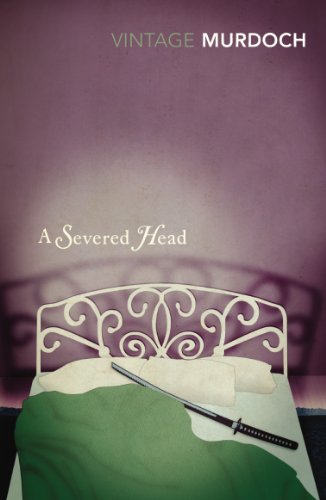
A Severed Head by Iris Murdoch: a Book Review

A severed head 1

This last February was the tenth anniversary of Iris Murdoch’s death. I’ve enjoyed several of her novels and biographies of her by John Bayley, Peter Conradi (an official biography)and A N Wilson (this last one was rather controversial). Recently I’ve read A Severed Head, first published in 1961  and have been wondering what to write about it without giving away too much of the plot.  As I was reading it I thought it would make a good farce and then I discovered that Iris Murdoch had adapted her book for the stage.

I felt I was looking into a different world and time. There are only a few characters – Martin, who is complacently happy with his mistress Georgie and his wife Antonia, Palmer who is Antonia’s analyst, Palmer’s half-sister, Honor, and Martin’s brother and sister Alexander and Rosemary. Iris Murdoch has made a tightly-structured novel, using Martin as the first-person narrator. Martin is shocked when his wife announces that she wants a divorce because she is deeply in love with Palmer. This sets in motion a sequence of events in which Martin’s weakness and need are clearly evident. Throughout the novel Murdoch uses the weather to indicate Martin’s mental and emotional state – the dense fog that covers the London streets and pervades his mind.

The novel depicts an amazing muddle and chaos ensues as Martin like a man possessed pursues Antonia, trying to keep Georgina at arms length whilst still not wanting to let her go.  He is a man in a mid-life crisis behaving like a teenager swept along by his emotions and falling in love at the drop of a hat.

There are some funny episodes as Martin moves his belongings out of his house into a flat and back again but set against that are serious issues such as abortion, marriage, incest and the struggle for power within relationships. Honor is one of the strangest characters. She is a powerful woman, an anthropologist who describes herself as

a severed head such as primitive tribes and old alchemists used to use anointing it with oil and putting a morsel of gold upon its tongue to make it utter prophecies.

She can wield a Japanese samurai sword like an expert, tossing a napkin  in the air she is able to slice it in half as it flutters to the floor. She has a pale sallow face with black gleaming hair, with “something animal-like and repellent in that glistening stare”. On her first appearance at Palmer’s house she appears to Martin like

some insolent and powerful captain, returning booted and spurred from a field of triumph, the dust of battle yet upon him, confronting the sovereign powers whom he was now ready if need be to bend to his will.

It’s not a novel I’d describe as comfortable reading, but it is entertaining.

(This is the 14th library book contributing to the Support Your Local Library Challenge.)

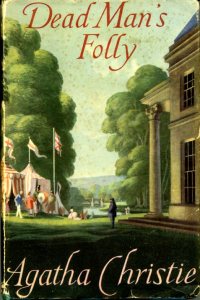
Dead Man’s Folly by Agatha Christie: Book Review

agatha_christie_rcYears ago I read as many of Agatha Christie’s books as I could find, but I don’t remember ever reading Dead Man’s Folly before. This one features Hercule Poirot and Mrs Ariadne Oliver.  There is of course a murder with a most unlikely victim. It kept me guessing to the end as there is such a misleading tangle of evidence.

Mrs Ariadne Oliver has devised a Murder  Hunt for Sir George Stubbs at the Fete to be held at Nasse House, a big white Georgian house looking out over the river (based on Agatha’s own house Greenway in Devon). She has a feeling that something is wrong and summons Hercule Poirot to join her, ostensibly to present the prizes.

I did find the number of characters a bit bewildering – there are so many, including the bluff Sir George and his exotic and beautiful, if simple wife, Hattie; Miss Brewis (Sir George’s secretary); Mrs Folliat whose ancestors had lived at Nasse House for generations; a Member of Parliament and his wife; an atomic physicist and his wife; an architect; the butler; Lady Stubbs’s cousin; and a couple of girl hitch hikers in shorts who cause Poirot to shut his eyes in pain and reflect

 … that seen from the back, shorts were becoming to very few of the female sex. Why, oh why, must young women array themselves thus? Those scarlet thighs were singularly unattractive!

dead-mans-folly001

The Murder Hunt goes badly wrong when the young Girl Guide, Marlene playing the part of the murder victim, is discovered in the boat house garotted with a piece of clothes line. Just who could possibly have a motive for killing Marlene? And what is the significance of the little white “Folly”, set high in the woods above the river?

The police have no idea and even Poirot is baffled for a while. The chief constable thinks he may have been “a little Belgian wizard in his day – but surely, man, his day’s over. He’s what age?” 

In the end, of course, it is Poirot who makes sense of it all.  I didn’t think this was as good as some of Agatha Christie’s other books, but it was still enjoyable.

To read more reviews of Agatha Christie’s books visit Kerrie’s Agatha Christie Reading Carnival.

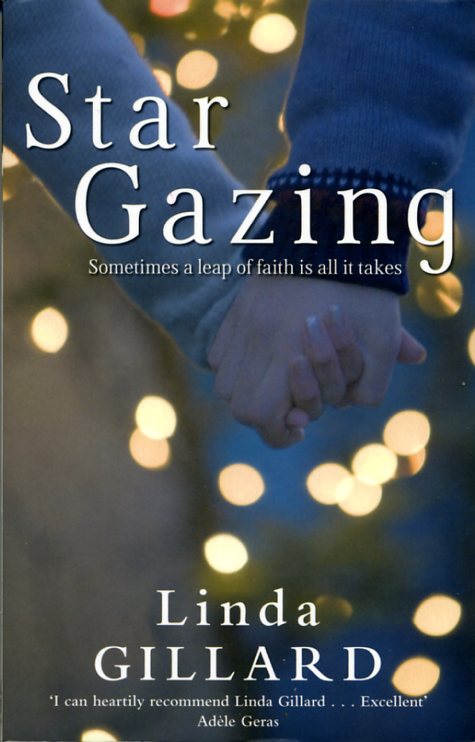
Book Review: Star Gazing by Linda Gillard and a Giveaway!

star-gazing001

Star Gazing by Linda Gillard was one of the best books I read in April. I have wondered many times how I would cope if I were blind. This book goes some way to describing what it must be like – a world where the other senses are  heightened, where sound is more distinct  and touch and smell of great importance.

Marianne who has been blind from birth, is now widowed and even though she lives with her older sister in Edinburgh she is lonely and angry. Her husband was killed years before in the world’s worst-ever offshore disaster – the Piper Alpha oil rig explosion.  By chance she meets Keir, a solitary Highlander and geophysicist, who also works on the oil rigs, but who spends his time on shore at his house on Skye. Marianne describes his voice as

“… a good dark chocolate, the kind that’s succulent, almost fruity, but with a hint of bitterness. He hit his Highland consonants with the same satisfying ‘click’ that good chocolate makes when you snap it in pieces. (The blind are as fetishistic about voices as the sighted are about appearances, so allow me, if you will to describe this man’s voice as chocolate. Serious chocolate. Green & Black’s, not Cadbury’s.) (page 10)

Despite her misgivings and unwillingness to get involved with another oilman, Marianne trusts Keir when he takes her to Skye to ‘show’ her the stars. Keir is kind and gentle but makes little concession to Marianne’s blindness in contrast to other men she has known.  At times Marianne’s stubborness is quite exasperating, but she is immensely resourceful. One of the most memorable episodes is when Keir has left her on her own at the house on Skye whilst he goes shopping and Marianne, startled by a fall of snow from the roof loses her bearings. Fearful of hypothermia she  struggles desperately through the snow and a frozen pond, before finding the burn that she follows back to safety. I had to hold my breath whilst reading this passage for fear she wouldn’t make it.

The locations in Star Gazing are just beautiful, described so vividly you could almost be there. Marianne falls in love with Keir and with Skye:

I was a fool to think I could resist the island: the scent of daffodils, gorse and primroses; the pitiful bleat of day-old lambs; the symphonic dawn chorus; the knowledge that, a few metres from my muddy, booted feet, grazing in the evening sun (could I actually hear them munching?), were a pair of hares. When they moved away, Keir drew my hand down quickly to the flattened grass where they’d sat, ‘looking like tea-cosies’, and it was warm to the touch. (page 189)

Keir’s comparison between the sights of nature in terms of music is pure genius. This is just one example:

Now if you look to the left of Orion, snapping at his heels you’ll find the brightest star in the sky: Sirius, the Dog Star, Orion’s hunting dog. Sirius is quite close, only eight light years away and it’s forty times more luminous than the sun, so that’s why it’s so bright. Think of … a clarinet, the way it dominates the other instruments of the orchestra. Sirius outshines all the other stars and draws your eye. (page 82)

I loved Star Gazing. It’s not just a love story, it’s also about how we ‘see’ the world, how we interact with other people and how we cope with our disabilities be they physical, emotional or otherwise. The epigraph from William Blake is I think very apt, ‘As a man is, so he sees.’ I liked this so much that I had to find its context:

    1. The tree that moves some to tears of joy
    1. Is in the Eyes of the others only a Green thing
    1. that stands in the way.
    1. Some See Nature all Ridicule & Deformity,
    1. & by these I shall not regulate my proportions;
    1. & Some Scarce see Nature at all.
    1. But to the Eyes of the Man of Imagination,
    1. Nature is Imagination itself.
    1. As a man is, So he Sees.
    As the Eye is formed, such are its Powers.

Linda has kindly sent me a signed copy of Star Gazing as a Giveaway book. Leave a comment on this post telling me why this book interests you for a chance to win it in the draw next Monday.

Sunday Salon – An Elegy for Easterly by Petina Gappah

Yesterday I finished reading An Elegy for Easterly by Petina Gappah. My copy, via LibraryThing’s Early Reviewer’s Programme, is an uncorrected proof and is not for quotation, so no quotes in this post.

Elegy for Easterly001

This book has one of the most attractive covers I’ve seen for a while – the colours as well as the trees receding into infinity.

I sometimes don’t get on very well with collections of short stories but these are long enough for the characters to be more developed and the stories to be more satisfying than others I’ve read. But several I though would be even better developed as full length novels. They are about the lives of people in Zimbabwe, struggling to live with escalating inflation, where a loaf of bread costs half a million dollars, of corruption, scams, disappointed lives, unfulfilled dreams and broken promises. They paint a bleak picture of the resilence and resistance of people in extreme circumstances, coping with despair.

Something Nice From London is one of the most poignant tales. Relatives living in England often sent something special to their families back home but one family are waiting at Harare airport for something different  – the arrival of Peter who died in London.  His cousin, also living in England keeps promising his body will be on the flight. Peter was the golden boy and much was expected of him. This is the story of unfulfilled ambition and expection. Because you’re not allowed to speak ill of the dead, the family have to forget how he bled them dry with constant demands for more money to pay his fees and provide accommodation and food as they mourn his death. Eventually the body does arrive, but not how they expected.

I also enjoyed Our Man in Geneva Wins a Million Euros, the story of a diplomat conned by an internet scam. In At the Sound of the Last Post, a politician’s widow at her husband’s funeral ponders the corrupt society they’re living in as his collegues bury an empty coffin – her husband was not the national hero he was made out to be. Death and sickness figure quite prominently in most of the stories and the book as a whole, although laced through with ironic humour,  is a lament – a lament for  Zimbabwe and its suffering people.