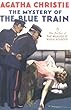
The Mystery of the Blue Train by Agatha Christie: Book Review

Agatha Christie didn’t enjoy writing The Mystery of the Blue Train (first published in 1928). In her autobiography she wrote that it had not been easy writing it and that she had always “hated” it:

To begin with I had no joy in writing, no élan. I had worked out the plot – a conventional plot, partly adapted from one of my other stories. I knew, as one might say, where I was going, but I could not see the scene in my mind’s eye, and the people would not come alive. I was driven on by the desire, indeed the necessity, to write another book and make some money.

That was the moment when I changed from being an amateur to a professional. I assumed the burden of a profession, which is to write even when you don’t want to, don’t much like what you are writing and aren’t writing particularly well. (pages 368-9)
As she was writing this book at the time of her disappearance and divorce from her first husband, Archibald Christie it’s hardly surprising. It may not be her best book, but it’s still a good read. Ruth Kettering, the daughter of millionaire Rufus Van Aldin, is married to Derek, against her father’s advice. Agatha’s views on divorce are clear when Van Aldin tells Ruth she should divorce Derek, who he thinks is no good, rotten through and through and had only married her for her money, saying:

Have you got the grit to admit to all the world that you’ve made a mistake. There’s only one way out of this mess, Ruthie. Cut your losses and start afresh. (page 20)

Later Ruth is found strangled in her compartment in the Paris-Nice train, known as the train bleu, on its arrival in Nice and the fabulous ruby, the Heart of Fire that Van Aldin had given her, has been stolen. Fortunately Hercule Poirot is also travelling on the train and he of course unravels the mystery. There are a number of suspects ranging from Derek and his mistress, the dancer Mirelle, who had both the motive and the opportunity, to Ruth’s lover, the Comte de la Roche, suspected of stealing the jewels.

I liked the reflections on detective novels through a conversation Poirot has with another passenger on the train, Katherine Grey, from St Mary Mead who has inherited money from her employer. She is reading a roman policier when they meet at dinner and Poirot comments that they always sell well. She replies that may be because they give ‘the illusion of living an exciting life’ and that ‘nothing of that kind ever happens to me.‘ From then on however, she is drawn into the mystery along with Poirot, that

 small man, distinctly foreign in appearance, with a rigidly waxed moustache and an egg-shaped head which he carried rather on one side. (page 80)

It may be that Poirot is a bit of a caricature in this book, but the characters are in the main believable and the book certainly has a 1920s feel to it.

Agatha Christie and the Eleven Missing Days by Jared Cade

In December 1926 Agatha Christie disappeared from her home, Styles, in Berkshire. She was found eleven days later in a hotel in Harrogate, Yorkshire apparently suffering from amnesia. Agatha Christie and the Eleven Missing Days by Jared Cade delves into the mystery of her disappearance. The book is not just about those eleven days but is a biography that reveals how those eleven days and the events that led up to her disappearance influenced the rest of her life.

Agatha’s Autobiography is silent on the matter. She recalls how they chose Styles, remarking that it was an unlucky house and that she had felt it as soon as she moved in. She then moved swiftly on merely saying:

The next year of my life is one I hate recalling. As so often in life, when one thing goes wrong, everything goes wrong. (page 356)

Sadly she was  right, as Jared Cade reveals from information given to him by Judith and Graham Gardner. Judith’s mother was Nan Watts, Agatha’s sister-in-law and life-long friend. They showed him photographs and private letters shedding light on the situation.  It makes a fascinating book. I did feel as though I was intruding into Agatha Christie’s private life that she had not wanted made known but Cade writes sympathetically. Now I really must read her life story in her own words, as so far I’ve only dipped into it reading snippets here and there.

The Holly-Tree Inn by Charles Dickens

The Holly-Tree Inn by Charles Dickens and others is a lovely little book, both to hold and to read. It’s a Hesperus Press publication, smooth paper and a softback cover with flaps you can use as bookmarks. I received my copy via Library Thing Early Reviewers Programme. I enjoyed reading it.

This was originally published in 1855, being the Christmas number of Dickens’s periodical Household Words. It was so popular that it was then adapted for the stage. It’s a collection of short stories by Dickens, Wilkie Collins, William Howitt, Adelaide Anne Procter and Harriet Parr, around the theme of travellers and  inns. I liked Collins’s and Howlitt’s stories the most.

It begins with a story by Dickens, The Guest in which a gentleman on his way to Liverpool is snowed in at the Holly-Tree Inn in Yorkshire. To keep himself entertained he reminisces about inns he has visited, giving glimpses into travel and inns in the 19th century. Having exhausted his own memories, this story ends with the idea of asking the inmates of the inn for their own stories.

So, the next stories are from:

The Ostler by Wilkie Collins. In this the landlord tell’s the ostler’s tale of his dread of his wife after dreaming that she is about to murder him, a tale of impending doom:

His eyes opened owards the left hand side of the bed, and there stood – The woman of the dream again? – No! His wife; the living reality, with the dream spectre’s face – in the dream-spectre’s attitude; the fair arm up – the knife clasped in the delicate, white hand. (page 53)

The Boots by Charles Dickens – according to Melisa Klimaszewski’s Introduction this tale was such a favourite that Dickens included it in his later public readings. It’s not quite to my taste, a sentimental tale about two young children determined to elope, staying at the Holly- Tree inn:

Boots could assure me that it was better than a picter (sic) and equal to a play, to see them babies with their long bright curling hair, their sparkling eyes, and their beautiful light tread, a rambling in the garden, deep in love.

The Landlord by William Howitt. An entertaining tale of the landlord’s brother who emigrated to Australia in order to better himself. But when they get there they wished they’d stayed in England. It seems they arrived just at the wrong time. Howitt, himself had travelled to Australia in search of gold and his experience is reflected in his tale. 

The Barmaid by Adelaide Anne Procter – a sad story told in verse by the landlord’s niece of Maurice and his love for ‘the loveliest little damsel his eyes had ever seen.’  Not the most challenging of tales.

The Poor Pensioner by Harriet Parr. Hester lives at the inn on ‘broken victuals’, now a poor demented creature refusing to believe that her son was guilty of murder. She waits in vain for his sentence to be reversed. This tale reveals how her wild and wilful ways as a young woman led her to seek for change and excitement with disastrous results. 

The Bill by Charles Dickens. This story completes the cycle. A week has gone by, the Guest’s route is now clear of snow and he can leave.He then discovers that his enforced stay at the inn has changed his life!

Reading this book has made a welcome break in reading modern fiction and has made me keen to read more of Dickens’s and Collins’s books.  I knew nothing about the other authors but fortunately there is a short section at the end with biographical notes about the contributors.

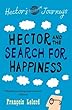
Hector and the Search for Happiness by François Lelord

This is a very easy book to read and I read it straight through in one go. Hector is a psychiatrist who realises that he can’t help people who are unhappy, so he travels around the world to find out the secret of happiness – what makes people happy or sad. Described on the back cover as a ‘modern fable’ I think that is the best way to think about Hector and the Search for Happiness by François Lelord, translated by Lorenzo Garcia.

A fable, according to one definition in the dictionary is a tale in literary form, not necessarily probable in its incidents, intended to instruct or amuse and this is most definitely a story intended to instruct, complete with short maxims called Lessons, which Hector jots down in his little notebook. But really I found there was nothing there I didn’t already know, things like ‘Making comparisons can spoil your happiness’. It’s simplistic and ‘nice’ in a sort of sit down and I’ll tell you a story sort of way, beginning:

Once upon a time there was a young psychiatrist called Hector who was not very satisfied with himself. (page 1)

But it’s really a self-help book rather than a novel.

François Lelord is indeed a writer of self-help books and he has also written non fiction psychology guides to daily life, after a career as a psychiatrist in France and the USA. At the end of the book there is a Question and Answer section in which Lelord explains that he feels that emotional subjects such as happiness and love ‘can’t just be carved up into chapters, rules and lessons’ and by writing this as a fable he hopes to make it more personal. Actually I found this part of the book better than the fable. Each to his own.

My copy was kindly supplied by the publishers, Gallic Books.

The Very Thought of You by Rosie Alison

Product Details

The Very Thought of You is a book that starts off so well, but didn’t quite live up to its early promise for me. That’s not to say I didn’t enjoy it, because I did, but it’s told from so many different viewpoints that my attention wandered at times. Then I found it getting repetitive because so many of the characters were experiencing sad love, lost love, yearning for love, love never known and separation from the people they loved.

Eight year old Anna  is evacuated from London to Yorkshire at the start of the Second World War, leaving behind her mother. Along with other evacuees she goes to live at Ashton Park, the home of Thomas and Elizabeth Ashton, who have set up a school in Thomas’s ancestral home. The Ashtons are a childless couple, in an unhappy marriage and Anna gets caught up in their relationship as it breaks down.

There is too much description, too many insights into what the characters are thinking and feeling, but very little dialogue. It all began to feel remote and distant. At one point the children are having a poetry lesson and Thomas reads them a poem by e e cummings, a love poem and Anna sums up the book so well when she says it is a sad poem

because it was about sad love. … it was all distant, as if they could never be together … it sounds as if he thinks he’ll never reach her’ (page 209)

The final section of the book is about the rest of Anna’s life and the effect that the evacuation had upon her. She still yearns for what was gone and reflects on her love for Thomas. She feels detached and ponders whether life was

one long story of separation, just as Wordsworth had said.  From people, from places, from the past you could never quite reach even as you lived it’ (page 300).

A sad and somewhat haunting book. Shortlisted for the Orange Prize for Fiction for me it can’t stand up against Hilary Mantel’s Wolf Hall.

Snapped in Cornwall by Janie Bolitho

Snapped in Cornwall by Janie Bolitho is a quick, light read in the ‘cozy mystery’ category. I had high hopes that this was going to be a really good book because the start sets the scene so well, but it didn’t quite meet my expectations and tailed off towards the end. Gabrielle Milton has recently moved to Gwithian in Cornwall, whilst Dennis, her husband spends his working week in a London flat. She employs Rose Trevelyan to photograph her house for her personalised Christmas cards. Rose, a photographer and artist is a widow in her forties, still recovering from the death of her husband four years earlier. When Gabrielle invites her to a party for old friends from London and the new people she’s met in Cornwall, even though the anniversary of her husband’s death is approaching Rose decides to go.

Dennis has been having an affair with Maggie. He wants to end the relationship but she doesn’t. The Cornwall house belongs to his wife and he is in danger of losing his job – his life is at a crossroads. He’s not pleased when Maggie turns up at the party. Also at the party are Paul, their son and his fiancee, Anna.  All in all, there’s an uncomfortable atmosphere, made worse as Paul and Anna are in the middle of an argument. Rose retreats into the garden where she finds Gabrielle’s body beneath the bedroom balcony. Why would anyone want to kill her? Was it her husband or his mistress?  Maybe it was her son or his fiancée who thought they would inherit the house, or maybe  it was Eileen Penrose, a local woman who thought her husband was having an affair with Gabrielle.

Rose finds herself drawn into the investigations, which brings her into contact with DI Jack Pearce. Inevitably relationships and secrets in the Milton family and the locals are gradually brought into the open, but the ending was rather predictable and straight forward. Nor was it surprising that Rose and Jack found themselves attracted to each other. Nevertheless the descriptions of Cornwall are good and it was the right book for a quick, easy read.

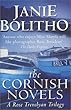
 This is the first book in Janie Bolitho’s series of mysteries featuring Rose Trevelyan, now published in an omnibus edition as The Cornish Novels.