Seeking Whom He May Devour by Fred Vargas

It took me some time to ‘get into’ Seeking Whom He May Devour, mainly because of the somewhat stilted style, which may be a result of the translation from French, but as this is the first book by Fred Vargas I’ve nothing to compare it with. Looking at the reviews on Amazon, it seems as though it is the translation. Anyway, it’s a rather quirky crime fiction novel with touches of humour that appealed to me.

On the back cover it describes the book as ‘frightening and surprising’, but I didn’t find it at all frightening – surprising, yes, particularly the ending which I hadn’t expected at all. It’s set in the French mountains. Johnstone, a Canadian is living there whilst he films a documentary about wolves. The problems start when more and more sheep are found with their throats torn out. The vet says it is the work of a very large wolf and after Suzanne Rosselin told Johnstone she believed it was a werewolf, the hunt is on, despite Johnstone’s wish to leave the wolves in peace. Then Suzanne is also found dead, killed in the same way, When Massart, who worked at the slaughterhouse and lived on his own high up on Mont Vence, disappears suspicion falls on him as the werewolf.

Soliman, Suzanne’s adopted son and Watchee her shepherd persuade Camille,  a plumber/musician, who is Johnstone’s girlfriend to go with them as they try to track down Massart. They are an odd combination of characters – Soliman, a young black man who loves telling African folk stories and giving definitions of words he ‘s learnt from a dictionary, Watchee, an old man more comfortable with his sheep than people and Camille, who is writing a music soap opera and reads the A to Z of Tools for Trade and Craft for relaxation.

Soliman and Watchee enlist Camille’s help in tracking down Massart, because she can drive and they can’t. Johnstone, a man who’s not good with words, doesn’t like the idea and every now and then pops up as they travel through the French countryside on narrow hairpin tracks in a smelly old sheep wagon. I felt this section of the book was over-long but I did like their philosophising and story-telling. I also liked the little touches of humour, such as the episode where Watchee phones a friend who puts his mobile in Watchee’s leading ewe’s ear so he can talk to her, to keep her spirits up whilst he is away.

With the help of Commissaire Jean- Baptiste Adamsberg the killer is finally tracked down. Adamsberg is another eccentric character, a policeman who is being stalked by a girl who is obsessed with the idea of killing him. He has his own way of working things out:

Adamsberg put one thing in another, or turned them upside down, or scattered what had been brought together and threw it up in the air to see where it would fall. And despite his amazingly slow pace, he would in the end, extract truth from that chaos. (page 109)

By the end of this book I was really enjoying it. It isn’t a scary book, but neither is it a ‘cozy’ mystery. It’s different from any other crime fiction that I’ve read and I want to read more by Fred Vargas. This is the second in her Chief Inspector Adamsberg series but it reads fine as a stand-alone book.
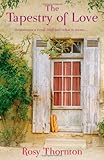
The Tapestry of Love by Rosy Thornton: Book Review

The Tapestry of Love is a beautiful book and a delight to read. I am so pleased that Rosy Thornton sent me a copy to review. It’s a gentle book and yet it’s about the drama of real life, its joys and tragedies. There is romance and so much more as the story of Catherine Parkstone and her move to the Cevennes mountains in southern France, reveals. Catherine divorced eight years previously has sold her house in England and moved to the Les Fenils, a house in the tiny hamlet of Le Grelaudiere near the village of St Julien de Valvert, to start a new life as a seamstress, selling her soft furnishings – tapestries, cushions, and chair covers.  

Catherine has left behind in England her daughter, Lexie, struggling to find a niche in the world of journalism, her son Tim, a scientist and her aging mother, suffering from Altzheimer’s and in a nursing home. Catherine is obviously a capable woman, a woman of common sense, but also a caring, sensitive woman, who may not be as self-sufficient as she seems. She is a creative, skilled needlewoman who has the gift of being able to reproduce on canvas what she visualises in full colour in her mind’s eye. It is this skill and her ability to make friends in her new surroundings that means she soon has a full order book. But she is reckoning without the intricacies of French bureaucracy and because her business is not ‘agricultural’  she cannot get it approved.

Despite the initial reserve of her new neighbours she becomes part of the daily life in Le Grelaudiere, helping her neighbours and being helped in return. Her nearest neighbour is Patrick Castagnol, who at first she thinks is a compatriot until she hears his flawess French. He is a bit of a mystery and when Tim visits he comments astutely that he suspects Patrick is ‘a bit too smooth for his own good’. When Bryony, Catherine’s younger sister visits she is soon smitten by his charm, leaving Catherine feeling decidedly uncomfortable.

There is so much I love in this book. Rosy has a talent for portraying relationships – not just between Patrick and the sisters, but also between the sisters and their mother, and how they cope with their mother’s illness, between Catherine and her grown-up children and between Catherine and her ex-husband. She is nothing if not resourceful. She not only sets up her business, but also grows vegetables and keeps bees. For Catherine it is a time of new beginnings, of new relationships and of letting go of the past.

I also loved Rosy’s descriptions – of the tapestries as Catherine conceives and makes them and of the wild and desolate landscape which forms the backdrop of daily life in Le Grelaudiere. It’s autumn when Catherine arrives, a season of rain and power cuts, which her neighbours describe as ‘C’est triste’. But it was still beautiful. As autumn took its course:

The skies were still pewter, but now swirled with high, wild, wind-chased clouds in shades of angry orange. The view across the valley re-emerged in all its desolate splendour. (page 61)

and then:

the sky was a luminous mauve, a colour that would never seem credible if she replicated it in a tapestry. It cast everything round her into sharp definition, giving the illusion that road and rocks and vegetation were illuminated from some hidden source, like ethereal stage lighting. She had a clear view between the trees, down to the valley of St Julien de Valvert, the ‘green valley’ –  although in this light it was etched in shades of grey and pink and silver.(page 88)

As I read on I wished I could be there.  It is a moving story full of wisdom and one I shall re-read.

Fleshmarket Close by Ian Rankin: Book Review

The latest Rebus book I’ve read is Fleshmarket Close. As usual with Ian Rankin’s books this is a complex novel, based around the issues of asylum seekers, illegal immigrants and racial prejudice. Rebus, himself is tolerant, pointing out that his grandfather was Polish and an immigrant. But Rebus hasn’t mellowed at all. He is still a loner and now an outsider, shipped out of his old office, St Leonard’s to Gayfield Square where there is no office or even desk space for him. He’s impatient with his superiors, realising they think it’s time for him to retire.

There is plenty going on in this book, a lot of characters and sub-plots, so it needs concentrated reading. There’s the murder of an unknown immigrant found dead in Knoxland, high-rise blocks of flats, the discovery of two skeletons under the concrete floor in the cellar of the Warlock pub in Fleshmarket Close, the disappearance of Ishbel Jardine, whose sister, a rape victim, had committed suicide, and the murder of the convicted rapist, Donny Cruickshank. 

Rebus is relentless in his pursuit of the truth, despite his drinking problems and his difficulties in maintaining any meaningful relationships. DS Siobhan Clarke is also feeling more and more as though she is turning into Rebus, with her late-night lone drinking and methods of working,and there are signs that she and Rebus are drawing closer.  How all the cases connect, or indeed if they do connect, is not clear until near the end of the book, when Big Ger Cafferty makes a brief appearance. Although Rebus can’t prove it he knows that Cafferty was behind the scenes using, abusing, conning and manipulating people.

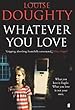
Whatever You Love by Louise Doughty: Book Review

Whatever You Love, set in a coastal English town is, as it says in the blurb, an ‘astonishing and emotionally-charged novel’, about Laura whose nine-year old daughter, Betty has been killed by a hit and run driver.  Laura tells her story alternating between events before Betty’s death – how she met and married David, Betty’s father, their subsequent divorce after his affair with Chloe – and after Betty’s death. Laura’s grief is palpable, which makes this a harrowing book to read. It is also startling and shocking in parts.

The ‘after’ chapters are written in the first person narrative, which I’m never completely happy about, but it works quite well in this book, and it does add some clarity to the sequence of events. I think I endured rather than enjoyed this book; ‘enjoy’ is not the right word to described reading it, but it is well written, and the characters, for the most part are well drawn. There is an emphasis on relationships, not only between Laura and David but also between Laura and Chloe, David’s new wife, between Laura and the Sally, whose daughter Willow was also killed in the accident, and between the local people and the immigrant community. As Laura, fraught with grief, tracks down the driver of the car she spirals more and more out of control. 

I found the ending of the book inconclusive and there are some questions left hanging.  It seemed to me a book of two halves – the first dwelling on Laura’s grief and her inability to cope, with the second concentrating on her instability. Just how reliable was Laura, a woman who was pushed to the edge of sanity? Overall, I was impressed by the writing and will look for more by Louise Doughty.

My copy was sent to me by the publishers, Faber and Faber via Library Thing’s Early Reviewers’ Programme.

Portrait of an Unknown Woman by Vanora Bennett: Book Review

I didn’t write about Portrait of an Unknown Woman by Vanora Bennett as soon as I’d finished reading it, which is a pity because I only made a few notes whilst reading and now my memory of it is fading fast. It took me some time to get really involved in the story, which is a mixture of fiction and history. I liked the historical elements very much. The fictional side mixed in quite well but I found some of it a bit too sentimental and somewhat contrived.

It’s the story of Sir Thomas More’s fall from Henry VIII’s favour and that of his adopted daughter Meg Giggs and her love for two men – John Clements, the family’s former tutor, and the painter, Hans Holbein. Bennett puts forward a theory about John Clements’ true identity drawn from an analysis and an interpretation of two paintings by Hans Holbein of the More family and also his painting, The Ambassadors. I was fascinated by this and the detail in the paintings, enhanced by the inclusion in the book of a reproduction of the plan for Holbein’s first portrait of the More Family painted in 1527 -28 and a colour reproduction of  a second portrait of the family attributed to Holbein, even though it is signed ‘Rowlandas Lockey’.

I liked the way Bennett portrayed different aspects of Sir Thomas More’s character; in his early life he was a humanist and friend of Erasmus, later a courtier and Henry VIII’s Catholic chancellor, who persecuted Protestant heretics. This contrasts with his family life, where he is relaxed, generous and gentle and Meg cannot reconcile her knowledge of him as a father with his cruel and fanatical persecution of the heretics.

It combines a love story, art history and historical fiction providing an insight into the Tudor period at a time of great social and religious change.

The Gourmet by Muriel Barbery: Book Review

I found The Gourmet an interesting book, maybe an appetiser, or an amuse-bouche, for Muriel Barbery’s later book The Elegance of the Hedgehog (which I haven’t read). It offers tantalising glimpses of food that Pierre Arthens, France’s celebrated food critic recalls as he lies dying, trying to remember the most delicious food he ever tasted. He thinks the flavour of this elusive food is

the first and ultimate truth of my entire life, and that it holds the key to a heart that I have since silenced. I know that it is a flavour from childhood or adolescence, an orginal, marvellous dish that predates my vocation as a critic, before I had any pretension to expound on the pleasure of eating. A forgotten flavour, lodged in my deepest self, and which has surfaced in the twilight of my life as the only truth ever told – or realised. (pages 12-13)

As he remembers back to his childhood his life and character are also revealed through impressions and memories of him from his wife, son and other relations and acquaintances. These are in short chapters building up a picture of Pierre’s character and contrasting with his own thoughts and memories. They are interspersed with Pierre’s florid, over-blown, pretentious ruminations on food, including fish, meat, vegetables, bread, mayonnaise, ice cream and sorbet, none of which provides that elusive taste he is seeking.

I wished the short chapters from his family and friends had been longer and his own shorter – I wanted to know more about the other characters. I know from the extract from The Elegance of the Hedgehog that there is more about Renee, the concierge of the apartement building where Pierre lies dying in that book, so I will read that at some time. I liked the changes in writing style between the characters and Pierre.

All in all, it’s a delightful description of food, mouth-watering, rich and sumptuous, but somehow lacking in substance. By the end it was losing impetus as I began to wonder what it could possibly be that had been tantalising him so much and that was so important to him. The ending was really inevitable and rather sad.

My copy was kindly sent to me from the publishers, Gallic Books.