Payment Deferred by Joyce Holms: Book Review

I like puzzles and that is one of the things I like about crime fiction – solving the puzzle. The problem for crime fiction authors must be judging it correctly – how to drop the clues into the narrative in a subtle way so that the reader doesn’t get the solution too easily. I like being able to work it out for myself – but not too soon. In Payment Deferred, Joyce Holms has managed it well.

Paperback: 288 pages
Publisher: Bywater Books (30 Aug 2007)
Language English
ISBN-10: 1932859314
ISBN-13: 978-1932859317
Source: Gift from the author

This is the first of Joyce Holms’s series of books featuring Tam Buchanan and Fizz Fitzpatrick. Tam is a lawyer who spends Monday mornings giving legal advice at a community centre in Edinburgh. Fizz is soon to be a mature student of Law and much against Tam’s better judgement talks her way into becoming his assistant. She looks like a teenager, but is actually 26, with a talent for getting people to talk to her.

Murray Kingston, an old friend of Tam’s, is released from prison having served three years convicted of molesting his daughter after his wife’s death. When he turns up at the community centre wanting Tam to clear his name and help him get his daughter back it is Fizz who persuades Tam to review the evidence. Murray believes he was set up.

I thought this was a well plotted book,which moves at a good pace, with a good sense of location (Edinburgh and Berwick) and convincing characters, particularly Fizz and Tam – the relationship between the two of them developed from lukewarm to exasperation. Having solved the case they part:

“See you around Buchanan,” she said coldly, as the doors slid shut between them.

Buchanan sagged back against the wall and closed his eyes. He felt utterly depleted.

“See you around, Fizz”, he whispered to the empty landing, and the words blew away like dry leaves into the silence.

But even as he said it, he knew with absolute certainty that he wouldn’t be shot of her so easily.

After a minute or two he started to laugh, and couldn’t stop.

Their partnership was not at an end, as there are eight more books in the series. I’ve already read the most recent – Missing Link.

Details of all Joyce’s books are on her website.
Crime Fiction Alphabet – Letter B – W J Burley

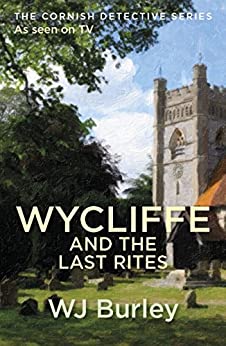
This week I’ve chosen to feature W J Burley to illustrate the letter B for Kerrie’s Crime Fiction Alphabet. I knew of  his Wycliffe novels but had never read any, or watched any of the TV dramatisations, so I came to Wycliffe and the Last Rites with no preconceptions. I really don’t know why I never watched the 1990s TV series starring Jack Shepherd as Wycliffe, but as I didn’t I was able to form my own image of him in my mind directly from the book.

William John Burley was born in Falmouth, Cornwall in 1914. His first book was published in the 1968. All in all he produced 22 more Wycliffe books and 5 others. He died in 2002 whilst he was writing his 23 Wycliffe book. There is more information about him at this website – W J Burley.

Wycliffe and the Last Rites
Paperback: 192 pages
Publisher: Orion; New Ed edition (7 Nov 2002)
Language English
ISBN-10: 075284931X
ISBN-13: 978-0752849317
Source: I bought it

Description from the back cover:

A bizarre murder shakes the Cornish village of Moresk. Arriving at church on Easter morning the vicar discovers the body of a woman sprawled across the chancel steps. To add to the horror, the church is filled with the discordant sound of an organ chord, the notes apparently chosen at random and wedged down.

Has the church been desecrated by a Satanist ritual? Chief Superintendent Wycliffe sees the crime more as an expression of hatred directed at others in the community, besides the dead woman. His investigation, however, is frustrated at every turn, and when another horrific murder is committed Wycliffe thinks he knows who the killer is. But can he prove it?

My thoughts:

This novel has a strong sense of location, with many passages describing the beautiful countryside of Cornwall. The characters are also well defined – a small local community focussing on the twin sisters, Katherine Geach and Jessica Dobell. The relationship between them is strained, with Jessica having a sense of guilt about a hit and run accident she’d witnessed 16 years earlier and admitting that she hadn’t played fair with Katherine.  After their parents’ deaths Jessica had inherited the family farm and lived there with the Vintners and their son, a strange family filled with hatred and resentment over their reduced circumstances. Then there is the Vicar and his sister, who had been forced to move from their previous parish, the houseboat man, Lavin, who is badly disfigured following an accident, and Arnold Paul, the organist and his ‘brother’.

Detective Chief Superintendent Wycliffe is a quiet character who thinks things through before divulging his suspicions to his colleagues. He delegates tasks to his team leaving himself free to concentrate on the victim. To him ‘hope is an ultimate resource’. His evening walks are a necessity for him to ponder what he has discovered and he is calm and collected:

It was characteristic that he should walk rather than drive or be driven; he refused to allow his days to become crowded with events in a frenetic succession of images like a television screen, lacking even commercial breaks to aid digestion. (pages 44 -5)

His problem in finding the murderer is that all the possible leads pointed to a limited range of possible suspects but none of them matched his specification for the criminal. It seemed he had to believe the impossible. It’s a tightly plotted book, concisely and precisely written and I enjoyed it very much. I have one other book of Burley’s to read – Wycliffe and the House of Fear. After that I’ll be looking out for his other books.

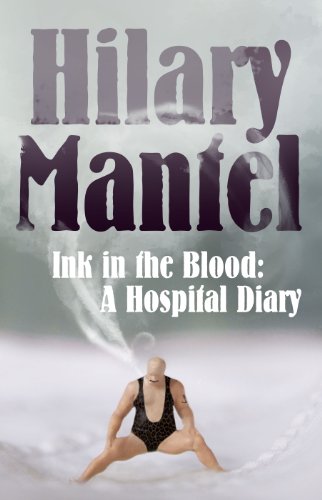
Ink in the Blood: A Hospital Diary by Hilary Mantel

This is a short memoir which I read quickly and easily on my Kindle – it’s only available on Kindle! Quite ironic that the first ebook (ie inkless) I read should be called ‘Ink in the Blood’! I was really pleased to find this because I loved Wolf Hall and had tickets for Hilary Mantel’s talk at the Borders Book Festival at Melrose in the summer.  She had to cancel that because she wasn’t well – I didn’t know just how ill she was. Ink in the Blood reveals all – how she had surgery to remove an intestinal obstruction that ended up in a marathon operation, followed by intense pain, nightmares and hallucinations.

Illness she found knocks down our defences, revealing things we should never see, needing moment by moment concentration on breathing, on not being sick and being dependent on others for your well-being. She read Virginia Woolf’s On Being Ill, which she thought was piffle, describing decorous illnesses such as fainting, fevers and headaches. She wonders what sort of wuss Woolf was, as she obeyed her doctors when they forbade her to write, whereas writing was Hilary Mantel’s lifeline – it was the ink, as she wrote in her diary, that reassured her she was alive.

It’s amazing how much she has managed to pack into this short memoir and one that repays more than one reading.

Product Description  from Amazon

During the summer after Hilary Mantel won the Man Booker Prize for Wolf Hall, she fell very ill. Just how ill is described in her extraordinary diary, Ink in the Blood. Originally published in the London Review of Books, it is one of the most incredible and haunting essays published in a very long time. In the diary she explores in forensic detail her loss of dignity, her determination, the concentration of the senses into an animalistic struggle to get through, and the attendant hallucinations she was plagued by.

  • Format: Kindle Edition
  • File Size: 134 KB
  • Publisher: Fourth Estate (15 Dec 2010)
  • Sold by: Amazon Media EU S.à r.l.
  • ASIN: B004GJXQ0C
  • Source: I bought it

Crime Fiction Alphabet – A is for …

… Agatha Christie

For the first of this year’s Crime Fiction Alphabet hosted by Kerrie I’ve chosen a double A – Agatha Christie – An Autobiography.

I finished reading it at the end of December. I can’t remember exactly when I began reading it. I think it was the end of May because in a Sunday Salon post then I wrote that I was thinking about starting it. I read short sections of it most days since I started it and felt quite sad when I came to the end. It was like having a daily chat with Agatha.


It took her fifteen years to write it. She stopped in 1965 when she was 75 because she thought that it was the ‘right moment to stop’. It seems right that a book that took her so long to write should take me a long time to read. As well as being a record of her life as she remembered it and wanted to relate it, it’s also full of  her thoughts on life and writing. I’ve written about her Autobiography in a few posts as I was reading it:

It struck me as I was reading her Autobiography that  it’s not very easy to work out the dates of many of the events she described. It follows on chronologically but is so interspersed with her thoughts and reflections that I forgot the date, or she hadn’t mentioned it. She wrote about her childhood, teenage years, friends and family, and her marriage to Archibald Christie; but although she wrote about their divorce she didn’t write about her disappearance in 1926. She wrote about her travels around the world, the two world wars, her interest and involvement with archaeology and her marriage to Max Mallowan.

Towards the end of the book she wrote that she had decided not to tidy up her Autobiography too much:

Nothing is more wearying than going over things you have written and trying to arrange them in proper sequence or turn them the other way around. I am perhaps talking to myself – a thing one is apt to do when one is a writer. (page 455)

What she remembered most were things that were most vivid and it was places that remained most clearly in her memory. She never had a good memory for people, apart from her own dear friends:

A sudden thrill of pleasure comes into my mind – a tree, a hill, a white house tucked away somewhere by a canal, the shape of a hill. Sometimes I have to think for a moment to remember where and when. Then the picture comes clearly, and I know. (page 416)

She wrote quite a lot about her writing methods, writing criticism, hearing your own voice, economy in wording, writing detective stories, adapting plays and writing them herself, the right length for a detective story (50,000 words), writing two novels at once, writing books set in historical periods and the joy of creation. The one book that satisfied her completely is not one of her detective books but one she wrote under the name of Mary Westmacott – Absent in Spring – and she wrote it in three days flat (pages 516 -7).

She ended the book with these words:

A child says ‘Thank God for my good dinner’.

What can I say at seventy-five? ‘Thank God for my good life, and for all the love that has been given to me.’ (page 551)

Louisa May Alcott: Little Women

I had forgotten that Little Women is such a moral tale. In fact, I doubt that when I first read it years ago I ever thought of it as a moral tale at all, but the emphasis on the characters of the four sisters  with their individual flaws and efforts to overcome them was the dominant theme that struck me whilst I was reading the book this time.

I loved Little Women when I first read it and re-read it several times. It remains in my memory as one of my favourite childhood books. But reading again now it seems dated (although I did like reading what the girls wore – gloves were essential wear for a party!) and rather pious. I’m also reading Eden’s Outcasts: the story of Louisa May Alcott and Her Father, so I flipped forward in that book to see what John Matteson had to say about Little Women and Louisa May’s thoughts on writing her book. She wrote Little Women after Thomas Niles, a partner in the publishing firm of Roberts Brothers had asked her to write a book for girls. She wasn’t too keen but agreed to do so even though she said that:

I don’t enjoy this sort of thing. Never liked girls or knew many, except my sisters. (Quoted in Eden’s Outcasts page 332.)

She consulted her mother and sisters and with their consent wrote the book based around the Alcott girls’ lives.

Little Women is about the four March sisters, Meg, Jo, Beth and Amy, and their mother – ‘Marmee’. Their father is absent for most of the book, working as a chaplain in the army,during the American Civil War.  The first part of the book is a series of scenes of the March family life illustrating each sister’s burden of character flaws, and their attempts to overcome them. Meg is vain and materialistic, Jo has a temper and flies into great rages, Beth is painfully timid and shy and Amy is selfish. This section of the book is loosely based on Bunyan’s Pilgrim’s Progress, as some of the chapter headings indicate – for example, Playing Pilgrims, Amy’s Valley of Humiliation, Jo Meets Apollyon and Meg Goes to Vanity Fair.

The second part of the book centres on Jo (based on Louisa herself), her writing and her reluctance to grow up. Again this hadn’t struck me when I read as a child (I can’t remember how old I was); I’d thought of her as a tomboy character. She says to Meg, who at 17 is a year older and falling in love:

Don’t try to make me grow up before my time, Meg: it’s hard enough to have you change all of a sudden; let me be a little girl as long as I can. (page 162 of my copy of Little Women)

Laurie, who lives next door with his grandfather becomes a friend to all the girls, but especially to Jo. The family go through a number of dramas, both small and large, culminating in Beth catching scarlet fever after visiting the poor Hummel family, whilst Marmee is in Washington staying with Mr March who was very ill in hospital. Mr March is mostly absent from the book, and even when he does come home there is very little mention of him; he is a man of few words. He discovers that his ‘little women’ have changed for the better whilst he has been away, despite it being a rough road for his little pilgrims to travel:

“But you have got on very bravely; and I think the burdens are in a fair way to tumble off very soon,” said Mr March, looking with fatherly satisfaction at the four young faces gathered him. (page 232)

Little Women ends with Meg’s engagement to John Brooks, Laurie’s tutor. The story continues in Good Wives,which I have as a separate book, but it was originally published as volume 2 of Little Women. These two books were followed by Little Men, the story of Jo and her husband Professor Bhaer at Plumfield school, and Jo’s Boys, continuing the lives of the family and the boys ten years later.

Even though it is a sentimental tale, which it wasn’t in my memory, I did enjoy the experience of re-reading Little Women – some of the magic was still there. And I think I’ll re-read the other books soon as well.

Frozen Moment by Camilla Ceder

It was a pleasure to read Frozen Moment, Camilla Ceder’s début novel, a police procedural set in Sweden. It is centred on the characters as much as on the plot. Camilla Ceder has studied social science and psychotherapy and as well as writing works in counselling and social work and this comes out quite strongly in this book.

Publishers’ blurb:

One cold morning, in the wind-lashed Swedish countryside, a man’s body is found in an isolated garage.  The victim has been shot in the head and run over repeatedly by a car. Inspector Christian Tell, a world-weary detective with a chequered past, is called to the scene. But there are few clues to go by, and no one seems to be telling the truth.

Then, a second brutal murder. The method is the same, but this victim has no apparent connection with the first. Tell’s team is baffled.

Seja, a reporter and witness, thinks a long-unsolved mystery may hold the key to the killings. Tell is drawn to Seja, but her presences at the crime scene doesn’t add up, and a relationship could jeopardise everything. For the inquiry to succeed, the community must yield the dark secrets of the past…

My view:

I liked this book straight away from the opening scenes describing how Ake Melkersson woke up and got ready for his last day at work and the shock he had on finding the dead man:

He’s only half a man, thought Ake Melkersson, a hysterical, terrified giggle rising in his chest. He’s flat, half of him smeared over the gravel. He thought back to the cartoons of his childhood, in which characters were always getting run over by steamrollers, ending up as flat as pancakes. There was never any blood in the cartoons, but there was blood here, collected in a hollow in the gravel around the man’s head, like a gory halo. (page 5)

After that it seemed to stall for a while and I was beginning to wonder if the plot would ever get going. A few chapters further on and I was relieved to find that it did. At times I felt the descriptions of the characters, their thoughts and motives were too detailed and I wanted the action to speed up, but by the end of the book I was converted to Ceder’s style.  There is a strong sense of place – the atmosphere of a bleak, and cold Scandinavian winter is well drawn.

I hope Ceder writes more books about Inspector Tell and his team, even if he is yet another detective who likes to work on his own, who is lonely and introspective, who can’t sleep well, smokes and likes a whisky or two …