Poetic Lives:Shelley by Daniel Hahn

I didn’t know much about Shelley before I read Poetic Lives: Shelley by Daniel Hahn. This biography gives brief details of Percy Bysshe Shelley’s short but extraordinary life, from his birth in 1792 to his early death in 1822, shortly before his thirtieth birthday.

The opening paragraph caught my immediate attention in pointing out that Shelley was not that far away from the present day. Although he was born during the reign of mad King George III when there were struggles for independence in Europe – the French Revolution and then Napoleon’s rise to power, his granddaughter saw the sinking of the Titanic, the First World War and the Great Depression.

Shelley was an unhappy child, an unconventional teenager, an atheist and a radical reformer. He was expelled from Oxford University before he could complete his degree and was at odds with his father. He eloped with the daughter of a coffee-shop owner in 1811 but after three years the marriage was over when he met Mary Godwin. He was constantly in poor health and for much of the rest of his life they lived a nomadic existence travelling around Italy and France.

Hahn also quotes extracts from Shelley’s poems and prose. He also uses various sources such as Shelley’s friend Thomas Hogg, who wrote his Life of Shelley in 1857, Shelley’s cousin Tom Medwin who published a memoir of Shelley and a two-volume Life of Percy Bysshe Shelley in 1847 and another friend, Edward Trelawney who wrote Recollections of the Last Days of Shelley and Byron in 1858.

I found parts of the book moving, Shelley’s  reaction to John Keats’s death for example and the events of his own death, but on the whole it is a prosaic account of Shelley’s life. Hahn’s repetitive use of the word “would” was irritating. It has interested me enough to want to read more about Shelley and his poems. I have started reading  Ann Wroe’s book Being Shelley: the Poet’s Search for Himself, which promises to be a much fuller account and also more about him as a poet. More about that book another time.

I received Poetic Lives:Shelley from the publishers via LibraryThing’s Early Reviewers’ Programme.

It’s All About Me – Booking Through Thursday

btt button

Deb’s question today is: Which do you prefer? Biographies written about someone? Or Autobiographies written by the actual person (and/or ghost-writer)?

I’m not sure I can decide which I prefer.

I read both biographies and autobiographies and they both have their pros and cons. Both can be biased and written to present a certain portrait, either flattering or otherwise. Biographers are trying to reconstruct a person’s life from different sources, including letters, diaries, and personal accounts. The end result may seem as if it is factual, but it is an interpretation and quasi-fictional. I don’t like biographies that make general assumptions about a person’s thoughts and motives based on speculation and the author’s own views and impressions.

Inevitably neither a biography nor an autobiography can retell the whole of a person’s life so there has to be a selection and the skill is deciding what to include and what to leave out. This does of course mean that secrets/events a person doesn’t want reveal may be revealed by a biographer with a particular axe to grind or be left out to paint a more flattering portrait.

A good example of a biography is Jane Austen: a Life by Claire Tomalin. It’s well researched, detailed, based on documentary evidence such as diaries and Jane Austen’s own letters.

Memoirs are what a person remembers about their life. Generally they’re more about a particular part of a life rather than the whole. I’ve recently read Somewhere Towards the End by Diana Athill, which is a good example of an autobiography/memoir. It won the Costa Biography Award in 2008 and I think the judges comment sums up what makes a good autobiography/biography:

A perfect memoir of old age – candid, detailed, charming, totally lacking in self-pity or sentimentality and, above all, beautifully, beautifully written.


Jane Austen: a Life by Claire Tomalin

Jane Austen: A Life

It’s been a few weeks since I finished reading Jane Austen: a Life by Claire Tomalin. I listed this book as one I hadn’t reviewed in a Weekly Geeks post  – the idea being to spur me on to writing the outstanding reviews and invite questions about the books from other book bloggers.

Dorothy, who sent me the book and who writes Of Books and Bicycles asked Were there things you learned in the book that surprised you? And Eva who writes A Striped Armchair’s questions are – Are you a big Austen fan? Did reading her biography enhance her fiction for you, or take something away? Is Tomalin a relatively objective biographer?

My outstanding impression of the book is how amazingly detailed it is given the fact that few records of her life have survived. It did surprise me a little that Claire Tomalin admits that it was not an easy story to investigate, but explained that Jane Austen wrote no autobiographical notes and if she kept any diaries they did not survive her. Most of her letters to her sister Cassandra were destroyed by Cassandra and a niece destroyed those she had written to one of her brothers. However, 160 letters remain and there is a biographical note of just a few pages written by her brother, Henry after her death. He explained that her life “was not by any means a life of event.” But as Tomalin discovered her life was “full of events, of distress and even trauma, which left marks upon her as permanent as any blacking factory.”

As I’d previously read Carol Shields’s biography of Austen there was really very little I learned reading this book that surprised me – I already knew the outline of her life, that she was considered rather unrefined by her relatives and of her love for Tom Lefroy who eventually married an heiress.

In answer to Eva’s questions I have loved Jane Austen’s books for years – since reading Pride and Prejudice as a young teenager. I’ve also enjoyed and been impressed by Claire Tomalin’s biographies. Reading her biography of Austen has enhanced my reading of her fiction, setting them in the context of her world. Jane Austen was not remote from the events of her day, with brothers in the navy, and England at war with France.  Tomalin is a relatively objective biographer although every now and then she voices opinions based on her impressions, such as this one concerning Jane’s lack of vanity and efforts to be concerned with fashion and dress design:

In her letters she may comment on the fact that ladies are wearing fruit on their hats, and that it seems more natural to have flowers growing out of the head, and be precise about the colour she requires for dress material; but the impression we get is that, had she lived two hundred years later, she would have rejoiced in the freedom of an old pair of trousers, with a tweed skirt for church, and one decent dress kept for evening. (pages 112 – 113)

But mainly she sticks to the facts, gleaned from the documentary material and concludes that Jane Austen

 …  is as elusive as a cloud in the night sky.

She has a way of sending biographers away feeling that as Lord David Cecil put it, she remains “as no doubt she would have wished – not an intimate but an acquaintance. ”  Her sharpness and refusal to suffer fools, makes you fearful of intruding, misinterpreting, crassly misreading the evidence. (page 285)

I thoroughly enjoyed reading this book and particularly liked the quotations from Austen’s letters and the details about her family and friends.

map-of-steventon

 I always like maps and thought this map at the front of the book showing Steventon and the Austens’  Hampshire Neighbours was a useful feature – I consulted it regularly. The End Notes are good, giving information on the sources and there is also a helpful index.

This Time Five Years Ago

I’ve previously written about what I was reading ten years ago so when I read Literary Feline’s post about the books she read in January 2004. I thought I’d have a look at what I was reading five years ago. It was in that month that I once again tried to keep track of my reading – I hadn’t recorded my reading since February 2003!  Even then it seemed to be a bit of a hit and miss affair.  I just jotted down a few details about each book.

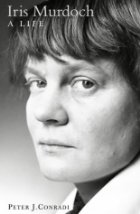
The first entry in January 2004 is Iris by A N Wilson. A year earlier I’d read John Bayley’s iris-by-conradibiographies of Iris, which I found rather uncomfortable reading with maybe too many personal details for my liking. Iris had died in February 1999 after suffering from Alzheimer’s Disease. I’d also read Iris Murdoch: a Life by Peter J Conradi. This is a very different account of Iris. I’d noted that it was “very long and detailed – mainly a literary biography – OK when I had read the books – most interesting when about events and descriptions of her and John.”
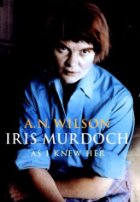
iris-by-wilsonA N Wilson’s biography is very different yet again and all I noted was that it was interesting because of that. This book received some very critical reviews, but I didn’t know that when I read it.  It made me want to read more of her books so I then read The Italian Girl as that was the only book by her on the shelf in the library. I thought it was “quite strange with unattractive characters”. I enjoyed it though and thought it “does make you want to know more about them, what happens and why. Not a book to re-read.”
Unlike the next book I read – Middlemarch by George Eliot, which I thought was “very good, middlemarchvery long and in places too wordy, but excellent in character description, analysis and plot development. I’d seen it on TV but long enough ago to forget what the characters looked like so it was easy to use my own imagination. Lots of different characters and much social background of 19th century England.” I still dislike having TV or film adaptations of books intruding into my own vision of how the characters look.
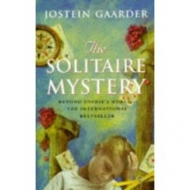
solitaireThe last book I wrote about in January 2004 was The Solitaire Mystery by Jostein Gaarder (who wrote Sophie’s World, that I’d read earlier). I described this as full of philosophical ideas, a story within a story – fantasy/reality/philosophy – about a boy and his father travelling from Norway to Greece in search of the boy’s mother. A dwarf gives the boy a magnifying glass and a baker gives him a miniature book telling the story of a sailor shipwrecked on a desert island in 1790. There is also a pack of playing cards with lives of their own, including a Joker (his father collects Jokers). These are all things he needs to solve the mystery. Unlike Sophie’s World this doesn’t mention specific philosophers but discusses ideas about destiny, the supernatural, conincidences and the reality of the everday world.
I wouldn’t mind re-reading these books, even The Italian Girl!

Wild Mary

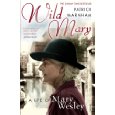
I’m still catching up with writing about books I read last year. Wild Mary by Patrick Marnham is a biography of Mary Wesley, the author of Camomile Lawn and other books. My only knowledge of her before reading this was that her first book was published when she was 70 and my impression was that she had only started to write later in her life. That was not the case, however, as she had been writing for many years and had had two children’s books published.

She had an extraordinary life – born in 1912, her mother told her she had been an unwanted child, that it would have been better if she had been born a boy and that she and Mary’s father loved Susan, her sister, more. She married Lord Swinfen and later said that she had done so to get away from her mother. She was soon bored and began a series of love affairs.

The couple eventually divorced in 1945. In 1944 she had met and fallen passionately in love with Eric Siepmann, a penniless writer, then unhappily married to Phyllis, who embarked on a campaign against him, resulting in him losing first one and then another job. Mary and Eric were married in 1952 just two weeks after his divorce. She was devasted when he died in 1970.

Wild Mary is a detailed book about a complicated life written at Mary’s invitation, based on her personal papers, and conversations between Mary and Patrick Manham in 2002. One of the most fascinating things about Mary’s life for me was her wartime experiences, working for MI5 in the decoding unit. She was an intensely private person who lived her life dividing it into compartments. As Patrick Marnham describes:

Almost everyone who remembered Mary Siepmann agreed on one thing; she lived her life in separate compartments. In love and friendship she was happiest with one-to-one relationships, and when she loved her love grew from a response to the distinct separate personality that confronted her own. She had three sons but in the last twenty five years of her life she never invited them to her house at the same time. Her sons, with three different fathers, also had three different mothers – since she could be a different person to each when she saw each alone; and she never shared a child with its father.

She was estranged from her oldest son Roger (due to a legal case between him and his half-brother Toby) but two months before she died he visited her and it had been nearly 30 years since they had seen each other!

I found Marnham’s portrayal of Mary Wesley difficult to follow in parts, maybe because there was so much intrigue and rumour surrounding her life which he was disentangling and at times I thought I certainly wouldn’t like to have met Mary. She seems to have been a difficult and determined woman who aroused strong passions in those who knew and loved her. Although Marnham highlights the links between Mary’s own life and the novels she wrote this biography did not make me want to rush out and read more of her novels.

The Life of Dodie Smith

dear-dodie

I’ve just finished reading Dear Dodie: the life of Dodie Smith by Valerie Grove. It has taken some time to read as at first I only read short sections at a sitting. This week I have spent more time on it – one reason being that it is a library book and I can’t renew it. I do like biographies and this is no exception. It is very readable and gives a very full picture of Dodie’s life, and it has an excellent index (always a plus for me).

I think the best way to sum up this book is to quote these extracts (some are very long, but I wanted to quote in full as I have to return the book):

Of the six plays and six novels that Dodie published between 1931 and 1967, at least one play and one novel will stand in a class of their own. Her life was essentially limited and, to a degree, pampered. Though she had to struggle in her actress days, even at her poorest she never cooked herself a meal, and even as a ‘shopgirl’ there was always someone to wake her and fetch her breakfast. After her mother’s death, she never had to look after anyone – husband, children or aged parents: and she was nannied by her husband for fifty years. A writer who has no family, no responsibility for other people, nobody to consider but himself and his own work (and there are legions of such writers, most of them men) lives a peculiarly privileged and self-indulgent life. But however self-absorbed, she was always curious about others, perceptive, incisive, extravagant, obsessively hard-working and oddly vulnerable. One cannot help liking Dodie for her spirit and humour. (page 323)

 She had a compelling presence; she talked precisely, listened intently; and her indomitable determination and diligence in the face of her own fading appeal were quite remarkable. (page 323)

From Dodie herself:

I am constantly trying to possess life, to save it up, to bring the then into now, and make it available for ever. (page 324)

Dodie Smith was born in 1896 and died in 1990. During her lifetime the world when through enormous changes and numerous wars. This biography not only relates Dodie’s life, but is also a record of those years, containing so much about the changing society, culture, values and recalling an unknown (to me at any rate) theatrical age.

She was the author of two classics – I Capture the Castle and The Hundred and One Dalmatians. Those are the two works that I knew before reading this book. She was also an acclaimed playwright and her plays receiving most praise were Autumn Crocus and Dear Octopus. This book has triggered my interest in reading these plays and more of Dodie’s books. She wrote millions of words, mostly about herself – in her journals and five volumes of autobiography. She simply loved writing. But at times she became depressed and stuck:

The death of Hitler was announced on 2 May 1945, the eve of Dodie’s forty-ninth birthday. In the ensuing week, when the European war reached its end – the very thing she longed for – she found she had a terrifying case of writer’s nerves. ‘My inner ear – that faculty for hearing every word spoken in my head before I write it – suddenly went out of gear; or it had become impossible to pull it out of gear because it never stopped morning or night. It worked while I was writing, reading and even sleeping. Always I heard the words battering at me, trying to form their own satisfactory sentences. I became obsessed by rhythm. I have always fussed about the balance of my writing but in a very amatuer way. Only recently it dawned on me that every word of a novel ought to be as carefully balanced as every speech in a play. Since then, life has been quite nightmarish. I found I was trying to impose on sentences the rhythm of poetry. I heard every word that was said with exaggerated accents. Moreover I couldn’t get any relaxation in reading because my ear listened to the rhythm of everything I read and I couldn’t take in the sense. And nights have been almost more exhausting than the days for I dreamed in words as well as happenings.’ (pages 166 -7)

One touching note – Dodie’s last Dalmatian, Charley, slept on the floor by her side on guard, as it were, during her final days. Dodie left £2000 in her will for ‘the utmost care and protection of Charley’, but three weeks after her departure he died.