Six Degrees of Separation: from What Are You Going Through to The Man on a Donkey

It’s time again for Six Degrees of Separation, a monthly link-up hosted by Kate at Books Are My Favourite and Best. Each month a book is chosen as a starting point and linked to six other books to form a chain. A book doesn’t need to be connected to all the other books on the list, only to the one next to it in the chain.
The chain this month begins with  What Are You Going Through by Sigrid Nunez, a book I’ve not read. Described as a luminous, heartbreaking and life-affirming novel about choosing to die, it is a novel about a woman with terminal cancer. She asks a friend to accompany her on a holiday where she will, without warning one day, take a lethal pill to end her life on her own terms.
My first link: My first thought was to link my chain to books about cancer, beginning with The Spare Room by Helen Garner. Nicola, who is suffering from cancer goes to stay with her friend Helen whilst she undergoes alternative therapy. She refuses to accept that she is dying and Helen struggles to cope with the situation. It is a difficult book to read, not because of the style of writing, which is fluent, but because of the agonising descriptions of Nicola’s condition and the anguish and anger that hits Helen. But I’m glad I read it; it was nowhere nearly as bad as I imagined it would be.

So then I changed my mind and the rest of the chain just happened:

My second link is a bit tenuous and is via the author, Helen Garner, an Australian author, born in Geelong. In the 1959 film of Nevil Shute’s novel On the Beach the closing scenes were filmed near Barwon Heads, a suburb of Geelong. The novel is set after a world wide nuclear war has destroyed most of the globe, and the few remaining survivors in southern Australia await the radioactive cloud that is heading their way and bringing certain death to everyone in its path.
My third link is another novel with the word ‘beach’ in the title, On Chesil Beach by Ian McEwan. Edward and Florence married that morning are on honeymoon at a hotel on Chesil Beach, an 18-mile long shingle barrier beach on the Dorset coast. They are struggling to suppress their fears of their wedding night to come.

My fourth link: is the name ‘Florence’. In Deadheads by Reginald Hill old Mrs Florence Aldermann instructs her great nephew, eleven year old Patrick, how to deadhead roses and explains why it is necessary. When Patrick eventually inherits the splendid Rosemount House and gardens on the death of his aunt he is able to indulge his horticultural passions without restraint. But why do so many of his colleagues keep dropping dead?
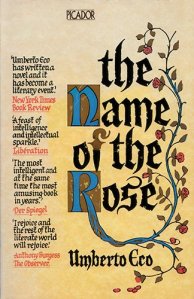
My fifth link is to a novel with the word ‘rose’ in the title. It’s one of my favourite books, The Name of the Rose by Umberto Eco, historical fiction set in 1327. Benedictine monks in a wealthy Italian abbey are suspected of heresy, and Brother William of Baskerville arrives to investigate. He collects evidence, deciphers secret symbols and coded manuscripts, and digs into the eerie labyrinth of the abbey, where “the most interesting things happen at night.” When his delicate mission is suddenly overshadowed by seven bizarre deaths, Brother William turns detective.
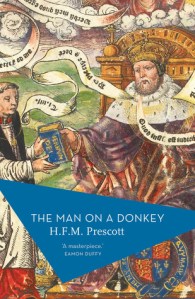
My sixth link: is to The Man on a Donkey by H F M Prescott, historical fiction that features Benedictines but in this book it’s Benedictine nuns, not monks. It is set in 1536 and is about The Pilgrimage of Grace, a protest against Henry VIII‘s break with the Roman Catholic Church, the Dissolution of the Monasteries, and the policies of the King’s chief minister, Thomas Cromwell.

Beginning with stories about terminal cancer my chain travels to one about Henry VIII’s dissolution of the monasteries, via tales about survivors of a nuclear war, a couple’s fears of their wedding night, a man who loves roses accused of murder, and murders in an Italian abbey.

Next month (December 4, 2021), we’ll start with the classic novella, Ethan Frome by Edith Wharton. For a change the chain begins with a book I have read!
Contemporary Novellas: Fludd by Hilary Mantel

A dark fable of lost faith and awakening love amidst the moors

5*

Novellas in November began this week, hosted by Cathy and Rebecca. Each week they will take it in turns to host a “buddy read” of a featured book they hope you will join in reading – see their blogs for details.

The definition of a novella is loose – it’s based on word count rather than number of pages – but they suggest aiming for 150 pages or under, with a firm upper limit of 200 pages. The prompt for this week is contemporary fiction, defined as post 1980 and hosted by Cathy,

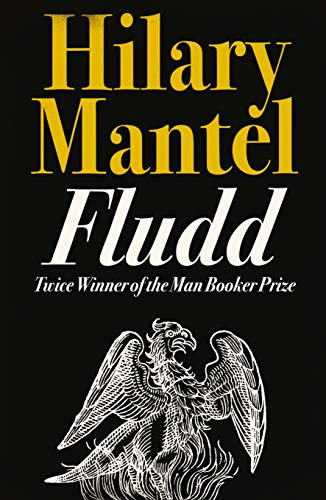
My choice this week is Fludd by Hilary Mantel, first published in 1989 by Viking. My copy, published in 2010 by Fourth Estate, has 181 pages followed by additional features at the end, including an About the Author section, and an interview with Hilary Mantel.

Description:

Fetherhoughton is a drab, dreary town somewhere in a magical, half-real 1950s north England, a preserve of ignorance and superstition protected against the advance of reason by its impenetrable moor-fogs. Father Angwin, the town’s cynical priest, has lost his faith, and wants nothing more than to be left alone. Sister Philomena strains against the monotony of convent life and the pettiness of her fellow nuns. The rest of the town goes about their lives in a haze, a never-ending procession of grim, grey days stretching ahead of them.

Yet all of that is about to change. A strange visitor appears one stormy night, bringing with him the hint, the taste of something entirely new, something unknown. But who is Fludd? An angel come to shake the Fetherhoughtonians from their stupor, to reawaken Father Angwin’s faith, to show Philomena the nature of love? Or is he the devil himself, a shadowy wanderer of the darkest places in the human heart?

Full of dry wit, compassionate characterisations and cutting insight, Fludd is a brilliant gem of a book, and one of Hilary Mantel’s most original works.

My thoughts:

It is 1956, set in the north of England in the fictional village of Fetherhoughton, which is loosely based on the village where Mantel grew up. She was brought up as a Catholic and the idea for the story came from a conversation with her mother about her childhood. When she was around four the Bishop decreed that all the statues in the church were to be removed which annoyed the parishioners and she heard the adults talking about what to do with the statues. One suggestion was to bury them. Her mother also told her about a young priest, who everyone liked, and who disappeared. It was assumed that there was a girl involved. The two events combined in her mind and came out as this novel.

Mantel clarifies in a Note before the story begins that the church in Fludd bears some resemblance, but not much to the Roman Catholic Church in the real world. Fludd was a real person (1574 – 1637), a physician, scholar and alchemist and she adds that

In alchemy, everything has a literal and factual description, and in addition a description that is symbolic and fantastical.

This sets the scene for what follows – there is a mystery that lies beyond the visible world, miraculous things appear to happen and very ordinary things appear miraculous. There is a hint of the supernatural.

The story centres on Fludd, a young priest who comes to the Church of St Thomas Aquinas to help Father Angwin, a cynical priest who has lost his faith. The Bishop, a modern man, is concerned about Father Angwin and wants to bring him and the Catholic community up to date – so the statues in the church have to go. This has a most disturbing effect on all concerned – not just the church and Father Angwin, but also the the nuns in the convent, and the school, both under the stern eye of Mother Perpetua.

Fludd, himself is something of a mystery. When he eats the food disappears, but he is not seen eating. When he pours out whisky for Father Anwin the bottle always remains full. Strange things happen, a wart disappears from one character’s face and finds its way to another’s, one character apparently spontaneously combusts, another disappears and there’s a tobacconist who may or may not be the devil. The real question is just who is Fludd?

I enjoyed it all immensely – partly about religion and superstition, but also a fantasy, a fairy tale, told with wit and humour with brilliant characterisation.

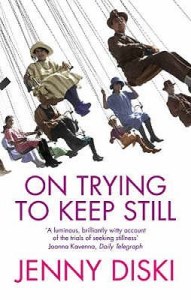
Throwback Thursday: On Trying to Keep Still

Today I’m looking back at my post on On Trying to Keep Still by Jenny Diski which I first reviewed on June 8, 2007.

Here are the first two paragraphs::

This book captivated me. I have read some good books this year, but this one outshines the rest. When I wasn’t reading it I was thinking and talking about it. It’s about experiencing an experience, becoming aware of experiencing the experience and so losing the experience.

I have had the experience of experiencing Jenny Diski’s travels during a year when she visited New Zealand, spent three months in a cottage in Somerset and went to sample the life of the Sami people of Swedish Lapland. No need to go those places myself now. Really, I could be tempted by a trip to New Zealand, but that is only a pipe dream. Now, a cottage in Somerset – that is a real possibility.

Click here to read my full review

The next Throwback Thursday post is scheduled for December 2.

Novellas in November: Novellas I’ve Read in Earlier Years

This is the first week of Novellas in November, hosted by Bookish Beck and Cathy at 746 Books, and like Susan and Annabelle, I’m looking back at some of the novellas I’ve previously read.

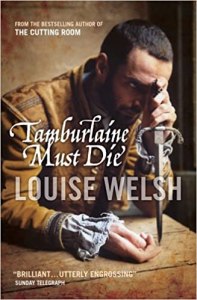
Tamburlaine Must Die by Louise Welsh – set in May 1593, it’s a tense, dramatic story of the last days of Christopher Marlowe, playwright, poet and spy. Accused of heresy and atheism, his death is a mystery, although conjecture and rumours abound. Louise Welsh has used several sources in writing this novella and it has an immediacy, that drew me in to the late Elizabethan world. It conveys the claustrophobic atmosphere of danger surrounding Marlowe; who can he trust, and who is behind the pseudonym of ‘Tamburlaine’, who posted a libellous handbill referencing Marlowe’s plays? He has just three days to find the murderous Tamburlaine, a killer escaped from the pages of his most violent play, Tamburlaine.

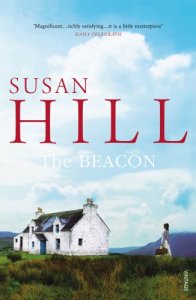
The Beacon by Susan Hill – a compelling story, drawing a picture of a family, four children and their parents living in the Beacon, an old North Country farmhouse. It’s also full of tension, of unspoken feelings and emotions as each child, Colin, May, Frank and Berenice grow up and leave home. Except that May came back after a year at university in London, unable to cope with ‘the terrors’ that began to assail her.  As the years pass, May is left at home caring for her widowed mother, after she suffered a stroke. It’s a powerful book about truth and memory, about the ordinary everyday outer lives we  live and the inner turmoil and tensions within us. It’s also about what we make of our lives, how we express ourselves and about how other people see us.

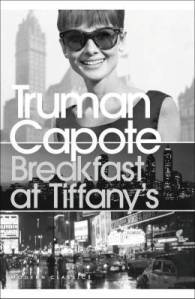
Breakfast at Tiffany’s by Truman Capote is a quick read and very entertaining. The narrator is not named, although Holly Golightly calls him ‘Fred’ after her brother. He’s a writer and at the beginning of the book he is reminiscing about Holly with Joe Bell, who ran a bar around the corner on Lexington Avenue. They hadn’t seen or heard from Holly  for over two years. She used to live in the apartment below Fred’s in a brownstone in the East Seventies in New York. Her past is almost as unknown as her present whereabouts. Holly is a free spirit, charming and carefree, but craves attention. She has a cat, plays the guitar and likes to live as though she’s about to leave – all her belongings still in suitcases and crates – and has a great many friends who she entertains with numerous parties. But her life is really a mystery and not all is as it appears on the surface, longing for something wonderful to happen.

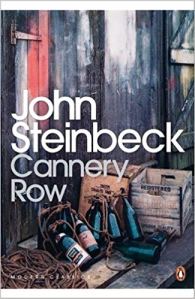
Cannery Row by John Steinbeck – I love this book. Steinbeck’s style is perfect for me, I could see Cannery Row itself, a strip of Monterey’s Ocean View Avenue, where the Monterey sardines were caught and canned or reduced to oil or fishmeal, along with all the characters – no, it was more than that -I was there in the thick of it, transported in my mind, whilst I was reading and even afterwards as I thought about the novel. There is humour and tragedy, meanness and generosity, life and death all within Cannery Row‘s 148 pages, full of fascinating characters including a group of down and outs, lead by Mack, the shop keeper, Lee Chong, who also owns the Palace Flophouse where he lets Mack and the boys live, Dora, a woman with flaming red hair, the madam who runs the Bear Flag Restaurant, Doc who lives and works at the Western Biological Laboratory and Henri the painter who is building and never finishing a boat.

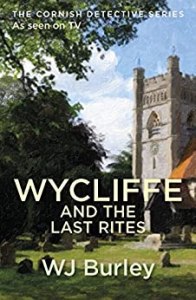
Wycliffe and the Last Rites by W J Burley – set in Cornwall a bizarre murder shakes the village of Moresk. Arriving at church on Easter morning the vicar discovers the body of a woman sprawled across the chancel steps. To add to the horror, the church is filled with the discordant sound of an organ chord, the notes apparently chosen at random and wedged down.Detective Chief Superintendent Wycliffe’s problem in finding the murderer is that all the possible leads pointed to a limited range of possible suspects but none of them matched his specification for the criminal. It seemed he had to believe the impossible. It’s a tightly plotted book, concisely and precisely written and I enjoyed it very much

Nonfiction November: Week 1

Week 1: (November 1-5) – Your Year in Nonfiction with Rennie at What’s Nonfiction: Take a look back at your year of nonfiction and reflect on the following questions – What was your favorite nonfiction read of the year? Do you have a particular topic you’ve been attracted to more this year? What nonfiction book have you recommended the most? What are you hoping to get out of participating in Nonfiction November?  

So far this year I’ve read 15 nonfiction books, more than in previous years, but I haven’t managed to write reviews of all of them. The links shown take you to my posts, where they do exist.

My favourite is English Pastoral: An Inheritance by James Rebanks.

I read it in February and gave it 5*. I thought then it would be one of the best books I’d read this year and I still think that. Rebanks’ farm is in the Lake District hills. It was part of an ancient agricultural landscape: a patchwork of crops and meadows, of pastures grazed with livestock, and hedgerows teeming with wildlife. And yet, by the time James inherited the farm, it was barely recognisable. The men and women had vanished from the fields; the old stone barns had crumbled; the skies had emptied of birds and their wind-blown song.

It is inspirational as well as informative and it is beautifully written. I enjoyed his account of his childhood and his nostalgia at looking back at how his grandfather farmed the land. And I was enlightened about current farming practices and the effects they have on the land, depleting the soil of nutrients.

But all is not doom and gloom as Rebanks explains what can be done to put things right, how we can achieve a balance of farmed and wild landscapes, by limiting use of some of the technological tools we’ve used over the last 50 years so that methods based on mixed farming and rotation can be re-established. By encouraging more diverse farm habitats, rotational grazing and other practices that mimic natural processes we can transform rural Britain.

I can highly recommend reading English Pastoral. I loved it and came away with much to think about and also hope for the future.

~~~

I like to vary my reading but tend to lean towards reading memoirs, biographies and history. This year I’ve also been interested in climate change, politics and in learning more about Covid-19 and how it’s been managed. Taking part in Nonfiction November in previous years has given me an incentive to read more nonfiction and I’m sure it will again this year. I’m looking forward to seeing what others have been reading!

Theses are the other 5* books:

  1. A Life on Our Planet by David Attenborough 5*
  2. Ice Bound by Jerri Nielsen 5*
  3. The Yorkshire Shepherdess by Amanda Owen 5*
  4. I Love the Bones of You by Christopher Ecclestone 5*

The remaining 10 books:

  1. For the Record by David Cameron
  2. The Salt Path by Raynor Winn
  3. The Way Home by Mark Boyle
  4. How Britain Ends by Gavin Esler
  5. And Away by Bob Mortimer
  6. Breathtaking by Rachel Clarke
  7. The Madness of Crowds by Douglas Murray
  8. Index, A History of the by Dennis Duncan
  9. Failures of State by Jonathan Calvert and George Arbuthnott
  10. Another Journey Through Britain by Mark Probert

Books Read in October 2021: Part One

I won’t be able to finish reading any more books this month, but it’s been a bumper month of reading, with a total of 8 books. Five of them are nonfiction (including one audiobook) which is probably the first time I’ve read more nonfiction than fiction during one month. But I’ve only written posts about 2 of them! I’ve definitely spent more time reading than writing this month.

These are books I’ve reviewed with links to my posts:

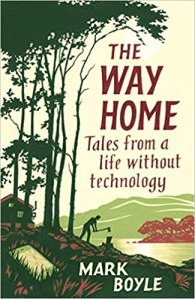
The Way Home: Tales from a life without technology by Mark Boyle 4* – This is not a ‘how to’ book, nor is it a guide to living without technology. It’s an account of what it was like for him, living in a wooden cabin he built on a smallholding in Ireland. He has no running water, no car, no electricity or any of the things it powers: the internet, phone, washing machine, radio or light bulb. He writes about the loneliness he experienced, the lack of contact with his parents and friends, and the damage to his relationships. The book follows the seasons of the year and is a collection of tales about his experiences and his observations about attempting to live a technology-free life.

The Man Who Died Twice by Richard Osman 1* – light, easy to read crime fiction, this is a follow up to The Thursday Murder Club. Many people have written glowing reviews of this book, but Richard Osmond’s style of humour differs from mine, so I didn’t find it very funny. I don’t like being so negative about a book but I think the characters are rather stereotypical and the plot is over complicated and unconvincing. In addition it’s written in the present tense which usually irritates me – and it did.

And here are a few notes about 2 of the remaining 6 books with links to Amazon:

The Library of the Dead by T L Huchu 4* – I loved this fantasy novel, set in a future or alternative Edinburgh, with a wealth of dark secrets in its underground. Teenager Ropa, has dropped out of school to become a ghost talker and when a child goes missing in Edinburgh’s darkest streets, Ropa investigates his disappearance. It’s a dark story, but with flashes of humour to lighten the darkness, and is a mix of Zimbabwean and Scottish magic and culture. If you enjoy Ben Aaronvitch’s Rivers of London novels, you’d enjoy this book.

I Love the Bones of You by Christopher Eccleston 5* an audiobook read by actor, Christopher Eccleston, who has played many roles. He is probably my favourite Doctor Who and I especially loved his portrayal of Maurice Scott in the BBC drama The A Word. Maurice is an eccentric and lovable man who has an autistic grandson. I Love the Bones of you is not the usual celebrity autobiography that is just all about him and his work. This is a really vivid portrait of his relationship with his family and particularly with his father who had dementia at the end of his life. He talks about his lack of confidence in his acting ability together with his experiences with anorexia, depression and breakdowns and talks honestly about his struggles with mental health..

~~~

Part Two of Books Read in October 2021 will follow shortly.