Mount TBR Challenge: September Checkpoint

Mount TBRIt’s time to check in for Bev’s Mount TBR Reading Challenge 2013.

This is a very simple challenge – to read books from your own shelves.  All the books I own are ones I want to read so why is it so difficult to reduce my TBR mountain of books?I think it’s because of the temptation to read newly acquired books, those recently published and also older books that I come across either on the internet, or in the library or bookshops.

I suppose the only way not to keep adding to the TBR mountain is to stop going to the library, bookshops or read the internet – and I really don’t want to do that and I could miss out on some good books. So, the TBR piles never get smaller, even though I’ve been reading quite a lot this year – 26 so far, which is one more than I read in the whole of last year.

This quarter I’ve read 13 of my TBR books (linked to my posts on the books):

  1. Falling Angels by Tracy Chevalier
  2. Tamburlaine Must Die by Louise Welsh
  3. The Sense of an Ending by Julian Barnes
  4. The Case of the Howling Dog by Erle Stanley Gardner
  5. The Red Coffin by Sam Eastland
  6. To Kill a Mockingbird by Harper Lee
  7. Third Girl (Poirot) by Agatha Christie
  8. Agatha Christie at Home by Hilary Macaskill
  9. The Birthday Boys by Beryl Bainbridge
  10. The Pillars of the Earth by Ken Follett
  11. The Death Maze by Ariana Franklin
  12. Relics of the Dead by Ariana Franklin
  13. Not the End of the World by Christopher Brookmyre

There are a couple of outstanding books in the ones I’ve read this quarter – To Kill a Mockingbird, and The Birthday Boys. 

Here are my answers to some of Bev’s questions:

1. Tell us how many miles you’ve made it up your mountain (# of books read).  If you’re really ambitious, you can do some intricate math and figure out how the number of books you’ve read correlates to actual miles up Pike’s Peak, Mt. Ararat, etc. 

This means in terms of mountains climbed (according to the Challenge criteria) that I’ve scaled Mont Blanc (24 books) and am now in the foothills of Mt Vancouver (36 books) – quite a way to go until my target of Mt Ararat (48 books).

2. Which book (read so far) has been on your TBR mountain the longest? Was it worth the wait? Or is it possible you should have tackled it back when you first put it on the pile? Or tossed it off the edge without reading it all?

Of the books read this quarter I think Falling Angels has been on the list the longest and it was well worth the wait. I always wonder why I haven’t read such a book earlier when I’ve enjoyed reading it so much, but really it doesn’t matter when I read it, so long as I do sometime!
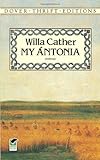
My Antonia by Willa Cather

I’d included My Antonia on my Classics Club list of books to read because I’d enjoyed reading A Lost Lady a few years ago (my post on that book is here). So when it popped up in the Classics Club Spin as the book to read in August/September I was pleased.

I liked it, but not as much as A Lost Lady. I think it’s because it’s a bit fragmented, made up of  a series of short stories. But it’s beautifully written with vivid descriptions of people and places. Published in 1918 it’s set in America at the beginning of the 20th century – the story of immigrant settlers and in particular that of Antonia Shimerda and her family as told by Jim Burden. Jim and Antonia meet as children, when he had come to live with his grandparents on their farm in Nebraska. Antonia’s family is from Bohemia, speaking very little English and living in a sort of shed, little more than a cave. They spend a lot of time together as Jim teaches Antonia to speak English.

Jim recounts various episodes as they grow up together. Gradually they drift apart and lose contact, as Jim left for college eventually becoming a lawyer, whilst Antonia stayed in Nebraska. They meet again years later. It’s a story of hardship and suffering, of poverty, people struggling to make a living from the land, and of the attitudes towards immigrants, women and children. It’s also about being an outsider and the importance of belonging, which makes it most poignant that to her father Antonia is ‘My Antonia’.

But the thing that stands out for me is the beauty of Cather’s descriptions of the countryside and as I read I highlighted many passages – this for example:

Presently we saw a curious thing: there were no clouds, the sun was going down in a limpid gold-washed sky. Just as the lower edge of the red disk rested on the high fields against the horizon, a great black figure suddenly appeared on the face of the sun. We sprang to our feet, straining our eyes toward it. In a moment we realized what it was. On some upland farm, a plough had been left standing in the field. The sun was sinking just behind it. Magnified across the distance by the horizontal light, it stood out against the sun, was exactly contained within the circle of the disk; the handles the tongue, the share black against the molten red. There it was, heroic in size, a picture writing on the sun.

Even while we whispered about it, our vision disappeared; the ball dropped and dropped until the red tip went beneath the earth. The fields below us were dark, the sky was growing pale, and that forgotten plough had sunk back to its own littleness somewhere on the prairie. (page 186)

But it’s not just descriptive, it conveys the timelessness of human nature, of how people interact and think, their prejudices, unreliability and of their love for each other. I was struck by this definition of happiness:

I was entirely happy. Perhaps we feel like that when we die and become part of something entire, whether it is sun and air, or goodness and knowledge. At any rate, that is happiness: to be dissolved into something complete and great. When it comes to one, it comes as naturally as sleep. (page 11)

Yet this is a sad book, full of nostalgia and poignancy. There’s such a contrast between the hardness of the life of the settlers and the loving gentle family life that Jim’s grandparents provide for him and their generosity towards their neighbours. Overall, though it is the character of Antonia that caught my attention and in the episodes that weren’t about her I lost interest somewhat. So, a mixed reaction – there are parts that I thought were outstanding and parts that left me rather unsatisfied.