Sunday Selection

This morning I finished reading A Caribbean Mystery by Agatha Christie. I read it very quickly as it’s easy reading and although sprinkled throughout with lots of red herrings it wasn’t too difficult to guess the outcome. I’ll write about it later, along with three other books I’ve read recently.

I’m wondering which book to read next. I have a pile of library books – new ones I borrowed this week:

I think I’d better get on with reading Salmon Fishing in the Yemen by Paul Torday as that is the next book we’re discussing at the book club at the end of October. It’s a matter of timing it right so that I finish it in time but not too soon so that I’ve forgotten about it before the meeting. It’s actually a book that I’ve ignored in the past as the title doesn’t appeal to me – the idea of  fly fishing is not guaranteed to fill me with desire. I have started it, but chapter one isn’t inspiring me, with its details of migratory salmonids, the evolution of salmon parr and feeding conditions. I shall persevere and hope it improves.

Meanwhile, my mind is wandering towards the library books, even though I have two non-fiction books from LibraryThing that I feel I should read soon – why is it that books that sound so interesting suddenly lose their attraction when I start to feel the slightest bit under pressure to read them by a certain date? A hangover from my working life, maybe when I had to produce reports to deadlines.

Another thing too – why do I borrow so many library books when I have plenty of my own still to read? If I didn’t have to return books then I wouldn’t be tempted to borrow more – maybe D should go on his own to take my books back!

Back to the library books, I think I’ll look at Solar by Ian McEwan. I like his books but having read somewhere that this isn’t as good as others and I wondered if it may contain a bit too much about physics for me I decided not to buy it, but to check it out if I saw it in the library. At least, it starts off well, as Michael Beard’s marriage appears to be disintegrating and he can’t stand it – the shame  and inconvenient longing he has for his wife. It does make me want to read on.

I borrowed the other books because I like the authors – apart from The Autobiography of the Queen by Emma Tennant and Mr Monk goes to the Firehouse by Lee Goldberg. I haven’t read anything by these two authors and they are impulse loans. The Goldberg book caught my eye because of its title, which intrigued me as it didn’t convey anything at all to me. On the cover it’s advertised as being based on the Television Series – an American series, I assume, as I’ve never heard of it. If anyone knows this series I’d love to hear about it. Is it any good?

The Autobiography of the Queen attracted me when I read on the front cover that this is ‘hot on the heels of Alan Bennett’s fictional account of the Queen.’ I’ve read that and thought it was very amusing. I thought I needed something light and amusing to counter-balance the crime fiction and serious books I seem to have been reading lately.
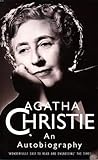
Agatha Christie on …

I’ve been reading Agatha Christie’s Autobiography for a while now – just a chapter or so each day. Instead of writing about the details of her life I thought I’d do a few posts now and then on things she drops into the narrative. Ideas she had, thoughts on various things, books she liked and so on.

Today, I’ve chosen to focus on her joy in being alive and happiness.

She’s writing about the time in her life when she was thirteen or fourteen:

Always when I woke up, I had the feeling which I am sure must be natural to all of us, a joy in being alive. I don’t say you feel it consciously – you don’t – but there you are, you are alive, and you open your eyes, and here is another day; another step as it were, on your journey to an unknown place. That very exciting journey which is your life. Not that it is necessarily going to be exciting as a life, but it will be exciting to you because it is your life. That is one of the great secrets of existence, enjoying the gift of life that has been given to you.(page 133)

She goes on to say that not every day will be enjoyable, for example if you remember you’re going to the dentist. However, she thinks it does depend upon your temperament – whether you’re a happy person or melancholic:

Naturally happy people can be unhappy and melancholic people enjoy themselves. But if I were taking a gift to a child at a christening that is what I would choose: a naturally happy frame of mind. (page 133)

I like that.

A Change in Altitude

I wasn’t sure when I was reading A Change in Altitude which time period it is set in and discovered from Anita Shreve’s website that it is set in the late 1970s, which surprised me because I’d thought it was possibly the 1950s. This is the story of Margaret and Patrick, a young American couple who have recently arrived in Kenya. At the start of the novel they have just arrived. They are living in a small house in the grounds of their new friends, Diana and Arthur because the plumbing has failed in their own house. Diana is a native white Kenyan and Arthur is British.

Seen through Margaret’s eyes, Kenya is a place of appalling poverty, discrimination and heat. She and Patrick  feel obliged to the other couple and agree to go on a climbing expedition up Mount Kenya, despite their inexperience. I felt very much for Margaret as she struggled to keep up with the others as they ascended the mountain. They were led by guides, roped together, crossing scree and then a glacier, when the inevitable accident happened and Margaret is overcome by feelings of guilt.

From that point on I began to lose interest in this book. I don’t know whether it’s my taste in reading that has changed but this book, fell short of Anita Shreve’s earlier books, which I enjoyed so much. Maybe I should re-read one and see if it’s me or her writing that has changed. Despite the drama of the accident there was no sense of suspense or tension. I liked the account of the change in attitude that was stirring in Kenya as the inequalities in living conditions and culture are highlighted, but as for the change in altitude I just didn’t understand the symbolism. At times the writing is disjointed and the characterisation unconvincing. It’s basically a story about marriage and love and how events and their aftermath affect our lives. All in all, although it promised to be good, it was rather disappointing.

Wondrous Words Wednesday

Wondrous Words Wednesday, run by Kathy (Bermudaonion),  is a weekly meme where we share new (to us) words that we’ve encountered in our reading.

My words this week are from The Fall by Simon Mawer. This is a novel involving rock climbing and mountaineering:

Exiguous – I thought I should know this word but I couldn’t work out the meaning from this sentence, so I looked it up – ‘She reached the edge and there he was around the corner taking in the rope as she moved on to his exiguous ledge.’ (page 144) Exiguous means ‘scanty’ or ‘slender’. In this context I’d say it means ‘narrow’.

Solecism another word I’m sure I’ve looked up before, but I couldn’t define it. People looked at one another nervously, as though to move would be to commit a solecism. (page 248) Solecism means an absurdity, impropriety, incongruity; a breach of good manners or etiquette. Also a breach of syntax or nonstandard grammatical usage.

Hieraticthis sentence didn’t make sense to me if I took hieratic to be something to do with ‘hierarchy’. ‘The gesture seemed almost hieratic, a mixture of farewell and blessing.’ (page 305) Hieratic means priestly.


Hematocrit He’d got big lungs had Jamie, and a strong heart and tough arteries, a high lactate threshold and high hematocrit; all the physical and physiological qualities that you need to go high.’ (page 396) Hematocrit means a graduated capillary tube in which the blood is centrifuged to determine the ratio, by volume, of blood cells to plasma. Still not sure what it means – something to do with the amount of red blood cells in the blood which if you have a lot – more than the average – helps when climbing to high altitude.


Ogive – ‘The coroner’s court was as solemn as a Welsh chapel – might have been a chapel once, in fact, with its ogive windows and steeply pitched roof .’ (page 414) this is another word that I felt I should know, but didn’t. Ogive means either a diagonal rib of a vault or a pointed arch or window.

Definitions taken from The Chambers Dictionary.

Teaser Tuesday – The Rain Before It Falls

Teaser Tuesdays is a weekly bookish meme, hosted by MizB of Should Be ReadingShare a couple or more sentences from the book you’re currently reading.

For today’s teaser I’ve chose this from The Rain Before It Falls by Jonathan Coe. I recently borrowed this book from the library and have only read  the opening page just to see if it appealed. It does. It begins with Gill and Stephen, her husband outside raking leaves and shovelling them onto a bonfire when the telephone rang. Gill ran inside to answer it and then went back into the garden:

Stephen turned as he heard her approach. He saw bad news in her eyes, and his thoughts flew, at once, to their daughters: to the imagined dangers of central London, to bombs, to once-routine tube and bus journeys suddenly turned into wagers with life and death. (page 1)

Now, I just have to read more …

My Read-a-Thon Experience

At the last minute on Saturday I decided to take part in the 24 Hour Read-a-Thon. This was the first time I’d done this. Previously I’d thought there was no way I could read for 24 hours, but this time I realised that I didn’t have to – I could read for just as long as I liked! Which is what I did.

So I read all of Saturday afternoon, with just a short break for making dinner. Then, because I’m a creature of habit and I enjoy watching TV on Saturday evenings, I stopped reading long enough to watch Strictly Come Dancing and the X Factor, both entertaining programmes. Later on I fell asleep reading and started again about 6am. It was easier to read on Sunday morning than usual because we’ve been having internet connection problems and couldn’t get access until the afternoon. All in all I must have read for about 13 hours or so out of the 24.

I liked the experience of concentrated reading, spending most of the time on reading Exit Music by Ian Rankin. Usually I read in chunks rather than for hours and hours on end and it really helped to get into the plot. Often when I’ve been reading for a while I get a feeling that I should be doing something other than sitting reading but during those 24 hours it was as though I had nothing to do except read.

I finished Exit Music during Sunday morning and started Practical Magic by Alice Hoffman. That was quite strange, because that is pure fantasy; it was surreal moving from the world of crime with Rebus to that of magic with the strange, witchy Owens sisters and their family. I read about half of Practical Magic before the end of the Read-a-Thon. More about both books to follow.

I’m not sure I’ll take part again, but I enjoyed it this time.