Sunday Salon – Recent, Current and Future Reading

I keep a record of the books I read but it’s meaningless to think of them in terms of how many I read because that depends not only on their length but also on the nature and complexity of the books.  I’ve read three books so far this month:

But that is no indication at all of the amount of reading I’ve been doing. And this is mainly because one of the books I’m currently reading and have been reading for a while is the massive Wolf Hall by Hilary Mantel. I’m nearing the end now with just under 150 pages left to read. I read this morning that Henry has married Anne Boleyn, she has had her coronation and given birth to Elizabeth. Henry, of course, wanted a son and I wondered as I read this whether the words Mantel puts in his mouth were from a contemporary source or were her own in the light of her knowledge of future events. Henry is striding about the palace at Greenwich:

We are young enough, he says, and next time it will be a boy. One day we will make a great marriage for her. Believe me, God intends some peculiar blessing by this princess (my own emphasis). (page 485).

The other book I’m reading is The Very Thought of You by Rosie Alison. I’m torn between wanting to finish it and taking it slowly just because it’s so good. It’s very easy to read (it’s not written in the present tense, which helps enormously) and I could gallop through it at top speed, so different from Wolf Hall, where I sometimes have to flip back a few pages and re-read them to make sure I know what’s going on. The characters in The Very Thought of You are clearly delineated and I don’t have to wonder ‘now who is that?’  as I do in Wolf Hall – thank goodness that book has a Cast of Characters at the front and two family trees as well.

The Very Thought of You begins in 1939 and as I’m reading I’m becoming very aware that I know very little about that time or about the Second World War as a whole. I’ve been meaning to find out more and a while ago I bought Wartime Britain 1939-1945 by Juliet Gardiner, to fill in some of the gaps in my knowledge, so I keep dipping in to that as I read. It looks as though Alison has done her research well.

As for the books I have coming up next to read, I want to get back to reading more Agatha Christie – Death on the Nile for example and  also Set in Darkness, the next Rebus book in my reading of Ian Rankin’s series. But before that I have some review books to read. The vast majority of the books I read are my own or borrowed from the library or friends and family, but every now and then I receive books from publishers. At the moment I have three I haven’t read yet, although I have read the beginning of each one:

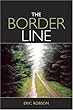
There is one more book that I’d love to read right now and that is The Border Line by Eric Robson (a library book). Robson is a broadcaster and he wrote this book about walking the modern border line between England and Scotland from the Solway Firth to Berwick-on-Tweed. It’s a mixture of history and anecdotes with descriptions of the landscape – the cairns, castles, battlefields and boundary stones along the way. This is the area we spent much time in last year when we were looking for a place to move to in the Borders and where we now live.
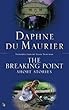
The Breaking Point: Short Stories by Daphne Du Maurier

The Breaking Point, first published in 1959, is my first book for the Daphne du Maurier Challenge. It’s a collection of eight short stories written after The Scapegoat and before The Infernal World of Branwell Bronte. Sally Beauman sums up the stories well in her introduction:

The stories here reflect the concerns of those adjacent books: they are dark, difficult, perturbing – and sometimes shocking. Du Maurier grouped them together under the title The Breaking Point – and they were written during a period when she herself came close to a severe nervous breakdown. They reflect and echo that psychological stress; it runs through them like a fault line. Here, we are a stylistic world away from the smooth technical assurance of her bestselling novels of the 1930s and 1940s: these stories are jagged and unstable; they constantly threaten and alarm; they tip towards the unpredictability of fairy tale, then abruptly veer towards nightmare. They are elliptic, awkward – and they are fascinating. (page ix)

I don’t really need to add much more, other than to indicate the stories themselves.

  1. The Alibi – about a man wanting to escape his ordinary life who takes on a new identity. He lives a double life, which ends as he becomes involved in two deaths.
  2. The Blue Lenses – a truly strange tale of a woman undergoing an eye operation who then sees everyone around her having an animal’s head appropriate to their character. She discovers that she is a victim, subject to betrayal and exploitation, fooled by those close to her.
  3. Ganymede – set in Venice, where a man on holiday is seduced by the beauty of a boy who is killed in a water-skiing accident. He returns home but inevitably he cannot escape his own nature.
  4. The Pool – a supernatural story with a mystical quality about a young girl reaching puberty and her overwhelming sadness at the loss of the hidden secret world she inhabited.
  5. The Archduchess – has a fairy tale atmosphere, about an imaginary principality in southern Europe, where the Archduke’s benign reign is overthrown by the insidious influence of two greedy and jealous men.
  6. The Menace – a silent movie star, a heart-throb until the advent of the ‘feelies’ when it is discovered that his magnetism is almost non-existant. Despite the efforts to raise it by the usual means,such as pretty girls, nothing can be done, until he meets an old friend. This one is much more optimistic than the other stories.
  7. The Chamois – about a married couple hunting for chamois in the Pindus; a chilling story of fear and fanaticism.
  8. The Lordly Ones – about a boy who cannot speak and is thought to be backward. Terrorised by his parents and unable to communicate he finds refuge for a while with the ‘lordly ones’.

The stories tell of double lives, split personalities, paranoia and conflict, each one with a ‘breaking point’. My favourite is The Pool.

Agatha Raisin and the Haunted House

I’ve not been around much on my blog this week, time out for looking after grandchildren in Scotland for one thing. I have still been reading, though I didn’t take Wolf Hall away with me as I knew I wouldn’t be able to concentrate much on reading and Wolf Hall deserves that.

I read a much less substantial book – Agatha Raisin and the Haunted House by M C Beaton. I’ve only read one of her books before, Death of a Gossip, which I thought was awful. I decided to give her books another go as I know other people enjoy the Agatha Raisin series. I’m sorry to say that I wasn’t enthralled by this book. It’s number 14 in the series, but I know a bit about the earlier books from an article in newbooks Crime Supplement, so it wasn’t difficult to follow. It’s definitely a ‘cozy’ mystery with three deaths for Agatha to resolve. An old woman reports that her house is haunted and is later found murdered. More deaths follow.

Agatha Raisin is an amateur sleuth and a very amateur one indeed. She blunders around and every now and then lands on something relevant. But this book is all rather silly and Agatha herself is a silly woman. It’s like reading an Enid Blyton book for not so very grown up adolescents, as she goes ga-ga over her new neighbour, Paul a married man, repeatedly changing her clothes and renewing her make-up to  catch his eye. Then there is the haunted house and a secret passage, reminding me of the Famous Five etc. For example she and Paul hide behind a hedge at dead of night keeping watch, stumble around in the garden trying to find the entrance to the secret passage and even worse, Agatha dressed up in a bright red wig and a long droopy tea-dress goes out at two in the morning to push a note through the police station door. I could go on … and  …. on.

So, a second book by M C Beaton hasn’t made me want to read any more.

Sunday Salon

Today I’ve been reading more from Wolf Hall by Hilary Mantel and I’m now almost at the halfway stage. At times I’m loving it and at times I’m thinking why, oh why is she writing this in the present tense? See, it’s getting to me – I’m not overly fond of books in the present tense. And why does she keep using ‘he’ and I’m not sure which ‘he’ she means? Sometimes it’s Thomas Cromwell, but it could be any number of other ‘he’s’ too. But on the whole she’s winning me over and I have to keep on reading. What a character this man Cromwell is, a man who Cardinal Wolsey describes as:

… rather like one of those square-shaped fighting dogs that low men tow about on ropes. Not that you are without a fitful charm, Tom. (page 86)

Cromwell knows that

You don’t get on by being original. You don’t get on by being bright. You don’t get on by being strong. You get on by being a subtle crook … (page 60)

I didn’t expect Wolf Hall to be relevant to the current state of affairs and yet it’s about power, who holds the purse strings, who can command. People, then as now, want change, always hoping for something better. I read this as the present election campaign was in flow with the politicians’ slogans ‘Vote for Change’ and ‘Change that Works for You’. Just see what Geroge Cavendish thought in 1529

‘But what do they get by the change? ‘ Cavendish persists. ‘One dog sated with meat is replaced by a hungier dog who bites nearer the bone. Out goes the man grown fat with honour, and in comes a hungry and a lean man.’ (page 55)

Talking about elections, Thomas Cromwell’s campaign to be ‘elected’ was rather different from today’s methods.  His constituency was Taunton which he held with the agreement of the king and the Duke of Norfolk because seats in the House of Commons were

…  largely, in the gift of the lords; of lords, bishops, the king himself. A scanty handful of electors, if pressured from above, usually do as they’re told. (page 161)

Well, at least that is different these days.

Wolf Hall engages me on different levels – it’s historical fiction of period I used to know well and as I read it all comes back to me – Henry VIII’s wives and all that. It’s also made me think about writing styles and what I’m comfortable reading. It’s a dense book, one that you have to take your time reading and it helps if you know the history because nothing happens quickly in this book, which is full of description and lots of characters. I’m not finding a page-tuner but a fascinating study in particular of Thomas Cromwell.

Wolf Hall is a long book, and I need to vary my reading. I’m also at the beginning of The Very Thought of You by Rosie Alison, very different from Wolf Hall and also listed for the Orange Prize for Fiction. Moving forward 400 years from Tudor England to Britain in the 20th century on the brink of war with Germany is quite a leap, but it still feels like historical fiction. The Very Thought of You begins with Anna’s evacuation from London in September 1939 to Ashton Park, a large Yorkshire estate. This is the calm before the storm.

It’s a very different style from Wolf Hall and I’m enjoying the contrast. So far, it has a warm, family feel about it, yet connected to world events with the parallel activity in Poland as Hitler invaded. The British ambassador in Warsaw, Sir Clifford Norton, watched the city burn and abandoned the embassy as the Nazis and the Soviets invaded.

I don’t envy the Orange Prize judges their task – how do you compare such different books?

Weekly Geeks:Secret pasts and peculiar presents

Bernadette at Reactions to Reading asks these questions at Weekly Geeks :

A couple of incidents have prompted this week’s topic.

  1. I very much enjoyed the two Susan Hill novels that I’ve read and already have the next book in her series Simon Serrailler series on my audio book playlist. Then I discovered, via the author’s opinion column in a UK newspaper, that I don’t particularly like her personality (this piece is an example of what I found mean-spirited and inaccurate about her rants but there were other articles too). Suddenly her books did not seem so appealing any longer.
  2. Craig Sisterson’s excellent blog Crime Watch featured an article about historical mystery author Anne Perry who, as it happens, committed a particularly grim murder many years ago (at the ripe old age of 15). “Thank heavens I’m not a fan of hers” was my first thought.

So I have been pondering the issues of whether it is possible to separate an author’s non-writing life from the books they produce and thought I’d throw these questions over to you. Feel free to answer one or more of these and give examples if you have them.

Does an author’s politics matter to you? Do you have a favourite book or series written by someone you know to be your political opposite? Or have you stopped reading works by a particular author after discovering that their politics was radically different from your own?

What about their personality? Have you ever stopped reading an author’s work after seeing or hearing them talk because you didn’t like what you saw or heard?

And how about that secret past? How would you feel if you found out your favourite author was a murderer or some other kind of criminal? Are there some crimes that you would be OK about and others that would stop you following their work? Do you know about the pasts of ‘your’ authors? Do you want to?

I’d like to say that a writer’s personality and/or past life crimes don’t affect my reading their work and that I judge it on its own merits. But of course it does. It hasn’t actually stopped me reading their books but I find it means their books have to be sufficiently absorbing for me to disregard what I know about their authors. The only way to avoid that influence is not to read anything about an author.

With regard to Susan Hill, I like her books and had read those comments and articles she published, plus her blog. I don’t agree with everything she writes by any means, but I did find her blog entertaining, perhaps more so when I didn’t agree with her views, and I went to hear her talk at Abingdon. She is not an easy character, in my opinion, certainly not very comfortable speaking in public and she had some very sharp words to say about e-books and book bloggers. But I still enjoy her books and won’t stop reading them.

I’ve read one book by Anne Perry, which I didn’t think was very good and based on that book I decided not to bother reading any more of her books. I didn’t know anything at all about her, but when I saw other bloggers recommending her books I checked them online and read about her crime. I did wonder whether that would have affected my decision if I’d known about it when I chose her book to read but I suspect it wouldn’t have put me off. There are plenty of films and books about real-life crime and I have no qualms about watching/reading them.

Non-fiction is different. For example, I want to know that an author’s credentials are genuine when reading books on health, diet, exercise and so on. I used to go to a book group where one person always asked these question about an author – “Who is the person and why should we take any notice of what s/he writes? “.

Unfortunately I haven’t always asked myself those questions. I picked up Bad Science  by Ben Goldacre this morning, which my husband is currently reading. Ben Goldacre is a qualified doctor working for the NHS, so maybe I can trust his book. There is a chapter on “Dr. Gillian McKeith PhD”, which reveals that she is neither a medical doctor, nor is she qualified as a nutritionist. Her PhD was  bought from a non-accredited correspondence course college. I had watched her TV programmes, You Are What You Eat with interest and I even bought her book, which has since sat on the bookshelves unread, along with other books such as Carol Vorderman’s book Detox for Life – both of them totally useless books, Carol’s because, as my husband points out, I didn’t follow it, but then I didn’t want to spend loads of money on all the supplements she recommends, although some of her recipes are good. As my bookshelves are groaning under the weight of too many books I think it’s time to get rid of at least McKeith’s book.

Half – Booking Through Thursday

 btt  button

This week’s topic:

So €¦ you’re halfway through a book and you’re hating it. It’s boring. It’s trite. It’s badly written. But €¦ you’ve invested all this time to reading the first half.

What do you do? Read the second half? Just to finish out the story? Find out what happens?

Or, cut your losses and dump the second half?

If I was hating a book I’d stop reading it, before getting halfway into it. I might skim through it if the story was interesting enough to find out what happens or read the end, but if it was that bad I’d dump it straight away. Life is too short and there are too many good books around to waste time and effort reading a boring, trite and badly written book.