Library Loot

I’ve been reading lots of library books  recently and still have quite a pile left unread. Here are just some of the books I’ve borrowed that I haven’t started to read yet.

From top to bottom:

  • Zennor in Darkness by Helen Dunmore. I haven’t read any of her books. The title of this drew my attention – Zennor is a village in Cornwall just north of Penzance, one of the places we used to go to years ago when Dave used to go rock climbing. But this book is different – it’s set in 1917 and U-boats are attacking ships on the Cornish coastline. D H Lawrence and his wife Frieda come into this novel, which won the McKitterick Prize in 1994.
  • Passenger to Frankfurt by Agatha Christie. I’m steadily reading Christie’s books, just in the order I find them. This is one of her later books and was written in 1970, published to mark her eightieth birthday. It’s a spy novel.
  • The Right Attitude to Rain by Alexander McCall Smith. I picked this one because I’d enjoyed The Careful Use of Compliments so much. This is the previous Isabel Dalhousie Novel in his Sunday Philosophy Club series and the third one in the series.  I’m looking forward to reading Isabel’s thoughts on moral and ethical dilemmas.
  • The Vicar of Sorrows by A N Wilson. I have a mixed reaction to Wilson’s books, some I like and some just turn me off. I liked A Jealous Ghost and Incline Our Hearts, but shied away from My Name is Legion. I also like his non-fiction – After the Victorians and some of his biographies. The Vicar of Sorrows is about a clergyman who does not believe in God and does not love his wife. It remains to be seen if I’ll like it.

Plotting

btt button

Plots? Or Stream-of-Consciousness? Which would you rather read?

 It all depends on my mood! I like both at different times.

Mrs Dalloway by Virginia Woolf springs to mind as a good example of stream-of-consciousness writing and is a book to cogitate over and I could read it again and again. Plot driven books, in contrast, are full of action and are page-turners, making me read quickly to find out what happens next, but once read I usually feel less inclined to re-read them.

Cozy Mysteries

When I saw the Cozy Mystery Challenge I wondered just would could possibly be ‘”cozy” about murder, after all “cosy” (as I prefer to spell it) means snug, warm and comfortable – a teacosy is meant to keep the teapot warm, a cosy cottage is small and welcoming. “Cozy” is not really the right word then for crime fiction.

Nevertheless there is a category of crime fiction with that label and I rather like reading them every now and then, along with police procedurals and historical crime fiction. As I found on the Cozy Mystery website cozy mysteries are those without  rough language, sex scenes, or gruesome details about the killing, and where the main character is normally an amateur detective. I like the puzzle-solving elements of that type of crime fiction rather than the noir realism of murder.

Sometimes I like to use reading challenges  to find new authors to read, but for this one I’m aiming to stick to books I already own and have been saving to read (in other words my to-be-read piles). The following are all on my shelves:

  1. Faithful Unto Death by Caroline Graham (Midsomer Murders)
  2. Asimov’s Mysteries
  3. My Cousin Rachel by Daphne Du Maurier
  4. An Agatha Christie – I have a few to choose from
  5. One Good Turn by Kate Atkinson
  6. The Private Patient by P D James
  7. A Ruth Rendell – also a few to choose from

But then again, I shall be going to the library over the next six months (the period of this challenge) and could easily find other books to read.

I think I’ll start with Azimov’s Mysteries.

Is there a category of crime fiction labelled science fiction mysteries? I expect there is. Years ago my husband and I both read a number of science fiction books – Frank Herbert’s Dune series and E E ‘Doc’ Smith’s Lensmen  and Skylark books for example. And hidden amongst them on the shelves I came across one I haven’t read –  Asimov’sMysteries, which I think fits into this category and may very well be a cozy mystery too. It is described on the back cover as:

… thirteen fiendishly ingenious stories of crime, murder, puzzlement and detection in the far reaches of space and centuries in the future … a superb showcase of Dr Asimov’s brilliant storytelling talent.

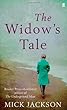
The Widow’s Tale by Mick Jackson:Book Review

 The Widow’s Tale by Mick Jackson is his third novel, published this month.  I didn’t know of him and hadn’t read anything by him before, but when I saw this book on offer through LibraryThing’s Early Reviewers’ Programme I thought it looked interesting.  His earlier novels are The Underground Man, shortlisted for the Booker Prize in 1997 and Five Boys, published in 2001.

The Widow’s Tale is a sad tale – she is certainly not a Merry Widow, but then again she is not the Widow of Windsor (Queen Victoria) even though she does leave her house in London and live in seclusion in Norfolk.

Like Rebecca she doesn’t have a name and written in the first person singular the narrative is all from her perspective and rather rambling as befits a woman in her sixties on the verge of a nervous breakdown. I was a bit put off at the beginning when she comes out with the phrase, so often used by my mother-in-law: “By the time you get to my age …”. But there the similarity ended.

Her husband has died, she’s taken it badly, and goes to live in a rented cottage on the bleak Norfolk coast, shunning other people. She drinks to forget herself, sits in pubs alone, doing the crossword and reading a book to pass the time. She drives out to places she once knew, goes for solitary walks,  gets stuck in the saltmarshes, and is definitely quirky and obsessional.

But there is something in her past life that is haunting her, an episode that John, her husband didn’t know anything about and that has coloured her life ever since. I think it it was this rather than losing  John that caused her such distress. I was wondering how this book would end and in a way it is inevitable and I thought it rather disappointing.

I don’t often think this about a book – it was OK. The writing is fluent and it’s a quick read. It’s episodic rather than linear as she recollects events and thoughts from the past and I would have said it’s really good but for the fact that I couldn’t really believe the narrator is a woman. But it has made me want to read more by Mick Jackson and I see from his website that as well as his three novels he’s also written two book of short stories, Ten Sorry Tales and Bears of England, both of which look interesting.

Crime Fiction Alphabet: Letter Y

There are just two letters left in Kerrie’s Crime Fiction Alphabet series. This week it is the letter Y and I’ve chosen Dead in the Morning which was first published in 1970 and is the first of Margaret Yorke’s Patrick Grant mysteries.

Set in Fennersham, an English village this is about a family dominated by old Mrs Ludlow. When Mrs Mackenzie, the housekeeper is found dead it seems that she was killed by mistake and the intended victim was in fact Mrs Ludlow.

Dr Patrick Grant, Fellow and Dean of St Mark’s College Oxford and lecturer in English  is staying in the same village with his sister Jane. Patrick is writing a book about unsolved mysteries from the past and as his sister says he

… is the most inquistive man ever to be born. … He looks for mysteries where there are none and is always poking his nose into other people’s business. (page 42)

He knows Timothy Ludlow, Mrs Ludlow’s grandson, who is a student at St Mark’s, so when he sees Phyllis Medhurst, Mrs Ludlow’s daughter in the chemist collecting her mother’s medicine his interest in the family is aroused. Jane tells him that Mrs Ludlow is a 

… regular tartar, from all accounts. … She’s  paralysed, or something, spends her days in a wheel chair and leads them all the devil of a dance, according to gossip. (pages 26-7)

The rest of the family comprise Cathy, Mrs Ludlow’s granddaughter, Gerald, Cathy’s father and his new wife Helen (Cathy’s mother died ten years earlier when Cathy was 8), and his brother Derek, his wife Betty and two sons, Timothy and Martin.

Mrs Ludlow, tired after the family get together to meet Helen, has her meal in bed, chicken fricassee and lemon meringue pie, but doesn’t eat the pie. The next morning Mrs Mackenzie is found dead in her room and the coroner’s verdict is that she died as a result of eating the portion of lemon meringue pie that Mrs Ludlow had left. It had been laced with barbiturates.

Cathy and Jane are friends and so Patrick manages to work his way into the family and discovers all sorts of family secrets. He thinks it is a question of character and wonders whether it is a crime of passion or of greed.

There are plenty of red herrings along the way but I’d worked it out before the end, which is predictable. Nevertheless I wanted to read on to find out the why rather than the who and that wasn’t so predicitable. All in all, an enjoyable book.