I’ve read two books by Josephine Tey – The Daughter of Time and now The Franchise Affair. Josephine Tey was a pseudonym for Elizabeth Mackintosh(1896 – 1952). She was a Scottish author who wrote mainly mystery novels.
I read The Daughter of Time a few years ago and thought it was an excellent book, a mix of historical research and detective work. Inspector Alan Grant is in hospital and to keep his mind occupied he decides to discover whether Richard III really did murder his nephews – the Princes in the Tower.
 When I saw this hardback secondhand copy of The Franchise Affair on sale last year (on a hospital book sale trolley, for £1) I had to buy it and have been going to read it ever since. So as Kerrie’s Crime Fiction Alphabet series has reached the letter T I thought now was the right time to read it.
It is also an excellent book, one I devoured and enjoyed immensely. It was first published in 1948 and it’s set in a post Second World War England reflecting the social attitudes of its time. It’s actually based on a real case from the 18th century of a girl who went missing and later claimed she had been kidnapped.
The Franchise is a “flat white house“, isolated on a road out of the town of Milford, surrounded by a “high solid wall of brick, with a large double gate, of wall height” – “the iron lace of the original gates had been lined, in some Victorian desire for privacy, by flat sheets of iron, and the wall was too high for anything inside to be visible”, except for a distant view of roof and chimneys“. It’s where Marion Sharpe and her mother live.
DI Grant is just a minor character in this story, the main investigator is local solicitor, Robert Blair, of Blair, Hayward and Bennet. He doesn’t normally deal with criminal cases but Marion appeals to him for help because she and her mother are accused of kidnapping Betty Kane, a girl of fifteen, of holding her prisoner for a month in their attic, and of beating her unless she agreed to work for them. She’d escaped one night and arrived back home, covered in bruises.
Even though Betty Kane is able to describe them, their house and its contents accurately the Sharpes completely deny her story. Reluctantly Robert agrees to give legal advice and is then drawn into investigating what had happened to Betty during the time she claimed she had been held captive, becoming convinced of their innocence. His life is completely changed. The problem is that it is possible to believe Betty’s story and also to find it a complete invention from beginning to end.
Betty is described as an innocent with baby blue eyes, intelligent and truthful – how could she have invented such a story? Marion and Mrs Sharpe on the other hand are a bit odd, a bit eccentric, keeping themselves to themselves and distrusted by the locals. Mrs Sharpe is intimidating – Robert thinks she is “capable of beating seven different people between breakfast and lunch any day of the week“, but he rather likes Marion’s “habit of mockery“. In fact he is rather smitten by Marion.
Then the press get hold of the story and public opinion is outraged at the tale of Betty’s ordeal. The case goes to trial as the Sharpes are vilified and their house attacked. The letters to the newspaper shock Robert with their contents:
… he marvelled all over again at the venom that these unknown women had aroused in the writers’ minds. Rage and hatred spilled over on to the paper; malice ran unchecked through the largely illiterate sentences. It was an amazing exhibition. And one of the oddities of it was that the dearest wish of so many of these indignant protestors against violence was to flog the said women within an inch of their lives. (page 103)
But worse is to come as the trial comes to an end and hatred results in actions. I found it an irresistable book. I just had to know what happens, all the time convinced of the Sharpes’ innocence but somehow wondering if they really were guilty. I liked Tey’s style of writing, straight forward, with touches of irony. Her characters are believable, well developed and unforgettable. The locations are well described, although as I used to live near some of them I may be biased there.
Now I want to read more of Josephine Tey’s books. She didn’t write many, but I hope to read at least some of these (list copied from Wikipedia):
- The Man in the Queue also known as Killer in the Crowd (1929)
- A Shilling for Candles (1936) (the basis of Hitchcock’s 1937 movie Young and Innocent)
- Miss Pym Disposes (1946)
- Brat Farrar [or Come and Kill Me] (1949)
- To Love and Be Wise (1950)
- The Singing Sands (1952)
- Kif: An Unvarnished History (1929) (writing as Gordon Daviot)
- The Expensive Halo (1931)
- The Privateer (1952)
- Claverhouse (1937) (writing as Gordon Daviot) (a life of the 17th-century cavalry leader John Graham, 1st Viscount of Dundee)
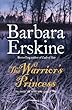 Recently, I wanted to read something other than crime fiction, but chose The Warrior’s Princess by Barbara Erskine, which just happens to include a couple of rapes, kidnappings and a murder. However, it’s really a time-slip book, switching between the present day and the first century AD in Rome and Britannia, a mix of historical fiction, fantasy and romance.


 BooksPlease