Wondrous Words from The Franchise Affair

Each Wednesday Kathy (Bermuda Onion) runs the Wondrous Words Wednesday meme to share new (to us) words that we’ve encountered in our reading.

This week my words are from The Franchise Affair by Josephine Tey (see here for my description of this book).


  • Drugget – “Round the corner it is drugget. A Victorian way of economising. Nowadays if you are poor you buy less expensive carpet and use it all the way up. But those were the days when what the neighbours thought mattered. So the lush stuff went as far as the eye could see and no further.”

Drugget is woven and felted coarse woollen fabric; a protective covering made of such fabric, for a  floor or carpet.

  • Preceptors – “It was a savage emotion, primitive and cruel; and very startling on the face of a demure schoolgirl who was the pride of  her guardians and preceptors.”

Preceptor is a teacher, an instructor, a tutor. It’s also the head of a school; the head of a preceptory of Knights Templars.

  • Picking Oakum – “You can’t imagine what a relief your note was to us. Both mother and I have been picking oakum for the last week. Do they still pick oakum, by the way?

Picking Oakum was untwisting old ropes and was done by prisoners and inmates of workhouses – appropriate in this case as Marion and her mother were virtually prisoners in their own house.

  • Oleograph – “Ben Carley calls her the ‘oleograph‘, by the way.” “How lovely. That is just what she is like.”

Oleograph is a print in in oil-colours to imitate an oil painting.

Teaser Tuesday – Crime on the Move

Teaser Tuesdays is a weekly bookish meme, hosted by MizB of Should Be Reading.

Share a couple or more sentences from the book you’re currently reading. You also need to share the title of the book that you’re getting your ‘teaser’ from €¦ that way people can have some great book recommendations if they like the teaser you’ve given!

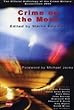
This week I’ve been reading short stories from Crime on the Move: the Official Anthology of the Crime Writers Association edited by Martin Edwards. The contributors include  Ann Cleeves, Reginald Hill, Michael Gilbert, Keith Miles Martin Edwards and Kate Ellis who wrote Top Deck, the story  I’m quoting from today.

The theme of the collection of the stories in this book is illustrated in Top Deck through Keith’s journey home from work in Liverpool by bus in 1965. What he sees has a profound effect on the rest of his life.

When the bus stopped briefly in the Ullet Road to let somebody off Keith found himself staring straight across into a lighted upstairs window. The curtains were wide open and two people were silhouetted behind the glass; a man and a woman who, for a split second, seemed faintly familiar. The man seemed to have both his hands raised up to the woman’s throat and they were moving slowly to and fro as if the woman was trying to ward him off, trying to save her life. (page 92)

The stories in this collection are varied, succinct and satisfying, ranging from the macabre and eerie to the comic, about journeys on the sea, in the air and on land. This is a book to dip into and enjoy.

Crime Fiction Alphabet: U is for Umberto Eco

This week’s letter in Kerrie’s Crime Fiction Alphabet series is  ‘U’.

I’ve chosen Umberto Eco, an Italian writer of post-modern fiction, full of allusions and references, using puzzles, playing with language, words and symbols.

I’ve read  The Name of the Rose twice, some years ago now.It is a fantastic historical crime mystery novel set in a Franciscan monastery in 14th century Italy. William of Baskerville and his assistant Adso are sent to the monastery to investigate a series of murders. I loved this book, which has so much of what I enjoy in reading – historical setting, the pursuit of truth behind the mystery and the meaning of words, symbols and ideas and a great detective story all combined with religious controversies and theories. William is an expert in deduction, and needs all his skills to work his way through the monastery’s labyrinthine library:

The library is a great labyrinth, sign of the labyrinth of the world. You enter and you do not know whether you will come out. … And in our midst someone has violated the ban, has broken the seals of the labyrinth … (pages 158 & 159)

I read Foucault’s Pendulum after reading The Name of the Rose, but struggled at first to read it. It’s immensely detailed, slow to get going and in parts it is boring. But I persevered and in the end I found it fascinating, although I do prefer The Name of the Rose. Again it’s a mystery thriller this time concerned with books and words, mixed in is a coded message about a Templar plan to tap a mystic source of power. It features the Knights Templar, the Crusades, the bloodline of Christ, the Rosy Cross etc, etc  so that when I read Dan Brown’s Da Vinci Code I immediately thought back to this book, but of course it’s nowhere near the same!

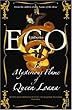
I have one other book by Eco – The Mysterious Flame of Queen Loana. I haven’t read it yet. From the back cover:

Yambo, a rare-book dealer, has suffered a bizarre form of memory loss. He can remember every book he has ever read but nothing about his own life.

In an effort to retrieve his past, he withdraws to his old family home and searches through boxes of old newspapers, comics, records, photo albums and diaries kept in the attic.

Flipping through it, it doesn’t look as difficult as Foucault’s Pendulum and there are colour illustrations of the books and newspapers etc that Yambo finds in the attic. As a book-lover this appeals to me.

Sunday Salon – Give Up Reading??

Could you give up reading for a week? That’s what Bibi van der Zee did. She wrote about it in yesterday’s Guardian. She was beginning to wonder if books were eating her up and whether they were some kind of drug.

I just can’t imagine not reading for that length of time. If I go for one day without reading I start to feel irritable and in need of a book, so perhaps it is a drug of sorts. She discovered this startling information about the effect of reading on the brain.

In a book coming out next year about the psychology of fiction, Professor Keith Oatley describes a piece of research where scientists got people to read while they were in a brain scanner. “When readers were engaged in a story, the researchers found that, at the points in which the story said a protagonist undertook an action, the part of the brain which was activated was the part which the reader himself or herself would use to undertake the action. So, when the story- protagonist pulled a light cord, a region in the frontal lobes of the reader’s brain associated with grasping things was activated.”

I shan’t be giving up reading and I must look out for that book.

Weekend Cooking – French Cookbooks

Last week for my Weekend Cooking post I wrote about Italian cookbooks, so this week I thought I’d stay on the Continent and write about my French cookbooks. I only have four – two over 20 years old and two more recent. Three are by British food writers and one by a French woman writer.

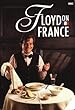
The first one is Floyd on France – an old book with a photo of a young (well youngish) Keith Floyd on the cover. It was published in 1987 by the BBC based on his BBC 2 series of the same name. Keith Floyd hosted many TV programmes on cooking, combining food and travel. He died last September. This book includes his personal selection of some of his favourite French dishes. They’re French provincial  recipes.

After a description of the “Principal Gastronomic Regions of France” the book follows the standard cookbook formula of recipes of Soups, Vegetables, Fish, Meat etc; recipes such as Shrimp Bisque made with live grey shrimps (I’ll never attempt that!) from Charente, a variety of omelettes, Carp in Wine Sauce from Burgundy,  Jugged Hare with Tiny Dumplings from Alsace, and Nut Tart from Perigord.

I’m going to make his Leek Pie (from Charente) tomorrow.

 (Click on the photo to see the recipe.)

Next The Frenchwoman’s Kitchen by Brigitte Tilleray, published in 1990. The brief biographical details given in the book are that she was born in Normandy and was a journalist before writing books on food. This is a beautiful book, one I love to peruse, admiring the photos of food and of France. It’s arranged by regions with information about the land and the people as well as recipes – such as Escargots Baked in a Wine Sauce from West France, Spicy Pear Pie from Normandy and Chicken with Cepes from The Pyrénéés .

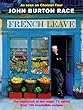
French Leave by John Burton Race is an account of 2002, the year he and his family spent living in a farmhouse in the south-west of France. Another book full of beautiful photos and recipes. John is a two Michelin  star chef, who was once a sous chef at Raymond Blanc’s Le Manoir aux Quat’ Saisons, before opening his own restaurants. His book follows the seasons from Autumn to Spring, with recipes such as Cauliflower Soup with Truffle Oil, Loin of Veal with Pieds de Mouton and Crepes Suzette.

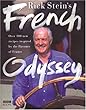
And last but not least Rick Stein’s French Odyssey. This is the book of Rick’s “journey of gastronique discovery from Padstow to Bordeaux and then on to Marseille”. It’s divided into a diary section and recipe chapters arranged by courses. Rick is one of my favourite TV chefs, and I would love to eat in one of his seafood restaurants in Padstow in Cornwall. There are recipes for classic French dishes such as Vichyssoise, Bouillabaisse, Cassoulet and Tarte Tatin as well as “new takes on traditional ingredients”, such as Fillets of John Dory with Cucumber and Noilly Prat and Prune and Almond Tart with Armagnac.

Visit Beth Fish Reads for other bloggers who are participating in Weekend Cooking.

Library Loot

Here are some of the library books I currently have out on loan.

I haven’t started any of them, although I’ve dipped into each one. From top to bottom they are:

  • The Case of the Missing Books by Ian Sansom. An interesting title I thought. It’s about a Jewish, vegetarian librarian who has just arrived to take up his first post as a librarian in Ireland. His problem is that the library has been shut down and he ends up driving a mobile library – with 15,000 fewer books than there should be. Who has stolen them and when would they have time to read them all?
  • The Careful Use of Compliments by Alexander McCall Smith. I keep reading reviews of his books, but not of this one, saying how good his books are, so I thought I’d borrow one to see for myself. This is an Isabel Dalhousie novel, part of the Sunday Philosophy Club series, in which she has a new baby, deals with the threatened takeover of her beloved Review and is drawn into the story of a painter’s mysterious death of the island of Jura.
  • Death of a Red Heroine by Qui Xiaolong. I read about this one on Norman’s blog and thought it sounded good. Set in Shanghai in 1990, Chief Inspector Chen’s investigation of the murder of a young woman leads him to the decadent offspring of high-ranking officials.
  • Dead in the Morning by Margaret Yorke. It’s been a few years since I read any of Margaret Yorke’s books. This one is about arrogant, cruel and demanding old Mrs Ludlow, whose housekeeper is found dead. Everyone assumes the fatal dose of poison was  intended for Mrs Ludlow herself, but was it?
  • Happy Birthday by Christina Jones. This is described as a “magical romantic comedy” and I thought it could make a nice change from my usual fare. It’s about Phoebe, jilted at the altar. Can she really use the secret magic of “birthday-ology” to find a perfect match? I’m not sure now that I’ll like this book.

Library Loot is hosted by Eva and Marg.