Sunday Salon – Reading And All That …

Today is Mother’s Day and I’ll be spending some time reading my present from my son – Amos, Amas, Amat … And All That by Harry Mount. It’s been on my wishlist for some time now! And a nice change it will make from all the crime fiction I’ve been reading recently. From the back cover:
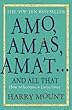
 In this delightful guided tour of Latin, which features everything from a Monty Python grammar lesson to David Beckham’s tattoos and all the best snippets of prose and poetry from 2000 years of literary history, Harry Mount wipes the dust off those boring primers and breathes life back into the greatest language of them all …

Not that the crime fiction I’ve been reading is boring – far from it. My reading has been a real treat and is way ahead of my reviews of these books:

I finished reading A Fatal Inversion by Barbara Vine at the end of last week and was so pleased after not liking her book The Birthday Present to find that this book about the discovery of the bones of a young woman and a baby in an animal burial ground was very different. There is a real air of mystery surrounding the several unlikeable characters – anyone of whom could be the guilty party.

 The Careful Use of Compliments by Alexander McCall Smith was a complete surprise to me as I had no idea when I borrowed it from the library just how much I was going to enjoy it. From a somewhat slow start I soon got used to the rhythm of his writing and was greatly intrigued by the character of Isabel Dalhousie.

Why Didn’t They Ask Evans? by Agatha Christie is a light-hearted mystery featuring Bobby Jones and Frankie (Lady FrancesDerwent) as they investigate a murder. This is a highly fantastical tale which I read at break-neck speed and thoroughly enjoyed.

Dead in the Morning by Margaret Yorke is the first book in her Patrick Grant series, first published in 1970. Set in an English village this is about an English family upset by the death of their housekeeper. All sorts of family secrets are revealed with plenty of red herrings along the way but the ending is predictable.

I’ll be writing in more detail about each one soon.

Next week my choice of reading is between these books, which I have on the go:

  • The Girl With the Dragon Tattoo by Stieg Larsson which I started a few weeks ago and put to one side.
  • Being Shelley by Ann Wroe – ongoing reading
  • Stratton’s War by Lorna Wilson. I’m not sure if I’ll finish this as I feel little inclination to pick it up at the moment.

I’m tempted to start a new one. Maybe another Agatha Christie or Ian Rankin, or The Little Stranger by Sarah Waters, which I’ve read is very good, or Maggie’s Tree by Julie Walters – her first novel, described as “dark and very funny”, which I found at the library.

Weekend Cooking

Weekend Cooking is open to anyone who has any kind of food-related post to share: Book (novel, nonfiction) reviews, cookbook reviews, movie reviews, recipes, random thoughts, gadgets, fabulous quotations, photographs. For more information, see the welcome post.

Salmon and Broccoli Fishcakes, or how to make a mess in the kitchen.

Simply steam the salmon in the microwave with a bay leaf and a little white wine. When cooked, flake into small pieces.

Add some  cooked broccoli florets and cooked mashed potato, salt and pepper, mixed herbs and an egg yolk.

With damp hands form into whatever size cakes you want, coat in flour, dip into beaten egg white and coat in breadcrumbs.

Then fry, turning once, until golden brown and crisp, drain on kitchen paper.

You then have sticky, eggy, breadcrumby hands and a mess in the kitchen as well as delicious fishcakes.

A New Rebus Story

A new Rebus short story by Ian Rankin, The Very Last Drop was published in The Scotsman today. I couldn’t find it online but it is in a four page pull-out in the paper, complete with illustrations and a photo of Ian Rankin reading his story at the Royal Blind School fundraising event that took place last Thursday at Edinburgh’s Caledonian Brewery.

Rebus, now retired, is on a tour around The Caledonian Brewery as a retirement present from Siobhan Clarke. When the tour guide Albert Simms tells the group about the ghost of Johnny Watt, who had died sixty years ago “almost to the day” after banging his head when he fell in one of the vats overcome by fumes, Rebus’s interest is aroused.  As Siobhan says

Soon as you get a whiff of a case – mine or anyone else’s -you’ll want to have a go yourself. 

He can’t resist looking back at the case, using the company’s archives and back copies of The Scotsman. What he finds is more than a ghost story.

Illustrious – Booking Through Thursday

 btt button

How do you feel about illustrations in your books? Graphs? Photos? Sketches?

I think illustrations are essential in some books and not in others. Non-fiction cries out for them. They enhance biographies for example. Cookery books without photos are just not as explanatory, they demonstrate how the cooked dish should look. Imagine travel books without photos or drawings – each reader would ‘see’ different places in their mind’s eye; or gardening books without examples.  And art books – impossible without illustrations.

I’m not so good at interpreting graphs and diagrams, though. I need words as well.  I’m not so keen on the tips in boxes that are dotted about such books as the Complete Idiot’s Guide series. I find them irritating and distracting. Maps are better – I love maps and plans in fiction as well as non-fiction.

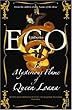
As for fiction. I like it plain. Although, just this week I’ve been tempted to read The Mysterious Flame of Queen Loana by Umberto Eco. This has a generous helping of illustrations  – photos, drawings, extracts from newspapers and magazines sprinkled thoughout. And it looks as though they are essential to the plot.

(Click on the photo to see a larger and clearer picture.)

All of which brings me to graphic novels. I haven’t read any. Each time I look at the selection in a library or bookshop I can’t find any that appeal and yet other bloggers have written reams in praise of graphic novels. I loved comics as a child and liked reading the comic strips such as The Gambols and Shultz’s Peanuts with Charlie Brown. Those of you who love graphic novels – please recommend a good one to get me going, bearing in mind that I’ve looked at and discarded graphic novels of Jane Austen and other classics.

The Rebecca Notebook & Other Memories by Daphne Du Maurier

Why do writers write? How do they go about it? What inspires them? The Rebecca Notebook and Other Memories gives a glimpse into the mind of Daphne Du Maurier.

Du Maurier began to write Rebecca in 1937 when she was thirty years old, living in Alexandria and feeling homesick for Cornwall. She jotted down chapter summaries in a notebook, setting the book in the mid 1920s ‘about a young wife and her slightly older husband, living in a beautiful house that had been in his family for generations.’ As she thought about it ideas sprang to her mind – a first wife – jealousy, something terrible would happen – a wreck at sea. She became immersed in the story, losing herself in the plot, as so many of us have done ever since.

One question that many people asked her was why she never gave the heroine a name and her answer is so simple – she couldn’t think of one and ‘it became a challenge in technique, the easier because I was writing in the first person.’ I thought this was quite surprising – if it had been me I would have not been able to write it without giving the heroine a name. It’s almost as if Du Maurier identified with her heroine so much that a name wasn’t necessary. It has puzzled me for years and now reading the reason she has no name I’m even more puzzled. See comments.

She made changes to the final published version of Rebecca merging the epilogue into the first chapter and changing the husband’s name from Henry, which she thought dull, to Max and making the housekeeper, Mrs Danvers, more sinister.

I enjoyed the other short pieces in this book – her ‘memories’ of her family and her own life and beliefs. The first three are about her grandfather, George Du Maurier, her father, Gerald and her cousins, the Davies boys. She wrote with nostalgia about George, who was an artist and writer – ‘a man who worshipped beauty’ and Gerald, who she described as ‘the matinee idol’, a leading actor-manager in the 1920s and early 30s.

Then there are memoirs on her thoughts entitled My Name in Lights, Romantic Love, This I Believe and Death and Widowhood. She disliked the ‘trappings of success’, thought there was no such thing as ‘romantic love’. The ‘sceptic of seven who queried the existence of God in the sky, of fairies in the woods, of Father Christmas descending every London chimney in a single magic night, remains a sceptic at fifty-seven, believing all things possible only when they can be proved by scientific fact.’

She wrote Death and Widowhood with the aim of helping others ‘who have suffered in a similar fashion’, about her husband’s death and the finality of being alone, pondering on immortality and the practicalities of daily life.

There are descriptions of finding the house she loved, Menabilly, of the upheaval of leaving it, and the move to Kilmarth (the house she wrote about in her novel The House on the Strand.)

Sunday (written in 1976) looks back on that day’s events when she was a child contrasted with the events of that day in her old age – a day for privacy and reflecting on the miracle of creation and a Creator. Finally, there are three poems, The Writer (1926), Another World (1947) and A Prayer (1967).

Mine is the silence

And the quiet gloom

Of a clock ticking

In an empty room,

The scratch of a pen,

Inkpot and paper,

And the patter of rain.

Nothing but this as long as I am able,

Firelight €“ and a chair, and a table.

(from The Writer, 1926)