Once Upon A Time IV

On Sunday it’s the first day of spring and already there are signs here – the daffodils are now in bud and I’m hoping the trees will burst into leaf soon. Another sign of spring in the book blogging world is the Once Upon a Time Challenge run by Carl. This too begins on Sunday and runs until 20 June.

There are several options to choose from, so there is no pressure to make me shy away from this one – I can just read one book from the four categories of fantasy, or folklore, or fairy tales, or mythology or I could read at least 5 books that fit somewhere within any of these categories.

I had a quick look at my books and came up with these – all books I own and haven’t read yet, so I may read one or more of these in the next three months, or I might find something else in the library – who knows. 

  • Grimm’s Fairy Tales – I fancy re-reading these tales, which I haven’t read since I was a child.
  • The Death of King Arthur – this is a translation of the 13th century French version of the Camelot legend.
  • The Brief History of the Dead by Kevin Brockmeier – about a place between heaven and earth where everyone ends up after they die.
  • Cloud Atlas by David Mitchell – I’ve had this ages, started reading it twice and other books took precedence. It’s a mix of science fiction, thriller and historical pastiche.
  • Firmin: Adventures of a Metropolitan Lowlife by Sam Savage – the tale of a literary rat who develops the ability to read.
  • The Book of Lost Things by John Connolly – another book I’ve had for a while. Twelve-year old David takes refuge in myths and fairytales.
  • The Children of Hurin by J R R Tolkien – tales of Middle-earth  from times before The Lord of the Rings, set in the country that lay beyond the Grey Havens in the West.
  • The Last Enchantment by Mary Stewart – a tale of Merlin and King Arthur and the third book in the Merlin trilogy. I read The Crystal Cave and The Hollow Hills years ago and don’t think I’ve ever read this one.
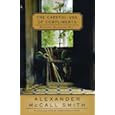
The Careful Use of Compliments by Alexander McCall Smith

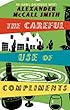
I’ve resisted reading Alexander McCall Smith’s books up to now partly because I couldn’t quite believe they would live up to my expectations and partly because I don’t like the style of the book covers. This one is quite off-putting because of its colours, which is really a trivial reason not to read a book.  I am so pleased that I overcame my resistance as I thoroughly enjoyed reading this one. I’ll be looking for more.

The Careful Use of Compliments  is an Isabel Dalhousie Novel, one of the Sunday Philosophy Club series. It’s number 4 in the series, but I had no problem following it as it stands well on its own. I’ve just seen the US cover – much better. My quibble with the cover is my only criticism of this book – I loved it.

Isabel has just had a baby, Charlie, and is in a relationship with his father, Jamie (14 years her junior) who is her niece’s, ex-boyfriend. Cat (her niece)  is upset and resentful and embarrassed even though she broke up her relationship with Jamie, and despite Isabel’s best efforts to bring about a reconciliation is barely speaking to her.

Cat said nothing, and Isabel realised that she was witnessing pure envy; unspoken, inexpressible. Envy makes us hate what we ourselves want, she reminded herself. We hate it because we can’t have it. (page 4)

In addition Isabel has to deal with an attempt from Professor Dove to take over her editorship of the philosophical journal,  Review of Applied Ethics. As well as coping with these two difficult situations Isabel tries to buy a painting by Andrew McInnes at auction and fails. This is a previously unknown painting by McInnes of a scene on the isle of Jura in the Inner Hebrides, where McInnes had drowned in mysterious circumstances. She thinks there is something odd about the painting and sets out to discover more about him and his paintings, becoming convinced that this one is a forgery.

But it’s not really the mystery that captivated me. It’s the philosophical questions that are always uppermost in Isabel’s mind and conversations. It’s her way of ‘interferring’ in matters which she considers ‘helping’, and her kind hearted nature (but she suffers few qualms at getting the upperhand over Dove). It’s the little gems of wisdom scattered through the book. It’s the descriptions of Scotland and Scottishness, of Edinburgh and the islands. It’s about the nuances of understanding the use of language as expressions of general goodwill, about the meaning of money and how it should or should not be used, about late motherhood and family relationships, and about morality and justice.

There are many passages I could quote. I think this one relating to the title of the book is a good one. Here Isabel is talking to Walter, who had tried to sell her McInnes’s painting:

‘Please’, she said, impulsively reaching out to lay a hand upon his sleeve. ‘Please. That came out all wrong. I’m not suggesting that you tried to sell me a forgery.’

He seemed to be puzzling something out. Now he looked up at her. ‘I suppose you thought that because I wanted to sell it quickly.’

‘I was surprised,’ she said. ‘but I thought that there must be a perfectly reasonable explanation.’ That was a lie, she knew. I am lying as a result of having made an unfair assumption. And I lied too, when I paid a compliment to that unpleasant dog of his. But I have to lie. And what would life be like if we paid one another no compliments? (pages 222-3)

The Orange Prize for Fiction Longlist

The Orange Prize for Fiction is awarded annually for the best fiction novel written by a woman. Here is this year’s longlist:

I have just two of these books – Hearts and Minds by Amanda Craig and Wolf Hall by Hilary Mantel, which won the 2009  Man Booker Prize – will it win this one? And I’ve currently borrowed The Little Stranger by Sarah Waters, which was shortlisted for the 2009 Man Booker Prize.

Will these three be on the shortlist when it is announced on 20 April?

Teaser Tuesdays – Heartland by John MacKay

My teaser today is from Heartland by John MacKay, which I have just finished reading.

John MacKay is a Scottish broadcast journalist, television presenter and producer, who is currently the chief anchor for the Central Scotland edition of STV News at Six.  This is his second book.

Heartland is about Iain Martin who returns to his home on the Isle of Lewis to rebuild his life after the breakup of his marriage and to reconstruct the ancient family home, a blackhouse, now in ruins. He meets his old friend Neilie and his wife Catriona, bringing back memories of their friend Rob who was lost at sea 20 years earlier. Neilie alone had survived the accident, becoming the local hero as he had piloted the boat back to shore.  Iain also discovers a skeleton under the floor in the blackhouse.

My teaser is from page 50.

The body had been laid to rest in a formal manner, on its back, the arms crossed on its breast and the legs fully extended. Over time it had settled awkwardly, twisted towards the right, with the distortion more exaggerated from the waist down.

Is it Rob’s body he has found? His suspicions are increased when Neilie confesses he had not been on Rob’s boat that night. At times the narrative stalls with lengthy descriptions of the locality and its history, all of which is interesting but it does slow down the story. I liked it well enough to look for MacKay’s other books – The Road Dance and Last of the Line.

See Should Be Reading for more ‘teasers’.

Crime Fiction Alphabet: V is for A Fatal Inversion by Barbara Vine

Kerrie’s Crime Fiction Alphabet series moves towards the end of the alphabet and has now reached the letter ‘V’.

A Fatal Inversion was first published in 1987 and was reissued in 2009 by Penguin Books.

Although about a group of not very likeable characters I was drawn into the world of this mystery. In 1976 Adam, a university student of 19 inherited Wyvis Hall from his great-uncle. He stayed there for a while that hot summer with a group of young people. Something tragic and terrible happened which led to them leaving the house and eventually Adam sold it. Then ten years later the current owners, whilst burying their pet dog in the animal cemetery in the woods, find the bones of a young woman and a baby. The police are seeking previous owners of the Hall to identify the bodies.

It’s a complicated plot told in flashbacks, seen from mainly three of the characters’ viewpoints – Adam, his friend, Rufus, a medical student, and Shiva, a British Indian. Shiva and his friend Vivian had thought they were joining a commune whereas with no money Adam was just keen to get others to contribute. They are reduced to selling his uncle’s silver for food and drugs and after Zosie’s arrival to stealing to support themselves. I thought the characterisation was good and the setting excellent – a grand old house, out in the Suffolk countryside surrounded by dark, dense and menacing pine woods, ‘the kind of place you saw in story-book illustrations or even in your dreams and out of which things were liable to come creeping.’

I wasn’t sure at first who the victims were, but the killer soon becomes obvious. I thought it a clever book, with clues dropped casually, so that I had to read it carefully. The plot covers a number of issues – family relationships, friendship, loyalty, race and class discrimination, the consequences of our actions and above all the nature of evil and guilt.  The ending is most satisfying, such a neat inversion, I thought.