 This week I’ve been travelling in time and place in my reading.
I’ve been in Pennsylvania and Connecticut with Gladys Taber and Barbara Webster reading their letters to each other from Stillmeadow and Sugarbridge over one year in the 1950s (the book was published in 1953; there’s been no mention of the Second World War so I’m guessing the letters were written in the late 1940s or early 1950s). Stillmead and Sugarbridge is a book to savour and read slowly. I’m limiting my reading to a few letters each time I pick up the book. Stillmeadow is the house in Southbury, Connecticut where Gladys Taber lived and Sugarbridge is the house where Barbara and her husband Edward Shenton lived in Pennsylvania. Edward’s drawings illustrate the letters. Between the letters and the illustrations I’m getting a good picture of their lives. Their letters are full of the love of the countryside and their families. When I’ve finished it I’ll write more fully about it. For now here is a quote from Barbara’s first letter in the book, writing in January about what she likes about living at Sugarbridge:
A broken-up day is to me a lost day, and social and business dates, no matter how delightful or important, hang over me with a sense of doom. So I am particularly grateful for those long intervals of country peace when we see no one, nor stir from our studio except for an afternoon ramble over the hills. We no longer live by the clock, slaves to time; we make our own.
She thought that this would not be everyone’s ideal. It sounds good to me.
I first read about Gladys Taber on Nan’s blog and was really pleased when she sent me this book. I would like to know more about Gladys and Barbara and so far I’ve found these websites – Stillmeadow Friends and also Stillmeadow, where I read that the farm was in danger from development. This was in 2002 and I can’t find out what happened – does anyone know? There is also a website for Edward Shenton, but I can’t find out how Gladys and Barbara met.
Then I’ve jumped back in time to France in the 1820s with Victor Hugo’s Les Miserables. I am only too glad that I don’t live in post revolutionary France. The Battle of Waterloo is now over and Jean Valjean has at last escaped from prison and rescued Cosette from her pitiful life with the cruel Thenardiers. Poor Cosette:
Fear emanated from her so that she might be said to be enveloped in it. Fear caused her to draw her elbows in at her sides and her feet underneath her skirt, to take up as little room as possible and to draw no unnecessary breath; it had become so to speak, the habit of her body, impossible of alteration except that it must grow worse, In the depths of her eyes there was the haggard gleam of terror.

Jean and Cosette are currently on their way to Paris and a better life I hope, but I don’t expect it will be as I still have about 800 pages left to read.
Over next to Regency England in the early19th century with Georgette Heyer’s Friday’s Child. Dialogue makes up a large part of the book, full of 19th century slang. I mentioned this in my last post and in the comments Geranium Cat explained what a “Tiger” is and pointed me to this site – http://www.heyerlist.org/slang.html for more explanations. This book is a mixture of romance, a whirl of social events – balls, masquerades, theatre-going, duels and farce. I’m about halfway in the book and this morning read about the duel between George, Lord Wrotham and Sherry, Anthony Verelst, Viscount Sheringham after Sherry saw George kissing his wife, Hero.
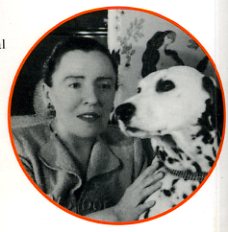
Last and my no means least I’ve popped over to America again. This time to New York with  Dodie Smith in 1939 just before the start of World War Two as described in Dear Dodie by Valerie Grove. Dodie and Alec (who she marries) arrive with Pongo, the dalmatian who inspired her to write 101 Dalmatians after leaving England because Alec was a pacifist and a conscientious objector. Dodie was soon cast into gloom, unable to like America and forecasting
years of exile, a world war in progress, losing her audience-sense by being away from England, and possibly also losing all her capital. On three out of four counts her forecast was absolutely correct.
I knew very little about Dodie before and am learning a lot about England at the beginning of the 20th century and theatrical history as well as about Dodie herself – an unsuccessful actress, then a shop assistant at Heals furniture store and then a playwright. It’s fascinating reading about her relationship with people such as Noel Coward, John Gielgud, Gladys Coper, Jack Hawkins and Jessica Tandy, to name but a few.





 BooksPlease