This Time 10 years ago …

Simon at Stuck-in-a-Book posted earlier this year on books he had read ‘œOn this day ‘¦’ where he listed books he had read on a particular day in the year going back several years ‘“ in his case on 28 September. I haven’™t kept such accurate records as Simon, but as I found a notebook listing books I read in 1997 I thought I’™d look back to see what books I was reading in December in 1997, 2002, 2006 and this December. I didn’™t record the precise dates and have just picked one book out of the books I read in December during those years.

December 1997 ‘“ Homeland and other stories by Barbara Kingsolver. I made just a brief note at the time ‘œv. readable’. This is a book of short stories and I have to admit that at a distance of ten years I can’™t remember much about them. So, I’™ll just quote from the back cover:

‘œExtraordinarily fine. Barbara Kingsolver has a Chekovian tenderness towards her characters ‘¦ The title story is pure poetry.’ New York Times Book Review.

December 2002 ‘“ Lord of the Rings by J R R Tolkein. I first read the books when I was at Library School ‘“ everyone on my course was reading them. I’™ve read them several times since then and this time I read them again, prompted by the films. The films compared quite favourably with the books, although I think the Ents didn’™t live up to my expectations. Ian McKellen as Gandalf was just perfect.

December 2006 ‘“ Alias Grace by Margaret Atwood. I have read several Atwood books and I think this one is one of her best. It’™s based on the true story of the murder of Thomas Kinnear and his housekeeper in Canada in 1843. Grace and fellow servant James are found guilty of the murders. James was hanged and Grace imprisoned for life. The question, never answered to my satisfaction, all through the book is, was Grace guilty?

December 2007 ‘“ All Passion Spent by Vita Sackville-West. I haven’™t read any other books by Sackville-West and was pleased to find it most enjoyable with an awful lot packed into what seems on the face of it to be a novel where not much happens. It’™s a novel of opposites. For example old age and youth are contrasted in looking back over the life of Lady Slane, widowed at the age of 88. I’™ll be writing about this in more detail, after 15 December, as it’™s the chosen book for Cornflower’™s book group.

A Christmas Meme

I was tagged by Sam for this Christmas meme.

What is your most enduring Christmas memory? I don’t think I could single out one particular moment, maybe remembering back to my childhood when Christmas was a magical time, later enjoying it through my son’s excitement and these days through my grandchildren’s eyes.


Do you have a favourite piece of Christmas music? Silent Night, but don’t ask me to sing it solo.

Do you stick to the old family traditions? Apart from giving present and celebrating with lots of food, no. My grandmother used to stand to attention during the Queen’s speech but no one else did, much to her disapproval.

What makes your mouth water at Christmas time!? I love all Christmas food.

How soon do you put the Christmas tree up and when do you take it down? It varies – we haven’t put one up yet. It has to be taken down and all Christmas decorations put away before Twelfth Night.

I would like to tag Nan, Kay, Cornflower and Geranium Cat for this meme.

Cranford – a “Multi-Threaded Production”

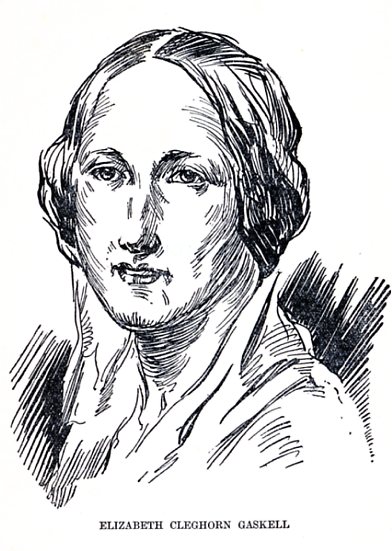
The third episode of “Cranford” is being shown on BBC1 this evening. Over the course of last week I have puzzled over my reaction to the production. If I hadn’™t only recently read Elizabeth Gaskell’s Cranford I might not have been so bemused. I was quite prepared to find that the actors and the locations didn’™t match the pictures in my mind ‘“ how could they? I also didn’™t expect the dramatisation to follow every word in the book ‘“ after all it is a dramatic representation, not a book.

Still, after seeing two episodes and looking at the preview of the third, I think that by amalgamating Cranford with two other books the end result is not Cranford. One difference that really has jarred is concerning Mary Smith. In the novel Mary is the narrator. She lives in Drumble (Manchester) with her father and writes about her visits to Cranford at different intervals over a number of years. Her father is an old friend of the Jenkyns family, maybe even a distant relative, who helps with Miss Matty’™s business affairs. Nowhere in Cranford is there any indication that Mary Smith has a stepmother and stepbrothers and sisters, but they appear in the TV series ‘“ I can’™t see how they add anything to the story. And why was it necessary to make Miss Brown’™s death take place before her father’™s? I could go on.

The BBC’™s Press Office page has some interesting information that explains how the script was written. The creators did not think that there was enough material in the novel suitable for a straightforward adaptation. So, as they wanted to keep ‘œtrue to the spirit of Gaskell’ they took several of her books and interwove them together. This quote from the Production Notes explains the process:

“We took a lot of liberties with Elizabeth Gaskell,” Sue continues. “We lost some of her characters, we amalgamated some and we invented. We shuffled story beats around and we added extras to some of the stories from the other books.

“And we lifted out two comic incidents from her essays about her childhood which weren’t in the novels. In the end, we had interwoven parts of all the three novels so closely that it took on a life of its own, and essentially became a new drama.’

Cranford is thus a multi-threaded production, combining three of Elizabeth Gaskell’™s books and essays as well as introducing new material. They have indeed produced a new drama. My question is ‘“ do I want to watch it? I’™m not so sure that I do.

Francesca Annis is quoted in the Press Pack:

“I read Gaskell’s My Lady Ludlow, and (Cranford writer) Heidi Thomas’s characterisation is quite faithful to her but she obviously had to leave out a huge amount of detail that I found completely fascinating.

“But then this serial isn’t called Lady Ludlow… unfortunately!”

Maybe it shouldn’™t be called ‘œCranford’, either.

One thing I do know is that thanks to this production, I shall read Mr Harrison’™s Confessions and My Lady Ludlow.

November Round Up of Books

Another month of good reading. I have already written posts about most of the books I finished reading in November. Clicking on the titles links to my posts.

Playing with the Moon by Eliza Graham – an excellent book, looking back over 60 years.
Lewis Carroll: a biography by Morton Cohen – long and detailed.
The Sidmouth Letters by Jane Gardam – good (better than I expected).
Remainder by Tom McCarthy – mixed feelings about this one, thought provoking.
Cranford by Elizabeth Gaskell – a very enjoyable read, better than the TV series for me.

The Great Fortune by Olivia Manning (the first in her Balkan trilogy) – set in Bucharest during the ‘phoney war’ period of the Second World War.

Posts to follow on these books that I’ve also finished:
Surveillance by Jonathan Raban – an interesting look at modern life.
The Testament of Gideon Mack by James Robertson – a thought provoking book.
Currently I’m reading:


My Cleaner by Maggie Gee. I’ve nearly finished this about Vanessa, English, middle class and Mary, Ugandan who used to be Vanessa’s cleaner.

All Passion Spent by Vita Sackville-West. I’ve read the first chapters of this story of an aging British aristocrat. This is the book chosen by Karen for her new book group.

Winter In Madrid by C J Sansom. I’ve just started reading this. I chose it because I read with great enjoyment his three earlier books, Dissolution, Dark Fire and Sovereign, historical mysteries featuring Matthew Shardlake, a lwyer-cum-detective. I hadn’t realised this book was set in the 1940s when I decided to read it – yet another book from that period.