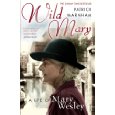
 I’m still catching up with writing about books I read last year. Wild Mary by Patrick Marnham is a biography of Mary Wesley, the author of Camomile Lawn and other books. My only knowledge of her before reading this was that her first book was published when she was 70 and my impression was that she had only started to write later in her life. That was not the case, however, as she had been writing for many years and had had two children’s books published.
She had an extraordinary life – born in 1912, her mother told her she had been an unwanted child, that it would have been better if she had been born a boy and that she and Mary’s father loved Susan, her sister, more. She married Lord Swinfen and later said that she had done so to get away from her mother. She was soon bored and began a series of love affairs.
The couple eventually divorced in 1945. In 1944 she had met and fallen passionately in love with Eric Siepmann, a penniless writer, then unhappily married to Phyllis, who embarked on a campaign against him, resulting in him losing first one and then another job. Mary and Eric were married in 1952 just two weeks after his divorce. She was devasted when he died in 1970.
Wild Mary is a detailed book about a complicated life written at Mary’s invitation, based on her personal papers, and conversations between Mary and Patrick Manham in 2002. One of the most fascinating things about Mary’s life for me was her wartime experiences, working for MI5 in the decoding unit. She was an intensely private person who lived her life dividing it into compartments. As Patrick Marnham describes:
Almost everyone who remembered Mary Siepmann agreed on one thing; she lived her life in separate compartments. In love and friendship she was happiest with one-to-one relationships, and when she loved her love grew from a response to the distinct separate personality that confronted her own. She had three sons but in the last twenty five years of her life she never invited them to her house at the same time. Her sons, with three different fathers, also had three different mothers – since she could be a different person to each when she saw each alone; and she never shared a child with its father.
She was estranged from her oldest son Roger (due to a legal case between him and his half-brother Toby) but two months before she died he visited her and it had been nearly 30 years since they had seen each other!
I found Marnham’s portrayal of Mary Wesley difficult to follow in parts, maybe because there was so much intrigue and rumour surrounding her life which he was disentangling and at times I thought I certainly wouldn’t like to have met Mary. She seems to have been a difficult and determined woman who aroused strong passions in those who knew and loved her. Although Marnham highlights the links between Mary’s own life and the novels she wrote this biography did not make me want to rush out and read more of her novels.



 BooksPlease