Top 5 Tuesday was created by Shanah at Bionic Book Worm, and it is now being hosted by Meeghan at Meeghan Reads. For details of all of the latest prompts for April to June, see Meeghan’s post here.
Today the topic is top 5 books with no pictures on the cover. Meegan writes: I guess this one is more of an anti-scavenger hunt? Also, it’s up to you how far you take this one. Does a pattern count as a picture? What about a single line or spot of colour? Maybe you want to go completely blank with just the words. No matter, please share your top 5 books with no pictures on the cover.
These are all books I’ve read, three nonfiction and two novels.
Nonfiction:
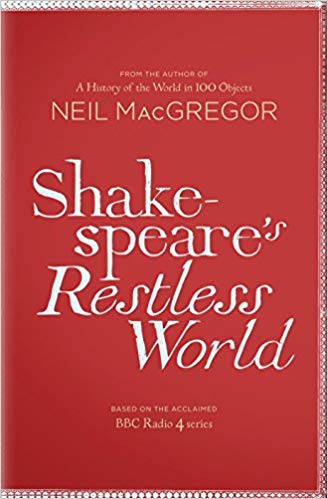
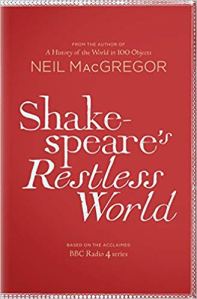
Shakespeare’s Restless World by Neil MacGregor.
A beautiful book recreating Shakespeare’s world through examining twenty objects. It reveals so much about the people who lived then, who went to see Shakespeare’s plays in the 1590s and 1600s, and about their ideas and living conditions. Through looking at each object MacGregor explores a number of topics, including what people ate whilst watching plays, religion, medicine, the plague, magic, city life, treason, and the measuring of time. It’s all fascinating and informative, and easy to read. There are plenty of quotations from Shakespeare’s plays and puts both him and his work into context. For me, it was a new way of seeing into the past,
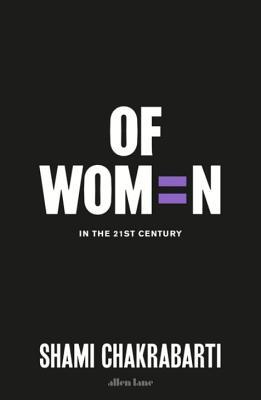
Of Women in the 21st Century by Shami Chakrabarti, a member of the House of Lords, formerly Labour’s Shadow Attorney General, and the author of On Liberty, a book about human rights violations published in 2014.
Shami Chakrabarti is passionate, and indeed angry, about the need for gender equality in her book. She examines the effects of gender injustice on a wide variety of issues in many parts of the world. In parts it reads like an academic textbook, packed full of statistics and wide ranging examples of gender injustice on a global scale. It becomes more personal however, when she writes about her own experiences her family and her background.
She covers a broad overview of many issues, rather than an in-
depth study, including violence against women, abortion, sanitary products, childcare and sex education and topics such as faith, the concept of home and displaced persons, health, wealth, education, representation, opportunity and insecurity in the 21st century. However, she remains optimistic, concluding that she believes that ‘far greater equality for women and men is realistically within our reach and well worth the stretch.’ I don’t think it is that easy and will need more than a ‘stretch’.
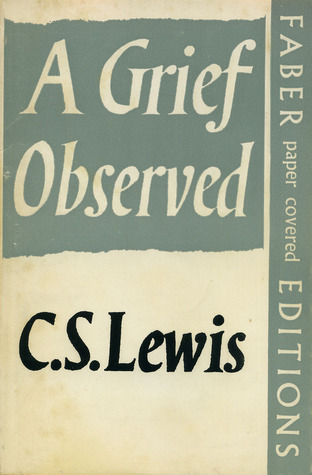
A Grief Observed by C S Lewis, another book I read before I began blogging, so no review.
Written after his wife’s tragic death as a way of surviving the “mad midnight moment,” A Grief Observed is C.S. Lewis’s honest reflection on the fundamental issues of life, death, and faith in the midst of loss. This work contains his concise, genuine reflections on that “Nothing will shake a man — or at any rate a man like me — out of his merely verbal thinking and his merely notional beliefs. He has to be knocked silly before he comes to his senses. Only torture will bring out the truth. Only under torture does he discover it himself.” This is a beautiful and unflinchingly honest record of how even a stalwart believer can lose all sense of meaning in the universe, and how he can gradually regain his bearings. (Goodreads)
Fiction:
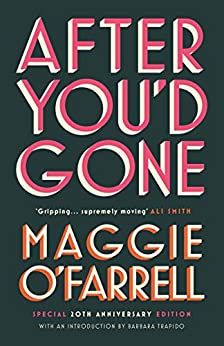
After You’d Gone by Maggie O’Farrell
Alice is in a coma after being in road accident, which may or may not have been a suicide attempt. She has been grieving the death of her husband, John.
It’s quite a complicated story, following the life stories not only of Alice, but also those of her mother, Ann (who I didn’t like much), her grandmother, Elspeth (who I did like very much), her two sisters and of John. What was it that Alice saw at Edinburgh station that shocked her so much? You don’t find out until the end of the book, although I did have an idea before that what it meant to her and why it was so upsetting.
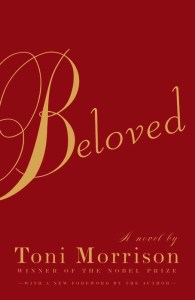
Beloved by Toni Morrison, which I read years ago before I began blogging, so I haven’t reviewed it.
Staring unflinchingly into the abyss of slavery, this spellbinding novel transforms history into a story as powerful as Exodus and as intimate as a lullaby.
Sethe, its protagonist, was born a slave and escaped to Ohio, but eighteen years later she is still not free. She has too many memories of Sweet Home, the beautiful farm where so many hideous things happened. And Sethe’s new home is haunted by the ghost of her baby, who died nameless and whose tombstone is engraved with a single word: Beloved. Filled with bitter poetry and suspense as taut as a rope, Beloved is a towering achievement by Nobel Prize laureate Toni Morrison. (Goodreads)
 BooksPlease