The Idea of Perfection by Kate Grenville

Last week I was thinking about taking Kate Grenville’s book, The Idea of Perfection back to the library without finishing it. But I gave it another go and this time it interested me enough to finish it. I thought her book The Secret River was brilliant, one of the best books I read last year and I also loved Sarah Thornhill, but I didn’t think The Idea of Perfection was as good as either of these, which surprised me as it won the 2001 Orange Prize for Fiction. That’s not to say I didn’t like it because I did, just not as much as the other two books.

I think the reason is that for the most part it lacked the drama of the other books and I found the beginning very slow. The title indicates the theme of the book with the characters all falling short of the impossible aim of perfection. Set in Karakarook, in New South Wales the two main characters are Douglas Cheeseman, an engineer who has come to pull down a quaint old bent bridge before it falls down and Harley Savage, who has come to advise the residents how to promote their inheritance. They both know they are far from perfect. On the other hand there is Felicity Porcelline, the local bank manager’s wife who thinks she is perfect and everything she does is aimed at perfection, which she doesn’t achieve either – just the opposite, in fact.

It’s quite a touching tale as Douglas and Harley, both middle aged and with failed marriages behind them, are shy awkward characters and although they are attracted to each other for most of the novel they find it almost impossible to express their feelings. They are both outsiders, neither fitting easily either into their own families or within society. Underlying their relationship is the conflict about the dilapidated bridge – should it be restored or replaced with a modern bridge? And just what should the proposed Pioneer Heritage Museum contain? – heirlooms, jewellery, silver teapots and lace christening robes, or the things Harley thinks are right – the really old shabby things that show how people used to live, the old bush-quilts made from old clothes, for example.

It’s the setting that really stands out – the dusty little country town in a valley in New South Wales, the hillsides, the river and the ‘huge pale sky, bleached with the heat.‘ Kate Grenville paints a picture of the town and its surrounding countryside with such detail that you can feel the heat and dust and see the buildings, the houses clinging to the hillside, tilting, patched and stained with rusting roofs and the dirt road leading out of Karakarook.

The strange thing is that after I finished reading it this book has grown on me as it were. And now I’ve written about I think I appreciate it more than I did whilst reading it. It’s precise writing, full of detail about the people and the places within its pages and also full of thoughts about love, loneliness, relationships and the impossibility of perfection.
Searching for The Secret River by Kate Grenville

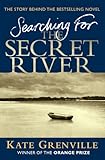
Searching for the Secret River is Kate Grenville’s account of how she came to write The Secret River. Her interest began with her great-great-great grandfather, Solomon Wiseman,who was the original ferryman at Wiseman’s Ferry. Her mother had told her stories about him, but she wanted to know more about what he was like and what he might have done when he first encountered Aboriginal people.

It is a fascinating book detailing how she went about her research into family history and how she imagined his life from facts gleaned from the records and the places he had lived.

She writes about reading. As a short-sighted child reading was her whole life:

I read in the bath, I read on the toilet, I read under the desk at school, I read up in my tree house, feeling the branches of the jacaranda swell and subside under me.

I can identify so well with this. I was a short-sighted child and read everywhere too, walking round the house, in bed under the covers with a torch when I should have been asleep, all the places Kate Grenville read, although not in a tree house – I would have loved a tree house!

She writes about writing. As a writer she couldn’t help examining how other writers went about their writing – seeing how books had been made. One book that helped her with writing The Secret River is Anil’s Ghost by Michael Ondaatje, a novel based on historical events in which some of the characters are apparently versions of real people. She had come to the point in her book where she had written lots of notes, forty-seven folders of notes!! So she made lists to try to organise her writing and then began just writing scenes and descriptions of various aspects – about London and Sydney, the convict system, and what she called ‘elements of memoir.’ But she thought that lots of her writing was dry and dead.

Reading Anil’s Ghost, however she realised that she had to take herself out of the book and find a character to carry out the search for the story of Wiseman and his dealings with the Aboriginal people. To do this she had to see the scenes before she could write them:

The hard part of the writing wasn’t finding the words – they seemed to come reasonably easily. If they started to come reluctantly, I stopped writing and began with something else. The hard part was finding the picture. Once I could see and hear the moment, I could write it.

In her first draft some parts were in the first person, some in the third person, but always from Wiseman’s point of view. The first-person point of view seemed right but then she decided that that didn’t match Wiseman’s character and there were things she wanted the book to say that Wiseman couldn’t say – about the Aboriginal culture for one thing. So, it had to be in the third person, but the ‘third person subjective’ – ‘from Wiseman’s point of view but only partly in his voice.’

There is so much in this book – the research, the notes, the descriptive passage, the numerous drafts, finding the right voices, the characters, identifying the central drama of the novel, the right eighteenth century names, developing Wiseman into a character, renaming him William Thornhill and building a picture of the Thornhill family. Then the dialogue had to be right, to be convincing. She listened to a recording of Robert Browning, went through transcripts of Old Bailey trials, looked at how Dickens, Defoe and other writers put words into their characters’ mouths.She remembered her mother’s and grandfather’s sayings, phrases and idioms. In the end she decided that she wouldn’t try

to reconstruct the authentic sound of nineteenth century vernacular. My job was to produce something that sounded authentic. … I read all the dialogue aloud. If anything hit a false note, it was obvious straight away. This was a bad one for example: ‘That bit of land, he said. Remember, I told you. We’ll lose it if we don’t move soon.’

This sounded terribly drawing-room. I muddied it up: ‘that bit of land, he said. Remember he telled you. We’ll miss out if we don’t grab it.’

She deleted large sections of dialogue.

The whole book is compelling reading, not just because it’s about how she wrote the book and the enormous amount of work she put into research, but also because in itself it paints a picture of life in London in the late eighteenth century and Australia in the early years of settlement in the early nineteenth century. I was captivated from start to finish.

Searching for The Secret River: a Book Beginnings Post

Book Beginnings ButtonGilion at Rose City Reader hosts Book Beginnings on Friday in which you share the first sentence (or so) of the book you are reading, along with your initial thoughts about the sentence, impressions of the book, or anything else the opener inspires.

I’m currently reading Searching for The Secret River by Kate Grenville. It begins:

In the puritan Australia of my childhood, you could only get a drink on a Sunday if you were a ‘bona fide traveller’. That meant you had to have travelled fifty miles or more. Around Sydney a ring of townships at exactly the fifty-mile mark filled with cheerful people every Sunday. One of them was a little place called Wiseman’s Ferry.

I loved Kate Grenville’s book The Secret River, so when I discovered that she had written a book about how she came to write it I just had to get a copy. Her interest began with her great-great-great grandfather, Solomon Wiseman,the original ferryman at Wiseman’s Ferry. Her mother had told her stories about him, but she wanted to know more about, what he was like and what he might have done when he first encountered Aboriginal people … she needed to know.

I haven’t finished the book yet, but it is fascinating – seeing how she went about her research into family history and how she imagined his life from facts gleaned from the records and the places he had lived.

Lilian's Story by Kate Grenville: a Book Beginnings post

Book Beginnings ButtonBook Beginnings on Friday at Gilion’s blog Rose City Reader is the place to share the first sentence (or so) of the book you are reading, along with your initial thoughts about the sentence, impressions of the book, or anything else the opener inspires.

Lilian’s Story by Kate Grenville begins:

It was a wild night in the year of the Federation that the birth took place. Horses kicked down their stables. Pigs flew, figs grew thorns. the infant mewled and stared and the doctor assured the mother that a caul was a lucky sign. A girl? the father exclaimed, outside in the waiting room, tiled as if for horrible emergencies. This was a contingency he was not prepared for, but he rallied within a day and announced: Lilian. She will be called Lilian Una.

When I returned Sarah Thornhill by Kate Grenville to the library the other day Lilian’s Story was sitting on the shelf and because I’d enjoyed Sarah Thornhill and before that The Secret River I decided to borrow this book, even though I’ve got more than enough books of my own to keep me busy for a long time.

The back cover tells me that Lilian begins life as the daughter of a prosperous middle-class family and ends it as an eccentric bag-lady living on the streets, quoting Shakespeare for a living. I’m hoping it will be as good as the other two of Grenville’s books that I’ve read! This opening is promising, I think.

Sarah Thornhill by Kate Grenville

A few thoughts on Sarah Thornhill:

I wrote about the opening paragraphs of this book in a Book Beginnings post; paragraphs that made me want to read on with promise of a good story. And that is what I got – it’s basically a love story set in 19th century Australia, where the convicts, transported or ‘sent out‘ are  now called ‘old colonists‘.

There is prejudice – some people, those who had ‘come free‘,  thought being ‘sent out‘ meant you were tainted for all time, but for others having money and land overcame their distaste. And then there is the prejudice about the ‘blacks’. When Sarah, the daughter of William Thornhill, an ‘old colonist’ and now a landowner on the Hawkesbury River, falls in love with Jack Langland, whose mother was a native woman, racial prejudice and hatred rear their ugly heads.

I loved this book, which kept me captivated from start to finish, as the secrets of the Thornhill family are brought to light. I liked the narrative, told in Sarah’s voice, that of an uneducated young woman, struggling to understand what had happened and why. I found the dialogue convincing, and I could visualise the landscape and the hardships of life in that place and time. I was also totally involved with the characters, all of which made the book come alive for me.

I think it stands well alone, but it is the sequel to The Secret River and it does reveals a significant part of that book, so be aware of that if you haven’t read The Secret River.

Sarah Thornhill by Kate Grenville: a Book Beginnings post

Book Beginnings Button

Book Beginnings on Friday at Gilion’s blog Rose City Reader is the place to share the first sentence (or so) of the book you are reading, along with your initial thoughts about the sentence, impressions of the book, or anything else the opener inspires.

I’m currently reading Sarah Thornhill by Kate Grenville. It begins:

The Hawkesbury was a lovely river, wide and calm, the water dimply green, the cliffs golden in the sun, and white birds roosting in the trees like so much washing. It was a sweet thing of a still morning, the river-oaks whispering and the land standing upside down in the water.

They called us the Colony of New South Wales. I never liked that. We wasn’t new anything. We was ourselves. (page 3)

I heaved a sigh of relief when I read these opening paragraphs. They paint such a beautiful picture in the first paragraph – I love the peaceful image of a dimply green river reflecting the world upside down – and then the contrast of the strongly individual statements in the second paragraph. The narrator is Sarah Thornhill, a young girl at the beginning of the book, the youngest daughter of William Thornhill, who had been transported to Australia for stealing timber and whose story is told in Kate Grenville’s book The Secret River.

My sigh of relief is because recently I’ve been rather disappointed in my choice of books. Sarah Thornhill is the follow up book to The Secret River, a book I absolutely loved and I was concerned that this book wouldn’t live up to my expectations (see my previous post on Joanne Harris’s book The Lollipop Shoes).

I’m now over half way through the book and although it’s written in different style from The Secret River, so far it’s living up to its early promise. My sigh of relief is now a sigh of contentment.