Top 5 Tuesday: 5 authors I want to try in 2025

Who are some new authors that you want to read from in 2025

Top 5 Tuesday was created by Shanah at Bionic Book Worm, and it is now being hosted by Meeghan at Meeghan Reads. For details of all of the latest prompts for January to March, see Meeghan’s post here.

Today the topic is 5 authors I want to try in 2025. Who are some new authors that you want to read from in 2025? These books are from my TBRs.

Schindler’s List by Thomas Keneally

I was really excited to read Schindler’s List when I bought it as I’d recently watched the film, Schindler’s List for a second time and was very moved by it – it had me in tears. It was first published as Schindler’s Ark. It recreates the story of Oskar Schindler, a member of the Nazi party, who risked his life to protect Jews in Nazi-occupied Poland. He rescued more than a thousand Jews from the death camps.
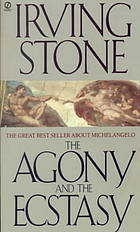
The Agony and the Ecstasy by Irving Stone is a book I’ve been longing to read for years. I’ve had it since 2007. It’s a biographical novel about Michelangelo. The copy I had was impossible to read as it was falling apart so I bought a new copy – but it’s still sitting waiting to be read. Why? Well because I have so many other books I really want to read.
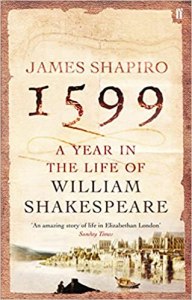
Another book I’ve had since 2007, still waiting to be read for the same reason is 1599: A Year in the Life of William Shakespeare by James Shapiro. 1599 was the year the Globe Theatre was built and that Shakespeare wrote Julius Caesar, Henry V, As You Like It and Hamlet. it’s full of detail, not just about Shakespeare, his plays and the theatre, but also about the events of his life and times!
Version 1.0.0

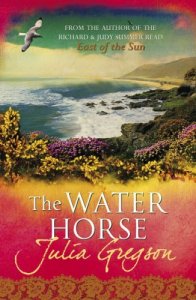
The Water Horse by Julia Gregson, a book I’ve had since 2009. It’s historical fiction based on the true story of a young Welsh woman, Jane Evans, a Welsh woman who in 1853 ran off with Welsh cattle drovers and volunteered as a nurse with Florence Nightingale in the Crimea. Catherine Carreg has grown up a tomboy, spending her days racing her ponies with Deio, the drover’s son, in a small Welsh village. But Catherine is consumed by a longing to escape the monotony of village life and, with Deio’s help, runs away to London.

Alone in the unfamiliar bustle of the city, Catherine finds a position in a rest home for sick governesses in Harley Street, run by Miss Florence Nightingale. Then, as the nation is gripped by reports of the war in the Crimea, Catherine volunteers as a nurse – and her life changes beyond all recognition.

Jeremy Hutchinson’s Case Histories by Thomas Grant – I bought this in February 2020 after watching the BBC series,The Trial of Christine Keeler, the story of the Profumo affair in 1962 as seen from her perspective. Hutchinson was Keeler’s defence barrister.

Born in 1915 into the fringes of the Bloomsbury Group, Jeremy Hutchinson went on to become the greatest criminal barrister of the 1960s, ’70s and ’80s. The cases of that period changed society for ever and Hutchinson’s role in them was second to none. In Case Histories, Jeremy Hutchinson’s most remarkable trials are examined, each one providing a fascinating look into Britain’s post-war social, political and cultural history.
A – Z of TBRs: U, V and W

I’m now up to U, V and W in my A – Z of TBRs, a series of posts in which I take a fresh look at some of my TBRs to inspire me to read more of them, or maybe to decide not to bother reading them after all. These are books I bought full of enthusiasm to read each one – and mainly because I wanted to finish books I was already reading, they have sat on the shelves ever since. And then other books claimed my attention.

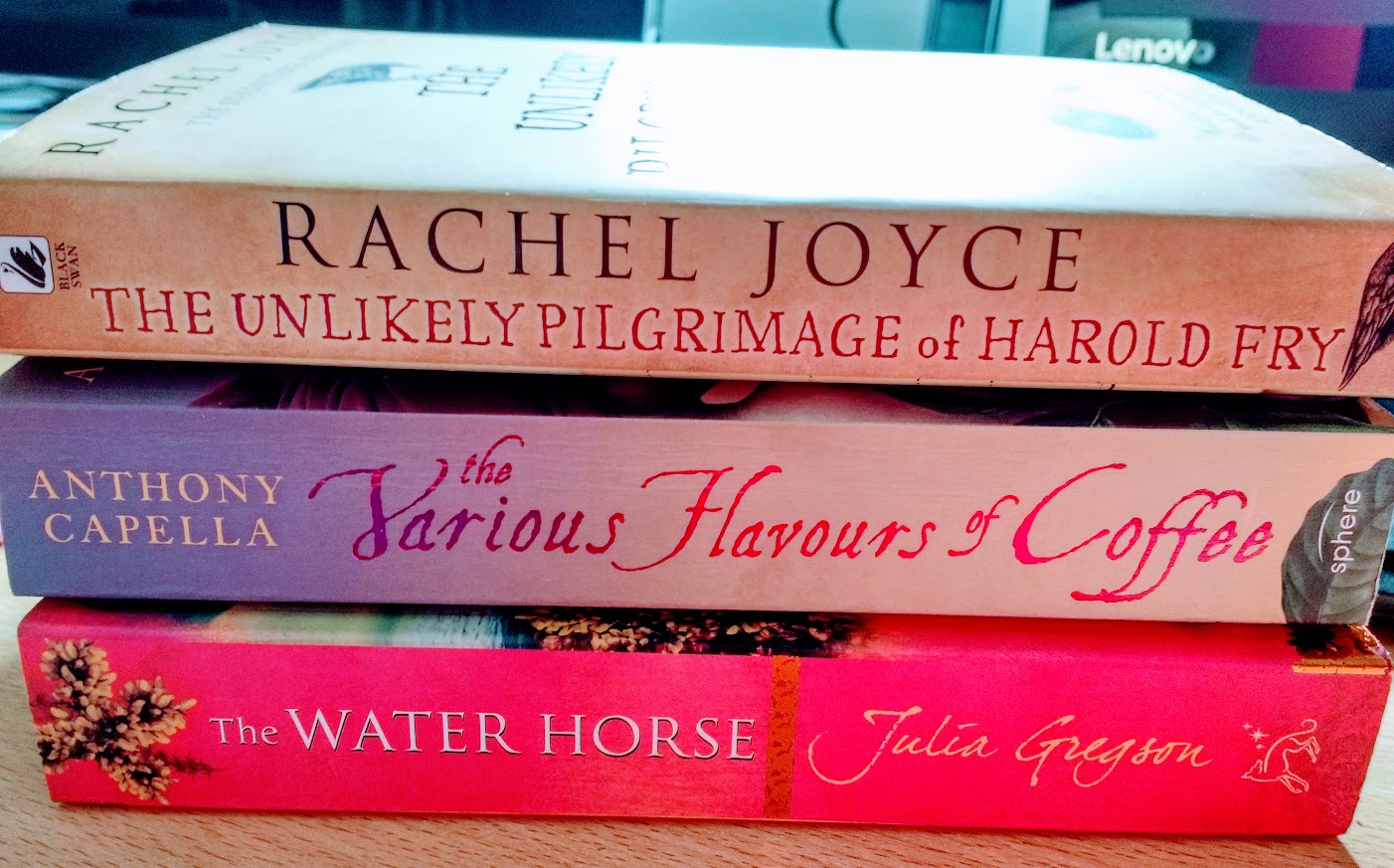
U V W books

– is for The Unlikely Pilgrimage of Harold Fry by Rachel Joycea novel I bought five years ago. It appealed to me because it’s about a man, Harold Fry, who walks from Kingsbridge in South Devon to Berwick-upon Tweed in Northumberland and I liked the idea of following his journey – on paper, that is.

Harold receives a letter from an old friend who is dying from cancer, writing to say goodbye. Feeling he can’t say what he wants to say in a letter he decides he needs to speak to her in person and phones the hospice where she is a patient:

‘Tell her Harold Fry is on his way. All she has to do is wait. Because I am going to save her, you see. I will keep walking and she must keep living. ‘ (page 28)

~~~

Harold Fry was a tall man who moved through life with a stoop, as if expecting a low beam, or a screwed-up paper missile, to appear out of nowhere. The day he was born his mother had looked at the bundle in her arms, and felt appalled. She was young, with a peony bud mouth and a husband who had seemed a good idea before the war and a bad one after it. A child was the last thing she wanted or needed. The boy learned quickly that the best way to get along in life was to keep a low profile; to appear absent even when present. He played with neighbours’ children, or at least he watched them from the edges. At  school he avoided attention to the point of appearing stupid. Leaving home when he was sixteen, he had set out on his own, until one night he caught Maureen’s eye across a dance hall and fell wildly in love. It was the brewery that had brought the couple to Kingsbridge. (page 36)

V – is for The Various Flavours of Coffee by Anthony Capella. I’ve had this book for nearly 10 years and started it not long after I bought it. My book mark is at the start of chapter twenty seven, so I’ve read about a third of the book. I can’t remember now why I stopped reading it. If I am going to read it I’ll have to start again.

It’s historical fiction and a love story beginning in 1896 in London where a struggling poet, Robert Wallis, accepts a commission from a mysterious coffee merchant, Samuel Pinker, to compose a ‘vocabulary of coffees’ that can capture their elusive fragrances. Robert is then dispatched to Africa in search of the world’s finest coffee.

In this extract Robert is considering how to describe black coffee beans:

… ‘these ones over here are as black as despair, whereas these are as golden as virtue -‘

‘No, no, no,’ Pinker interjected. ‘this is far too poetical. One man’s despair is another man’s gloom, and who is to say whether gloom and despair are the same colour?’

I saw his point. ‘Then we shall have to decide on words for several different shades of black.’

‘Exactly, sir – that is my purpose entirely.’

‘Hmm.’ I considered. It was, when one thought about it a rather vexing issue. ‘We shall begin,’ I declared, ‘by fixing the very blackest form of black there is.’

‘Very well.’

A silence fell upon us. It was in fact, quite hard to think of a word to describe the pure blackness of the darkest beans. ‘The pure black of a cow’s nose, I said at last. Pinker made a face. ‘Or the glistening black of a slug at dawn -‘

‘Too fanciful’ And if I may say so, hardly appetising.’

‘The black of a bible.’

‘Too objectionable.’

‘The black of a moonless night.’

Pinker tutted. (page 38)

and so it goes on, until they finally settled for ‘jet’.

W– is for The Water Horse by julia Gregson, a book I’ve had for nine years. This is a historical fiction based on the true story of a young Welsh woman, Jane Evans, a Welsh woman who in 1853 ran off with Welsh cattle drovers and volunteered as a nurse with Florence Nightingale in the Crimea.

The title refers to the story of the Water Horse

‘And God help you if you find the Water Horse,’ said Eleri, ‘he looks so lovely and he’s deadly.’

‘Do you believe in him?’ Catherine was interested at last. ‘I think about him every time I see the sea. ‘

‘No.’ She put down her pipe. ‘No, I don’t. but I do believe he shows us what we fear.’

‘What?’

‘Well, there he is: beautiful, extraordinary. he stands placidly by the water’s edge. We try to mount him, and sometimes you can ride him and feel so powerful, so wonderful, and the next time he bolts back into the sea with you and you die a horrible and frightening death. What could be clearer?’ Eleri’s eyes were shining in the dusk. ‘It’s our fear of being out of control. He’s the one who tells you, stick with the ordinary, don’t move, everything else is dangerous and nothing possible, but the problem is that if you fear everything you can’t control, you’ll never do anything that matters to you.’ (pages 58-9)

Looking at them this morning the one that appeals most is The Water Horse.

What do you think? Do you fancy any of them? Would you ditch any of them?