Earlier this year we visited Edinburgh Zoo.

- Penguins on Parade

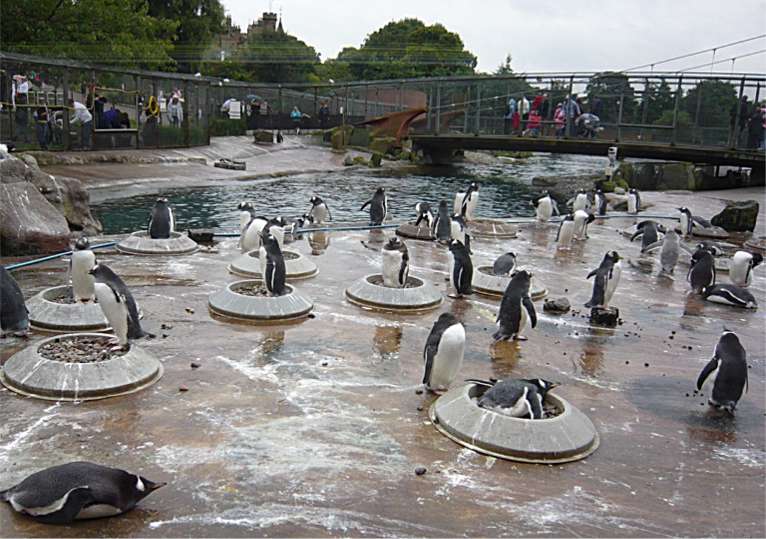
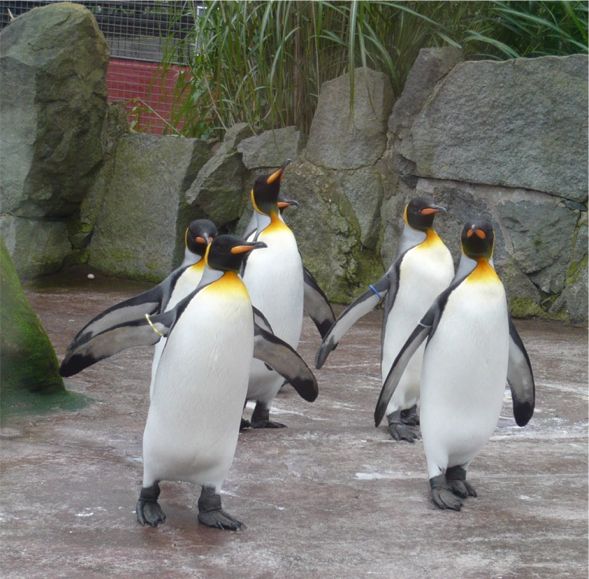
The Penguin Parade is totally voluntary – every day any penguin who wants to comes out of the Penguin Enclosure at 2.15pm and goes for a walk around the zoo grounds. It was dull and rainy when we were there and lots of the penguins were enjoying themselves swimming and diving whilst others were stood around looking like waxwork models, but a few penguins were keen and bold enough to come out on parade. There were Gentoos, one King Penguin and a Rockhopper Penguin. We all stood behind the yellow lines and watched as the penguins paraded passed us. This first began in 1951 when a keeper left their gate open by accident and has continued ever since. it wasn’t quite happy feet as they weren’t dancing but they seemed to enjoy their walk.

- Penguins by the Pool

- King Penguins

This book Wonders Never Cease tells the story of Edinburgh Zoo and the story of the evolution of the modern zoo. I have to admit that in the past I’ve never been comfortable visiting a zoo and usually feel sorry for the animals, behind bars in prison as it were. Edinburgh Zoo aims to be a “centre for integrated conservation, from zoo to wild” and it is “a global leader of zoo-led conservation education.” More people visit zoos in Britain every year than attend premiership football matches and the day we were there the zoo was packed with people.
I did enjoy my visit and felt I’d learnt a lot and not just about penguins, although for me they were the highlight of the day.
I was a bit scared of the rhinos and wondered whether they were really comfortable with their enclosure. They were able to go outside but it was a cold, wet day and they really didn’t want to go out and I wasn’t sure if they wanted to be gawped at either. They seemed agressive to me snorting and pawing the ground. They did venture outside but soon went back in.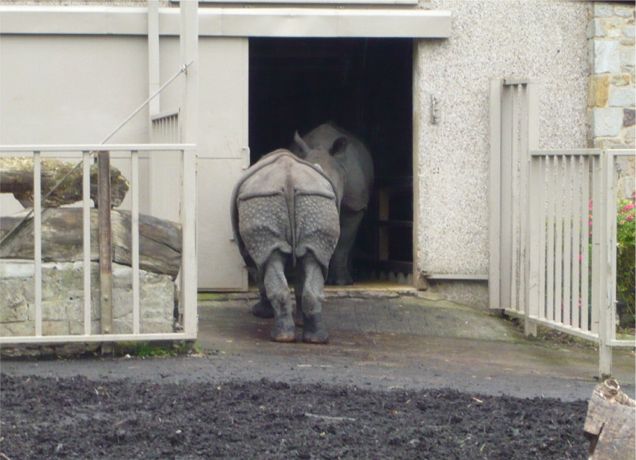
Maybe when I’ve read the book I’ll feel differently. It explains that zoos are no longer merely places of spectacle and display but they are also places of refuge for many endangered species and working to ensure
that animals will be maintained in their wild environment in a sustainable natural habitat. …
Zoos, because of their very nature, have their critics. It is inevitable that there will be many different ways of approaching any problem. Some people consider the keeping of animals in captivity to be anathema. Zookeepers, however, understand the literally vital role that responsible zoos can play in the twenty-first century. They know that through carefully managed programmes of care, research and positive conservation in the field they really can make a difference.
 BooksPlease