The Sunday Salon – This Week’s Books

This last week has been yet another week away from home and reading has had to be slotted in. I read late at night when I nodded off with a book in my hand or early in the mornings when the time speeds up at an alarming rate so I hardly felt I’d read much at all. However, this week I finished reading Joyce Carol Oates The Gravedigger’s Daughter and yesterday I finished reading Daphne du Maurier’s The House On The Strand. I also started Linda Grant’s The Clothes On Their Backs (short listed for the Booker Prize).

This morning I read the introduction to The House On The Strand and dipped into Margaret Forster’s biography of Daphne Du Maurier to see what she had to say about it too. This was my first reading of The House On The Strand and I was drawn into its world immediately. I read it quickly and without taking notes, so this is just a brief summary of the book. It’s a story of time-travel as Dick Young moves between the present day and the 14th century set in Cornwall – around Par Sands and the Manor of Tywardreath. Dick is staying at Kilmarth (the house where Du Maurier lived after she was forced to leave Menabilly), the guest of his friend Magnus, a scientist researching the effect of a psychedelic drug. The drug produces hallucinations of time travel and as Dick moves in his mind to the 14th century he physically moves across the present day landscape crossed by roads and railway lines that he cannot see. The difference in the landscape plays a central part in the story.

Life in the 14th century is more to Dick’s liking than his own, where he is married not too happily to Vita, an American with two sons from an previous marriage. The 14th century world is full of danger, intrigue, adultery and murder and he falls in love (from afar, of course) with Isolda, a beautiful young woman married to a scoundrel, Sir Oliver Carminowe and in love with Sir Otto Bodrugan. Du Maurier had researched the history of Kilmarth and the local families and she was so exhilarated by the story that she actually  “woke up one day with nausea and dizziness” and could hardly bear to leave it for more than a few hours. Dick is a rather pathetic figure disllusioned with his marriage, unable to relate to his step-sons and alienated from his own times.

The combination of historical fact and psychological study moves into fantasy with the effect of the mind-expanding drug Dick takes. Du Maurier was writing in 1967 when LSD was well established, and in this book she has elaborated on its effects in describing Dick’s experiences as though on each trip a chemical time machine enabled him to continue the narrative of events with the same characters.  I did have to suspend my disbelief at times whilst reading but was carried along by Dick’s increasing obssession and addiction to the 14th century. It reminded me a bit of The Scapegoat by Du Maurier, a book I read many years ago – time for a re-read of that soon.

I alternated my reading between Linda Grant’s The Clothes On Their Backs and The House On The Strand. Grant’s book is narrated by Vivian as she looks back on her life, growing up in London in the 1960s and 1970s, the only child of refugee parents, fascinated by her glamorous and notorious Uncle Sandor. In the acknowledgements Grant states that the character of Sandor was inspired by that of the Notting Hill landlord Peter Rachman. I’m only about half way through this book which includes, as you would expect from its title, many descriptions of clothes and how they define us; how we use them to create or disguise our personalities.

I particularly liked the description of how Vivian reads:”Somehow I would climb inside the books I read, feeling and tasting them – I became the characters themselves.” It reminded me of Du Maurier’s immersion in the characters in her novels. Both books look at identity and how personalities influence and are influenced by others and both have entertained me thoughout this week.

The House On The Strand is the first book I’ve read for the RIP III Challenge.

The Sunday Salon – The Gravedigger’s Daughter

Last Sunday I wrote that I’d started The Gravedigger’s Daughter by Joyce Carol Oates. I’m still reading it. I really shouldn’t write much about it as I haven’t finished it and I’m wondering how it is going to end. I thought I could predict the ending but then something happened which made me think, maybe I was wrong, but maybe not. It’s a dark book, quite violent in parts which I don’t really like, but then I don’t have to visualise all the violence – not like watching something on TV or film such as Wire In the Blood, which is just gross. I’ve decided not to watch any more in the series, having turned it off during the first programme.

The Gravedigger’s Daughter is very much a book of two halves, split between Rebecca’s life as a child, living with her father, Jacob Schwart, a troll-like figure of a man and Anna,  her mother and her two brothers. They are a Jewish family who emigrated to America before the Second World War, fleeing from the Nazis. Her father, originally a maths teacher can only get work as a gravedigger and as the story unfolds we see the effect this has on him and inevitably on his wife and children. Denying they are Jewish, Rebecca grows up to be fearful of the others and after a terrifying and vividly described episode full of blood and gore in which her parents both die she eventually meets Niles Tignor. Life with Niles is full of danger and sickening violence towards her and her son Niley. It was with some relief that I found the second half of the book is a lot lighter in tone as Rebecca, now Hazel Jones makes a life for herself and her son, now known as Zack.  She at last meets a man, Chet Gallagher, a jazz-playing journalist from a wealthy family, who wants to look after her and Zack, encouraging his musical talent, and she uses all her cunning to make the most of her life with him.

So this is a book about prejudice, poverty, humiliation, suffering, and hiding your identity/creating a new personality for yourself, denying the past yet seemingly unable to escape from its consequences. The male characters are all unattractive, even repulsive and I found it hard to feel much sympathy for Rebecca/Hazel as she suffered and struggled to escape the tragedy that seems to follow her. Only Chet and Zack aroused my sympathy. Just occasionally I could see in Zack the inheritance of his father’s violence simmering just below the surface. The parent/child relationships are never easy in this book! I always find Oates’s books compelling reading despite the pessimism. Is there hope for Rebecca/Hazel – so far I can’t see it?

The questions I had on reading the opening chapters have mainly been answered – I only have about 50 pages left to read. I do have one little niggle about the way Oates writes sometimes in short, abrupt incomplete sentences, which break up the flow of reading too much.

Mainly, I suppose, The Gravedigger’s Daughter is about life and how we live it. Just a couple of quotes to end on. The first is Hazel’s thoughts about life and movies (for a while she worked as an usherette):

Stories looped back on themselves. No one got anywhere. She knew beforehand what actors would say, even as the camera opened a “new” scene. She knew when an audience would laugh, though each audience was new and their laughter was spontaneous. She knew what music cues signalled even when she wasn’t watching the screen. It gave you a confused sense of what to expect in life. For in life there is no music, you have no cues. Most things happen in silence. You live your life forward and remember only backward. Nothing is relived, only just remembered and that incompletely. And life isn’t simple like a movie story, there is too much to remember. 

“And all that you forget, it’s gone as if it had never been. Instead of crying you might as well laugh.”

And finally I think this quote sums up the novel succinctly:

Throwing off the shackles of the past.

The Sunday Salon

I thought I wouldn’t manage to write a Sunday Salon post today but find I do have a little time just to write a short post. Yesterday I finished reading Old School by Tobias Wolff, one of the best books I’ve read recently. I’ll write a post about it later in the week.

I’ve not done much reading today, but I did manage to start reading The Gravedigger’s Daughter, by Joyce Carol Oates. a massive 581 pages that will see me busy for several days – if not weeks. So far I’ve met Rebecca, haunted by her dead father. She hated him  and could see no resemblance to either her mother or her father. She is alone in the world, apart from her three year old son, Niley, as she doesn’t where her husband is or if indeed he will return.

The story starts as Rebecca Tignor (formerly Schwart) is walking home from work along a canal towpath followed by a mysterious stranger – a odd looking man in a panama hat. Quickly she experiences a quivering malevolence and trying to escape him in her panic she falls. He approaches and asks if she is Hazel Jones.  After her denial she eventually goes on her way home. I have many questions – it appears that Schwart was not her real name anyway – so who is she, why did she hate her father, the gravedigger, why is her husband absent and who is the man in the panama hat?

The Sunday Salon – In the Crimea and Elsewhere

Last Sunday found me in Ancient Egypt. Today I’ve been flitting between the Crimea, London and Italy with the Victorians whilst reading The Rose of Sebastopol by Katharine McMahon. I’m about half-way through this historical romance that switches from place to place and backwards and forwards between1844, 1854 and 1855 making me wondering where and when I am. Apart from that it’s a good read about the Crimean War as seen through the eyes of Mariella Lingwood. Her fiance, Henry is a surgeon who volunteered his services at the battlefields and her cousin Rosa, determined to be a nurse has also gone to the Crimea. There’s a good deal of interesting and somewhat gruesome descriptions of the medical practices and, surprisingly to me at any rate, criticism (so far) of Florence Nightingale. It was the connection with Florence that interested me when I saw this book in the bookshop so I hope she gets more involved in the story in the second half of the book. There’s a list of books about Florence Nightingale in the acknowledgements at the beginning of the book – maybe I’ll look these up later. It’s also interesting to read of the amazement that horses were shipped to the Black Sea by sail instead of steam and the dismay that supplies hadn’t reached the British troops and that proper medical arrangements hadn’t been made. Not only were they suffering from neglected battle wounds they were dying from cholera.

Yesterday I wrote that there is an autumn feel in the air, and then the sun came out here. It was really hot, but today it’s a lot cooler and pouring with rain. This morning I watched Countryfile, which featured Bekonscot Model Village, which we visited at the end of June. It was a bit chilly that day too. I’ve been meaning to write about it ever since. In the meantime you can check it out here.

I’ve still to write about Down To a Sunless Sea by Mathias B Freese, which he kindly sent to me a while ago. I’ve started to write a post about it so maybe I’ll finish that this week. It’s a collection of fifteen short stories, well character studies, described as “dark, offbeat stories about life”, about “the darkest struggles of life”. Serious stuff, indeed.

On a lighter note, a short while ago I received Stillmeadow and Sugarbridge by Gladys Taber and Barbara Webster from Nan at Letters From a Hillfarm as a result of a draw she held. Thank you, Nan. This looks a lovely book composed of letters between Gladys and Barbara about life in the country, illustrated by Edward Shenton. I’ve dipped into this and liked this short extract showing that life in the country is far from boring:

For one thing you can’t sit down long enough. Things happen. Pipes burst, well goes dry, heaters go off, dogs get sick, mice arrive in the back kitchen. Japanese beetles swarm on the special roses. Company drives up; in the end, all the world comes to the country for weekends. And you hope there’s time to do the laundry before the next batch comes round the mailbox corner.

I’m looking forward to receiving an Early Reviewer’s copy of Tangled Roots by Sue Guiney from LibraryThing, described as the story of an ageing mother and her adult son, carrying us from Boston to London to Moscow and back again. “Through physics, religion, travel and even baseball, they express the often unknown, yet undeniable, influences one life will have on another.”

newbooks magazine arrived a couple of weeks ago and I’m still deciding which free book (you only pay for postage) to choose from this latest edition. It’s either:

  • Life Class by Pat Barker -set in World War I, Slade School of Art and the Belgian Red Cross.
  • The Outcast by Sadie Jones – life in an English village after World War II and its effect on Lewis.
  • Lullabies for Little Criminals by Heather O’Neill – Baby is 12, whose survival depends on her gift for spinning stories.
  • Boy A by Jonathan Trigell – can Jack connect with new friends while hiding a monstrous secret?
  • The Septembers of Shiraz by Delia Sofar – in the aftermath of the Iranian revolution a rar-gem dealer is arrested and falsely accused of being a spy.

I’m torn between Life Class, The Outcast and The Septembers of Shiraz, but leaning towards Life Class at the moment.

newbooks includes extracts from each book, other features and interviews with authors.The “Big Interview” in this issue is with Susan Hill, a favourite author who has published over thirty five books – I’ve only read a few and am particularly fond of the Serrailler series, which began as a trilogy and now there is a fourth, The Vows of Silence, which I must read. She’s already writing the fifth, while the sixth and seventh are planned!

The Sunday Salon – in Egypt with Nefertiti

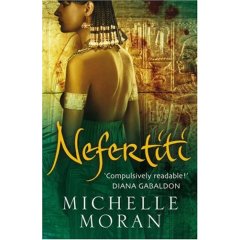
I started to read Nefertiti by Michelle Moran a bit ago and just in the last few days have picked it up again. Nefertiti is most irritating – insufferably self-confident, arrogant, demanding, lusting after power, manipulative, superior, full of her own self-importance and well, beautiful; just as you would expect her to be, a jealous selfish queen. I’m about half way through the book now and am enjoying it despite my dislike for Nefertiti, maybe she’ll become more likeable but I doubt it. As I read, ancient Egypt comes to life as Moran describes the building of the new city of Amarna, which Nefertiti boasted:

… would be a city unlike anything that had ever come before it, a jewel on the east bank of the Nile, that would write our family’s name in eternity. ‘When future generations speak of Amarna’, she vowed,’they will speak of Nefertiti and Ahkenaten the Builder.’

She was right, all these centuries later we are still fascinated with Nefertiti and this period of the 18th Dynasty. But I am more fascinated by her sister as described in this novel. I hadn’t heard of Mutnodjmet (Mutny) before, but she is presented as a much more likeable character. Younger than Nefertiti, and with a different mother, she is at first swept along as Nefertiti is chosen to marry Amunhotep, the young Prince of Egypt. However, she longs for a life of her own, with the man of her choice, Nakhtmin, a general in the army and worst of all a “commoner”. When Mutny becomes pregnant Nefertiti and Akhenaten (as he re-named himself when he renounced the god Amun in favour of Aten), by then rulers of the whole of Egypt, will not accept this, banishing Nakhtmin to fight the Hittites, and bringing about Mutny’s miscarriage. This is as far as I have read – it looks as though an immense struggle between the sisters is about to explode.

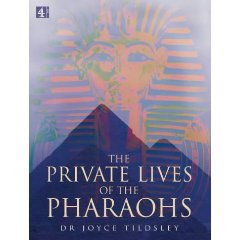
private livesReading Nefertiti reminded me of another book on Egypt: The Private Lives of the Pharoahs by Dr Joyce Tyldesley, which I bought a few years ago, only for it to sit unread on the bookshelves, until now. This book looks at the pyramids, how and why they were built; why the 18th Dynasty died out; and who was the boy-pharoah Tutankhamun. I’ve only dipped into this book so far, but it promises much and has a Further Reading section with yet more books to look out for. I see on Amazon that Tyldesley has also written, amongst many other books, Nefertiti:Egypt’s Sun-Queen . I really must read this as well.

I think I may stay in ancient Egypt for a while.

The Sunday Salon – Book of the Day

It’s been a really hot day here today, stifling in fact, and far too humid for me to be comfortable. This is the sort of weather that makes me feel limp and exhausted even if I didn’t have toothache. So I’ve taken things easy today, dosed myself with painkillers and read Paul Auster’s new book Man In The Dark. My copy is an uncorrected proof that LibraryThing sent to me in the Early Reviewers Programme, so I can’t quote from it, which is a pity as it’s full of sentences/paragraphs I’d love to include in this post. It’s due out in hardback on 21 August and the back cover of my copy reveals that Paul Auster will be making a rare visit to the UK around that time.

It’s not long – 180 pages, just right for reading in a day and it’s sufficiently complex to take my mind off things. The “man in the dark” is seventy-two year old August Brill, recovering from a car accident, who can’t sleep. He is living with his daughter Miriam and granddaughter, Katya. To take his mind off the things he doesn’t want to think about – his wife’s death and the shocking murder of Titus, his granddaughter’s boyfriend – he makes up stories in his head. At this point I had to concentrate because there are so many stories and stories within stories. He imagines a parallel America, in which there is no war with Iraq. Instead there is civil war, several states having declared their independence and formed the Independent States of America. The main character in his story is Owen Brick, who reminiscent of the man in Travels in the Scriptorium, has to discover what is happening to him as the story progresses. His confusion deepens as he thinks someone is inside his head, stealing his life, not knowing what is real and what is imagined.

Katya is a film student, training to become a film editor and she and August spend their days watching films. A point of interest here for me as August considers that the difference between films and books is that watching films is a passive activity, whereas reading books makes you use your imagination and intelligence. He thinks Katya is using the films as a sort of self-medication to anesthetise herself against the realities of her life. As in The Book of Illusions there are descriptions of the films – more stories within the story.

As August struggles with insomnia he is joined by Katya in the dark hours and questioned by her he gradually reveals the story of his marriage and his despair at the death of his wife, Sonia. She in turn tells of her relationhship with Titus. This may sound a depressing, dark book – there is much in it about loss, despair, divorce, death and disaster  – but I didn’t find it so. There is also much about the everyday, ordinary stuff of life and love, even in a dark, brutal world. I enjoyed it.