Nonfiction November: Week 1

Week 1: (November 1-5) – Your Year in Nonfiction with Rennie at What’s Nonfiction: Take a look back at your year of nonfiction and reflect on the following questions – What was your favorite nonfiction read of the year? Do you have a particular topic you’ve been attracted to more this year? What nonfiction book have you recommended the most? What are you hoping to get out of participating in Nonfiction November?  

So far this year I’ve read 15 nonfiction books, more than in previous years, but I haven’t managed to write reviews of all of them. The links shown take you to my posts, where they do exist.

My favourite is English Pastoral: An Inheritance by James Rebanks.

I read it in February and gave it 5*. I thought then it would be one of the best books I’d read this year and I still think that. Rebanks’ farm is in the Lake District hills. It was part of an ancient agricultural landscape: a patchwork of crops and meadows, of pastures grazed with livestock, and hedgerows teeming with wildlife. And yet, by the time James inherited the farm, it was barely recognisable. The men and women had vanished from the fields; the old stone barns had crumbled; the skies had emptied of birds and their wind-blown song.

It is inspirational as well as informative and it is beautifully written. I enjoyed his account of his childhood and his nostalgia at looking back at how his grandfather farmed the land. And I was enlightened about current farming practices and the effects they have on the land, depleting the soil of nutrients.

But all is not doom and gloom as Rebanks explains what can be done to put things right, how we can achieve a balance of farmed and wild landscapes, by limiting use of some of the technological tools we’ve used over the last 50 years so that methods based on mixed farming and rotation can be re-established. By encouraging more diverse farm habitats, rotational grazing and other practices that mimic natural processes we can transform rural Britain.

I can highly recommend reading English Pastoral. I loved it and came away with much to think about and also hope for the future.

~~~

I like to vary my reading but tend to lean towards reading memoirs, biographies and history. This year I’ve also been interested in climate change, politics and in learning more about Covid-19 and how it’s been managed. Taking part in Nonfiction November in previous years has given me an incentive to read more nonfiction and I’m sure it will again this year. I’m looking forward to seeing what others have been reading!

Theses are the other 5* books:

  1. A Life on Our Planet by David Attenborough 5*
  2. Ice Bound by Jerri Nielsen 5*
  3. The Yorkshire Shepherdess by Amanda Owen 5*
  4. I Love the Bones of You by Christopher Ecclestone 5*

The remaining 10 books:

  1. For the Record by David Cameron
  2. The Salt Path by Raynor Winn
  3. The Way Home by Mark Boyle
  4. How Britain Ends by Gavin Esler
  5. And Away by Bob Mortimer
  6. Breathtaking by Rachel Clarke
  7. The Madness of Crowds by Douglas Murray
  8. Index, A History of the by Dennis Duncan
  9. Failures of State by Jonathan Calvert and George Arbuthnott
  10. Another Journey Through Britain by Mark Probert
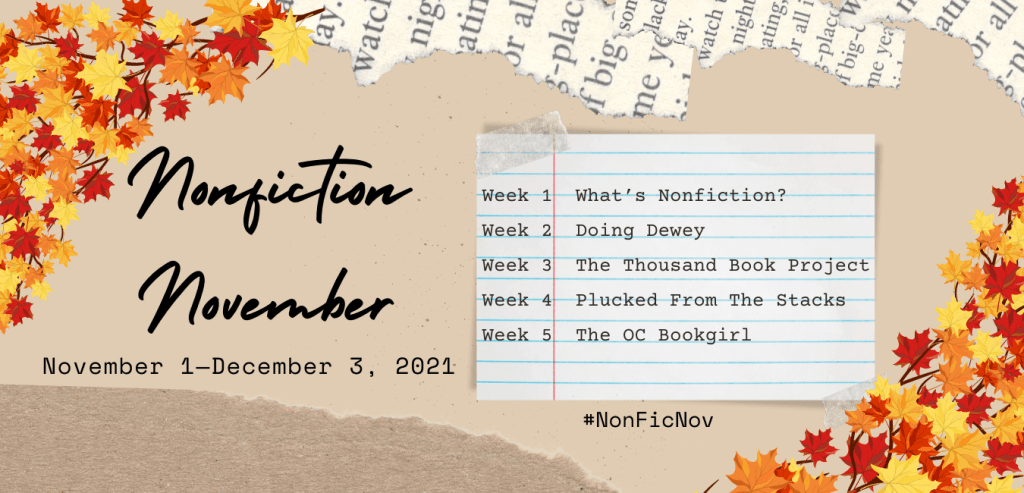
Nonfiction November is Coming!

November will be a busy month bookwise as Nonfiction November is happening again this year, as well as Novellas in November!

See Rennie’s blog What’s Nonfiction for the full details.

Nonfiction November Week 4

Week 4: New to My TBR, hosted by Katie @ Doing Dewey: It’s been a month full of amazing nonfiction books! Which ones have made it onto your TBR? Be sure to link back to the original blogger who posted about that book!

So many books to choose from! Here are a few that appealed to me:

Plus the books recommended to me on my Ask the Experts post on World War Two:

From Shelleyrae – Poland 1939: The Outbreak of World War II by Roger Moorhouse

From Deb Nance:

  • The Splendid and the Vile: A Saga of Churchill, Family, and Defiance During the Blitz
  • Lost in Shangri-la: A True Story of Survival, Adventure, and the Most Incredible Rescue Mission of World War II
  • Unbroken: A World War II Story of Survival, Resilience and Redemption
  • Torpedoed: The True Story of the World War II Sinking of “The Children’s Ship

From The Paperback Princess

  • A Train in Winter by Caroline Moorehead, Hitler and the Habsburgs by James Longo
  • Sons and Soldiers by Bruce Henderson
  • When Books Went to War by Mollie Guptill Manning
  • In the Garden of Beasts by Erik Larson

From Gilt and Dust -No Woman’s World: From D-day to Berlin by Iris Carpenter

From What’s Nonfiction

  • A Woman in Berlin, an anonymous diary of a woman who lived through the Russian occupation of the city
  • Primo Levi’s memoirs like Survival in Auschwitz and The Reawakening,
  • Underground in Berlin.
  • Svetlana Alexievich’s The Unwomanly Face of War is an oral history of the women in the Red Army by Marie Jalowicz Simon

Thanks so much to our hosts, Katie at Doing Dewey, Julie at Julz Reads, Leann at Shelf Aware, and Rennie at  What’s Nonfiction! And thanks to everyone who stopped by with comments and recommendations as well!

Nonfiction November Week 3: Ask the Expert

We’re now in Week 3: (Nov. 12 to 16) of Nonfiction November. The topic is – Be The Expert/Ask the Expert/Become the Expert (RennieWhat’s Nonfiction)

Three ways to join in this week! You can either share three or more books on a single topic that you have read and can recommend (be the expert), you can put the call out for good nonfiction on a specific topic that you have been dying to read (ask the expert), or you can create your own list of books on a topic that you’d like to read (become the expert).

I’ve read a few books on World War 2 and would love to find out more. I have read several novels set during the War, the most recent is V2 by Robert Harris, which has made realise how little I know about it. It is a vast subject and I know there are very many books both fiction and nonfiction about it. My difficulty is where to start!

These are some of the nonfiction books I’ve read/have waiting to be read:

  • Our Longest Days: a People’s History of the Second World War by the Writers of Mass Observation, which is fascinating.
  • Wartime Britain 1939 – 1945 by Juliet Gardiner – I’ve only read some of this book.
  • The Ration Book Diet by Mike Brown, Carol Harris and C J Jackson – social history.
  • Winston Churchill’s six volume History of the Second World War – these look particularly daunting in the amount of detail involved! I’ve start the first volume.
  • Band of Brothers by Stephen E Ambrose – I watched the entire HBO series called Band of Brothers. I started to read the book and stalled!
  • Great Escape Stories by Eric Williams – TBR
  • How the Girl Guides Won the War by Janie Hampton – TBR

There are so many aspects to the war, so many countries involved, so many battles, people, places, politics, so many events that led up to the war, so many technological details and developments, etc, etc. Any suggestions of where to start will be much appreciated.

Nonfiction November: Week 2 Book Pairing

I’m taking part in Nonfiction November again this year. It runs from Nov2 to Nov 30. Each Monday a link-up for the week’s topic will be posted at the host’s blog for you to link your posts throughout the week. 28 to Nov 30.

Week 2: (November 9-13) – Book Pairing (Julie @ Julz Reads): This week, pair up a nonfiction book with a fiction title. It can be a “If you loved this book, read this!” or just two titles that you think would go well together. Maybe it’s a historical novel and you’d like to get the real history by reading a nonfiction version of the story.

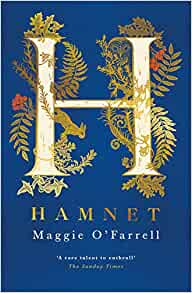
I’ve recently read Hamnet by Maggie O’Farrell, historical fiction inspired by Hamnet, Shakespeare’s son. It is a story of the bond between him and his twin sister, Judith.  Shakespeare isn’t the main character and he is never named in this novel, which really focuses on Ann Hathaway and her children. Little is actually known about her and she comes across to me in this book as a rather wayward, wild young woman when Shakespeare first met her, flouting convention and set on getting her own way, manipulating the people around her.

So, I’d like to know more about Ann Hathaway. Germaine Greer’s book, Shakespeare’s Wife explores what is known but I haven’t read it, so I don’t know how much is supposition and padding. I think it sounds interesting from the description on Goodreads:

Until now, there has been no serious critical scholarship devoted to the life and career of the farmer’s daughter who married England’s greatest poet. Part biography, part history, Shakespeare’s Wife is a fascinating reconstruction of Ann’s life, and an illuminating look at the daily lives of Elizabethan women, from their working routines to the rituals of courtship and the minutiae of married life. In this thoroughly researched and controversial book, Greer steps off the well-trodden paths of orthodoxy, asks new questions, and begins to right the wrongs done to Ann Shakespeare.

If you have read Shakespeare’s Wife I’d love to know what you think about it.

Nonfiction November 2020: Week 1 – My Year in Nonfiction

Nonfiction November begins this week. Each Monday a link-up for the week’s topic will be posted at the host’s blog for you to link your posts throughout the week.

 Week 1: (November 2-6) – Your Year in Nonfiction (Leann @ Shelf Aware): Take a look back at your year of nonfiction and reflect on the following questions – What was your favorite nonfiction read of the year? Do you have a particular topic you’ve been attracted to more this year? What nonfiction book have you recommended the most? What are you hoping to get out of participating in Nonfiction November?

I love reading non fiction but it takes me much longer to read than fiction, so it’s only been 11% of my total reading so far this year. And during this strange year I’ve found it hard to concentrate on reading, and even less motivated to write about what I’ve read. Reading nonfiction always takes me longer than fiction because of the detail involved but this year it’s been taking me even longer than usual.

I like to vary my reading but tend to lean towards reading memoirs, biographies and history. This year I’ve also been interested in learning not just about Covid-19 but also about the history of disease and its impact.

It’s hard to say which one is my favourite as they’re all so different, but Happy Old Me by Hunter Davies, which I read in February, entertained me the most. And if you like history, and biographies I can definitely recommend The Mystery of Princess Louise by Lucinda Hawksley, which gave me a different perspective on Queen Victoria. Louise reminded me a bit of Princess Margaret and also of Princess Diana – she really had an interesting and unconventional life.

These are the books I read and one I’m currently reading. The links on the titles below take you to my reviews on the books:

Happy Old Me by Hunter Davies, the third book of his memoirs, written when he was in his eighty-second year, after the death of his wife, author, Margaret Forster. It is part memoir, part self-help, as he got to grips with being old and living on his own. He writes openly and frankly, with a sense of humour and a zest for life. I really enjoyed it. Hunter Davies is a writer and journalist who has written more than 30 books, covering biographies, novels, children’s novels. These include the only authorised biography of The Beatles, many works on the Lake District, and Confessions of a Collector.

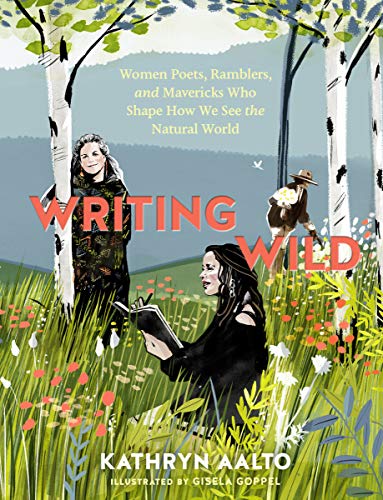
Writing Wild by Kathryn Aalto – part travel essay, literary biography, and cultural history. A fascinating book about 25 women writers covering two hundred years of women’s history through nature writing, including natural history, environmental philosophy, country life, scientific writing, garden arts, memoirs and meditations and does not aim to dismiss men’s contributions. 

The Mystery of Princess Louise: Queen Victoria’s Rebellious Daughter by Lucinda Hawksley – a detailed biography about Victoria’s sixth child – her fourth daughter, born on 18th March 1848. There is so much detail about her life in this book, packed with intrigues, scandals and secrets. She had a difficult childhood, disliked and bullied by her mother and she often rebelled against the restrictions of life as a princess. Louise was unconventional, generous and charming to people she liked. She was a sculptor and several scandals arose about her, rumours of an illegitimate child and of her love affairs. The mysteries are still unresolved as Louise’s files in the Royal Archives are closed.

Blue Tits in My Nest Box by David Gains – this is a short book, packed with information. I bought it after my husband bought a new blue tit box – one with a camera. It gave us enormous pleasure watching a pair of blue tits make a nest in the box, lay eggs and feed the chicks and then fledge.

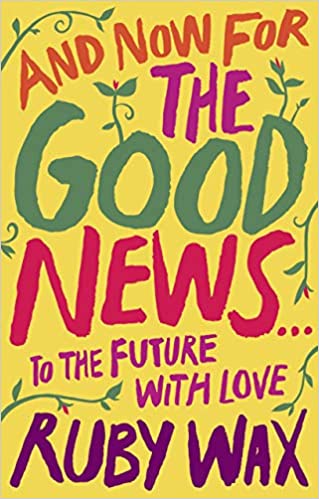
And Now For the Good News by Ruby Wax – written clearly in a breezy conversational style and covering a large amount of information. She emphasises the importance of compassion and kindness, of community and on working for the good of all. Above all she focuses on the benefits of mindfulness and on positive experiences.

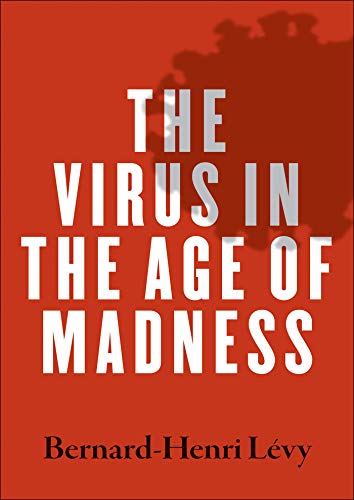
The Virus in an Age of Madness by Bernard-Henri Levy – review to follow.

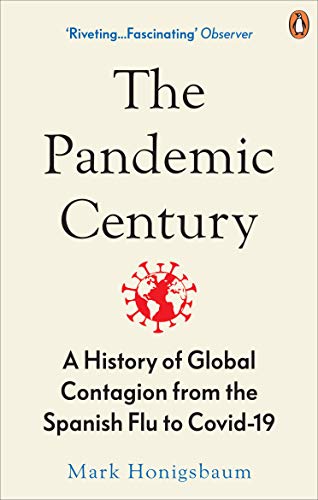
The Pandemic Century by Mark Honigsbaum – beginning with the Spanish Flu in 1918 this is a fascinating account of 100 years of pandemics. Review to follow.

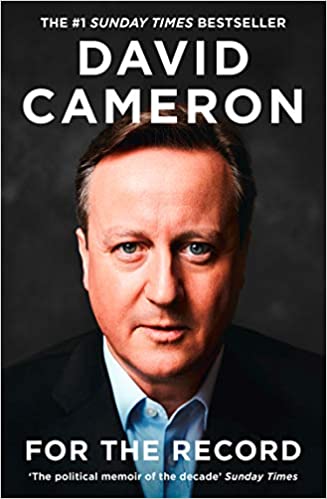
I’m currently reading For the Record by David Cameron – his autobiography. I rarely read about politics, so this is a change for me. I’m interested to find out his views on the EU and Brexit, but haven’t got up to that yet. I never thought I’d say this, but I’d prefer the news to be full of Brexit talk instead of Covid-19!

By participating in Nonfiction November I’m hoping this will encourage me to read more nonfiction rather than picking up the next novel to read and I’m looking forward to seeing what others recommend.