Seventy Years Ago Today …

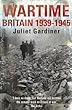
… Neville Chamberlain broadcast that Britain was at war with Germany. In Wartime Britain 1939-1945 by Juliet Gardiner she quotes from the diary of  a twenty-four year old civil servant living in Croydon on 3 September 1939:

The sun is shining, the garden never looked lovelier – everything is in bloom. Tiger [the cat] lies there in the sun; all looks happy and peaceful. But it’s not. War has broken out between England and Germany, beastly, beastly war.

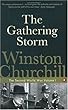
 Winston Churchill’s frame of mind was rather different. He wrote in his memoirs, The Second World War Volume 1: The Gathering Storm, that he knew if war came a major burden would fall on him. On 3 September 1939 he wrote

As I sat in my place [in the House of Commons], listening to the speeches, a very strong sense of calm came over me, after the intense passions and excitements of the last few days. I felt a serenity of mind and was conscious of a kind of uplifted detachment from human and personal affairs. The glory of Old England, peace-loving and ill-prepared as she was, but instant and fearless at the call of honour, thrilled my being and seemed to lift our fate to those spheres far removed from earthly facts and physical sensation.

And so it began …

Giving Up the Ghost by Hilary Mantel

In the first chapter of Hilary Mantel’s memoir she writes, ”I hardly know how to write about myself. Any style you pick seems to unpick itself before a paragraph is done.”  She then advises herself to trust the reader, to stop spoon-feeding and patronising and write in ‘the most direct and vigorous way that you can.’ She worries that her writing isn’t clear, or that it is ‘deceptively clear’. It comes across to me as being clear, honest and very moving. She’s not looking for sympathy but has written this memoir to take charge of her memories, her childhood and childlessness, feeling that it is necessary to write herself into being.

When I read Beyond Black a couple of years ago I was struck by the biographical information at the end of the book – that as a child she believed their house was haunted and that she was often very frightened. She expands on this in her memoir. From the age of 4 she believed that she had done something wrong and she was ‘beyond remedy and beyond redemption’. She thought it was because of her that her parents were not happy and that without her they would have had a chance in life. It didn’t get any better as her father left home and she was left to live with two younger brothers and their mother and her mother’s lover. Home was a place where secrets were kept and opinions were not voiced. Her experience of ghosts at the age of 7 was horrifying she felt as though something came inside her, ‘some formless, borderless evil’.

She wasn’t happy at school; and by the age of twelve she no longer believed in God and as she was at a convent this must have been difficult. She went to university to study law, and was married at 20, struggling to combat the prejudice against women prevailing in the early 1970s:

‘It was assumed that marriage was the beginning of a woman’s affective life, and the end of the mental one. It was assumed that she neither could nor would exercise choice over whether to breed; poor silly creature, no sooner would her degree certificate be in her hand before she’d cast all that book-learning to the winds, and start swelling and simpering and knitting bootees. When you went for an interview, you would be asked, if you were not wearing a wedding ring, whether you were engaged; if you were engaged or married, you would be asked when you intended to’start your family’.

Oh yes, I remember that too!

Life got worse for Hilary as her health deteriorated and the doctors thinking depression was the cause prescribed anti-depressants, which in turn damaged her further. From being underweight she went from a size 10 up to size 20 and developed akathisia as a side effect of the drugs she was given. This condition looks and feels like madness and was the worst thing she had ever experienced, apart that is from the horror she had felt as a child of 7. As a result of the misdiagnosis of her condition (eventually it was diagnosed as endometriosis) she was unable to have children. She sees the children she never had as ghosts within her life; ghost children who never age, who never leave home. Ghosts in her definition are also

the tags and rags of everyday life, information you acquire that you don’t know what to do with, knowledge that you can’t process; they’re cards thrown out of your card index, blots on the page.  It’s just the little dead, I say to myself, kicking up a fuss, demanding attention by the infantile methods that are the only ones available to them.

I found it a remarkable memoir.

On Trying To Keep Still by Jenny Diski

This book captivated me. I have read some good books this year, but this one outshines the rest. When I wasn’t reading it I was thinking and talking about it. It’s about experiencing an experience, becoming aware of experiencing the experience and so losing the experience.

I have had the experience of experiencing Jenny Diski’s travels during a year when she visited New Zealand, spent three months in a cottage in Somerset and went to sample the life of the Sami people of Swedish Lapland. No need to go those places myself now. Really, I could be tempted by a trip to New Zealand, but that is only a pipe dream. Now, a cottage in Somerset – that is a real possibility.

I can see myself living in that cottage, but I would not want to be there alone. Her description of her drive to Lilstock, in Somerset identifies the pleasure and gratitude of the present-moment experience of being in a beautiful place, even though this then conjures up the consciousness of

that terribly difficult business of experiencing experience. I am so conscious of me being here, of being me here, not somewhere else, having this experience, that I lose my awareness of what is pleasing me in order to think about the pleasure.

To me being in the right company as well as in the right place enhances rather than diminishes my pleasure.

I don’t need to visit the glow-worm caves or Doubtful Sound in New Zealand, now that Diski has described them to me; indeed she had to miss out on an actual visit to the caves but enjoyed a virtual trip courtesy of an imaginative reading of the brochure ‘what more could we want, particularly as the actual visit to Doubtful Sound was disappointing?‘ And I certainly don’t want to go to cold, dark Lapland even though the enchanting, mythical, magical forest ‘glittering fairyland labyrinth‘ lit up with frost ‘making an intricate latticework which sparkled, twinkled, actually dazzled the eyes, as if the forest had been sprinkled with a layer of diamond dust‘ is beguiling. This is counterbalanced by the difficulty in living in such a hostile environment. Intriguingly this visit was aimed at advertising tourism.

Of course this book is not only about travelling. It is also a personal memoir, and is about being still, being alone, wanting to be alone, phobias and the problems of coping with life and especially with ageing. There is so much in this book that I can empathise with that it is almost alarming. Jenny Diski wants to be alone to a greater extent than I do, but I still identify with feelings such as not wanting to make a noise in case people notice that I’m there, not wanting others to worry about me, and worrying that others are worrying about me; feeling the need to do something such as going out for a walk – not the desire to do it for itself but the feeling that I should want to. On a practical level I also have difficulty with ‘left’ and ‘right’. In my mind I see left and say right etc and like Diski I can only visualise a route for a short distance before it disappears in a grey fuzz in my mind.

There is so much more in this book; it describes adventures in places at the opposite ends of the earth intermingled with personal insights and meditations on solitude and stillness, consciousness and belief systems. I found it a moving, amusing, thought-provoking and original book.