The Holly-Tree Inn by Charles Dickens

The Holly-Tree Inn by Charles Dickens and others is a lovely little book, both to hold and to read. It’s a Hesperus Press publication, smooth paper and a softback cover with flaps you can use as bookmarks. I received my copy via Library Thing Early Reviewers Programme. I enjoyed reading it.

This was originally published in 1855, being the Christmas number of Dickens’s periodical Household Words. It was so popular that it was then adapted for the stage. It’s a collection of short stories by Dickens, Wilkie Collins, William Howitt, Adelaide Anne Procter and Harriet Parr, around the theme of travellers and  inns. I liked Collins’s and Howlitt’s stories the most.

It begins with a story by Dickens, The Guest in which a gentleman on his way to Liverpool is snowed in at the Holly-Tree Inn in Yorkshire. To keep himself entertained he reminisces about inns he has visited, giving glimpses into travel and inns in the 19th century. Having exhausted his own memories, this story ends with the idea of asking the inmates of the inn for their own stories.

So, the next stories are from:

The Ostler by Wilkie Collins. In this the landlord tell’s the ostler’s tale of his dread of his wife after dreaming that she is about to murder him, a tale of impending doom:

His eyes opened owards the left hand side of the bed, and there stood – The woman of the dream again? – No! His wife; the living reality, with the dream spectre’s face – in the dream-spectre’s attitude; the fair arm up – the knife clasped in the delicate, white hand. (page 53)

The Boots by Charles Dickens – according to Melisa Klimaszewski’s Introduction this tale was such a favourite that Dickens included it in his later public readings. It’s not quite to my taste, a sentimental tale about two young children determined to elope, staying at the Holly- Tree inn:

Boots could assure me that it was better than a picter (sic) and equal to a play, to see them babies with their long bright curling hair, their sparkling eyes, and their beautiful light tread, a rambling in the garden, deep in love.

The Landlord by William Howitt. An entertaining tale of the landlord’s brother who emigrated to Australia in order to better himself. But when they get there they wished they’d stayed in England. It seems they arrived just at the wrong time. Howitt, himself had travelled to Australia in search of gold and his experience is reflected in his tale. 

The Barmaid by Adelaide Anne Procter – a sad story told in verse by the landlord’s niece of Maurice and his love for ‘the loveliest little damsel his eyes had ever seen.’  Not the most challenging of tales.

The Poor Pensioner by Harriet Parr. Hester lives at the inn on ‘broken victuals’, now a poor demented creature refusing to believe that her son was guilty of murder. She waits in vain for his sentence to be reversed. This tale reveals how her wild and wilful ways as a young woman led her to seek for change and excitement with disastrous results. 

The Bill by Charles Dickens. This story completes the cycle. A week has gone by, the Guest’s route is now clear of snow and he can leave.He then discovers that his enforced stay at the inn has changed his life!

Reading this book has made a welcome break in reading modern fiction and has made me keen to read more of Dickens’s and Collins’s books.  I knew nothing about the other authors but fortunately there is a short section at the end with biographical notes about the contributors.
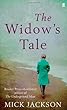
The Widow’s Tale by Mick Jackson:Book Review

 The Widow’s Tale by Mick Jackson is his third novel, published this month.  I didn’t know of him and hadn’t read anything by him before, but when I saw this book on offer through LibraryThing’s Early Reviewers’ Programme I thought it looked interesting.  His earlier novels are The Underground Man, shortlisted for the Booker Prize in 1997 and Five Boys, published in 2001.

The Widow’s Tale is a sad tale – she is certainly not a Merry Widow, but then again she is not the Widow of Windsor (Queen Victoria) even though she does leave her house in London and live in seclusion in Norfolk.

Like Rebecca she doesn’t have a name and written in the first person singular the narrative is all from her perspective and rather rambling as befits a woman in her sixties on the verge of a nervous breakdown. I was a bit put off at the beginning when she comes out with the phrase, so often used by my mother-in-law: “By the time you get to my age …”. But there the similarity ended.

Her husband has died, she’s taken it badly, and goes to live in a rented cottage on the bleak Norfolk coast, shunning other people. She drinks to forget herself, sits in pubs alone, doing the crossword and reading a book to pass the time. She drives out to places she once knew, goes for solitary walks,  gets stuck in the saltmarshes, and is definitely quirky and obsessional.

But there is something in her past life that is haunting her, an episode that John, her husband didn’t know anything about and that has coloured her life ever since. I think it it was this rather than losing  John that caused her such distress. I was wondering how this book would end and in a way it is inevitable and I thought it rather disappointing.

I don’t often think this about a book – it was OK. The writing is fluent and it’s a quick read. It’s episodic rather than linear as she recollects events and thoughts from the past and I would have said it’s really good but for the fact that I couldn’t really believe the narrator is a woman. But it has made me want to read more by Mick Jackson and I see from his website that as well as his three novels he’s also written two book of short stories, Ten Sorry Tales and Bears of England, both of which look interesting.

Poetic Lives:Shelley by Daniel Hahn

I didn’t know much about Shelley before I read Poetic Lives: Shelley by Daniel Hahn. This biography gives brief details of Percy Bysshe Shelley’s short but extraordinary life, from his birth in 1792 to his early death in 1822, shortly before his thirtieth birthday.

The opening paragraph caught my immediate attention in pointing out that Shelley was not that far away from the present day. Although he was born during the reign of mad King George III when there were struggles for independence in Europe – the French Revolution and then Napoleon’s rise to power, his granddaughter saw the sinking of the Titanic, the First World War and the Great Depression.

Shelley was an unhappy child, an unconventional teenager, an atheist and a radical reformer. He was expelled from Oxford University before he could complete his degree and was at odds with his father. He eloped with the daughter of a coffee-shop owner in 1811 but after three years the marriage was over when he met Mary Godwin. He was constantly in poor health and for much of the rest of his life they lived a nomadic existence travelling around Italy and France.

Hahn also quotes extracts from Shelley’s poems and prose. He also uses various sources such as Shelley’s friend Thomas Hogg, who wrote his Life of Shelley in 1857, Shelley’s cousin Tom Medwin who published a memoir of Shelley and a two-volume Life of Percy Bysshe Shelley in 1847 and another friend, Edward Trelawney who wrote Recollections of the Last Days of Shelley and Byron in 1858.

I found parts of the book moving, Shelley’s  reaction to John Keats’s death for example and the events of his own death, but on the whole it is a prosaic account of Shelley’s life. Hahn’s repetitive use of the word “would” was irritating. It has interested me enough to want to read more about Shelley and his poems. I have started reading  Ann Wroe’s book Being Shelley: the Poet’s Search for Himself, which promises to be a much fuller account and also more about him as a poet. More about that book another time.

I received Poetic Lives:Shelley from the publishers via LibraryThing’s Early Reviewers’ Programme.

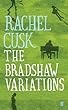
The Bradshaw Variations by Rachel Cusk: a Book Review

I expected  The Bradshaw Variations by Rachel Cusk to be much better than it is. It begins well, and every now and then I thought this is really good, but at times it seems to get lost in itself. It’s about the life of a family – the Bradshaws, mainly concentrating on Thomas and his wife Tonie – over the course of a year. Not a lot happens on the surface but underneath everyone’s life is in turmoil and change.

Thomas is the middle brother. Howard is his older brother, married to Claudia; Leo, is his younger brother married to Susie. We also meet his parents and Tonie’s parents. The book is a series of episodes in their lives, both individually and collectively. It’s a mixture of straight forward narrative about their daily lives, interspersed with interesting reflections on such themes as what is real/unreal/artificial, what is the value and nature of success, what is art, the duality of character, the question of work/home balance, women going out to work versus staying at home, progress, the impossibility of perfection, the nature of love, the importance of wanting what you have and of avoiding not wanting what you have and so on and so forth.

 Thomas, the house-husband, is learning to play the piano whilst he is at home looking after Alexa, their eight-year old daughter, and much of the description of him has a musical theme – he is a “symphony” crashing about. Tonie, getting on with her career, seems a very negative character, usually dressed all in black and uncertain of what she wants from life. The crisis comes when Alexa falls ill and Thomas has to cope on his own. Howard and Claudia are muddling along with their three children and Skittle, their little dog and their crisis comes as they are preparing to go away on holiday – I found this chapter one of the most “real” in the book, describing the “ordeal” of it all.

My overall impression of it is that although it’s intense, it’s also emotionally detached; the characters are well drawn for the most part, but just as I was getting involved with them, the narrative moved away.

(The Bradshaw Variations – an Uncorrected Proof copy supplied by LibraryThing Early Reviewer Programme)

Turbulence by Giles Foden: Book Review

turbulence001

I received an uncorrected proof of Turbulence from the publishers Faber and Faber through LibraryThing’s Early Reviewers Program. I should have found it boring because most of the characters are scientists – meteorologists, to be precise – and a lot of the dialogue is scientific concerning the theory of weather forecasting and mathematical forecasting in particular. Maths is not my strong subject and a lot of this was beyond me. There was just too much detailed information. Yet, strangely this book gripped me and once I’d got through the first chapter, which was very technical and odd, about making a ship out of ice to transport water to Saudia Arabia, it was compelling reading.

The main action takes place during 1944 in the run up to D-Day. The narrator is Henry Meadows a young meteorologist working for the Met Office. He is sent up to Scotland to find out about the “Ryman number”  from Wallace Ryman, a pacifist and former meteorologist who devised the formula that will make forecasting the weather over a longer period more accurate. This is just what the Allies need to know in preparing for the invasion of Normandy. Ryman is based on Lewis Fry Richardson, who devised the Richardson number, which enables the turbulence of different weather systems to be measured (hence the title of the book). I don’t have a clear picture from the novel of what this actually is or how it works, but it was his work in forecasting a  break in the bad weather conditions in the Channel that fixed the date of D-Day as 6 June 1944.

Ryman is the most interesting character in the  book. He is opposed to war, now  pursuing peace studies and is known as a difficult, stubborn character. Henry finds him awkward, uncooperative and reluctant to talk about his work at first. The book began to come to life for me in this section when Henry and Ryman and his wife Gill start to get to know each other, made more interesting by the tensions in the Rymans’ marriage. At this stage Henry’s own fragility becomes obvious from passages where he recalls his childhood in Africa and the death of his parents.

The action moved back to London and began to drag a little, but picked up as Henry became more involved in the disagreements between the meteorologists from different countries, brought together over the phone to pool their resources about methods and interpretation. Henry is assigned to go with the invasion forces as Met liaison between the British and Americans. This provides a dramatic ending to the book as he is injured on landing in France.

Turbulence is a combination of theoretical and scientific information, philosophical musings (which were more meaningful to me), and a portrayal of complex and emotional characters. In the end I thought it was well worth the effort of reading it.

When the Lights Went Out by Andy Beckett: Book Review

I saw When the Lights Went Out: Britain in the Seventies by Andy Beckett on LibraryThing’s Early Reviewer Programme and the publishers’ description made me think maybe it would be interesting:

Over five years in the making, this book is not an academic history but something for the general reader, written with the vividness of a novel or the best works of American New Journalism. No such treatment of the seventies has been previously attempted. Hopefully the book will bring the decade back to life in its all its drama and complexity.

And it did bring that decade back to life. It’s a very detailed book, using original material such as diaries, letters, personal memoirs as well as books written about the period. I particularly liked the personal, face-to-face interviews with some of the key figures such as Ted Heath,  and his assessments of politicians such as this one of Margaret Thatcher in 1975 when she was a contender for the leadership of the Conservative Party:

 She was a fast learner, a holder of fierce convictions and a highly distinctive speaker and political presence. (page 261)

Margaret Thatcher was, essentially not easy to be around: ‘Thatcher was always tiresome,’ remembers the political journalist Michael White who spent a lot of time with her in the seventies. ‘There was no romance, no self-analysis, no self-consciously epic qaulity like you would have got with Churchill. (page 262)

When Beckett describes the strikes of the decade, and there were so many, the changes in the balance of power, the three-day week and the Winter of Discontent, I was back there living it all over again. My only criticism is a personal one – when he writes about the economic and financial situations with all the statistics he quotes I was a bit bored and have to admit that I skim read those sections. It was the personalities, the personal touches and the cultural and social scenes that I liked – for example during his interview with Denis Healey, who was Harold Wilson’s Chancellor of the Exchequer in the seventies Healey talked about Wilson’s lack of ambition:

‘In his second term he told many people that he planned only to stay a few months. He told me in the lavatory at No. 10 just before a Cabinet meeting.’ Healey giggled, characteristically delighting in the black comedy. Then, equally characteristically, he looked out of the window of his Sussex study and kicked Wilson’s reputation in the shins. ‘I thought, “About bloody time!” He was a terrible prime minister, actually.’ (page 162)

 Andy Beckett is a journalist and this book is very readable. As well as the personalities I also liked his descriptions of places, comparing how they are today with how they were in the seventies and his comparisons of the crises that faced Britain then with those facing us today:

At the least, a very seventies dread has seeped back into how people in Britain and other rich countries see the world. Economic crises, floods, food shortages, terrorism, the destruction of the environment: these spectres, so looming in the seventies did not go away during the eighties and nineties; yet they faded – they were often quite easy to forget about. Now that they have returned to haunt newspaper front pages almost daily, it is possible to wonder how many of Britain’s seventies problems were ever really solved. (page 522)