This was one of the best books I read in 2007. Philip Reeve is a new author to me. Here Lies Arthur is an adventure story, set in Britain in AD 500. I have always been fascinated by the legend of King Arthur and this book tells his story, casting a new and original slant on the ‘facts’. Very little historical evidence has survived to give concrete information about life in Britain from the fifth to the sixth centuries. The picture Reeve paints is of a turbulent and harsh world, with Arthur as a war-leader in a land where opposing war-bands fight for supremacy. Arthur is not the romantic hero of legend but a dangerous, quick-tempered man, ‘solid, big-boned with a thick neck and a fleshy face. ‘A bear of a man.’
Merlin is in this story too, not the magician of legend but Myrddin, a singer of songs and a story-teller par excellence, whose tales convince people of Arthur’s supremacy and power – the King That Was and Will Be. With the help of Gwyna, a young girl whose home has been ransacked and burnt, Myrddin works his own kind of magic on people, eager to believe in miracles, the old gods and spirits, the Lady of the Lake and the significance of the sword, Excalibur called Caliburn in this book.
Gwyna, disguised as a boy acts as Myrddin’s servant as they travel with the war-band. Then as it becomes difficult to continue with the disguise Myrddin sends her to Gwenhwhfar’s household to act as a spy. As in the legend Gwenhwhfar is not faithful to Arthur. Other characters in the legends are interwoven into the story, most memorable is Peredur, Sir Perceval of Round Table fame and the hero of one of the stories in the Mabinogion.
As Gwyna matures she takes on the role played by Myrddin, spinning tales of her own, giving meaning to his life and death. It’s the stories that matter, with their magical enchantment. We can still hope that Myrddin’s Arthur will one day return, ‘the wisest and best king they had ever heard of. You can’t blame people for wanting to believe there’d been a man like that once, and might be again.‘
Gwyna ends the story with the tale of the ship carrying Arthur to ‘an island in the west’ where ‘he lies sleeping, healed of all his wounds. And he’ll wake one day, when our need of him is bad enough, and he’ll come back to us. And the name of that ship is called, Hope.’
The stories of course are made up of words and what a spell Reeve has woven with his words. The names and place names conjure up such memories and visions of the time when people in Britain spoke a language similar to Welsh and there is a list at the back of the book with a guide to how they might have been pronounced. I kept referring to the guide as I read along, saying the names out loud and letting the sounds resonate within my head.
It may be sentimental, but this is what I found irresistible in this book, the mixture of fact and fantasy, realism and enchantment, and the importance of story to encourage and inspire people. It brings the legends to life.
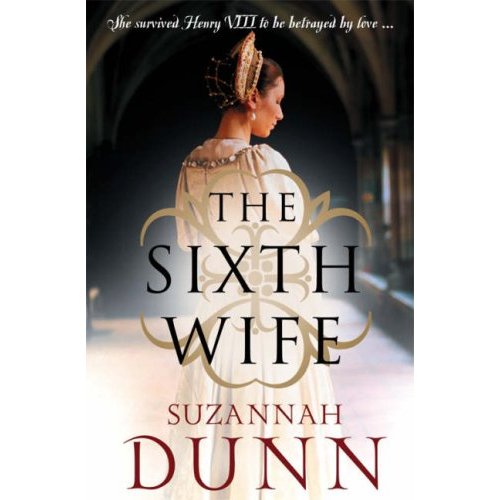
 Yesterday I started reading The English by Jeremy Paxman. It’s entertaining but I felt I wanted a story – something to get lost in. So I picked up The Sixth Wife by Suzannah Dunn. I’ve had this book for a long time and I decided it was now time to read it. I’m so glad I did because I have difficulty putting it down. It’s the story of Katherine Parr as told by her friend Catherine, Duchess of Suffolk after the death of Henry VIII, when Katherine had married Thomas Seymour.