Weekly Geeks – What’s Cookin’?

What shall we cook today? It seems that for most of us, a bit of our book obsession would carry over to the cookbook genre, so this week for Weekly Geeks, let’s talk cookbooks!

I’ve been collecting cookbooks for many years now.  I have all sorts – Italian, Chinese, Thai, Indian, French, Vegetarian, Diet, Low Fat, Freezer, and Microwave cookbooks to name but a few. These days I try to be selective and only buy books that look as though there are some new recipes that I haven’t tried.

I’m only going to write about three books in this post and these are the cookery books that were my mother’s. She loved cooking and was a very good cook.  Compared to me she had so few books! There is her Recipe Index – inside she wrote the date she bought it – March 25 1938, containing some of her handwritten recipes mainly for cakes and biscuits. It’s divided into sections such as Soups, Fish, Meat Game and Poultry etc. There’s one section called “Entrees” which she has crossed out and renamed it Jams. I can’t imagine we ever knew what entrees were! Some of the recipes are wartime ones as they include dried egg. The book is now looking well-worn and is a bit fragile.
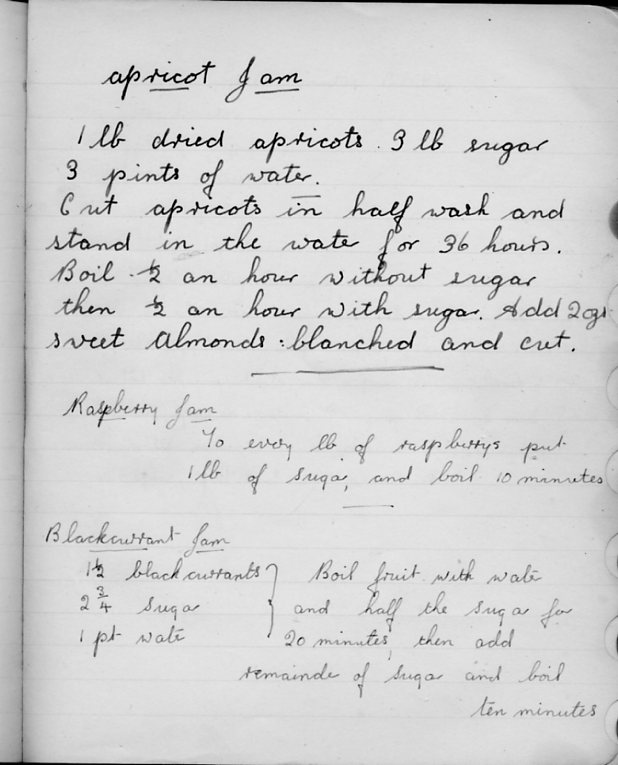
mums-jam-recipes001

Then there is The Radiation Cookery Book – such a scary title, which actually is a recipe book for use with the Radiation “New World” Regulo-Controlled Gas Cookers – my mum had one – very modern in 1938. Just opening it at random I find recipes for such things as Rabbit Broth, Hodge-Podge (made with shin of beef or scrag end of the neck of mutton), Bath Buns, Stewed Eel (in the Invalid Cookery section), Linseed Tea – none of which we ever ate. My father loved food such as Roll Mop Herrings, Tripe and Onions and Pigs Trotters – my sister and I hated them. Then there are the old favourites – Parkin, Treacle Tart, Queen of Puddings, Apple Charlotte and Bread and Butter Pudding.
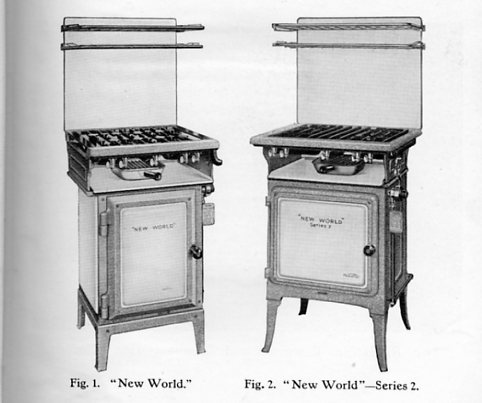
new-world-cooker002

Finally there is my favourite – The Good Housekeeping’s Cookery Compendium, which she bought in 1956. I used to love looking through this as a child. It has nearly 2000 wonderful photos and 1500 recipes with step-by-step pictures. It covers everything – how to boil an egg, buying and choosing meat, making hors d’oeuvre, how to make pickles, preserves and chutneys and the most comprehensive section on cake-making with full instructions on making and decorating the most elaborate wedding cakes.


gh-cookery-compendium001

Sunday Salon

Sunday SalonReading today so far has been Stephen Fry’s The Ode Less Travelled. I’m only at the beginning of this and this morning I read about metre: “Poetry is organised.” I am comforted by Stephen’s words in his chapter How To Read This Book – the three Golden Rules are (and I paraphrase) read poems as slowly as you can because poems are not like novels; they are not to be swigged but are to be sipped like a “precious malt whisky” – I don’t like whisky, malt or otherwise, but I know what he means. Poems are to be read out loud – awkward when in public, but in those circumstances you can read out loud inside yourself whilst moving your lips. Mmmm, people already think I’m a bit odd when I mention I read at all, they’ll know I am if I read out loud or look as though I’m talking to myself, but I will try it, maybe.
The second rule is never worry about meaning – that suits me fine as I remember sitting in class at school beating my brains whilst the teacher was waiting for an answer to what does this poem mean. And don’t be shy or cross – be confident. You don’t have to make any response or judgment. The third rule is very simple – buy a notebook and pencil (doesn’t have to be a pencil, just not a computer) and doodle with words. Great, next week I might blog my word doodles – or not.

This morning I am sad to say that I have finished reading Cider With Rosie. Sad because it is such a delicious book, full of wonderful word pictures of life in a remote Cotswold village at the beginning of the twentieth century. Laurie Lee was also a poet and this book reads like a prose poem throughout. The village is Slad in Gloucestershire, the home of Laurie Lee, a beautiful place today (I went there last year). But the village of Laurie Lee’s childhood is no more:

The last days of my childhood were also the last days of the village. I belonged to that generation which saw, by chance, the end of a thousand years’ life. The change came late to our Cotswold valley, didn’t really show itself till the late 1920s; I was twelve by then, but during that handful of years I witnessed the whole thing happen.

and as he grew older he found that

Time squared itself, and the village shrank, and distances crept nearer. The sun and moon, which once rose from our hill, rose from London, now in the east. One’s body was no longer a punching ball, to be thrown against trees and banks, but a telescoping totem crying strange demands few of which we could yet supply.

I realised reading this book that although a few years younger than Laurie Lee my parents too grew up in that world, which was changed for ever after the First World War. They both lived in small villages and went to village schools and Sunday School each week as Lee did. Cider with Rosie brings their childhood to life for me in a way I never thought was possible. There’s so much more to say about this book, but that will be in a separate post.

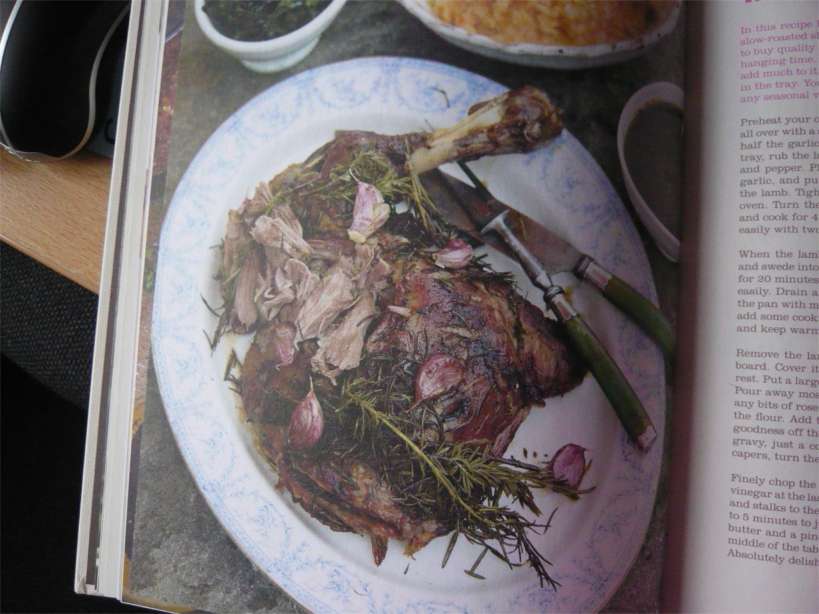
Back to the modern world another book I’ve dipped into today is Jamie Oliver’s Jamie At Home because today we’re having roast lamb. I loved his TV series and bought the book. Like his programmes it’s full of Jamie’s enthusiasm for food and cooking and of course, recipes. It’s not just recipes but details of how to grow a huge variety of vegetables, salad leaves and herbs, plus facts about the shock of battery farming and so much more.

I’ve cooked his “Incredible roasted shoulder of lamb” before and it is simply delicious.

Chocolate Please! In Nigella Bites

I first thought of writing about Nigella Lawson’s How To Eat when I joined the Soup’s On! Challenge as it’s one of her books that I have used a lot. It’s a long book – over 500 pages, nearly all covered in words, with just a few pages of photos. I love just dipping into it and reading for pleasure even if I don’t cook from it that day. 

But today I want to write about another one of her books – Nigella Bites. Sharon has already written about it – see here – but she has not written about the recipe that I made at the weekend.

On our recent visit to Suffolk we stayed near Peasenhall, which is where you can find the most wonderful shop – Emmett’s, which has been trading since 1840. You can order on-line too. They specialise in Suffolk ham and bacon but there are also other delicious goodies for sale – Spanish Charcuterie, a fantastic selection of British cheeses, honey, dried fruit and Greek olives, the best olives I’ve ever tasted in England. The aroma is simply stunning as you enter the shop and most enticing of all for me was the display of chocolate – plain, milk and white chocolate, chocolate with almonds or hazelnuts dried apricots coated in chocolate, crystalised ginger in chocolate, orange and lemon peel strips in chocolate – simply divine handmade Spanish chocolate. I bought some, ate some and brought some home.

Nigella Bites has some unusual recipes, such as Ham in Coca-Cola, Elvis Presley’s Fried Peanut-Butter and Banana Sandwich and Deep-Fried Bounties with Pineapple, none of which I’ve tried. There are more traditional recipes, including mashed potato and rice pudding, Sunday lunch and Sticky Toffee Pudding.

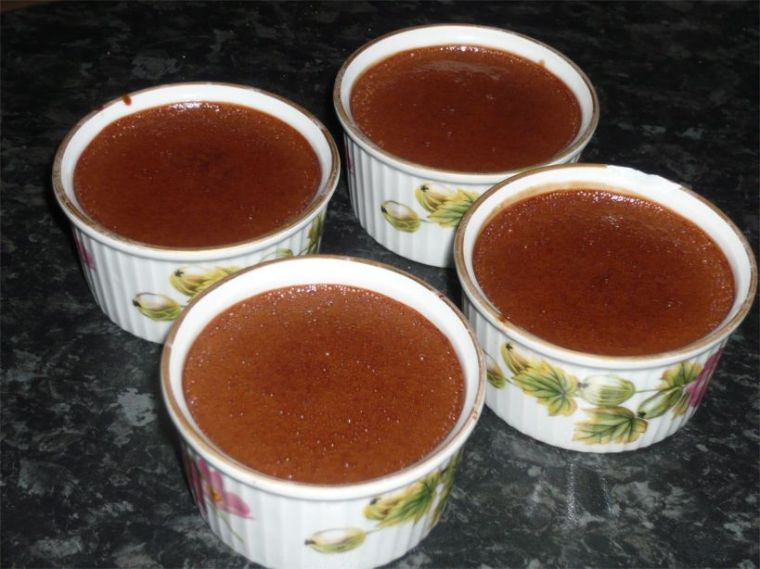
But the recipe for me is her Chocolate Pots, which is so easy to make and tastes out of this world (sorry about all the cliches). You use 175g of the best quality chocolate, minimum 70% cocoa solids (Emmett’s sells this and the 80% as well!), double cream (150ml), milk (100ml), 1 egg, real vanilla extract (half a teaspoon) and allspice (half a teaspoon).

Nigella writes – “Crush the chocolate to smithereens in a food processor ” – this is a satisfying if noisy process. Then you heat the milk and cream add the vanilla and allspice to the chocolate and wait 30 seconds then whizz up for 30 seconds, add the egg and process again for 45 seconds. Pour into little pots (Nigella says it makes 8 little pots of approximately 60ml, but I used 4!) and refrigerate for 6 hours or overnight. Take them out about 20 minutes before eating.

After Work Cookbook

After Work, by W H Smith, published by Octopus Publishing Group Ltd 1999.

I’™ve had this book a few years and have made several of the recipes. As the title suggests all the recipes are for making quick meals from fresh ingredients plus some storecupboard items. Each recipe is illustrated with a photograph. Some dishes need more preparation than others, but none of them are difficult to make ‘“ just what you need at the end of a busy day.

There’™s a good mix of recipes divided into sections:

· ‘˜light bites’™ ‘“ sandwiches, salads and soups
· ‘˜international flavours’™ ‘“ a selection from around the world ‘“ pasta, stir-fry, curry, chow mein etc
· ‘˜quick fish dishes’™ ‘“ fish cakes, fish casserole etc
· ‘˜’™meat and poultry for dinner’™ ‘“ family meals and special occasions
· ‘˜sweet endings’™ ‘“ using fruit and chocolate eg double chocolate brownies

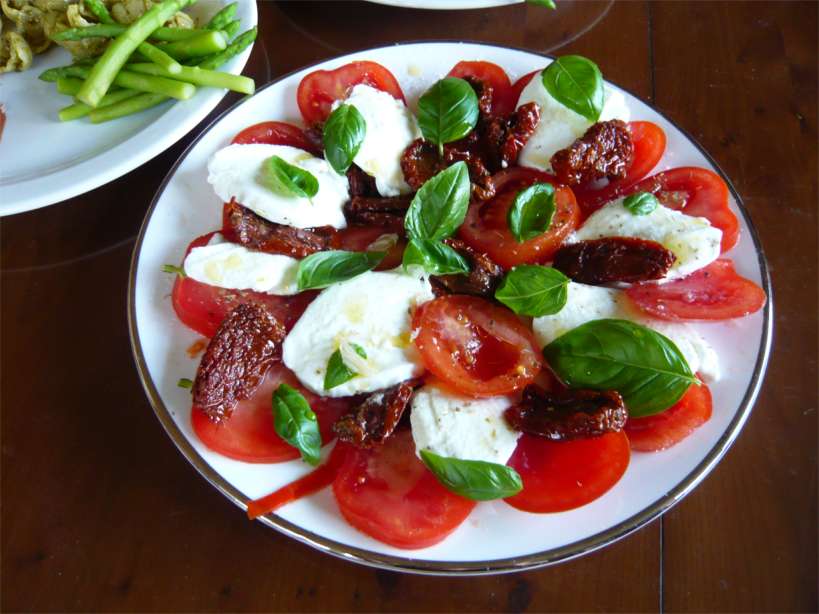
Today I made Two-Tomato Mozzarella Salad, one of my favourite recipes from this book. Really all you do is put it all together and eat it. It only takes a few minutes to prepare.

two tomato mozzarella
For 4 people you need:

· 500g fresh plum tomatoes sliced ‘“ or as many as you like
· chopped oregano
· 375g mozzarella cheese sliced ‘“ or use as much or you like – buffalo mozzarella is the nicest
· 12 sun-dried tomatoes preserved in oil and cut into strips. I don’™t cut them up unless they are very large ‘“ again you can use as many as you want
· fresh basil leaves
· salt and pepper ‘“ I use rock or sea salt and freshly ground black pepper

For the dressing, whisk the following ingredients together in a small bowl or put in a screw top jar and shake well to combine:

· 5 tablespoons extra virgin olive oil
· 3 tablespoons oil from the sun-dried tomatoes
· 3 tablespoons red wine vinegar
· ¼ garlic clove crushed – I usually use a whole clove
· pinch of sugar

1. Arrange the plum tomato slices in a single layer on a large plate and sprinkle with salt and pepper to taste together with the oregano.
2. Arrange the slices of mozzarella on top of the sliced tomatoes and tuck in the sun-dried tomatoes between them.
3. Scatter the basil leaves over the top and drizzle on the dressing.

Sometimes we just have this with maybe some crusty bread. Today we added some Parma ham, pasta shells with green pesto and asparagus tips ‘“ simply delicious.

Also posted on Soup’s On! blog.

Oh Yes – another Challenge – Soup’s On!

This Challenge is hosted by Ex Libris (Sharon). It runs from April 1, 2008 to March 31, 2009. Sharon writes: All you have to do is select six cookbooks to read (enough to give an overview of the book) and make at least one of the recipes. These can be any cookbooks of your choice – brand new ones, old stand-bys that you can’t live (or cook) without, or even heirlooms. You do not have to decide on the cookbooks ahead of time (unless you want to, of course).

I love cooking, that’s my reason for joining this challenge. I’m always buying and looking at cookbooks, and watching TV cookery programmes. I’ve only written a couple of posts on cooking, so this is a great way to write more. I’m not sure yet which books I’ll be writing about between now and the end of March next year but it could be these:

The Ration Book Diet by Mike Brown, Carol Harris and C J Jackson, because I bought it a few months ago, scan read it and thought oh yes I must cook some of these recipes, but haven’t done so yet. It’s full of information about the Second World War years in Britain, photos and cartoons from the Forties as well as beautiful modern photos.

The Good Food magazine 101 Meals For Two. This is a great little book and I’ve made a few of the recipes, but lots more to try out.

How To Eat by Nigella Lawson. She’s one of my favourite TV cooks and I love this book, even though it has no photos.

Great British Menu from the first TV show of that name. Extravagant ingredients, but fantastic food.

After Work, a WHSmith publication. Another favourite book with quick recipes that work.

The Country Kitchen by Jocasta Innes. I’ve had this book for years; it’s full of information about cooking with cream, butter, game – trussing and plucking a pheasant, making raised pies, terrines and galantines and preserving food. I haven’t ventured much yet out of this book, but I’d love to have a go.

I’m looking forward to reading all the other reviews!

Red Pepper Soup

I enjoy making and eating (or is it drinking?) soup. This is one of my favourites. It’s very easy and quick to make and very tasty too.

My recipe is one I’ve adapted from The Soup Bible.The Soup Bible is a beautifully illustrated book, packed with over 200 recipes from all around the world. I’d never have thought of making soup from red peppers before.

Ingredients
For 2 servings

1 onion, chopped
2 red peppers, seeded and chopped. I use the long thin pointy ones that are mild and sweet – not at all hot.
Olive oil
1 garlic clove, crushed
1 ½ tablespoons tomato purée
1 pint vegetable stock
Juice of one lime
Salt and freshly ground black pepper

Heat a little olive oil in a saucepan and soften the onion and peppers.
Add the garlic, tomato purée salt & pepper and stock.
Bring to the boil and then simmer, covered for about 10 minutes.
Cool slightly and then purée ‘“ I use a hand blender
Add the lime juice. Reheat.

The original recipe includes 1 small red chilli, sliced, but I like it without. Together with some wholemeal bread (I make it in a breadmaker) this makes a filling lunch.