Half – Booking Through Thursday

 btt  button

This week’s topic:

So €¦ you’re halfway through a book and you’re hating it. It’s boring. It’s trite. It’s badly written. But €¦ you’ve invested all this time to reading the first half.

What do you do? Read the second half? Just to finish out the story? Find out what happens?

Or, cut your losses and dump the second half?

If I was hating a book I’d stop reading it, before getting halfway into it. I might skim through it if the story was interesting enough to find out what happens or read the end, but if it was that bad I’d dump it straight away. Life is too short and there are too many good books around to waste time and effort reading a boring, trite and badly written book.

Plotting

btt button

Plots? Or Stream-of-Consciousness? Which would you rather read?

 It all depends on my mood! I like both at different times.

Mrs Dalloway by Virginia Woolf springs to mind as a good example of stream-of-consciousness writing and is a book to cogitate over and I could read it again and again. Plot driven books, in contrast, are full of action and are page-turners, making me read quickly to find out what happens next, but once read I usually feel less inclined to re-read them.

April Fool – Booking Through Thursday

btt   button

Deb has asked a variety of questions for today.

  • Who’s your favorite ‘fool’ of a character, and why?
  • What authors have fooled you? By a trick plot twist? By making you think their book was any good when it wasn’t?
  • What covers have fooled you into reading books you hated €¦ even though the covers were wonderful?
  • What’s the best April Fool’s Day trick you’ve ever seen/heard about/done?

Choose the one you like best. Or answer all of them! Or make up your own.

I was fooled by Margaret Forster’s book, Diary of an Ordinary Woman, or rather I fooled my self.

Even though it is clear from the front cover that this is a novel I started reading it thinking it really was the diary of Millicent King, a woman born in 1901 who had kept a diary from the age of 13 until she was 94. I think the fact that it has an ‘Introduction’ was partly to blame where the narrator explained how she had come across the diaries and was intrigued enough by them to ‘make something of them’ and how she had met Millicent just before her death. The ‘diary’ records the events of the Great War as it touched her family, on through the 20s and 30s in London and then to the Second World War where Millicent drove an ambulance through the bombed streets of London.

It’s written in diary format with added information from the ‘editor’. It was only when I came to read the later part of Millicent’s ‘life’ that I began to wonder if this woman could possibly be real and have been involved in so many of the great social upheavals and dramas of the times and I began to suspect that this was fiction.  That should teach me to read book titles more closely and look at the front covers properly!

Nevertheless this is very good book and I enjoyed it enormously, although I did feel a little sad that Millicent wasn’t a real person.

As for covers I don’t think I’ve ever been fooled by one – as I don’t really look at them very carefully.

Breaks In Reading?

   btt button

Do you take breaks while reading a book? Or read it straight through? (And, by breaks, I don’t mean sleeping, eating and going to work; I mean putting it aside for a time while you read something else.)

I have three books on the go right now. Sometimes I have more. I have tried sticking to one book, but it just doesn’t work like that for me, I seem to need the variety. I’ll be reading one book and find myself wanting to read something different, which is why I often have one book of non-fiction and a variety of fiction at hand to turn to. But there always comes a point in each book where that book takes over and I read it through to the end without interruption from the others. At the moment it’s The Little Stranger by Sarah Waters that is taking precedence, closely followed by Raven Black by Ann Cleeves, with Being Shelley by Ann Wroe trailing behind in third place.

It can become difficult if I have put a book aside for a while and then I have to start reading it again from the beginning! It gets even more difficult when I’ve been to the library and want to start all the books I’ve just borrowed.

And so it goes on …

Illustrious – Booking Through Thursday

 btt button

How do you feel about illustrations in your books? Graphs? Photos? Sketches?

I think illustrations are essential in some books and not in others. Non-fiction cries out for them. They enhance biographies for example. Cookery books without photos are just not as explanatory, they demonstrate how the cooked dish should look. Imagine travel books without photos or drawings – each reader would ‘see’ different places in their mind’s eye; or gardening books without examples.  And art books – impossible without illustrations.

I’m not so good at interpreting graphs and diagrams, though. I need words as well.  I’m not so keen on the tips in boxes that are dotted about such books as the Complete Idiot’s Guide series. I find them irritating and distracting. Maps are better – I love maps and plans in fiction as well as non-fiction.

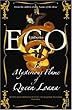
As for fiction. I like it plain. Although, just this week I’ve been tempted to read The Mysterious Flame of Queen Loana by Umberto Eco. This has a generous helping of illustrations  – photos, drawings, extracts from newspapers and magazines sprinkled thoughout. And it looks as though they are essential to the plot.

(Click on the photo to see a larger and clearer picture.)

All of which brings me to graphic novels. I haven’t read any. Each time I look at the selection in a library or bookshop I can’t find any that appeal and yet other bloggers have written reams in praise of graphic novels. I loved comics as a child and liked reading the comic strips such as The Gambols and Shultz’s Peanuts with Charlie Brown. Those of you who love graphic novels – please recommend a good one to get me going, bearing in mind that I’ve looked at and discarded graphic novels of Jane Austen and other classics.

Winter Reading – Booking Through Thursday

This week’s question:

The northern hemisphere, at least, is socked in by winter right now€¦ So, on a cold, wintry day, when you want nothing more than to curl up with a good book on the couch €¦ what kind of reading do you want to do?

It is cold here, but looking at what I’m currently reading it’s the same as if we were in a heatwave. In both scenarios I’d be reading indoors – today it’s too cold to sit outside reading and when it’s hot I can’t read outside either. So, the weather does not affect my choice of reading at all. If it’s cold I like to get warm and if it’s hot I look for somewhere cool to sit and read, but my choice of reading is the same.