This week’s topic is hosted by Rebekah @ She Seeks Nonfiction.
One of the greatest things about reading nonfiction is the way it can open your eyes to the world around you–no plane ticket required. What nonfiction book or books have impacted the way you see the world in a powerful way? Is there one book that made you rethink everything? Is there a book that, if everyone read it, you think the world would be a better place?
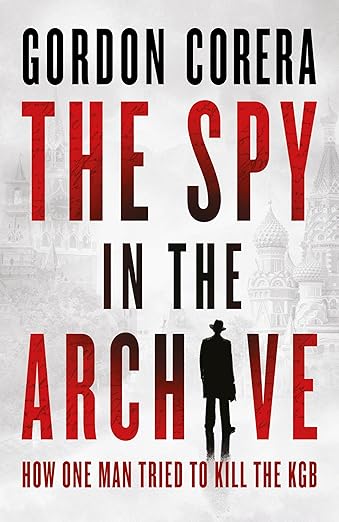
I think that The Spy in the Archive: How One Man Tried to Kill the KGB (my review) by Gordon Corera certainly opened my eyes and enlightened me about the extent of corruption, torture and terror within Russia, and the infiltration of Western countries.
It’s about Vasili Mitrokhin, a KGB archivist who defected to Britain in 1992. Mitrokhin, a quiet, introverted and determined man, was a reluctant defector, because whilst he loved Russia he came to hate the KGB and the Soviet system. It is a remarkable book about a remarkable man, an in-depth account, that is both fascinating and informative.
As the in-house archivist for the KGB, the secrets he was exposed to inside its walls turned him first into a dissident and then a spy, a traitor to his country but a man determined to expose the truth about the dark forces that had subverted Russia, forces still at work in the country today. It is the story of what it was like to live in the Soviet Union, to raise a family and then of one man’s journey from the heart of the Soviet state to disillusion, betrayal and defection. At its heart is Mitrokhin’s determination to take on the most powerful institution in the world by revealing its darkest secrets.
Mitrokhin wanted the documents he had copied to be made public, not just to the world but to open the Russians’ eyes to the corruption, torture and terror that was prevalent. Sadly, despite his determination that his work would reach the Russian people, that has not proved possible
Gordon Corera is the BBC’s security correspondent. He covers terrorism, cyber-security, spying and other related issues in the UK and around the world. Before taking on the role in 2004 he worked for the Today programme on Radio 4 as a foreign reporter. Gordon joined the BBC in 1997. He has presented documentaries and written a number of books relating to espionage and security.
 BooksPlease
This sounds really compelling, Margaret. It’s something I don’t know nearly enough about, and I can see how it would have held your interest and given a different perspective.
LikeLiked by 2 people
Thank you so much for sharing this. It sounds compelling.
LikeLiked by 1 person
What an incredible and determined man.
LikeLiked by 1 person
From reading as a young adult, keeping up with the news during the Cold War, and military service during the Cold War, I learned some about the conditions in the Soviet Union and its efforts to undermine the democracies of the West. The Spy in the Archive would have made a great pairing for last week’s post in this challenge, with Darkness at Noon, by Arthur Koestler. It is about an old Bolshevik, loyal to the USSR, who discovers truths about Stalin’s horrific regime. He is arrested and brutally interrogated. The key is the play between the protagonist and his interrogator, as a dissection of totalitarianism. I read that when I was in high school, and found just the sort of chilling reading as you describe in your blog post. The Spy in the Archive sounds like a tale of a very brave man.
LikeLiked by 1 person
An interesting selection, thanks for sharing
LikeLiked by 1 person
This sounds awesome. It’s like the Russia version of Most Dangerous by Steve Sheinkin.
LikeLike
I bet this book was fascinating.
My week 4 post: https://headfullofbooks.blogspot.com/2025/11/nonfiction-november-week-four-diverse.html
LikeLike
So intriguing! I haven’t heard of this book but I’ll be on the lookout for it.
LikeLike
My book club read The Spy and the Traitor by Ben McIntyre this year. I was not interested at first in reading this book, but when I actually read it, I was fascinated. This book discusses Russia and their spy system, too.
LikeLike