2023 has been a good time for reading books, but not a good time as far as writing reviews goes and I am way behind. I’ll probably never catch up.
These are 10 of the 21 books I rated 5 star reads this year. I’ve listed them in a-z author order, with links to my reviews where they exist.
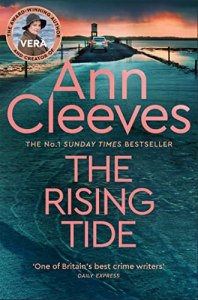
The Rising Tide by Ann Cleeves – this is the 10th Vera Stanhope mystery novel. I love the Vera books and this one is no exception. Ann Cleeves is a superb storyteller. Her books are deceptively easy to read, moving swiftly along as the tension rises. They are layered, cleverly plotted and above all convincing. It’s set on the Holy Island of Lindisfarne, a tidal island just off the coast of Northumberland, only accessible across a causeway when the tide is out.
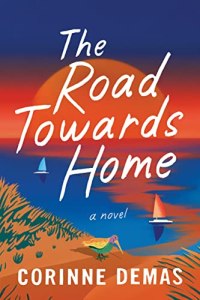
The Road Towards Home by Corinne Demas – I thoroughly enjoyed this book, a complete and welcome change from crime and hisrorical fiction. It’s about the friendship between Cassandra and Noah, two retired people who had first met in their youth. They were reacquainted when they moved to Clarion Court an ‘an independent living community’. Noah invites Cassandra to rough it with him at his Cape Cod cottage, and their relationship unexpectedly blossoms after several ups and downs.
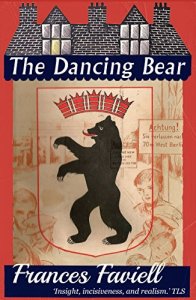
The Dancing Bear by Francis Faviell – a moving memoir of the Occupation. Set in Berlin it covers the years from autumn 1946 to autumn 1949 and is mainly about her friendship with the Altmann family. Frances is horrified by the conditions she found. There were deaths from hunger and cold as the winter approached and queues for bread, milk, cigarettes, cinemas, buses and trams. I was fascinated by it all – the people, their situations, and their morale and attitudes as well as the condition of Berlin in the aftermath of World War Two. The realities of living under occupation are clearly shown, as well as the will to survive despite all the devastation and deprivation.
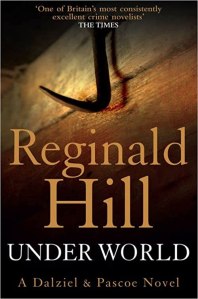
Underworld by Reginald Hill – the 10th Dalziel and Pascoe novel, set in the small mining town of Burrthorpe (a fictional town) in Yorkshire. The majority of the book is about the miners, their families, their hatred of the bosses, and their distrust and dislike of the police. There are two mysteries facing Dalziel and Pascoe. One is current and the other is a case that had appeared to have been resolved several years earlier, when a young girl disappeared. Dalziel has just a minor role as Pascoe leads the investigation. And it’s left to Dalziel to bring a touch of humour to the book. His down to earth approach to the miners gets more results than Pascoe’s middle class attempts to understand them.
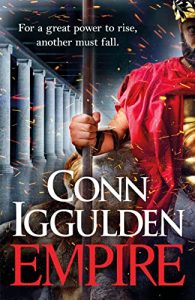
Empire by Conn Iggulden – this is the first book in Conn Iggulden’s Golden Age series set in the 5th century BCE. I thoroughly enjoyed it which surprised me as generally speaking I’m not keen on reading battle scenes and the book starts and ends with battles. But I had no problem with following the action of the battles between the Greeks and the Persians, and was able to visualise what was going on without any difficulty.
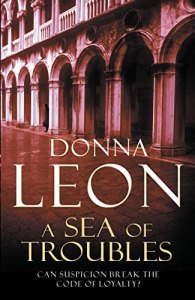
A Sea of Troubles by Donna Leon – the 10th Commissario Guido Brunetti novel. Brunetti is one of my favourite detectives. He is happily married with two children. He doesn’t smoke or drink to excess and often goes home for lunch to his beautiful wife Paolo, who is a wonderful cook. In this book he investigates the deaths of two clam fishermen, father and son, off the island of Pellestrina, south of the Lido on the Venetian lagoon, when their boat had suddenly exploded. He found himself in a web of political intrigue, corruption and secrets. From a slow start the ending is dramatic and action packed with Brunetti and Elletra, his boss’s secretary, in danger of their lives.
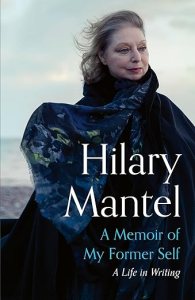
A Memoir of My Former Self by Hilary Mantel – a selection of articles and essays including newspaper and periodical articles, film reviews, and her Reith lectures. She wrote about episodes from throughout her life and about a huge variety of topics, including her thoughts on her own historical fiction, explaining how and why she wrote the Wolf Hall trilogy, her love for Jane Austen’s novels, her thoughts on nationalism, and on identity – being European and ‘English’ that I found particularly fascinating and thought-provoking.
I read it totally out of order and want to go back and can read it all again before writing any more about it. If you like Mantel’s work it’s a ‘must read’.

Excellent Women by Barbara Pym – set just after the end of the Second World War, about the everyday life of Mildred Lathbury, an unmarried woman – in other words a spinster – in her early 30s. The daughter of a clergyman she is one of those ‘excellent women’ who could be relied upon to help out at Church jumble sales, garden fêtes, to make tea when required or to make up numbers at social gatherings. Pym is such a keen observer of human nature, giving the little details that bring the characters to life. I found them all totally believable, each with their own eccentricities. She writes so simply but with such depth. It’s a slow-paced book but all the better because of that.

On the Beach by Nevil Shute – I think this is a terrifying and incredibly sad book, and yet it all seems low key. People go about their everyday lives but set against the background that the world is about to end. It was first published in 1957 and is set sometime in the early 1960s about a group of people living in Melbourne and on the USS submarine, Scorpion, as they await the arrival of deadly radiation spreading towards them from the Northern Hemisphere, following a nuclear war the previous year.
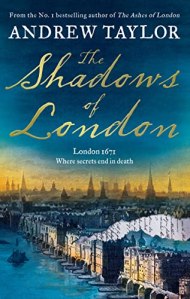
The Shadows of London by Andrew Taylor – the 6th book in his James Marwood and Cat Lovett Restoration series. I’ve read all of the previous books, set in 17th century England, during the reign of Charles II, and thoroughly enjoyed each one. When a man’s brutally disfigured body is discovered in the ruins of an ancient almshouse it is obvious he has been murdered, and Whitehall secretary James Marwood is ordered to investigate. One of the things that I really enjoyed in this book is the picture it paints of John Evelyn, the writer and diarist, bibliophile and horticulturalist. He was a contemporary of Samuel Pepys. His diary covers the years from 1640 to 1706 when he died. And now I want to find out more about him.
 BooksPlease
Cleeves, Hill, Leon, Mantel…. I can definitely see why these books made your Top Ten list, Margaret. I’ve never been disappointed by any of them. Wishing you a Happy New Year and all the best for 2024!
LikeLiked by 1 person
I’ll have to get the Hilary Mantel – it sounds wonderful.
Agree with you about On The Beach, it’s years since I read it but am thinking of doing a re-read…
LikeLiked by 1 person
Looks like you had a great and varied reading year! On the Beach is so low key, isn’t it? If it happened these days there would undoubtedly be mass hysteria, all recorded in short bursts for TikTok! ;) Happy New Year, Margaret – hope 2024 treats you well! 🎉
LikeLiked by 1 person